Prevent Tarnish: The Best Necklace Stand Organizer Care Guide
Discover how the right necklace stand organizer prevents chain tangling, tarnish, and stretching. Expert storage and cleaning tips for fine jewelry.

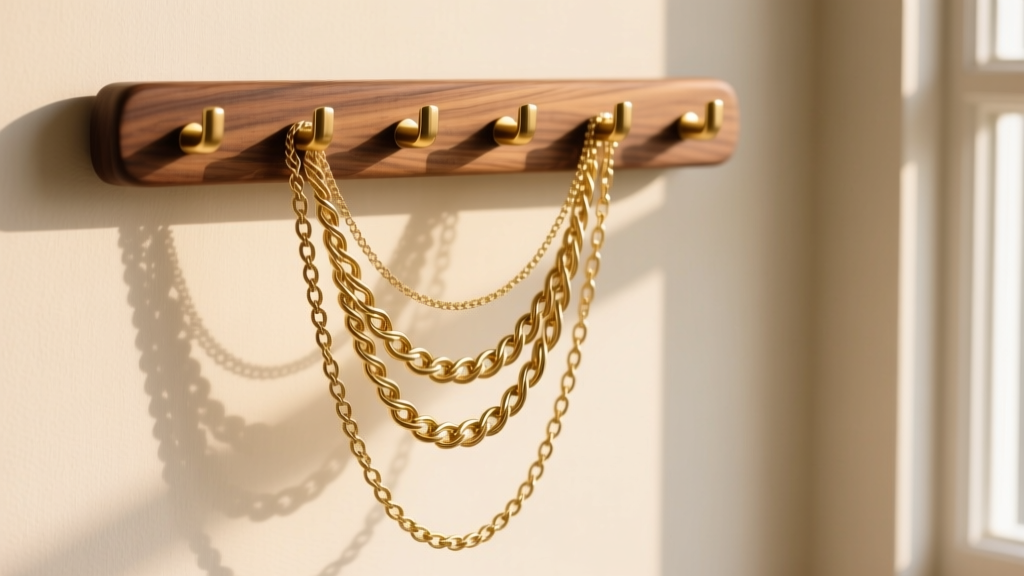
For jewelry collectors and everyday wearers alike, the transition from wearing a necklace to storing it is often where the most damage occurs. A high-quality necklace stand organizer is not merely an aesthetic display piece; it is a critical preservation tool. Improper storage leads to micro-scratches, permanent chain kinking, clasp fatigue, and accelerated chemical tarnishing. In 2026, with the rising popularity of mixed-metal layering and delicate micro-pave pendants, understanding the material science of jewelry storage is essential for maintaining the structural integrity and brilliance of your collection.
This comprehensive guide explores the physics of chain damage, the chemical interactions between storage materials and precious metals, and the exact protocols for maintaining both your jewelry and your organizer.
The Physics of Chain Damage and Tensile Stress
Different chain weaves react uniquely to gravity and tension. When you hang a heavy pendant on a delicate chain, the tensile stress is concentrated at the clasp and the bail. Over time, this constant gravitational pull can stretch the metal, particularly in softer alloys like high-karat gold (18k and 22k) or pure silver.
Furthermore, certain chain weaves are highly susceptible to kinking. Herringbone, snake, and omega chains are constructed from flat, tightly interlocking links designed to lay flush against the skin. If bent past a 45-degree angle, these links can fold over one another, creating a permanent weak point that will eventually snap. According to the Gemological Institute of America (GIA), storing these specific weaves requires specialized support to prevent irreversible structural damage. A standard thin wire hook will cause a herringbone chain to fold sharply, whereas a padded, wide-radius hook or a flat velvet tray provides the necessary support.
Matching Chain Weaves to Your Necklace Stand Organizer
To maximize the lifespan of your necklaces, you must match the chain weave to the correct hook geometry and spacing on your necklace stand organizer. Tangling occurs when chains are hung too closely together, allowing their links to interlock through ambient movement or vibrations.
| Chain Weave | Required Hook Style | Minimum Spacing | Storage Risk Factor |
|---|---|---|---|
| Herringbone / Snake | Wide, padded curve (radius > 1 inch) | Lay flat in velvet tray | High (Permanent kinking) |
| Box / Wheat | Standard metal or acrylic hook | 2.5 inches apart | Medium (Tangling at clasps) |
| Cable / Curb | Standard metal or acrylic hook | 2.0 inches apart | Low (Highly durable) |
| Omega | Wide, padded curve or flat tray | Lay flat in velvet tray | High (Dents and kinks) |
Material Off-Gassing and Tarnish Acceleration
The physical structure of your necklace stand organizer is only half the equation; its chemical composition is equally vital. Tarnish on sterling silver (which is 92.5% silver and 7.5% copper) is primarily caused by the copper reacting with hydrogen sulfide ($H_2S$) and moisture in the air to form silver sulfide. However, this process is drastically accelerated by acidic environments and off-gassing from cheap storage materials.
Many budget-friendly organizers are constructed from MDF (medium-density fiberboard) or particleboard. These materials often utilize urea-formaldehyde resins and acidic glues that continuously off-gas volatile organic compounds (VOCs). When trapped in a closed jewelry armoire or placed in close proximity to silver, these acidic gases will cause rapid, severe tarnishing. Similarly, organizers lined with PVC (polyvinyl chloride) plastics can release plasticizers that leave a sticky, corrosive residue on pearls and soft gemstones.
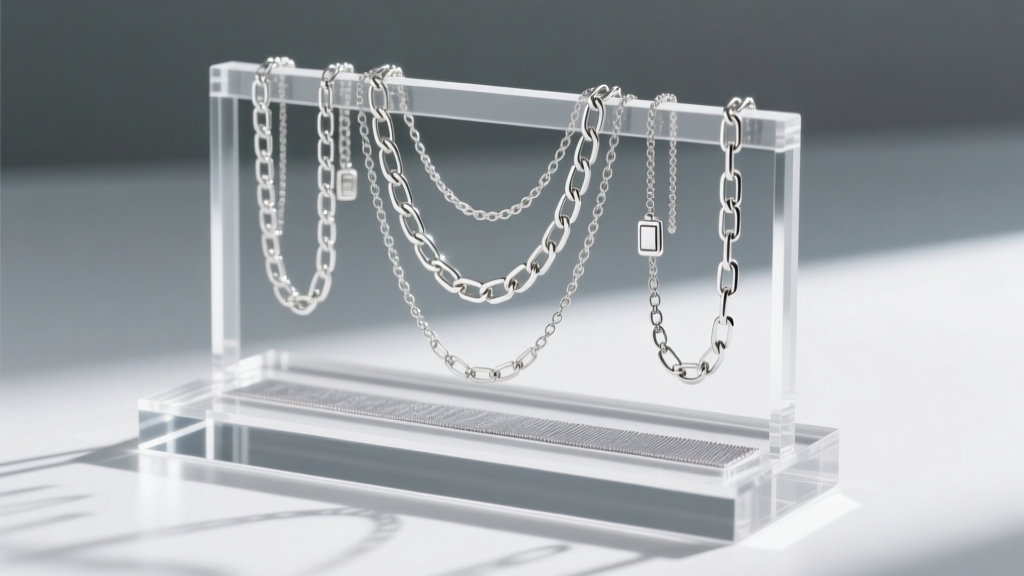
Expert Recommendation: Always opt for a necklace stand organizer made from sealed hardwoods (like walnut or maple with a polyurethane finish), cast acrylic (PMMA), or powder-coated stainless steel. If using a fabric-lined organizer, ensure the lining is made of unbleached cotton, acid-free felt, or high-quality nylon velvet, as natural wool and some dyed felts contain sulfur compounds that actively promote tarnish.
Environmental Controls: Humidity and Tarnish Strips
Even with the perfect organizer, ambient humidity and airborne pollutants will eventually cause oxidation. To create a micro-climate that protects your jewelry, integrate anti-tarnish technology directly into your necklace stand organizer setup.
- Anti-Tarnish Strips: Products like 3M Anti-Tarnish Strips contain copper-based polymers that chemically absorb and neutralize hydrogen sulfide and sulfur dioxide gases. Tuck one strip into the base or drawer of your organizer. These strips typically remain effective for 6 to 12 months, depending on the room's ventilation and pollution levels.
- Silica Gel Packets: Moisture acts as a catalyst for tarnish. Place rechargeable silica gel desiccant packets near the base of your stand to maintain a localized relative humidity (RH) below 50%, which significantly slows the oxidation process.
- Chalk or Activated Charcoal: For open-air display stands, placing a small, breathable muslin bag of activated charcoal behind the organizer can help absorb ambient moisture and odors without detracting from the visual display.
Step-by-Step Cleaning and Maintenance Protocols
Your jewelry is only as clean as the surface it rests upon. Dust, skin oils, and cosmetic residues transfer from your necklaces to the organizer over time, creating a breeding ground for bacteria and abrasive grit that can micro-scratch your metals. The Jewelers of America emphasizes that regular maintenance of storage environments is just as important as cleaning the jewelry itself.
Cleaning Acrylic and Glass Stands
Acrylic (PMMA) is highly prized for its modern, invisible aesthetic, but it is exceptionally soft and prone to crazing (micro-cracking) when exposed to harsh chemicals. Never use ammonia-based glass cleaners (like Windex) or alcohol on an acrylic necklace stand organizer. These solvents will strip the surface polish and cause permanent cloudiness.
- Dust the stand using a clean, dry microfiber cloth or a soft camel-hair brush to remove abrasive surface grit.
- Mix a solution of distilled water and a single drop of pH-neutral dish soap (like Dawn).
- Dampen a second microfiber cloth with the solution—do not spray the stand directly, as liquid can seep into the joints.
- Wipe gently in a circular motion, then dry immediately with a lint-free cloth to prevent water spots.
Refreshing Velvet and Felt Liners
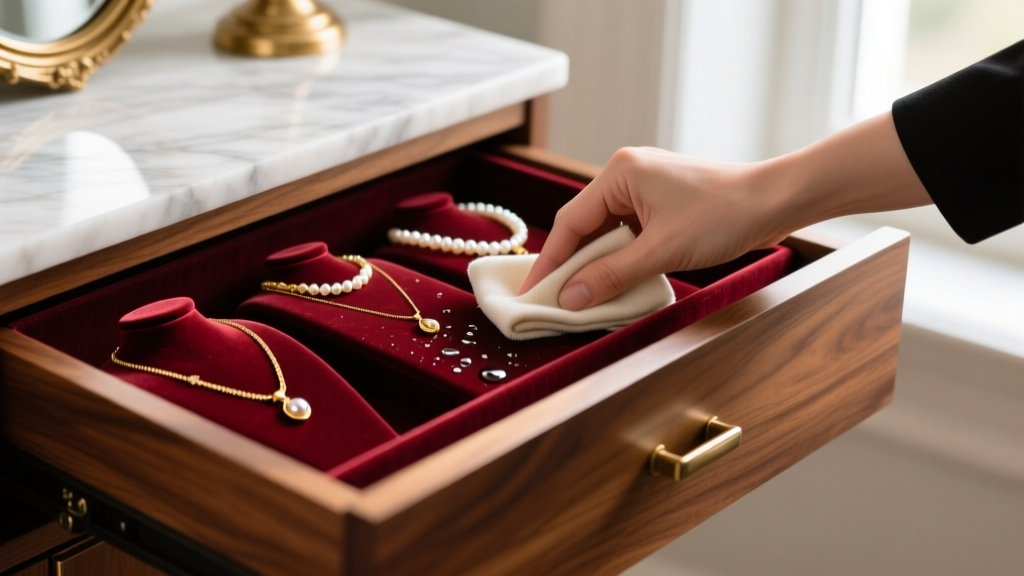
Velvet and felt inserts trap dead skin cells, perfume oils, and dust. Because these materials cannot be submerged in water without ruining the backing adhesive, they require dry-cleaning methods.
- Use a clean, dry horsehair brush to gently agitate the fibers and lift trapped dust. Brush in a single direction to maintain the velvet's nap.
- For stubborn cosmetic stains (like foundation or lotion), use a specialized dry-cleaning sponge (vulcanized rubber soot sponge). Gently dab the stain; the rubber absorbs the oils without wetting the fabric.
- Never use liquid spot removers on velvet jewelry inserts, as the moisture can cause the underlying cardboard or wood backing to warp and harbor mold.
Common Storage Mistakes to Avoid
Even with the best intentions, many collectors inadvertently damage their pieces through improper use of their necklace stand organizer. Avoid these critical errors:
- Leaving Clasps Open: Always fasten the lobster clasp or spring ring before hanging the necklace. An open clasp hook can easily snag on adjacent chains, causing severe tangling or scratching delicate gemstone facets.
- Overloading Hooks: Hanging more than two necklaces on a single hook increases friction and tangling. If the chains have pendants, the weight distribution will cause the top chain to stretch and deform.
- Storing Pearls on Wire Hooks: Pearls are exceptionally soft (2.5 on the Mohs scale) and are often strung on silk thread. Hanging heavy pearl strands on thin metal hooks can stretch the silk thread over time, leading to gaps between the pearls and eventual breakage. Always store pearl necklaces flat in a padded drawer or on a wide, cushioned bar.
- Exposure to Direct Sunlight: Placing your organizer in direct sunlight not only fades delicate gemstones like amethyst, kunzite, and topaz, but it also degrades the UV-sensitive dyes used in fabric-lined organizers and accelerates the drying and cracking of wooden stands.
Conclusion
A necklace stand organizer is an investment in the longevity of your jewelry. By understanding the mechanical vulnerabilities of different chain weaves, selecting chemically inert materials, and adhering to strict cleaning protocols, you can ensure your collection remains pristine for decades. Treat your storage environment with the same care and precision as the jewelry it holds, and your pieces will retain their structural integrity and brilliant finish for years to come.


