Expert Care and Cleaning Tips for a Chinese Bead Necklace
Preserve your heritage jewelry. Learn expert cleaning, storage, and restringing techniques for jade, cloisonné, and turquoise Chinese bead necklaces.

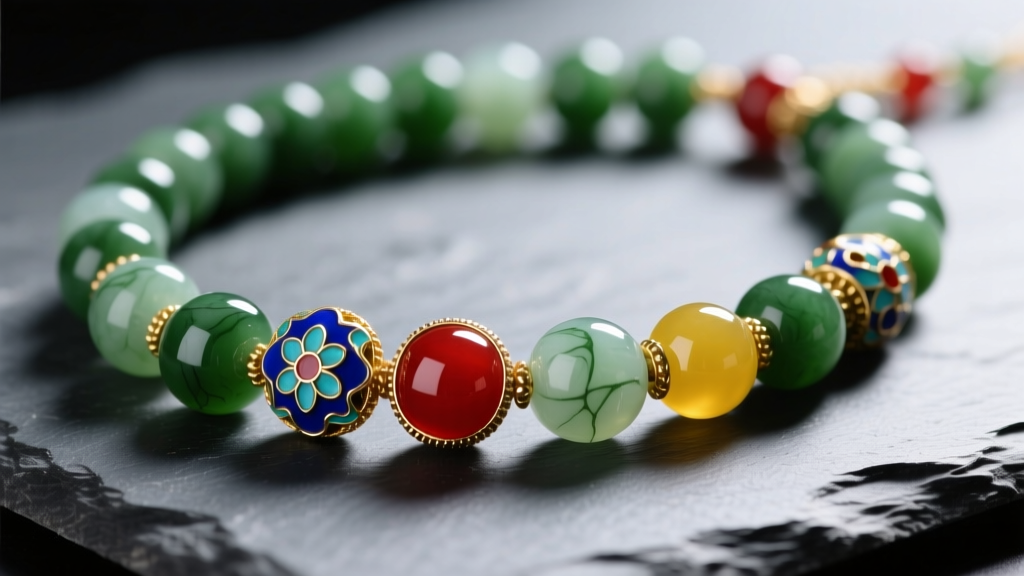
Understanding the Anatomy of a Chinese Bead Necklace
A traditional Chinese bead necklace is far more than a simple string of ornaments; it is a complex assembly of diverse organic and inorganic materials, often hand-knotted on natural silk. Whether your piece features translucent jadeite, opaque nephrite, vibrant cloisonné enamel, or porous turquoise, each component reacts differently to environmental stressors, skin oils, and cleaning agents. Unlike homogeneous metal chains, a multi-material Chinese bead necklace requires a highly specialized, segmented approach to maintenance.
The most common point of failure in these necklaces is not the beads themselves, but the stringing medium and the microscopic accumulation of sebum and cosmetic residues in the drill holes. Human sweat has a pH ranging from 4.5 to 7.0, making it mildly acidic. Over time, this acidity degrades natural silk cords and etches the surface of porous gemstones. To preserve the structural integrity and historical value of your jewelry, you must adopt a meticulous care regimen tailored to its specific material composition.
Material-Specific Vulnerabilities
Natural Jade (Jadeite and Nephrite)
Jade is renowned for its toughness, which stems from its interlocking crystalline structure rather than its absolute hardness. Nephrite ranks 6.0 to 6.5 on the Mohs scale, while jadeite is slightly harder at 6.5 to 7.0. However, jade possesses distinct cleavage planes. Exposure to sudden thermal shock or high-frequency vibrations can cause internal micro-fractures, eventually leading to catastrophic splitting. Furthermore, many commercial jades are treated with polymers or waxes to enhance translucency; harsh chemicals will strip these treatments, leaving the stone dull and dry.
Cloisonné Enamel Beads
Cloisonné involves fusing powdered glass to a metal substrate (usually copper or bronze) using fine wire cells. The primary vulnerability here is the coefficient of thermal expansion. The metal base and the glass enamel expand and contract at different rates. Immersing cloisonné beads in hot water or exposing them to steam can cause the enamel to craze, crack, or pop out of the wire cells entirely. Additionally, the exposed metal wires are prone to oxidation if trapped moisture lingers in the crevices.
Porous Stones (Turquoise and Lapis Lazuli)
Turquoise (Mohs 5.0-6.0) is a hydrous phosphate of copper and aluminum. It is highly porous and acts like a sponge, readily absorbing oils, lotions, and perfumes. This absorption permanently alters the stone's color, often turning vibrant sky-blue turquoise into a muddy green. Lapis lazuli contains calcite, which is highly reactive to acids. Even a mild acidic cleaner will dissolve the calcite matrix, pitting the surface of the bead.
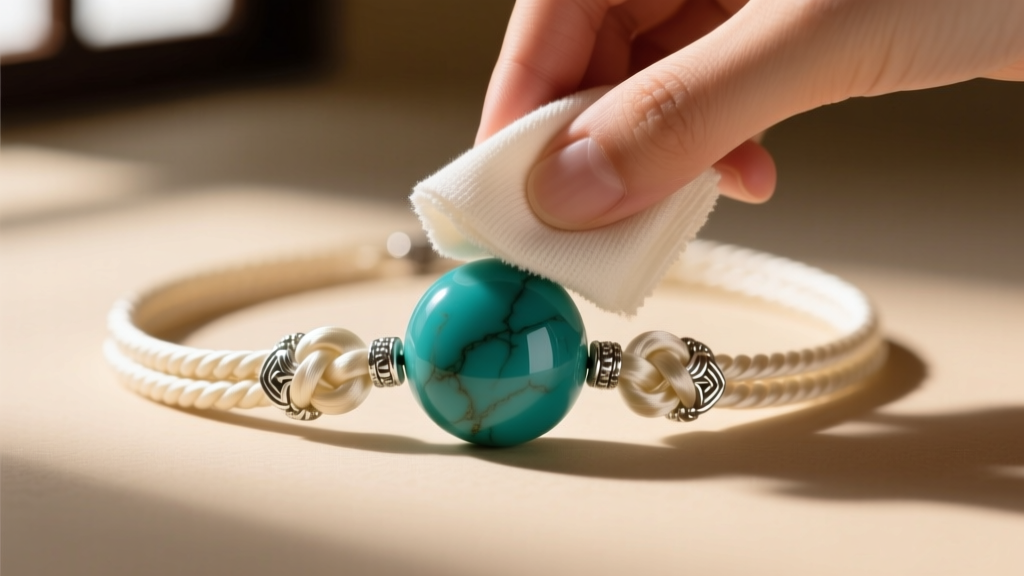
The Golden Rules of Storage and Daily Wear
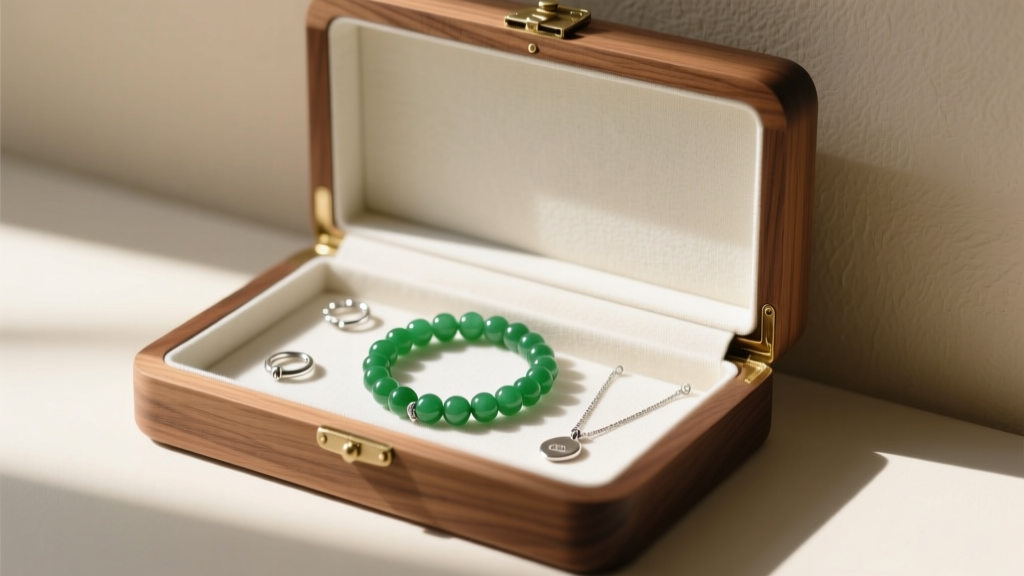
Proper storage is the first line of defense against environmental degradation. Never store a Chinese bead necklace in a plastic ziplock bag or a PVC-lined jewelry box. Plastics off-gas volatile organic compounds (VOCs) that can react with the copper in cloisonné or the organic dyes used in older silk cords.
- Climate Control: Maintain a relative humidity of 45% to 55%. Extremely dry environments can desiccate organic beads (like coral or carved bone) and cause silk threads to become brittle and snap.
- Light Exposure: Prolonged exposure to UV radiation can fade dyed agate, coral, and certain types of treated jade. Store the necklace in a dark environment.
- Physical Isolation: Always store the necklace flat and fully extended, or loosely coiled in a figure-eight pattern to prevent the silk from taking a permanent set. Keep it isolated from diamonds or sapphires, which rank 9.0+ on the Mohs scale and will easily scratch jade and enamel.
Step-by-Step Cleaning Guide by Material
Cleaning Jade and Agate Beads
For natural, untreated jade and agate, use a solution of lukewarm distilled water and a few drops of pH-neutral baby shampoo (pH 7.0). Submerge only the stone beads, avoiding the silk knots. Gently agitate the water, then use a soft-bristled baby toothbrush to clean around the drill holes where grime accumulates. Rinse briefly with clean distilled water and immediately pat dry with a lint-free microfiber cloth. According to the Gemological Institute of America (GIA), ultrasonic cleaners should never be used on jade, as the vibrations can exacerbate existing internal fissures.
Cleaning Cloisonné Enamel
Never submerge cloisonné beads. Instead, lightly mist a microfiber cloth with distilled water and gently wipe the surface of each bead. Use a dry, soft-bristled makeup brush to dust the intricate wire cells. If oxidation is present on the metal wires, apply a microscopic amount of jewelry polishing paste to a cotton swab, carefully targeting only the metal, and immediately buff it away to prevent residue from settling into the enamel.
Cleaning Turquoise and Lapis Lazuli
Porous stones must never come into contact with liquid cleaners. The GIA's turquoise care guidelines explicitly warn against submerging these stones. Simply wipe the beads down with a dry, untreated chamois cloth after every wear to remove skin oils before they can penetrate the stone's matrix.
Cleaning Agents Matrix: What to Use and Avoid
| Bead Material | Safe Cleaning Agents | Destructive Agents to Avoid |
|---|---|---|
| Jadeite / Nephrite | Distilled water, pH-neutral soap | Ultrasonic, bleach, ammonia, steam |
| Cloisonné Enamel | Dry microfiber, soft dusting brush | Water immersion, acids, abrasives |
| Turquoise / Lapis | Dry chamois cloth only | All liquids, oils, ultrasonic, heat |
| Carved Bone / Coral | Slightly damp cloth, mild soap | Acids, alcohol, prolonged moisture |
Restringing and Knotting Maintenance
The silk cord is the hidden backbone of a Chinese bead necklace. Traditional pieces utilize hand-knotting between each bead. This serves a dual purpose: it prevents the beads from grinding against one another, and it ensures that if the cord breaks, only one bead falls off rather than the entire strand scattering.
Silk is a protein fiber that degrades rapidly when exposed to the acidity of human sweat and the alkalinity of laundry detergents if washed. If you wear your necklace frequently, plan to have it professionally restrung every 12 to 18 months. For a standard 6mm to 8mm bead necklace, jewelers typically use Griffin No. 4 (0.55mm) or No. 6 (0.70mm) natural silk thread. Synthetic alternatives like nylon are stronger but lack the traditional drape and can act like a saw, eventually cutting through the softer drill holes of antique jade or turquoise beads over decades of wear.
When inspecting your necklace for restringing needs, look for three warning signs:
- Visible Stretching: If you can see the cord between the beads when the necklace is laid flat, the silk has lost its structural integrity.
- Discoloration: Dark, grayish stains on the cord near the clasp indicate heavy oil and sweat saturation.
- Fraying at the Drill Holes: Rough or poorly polished drill holes will slowly saw through the silk from the inside out.
Professional Conservation vs. DIY Repair
While routine dusting and gentle wiping can be done at home, deep cleaning or repairing antique Chinese bead necklaces requires professional intervention. If your cloisonné enamel is actively flaking, or if an antique jade bead has developed a stress fracture, consult a jewelry conservator rather than a standard retail jeweler. Conservators utilize specialized, reversible adhesives and stabilization techniques that preserve the historical provenance of the piece. By understanding the specific material science behind your Chinese bead necklace, you ensure that its beauty and structural integrity endure for generations to come.
For more information on preserving historical jewelry pieces and enamelwork, the Victoria and Albert Museum's conservation guidelines offer excellent resources on managing environmental factors that degrade delicate glass and metal fusions.


