How to Fix a Tarnished Sugarfix Necklace: Expert Guide
Learn how to clean, untangle, and repair your Sugarfix necklace. Expert troubleshooting tips for tarnish, broken clasps, and cloudy stones.

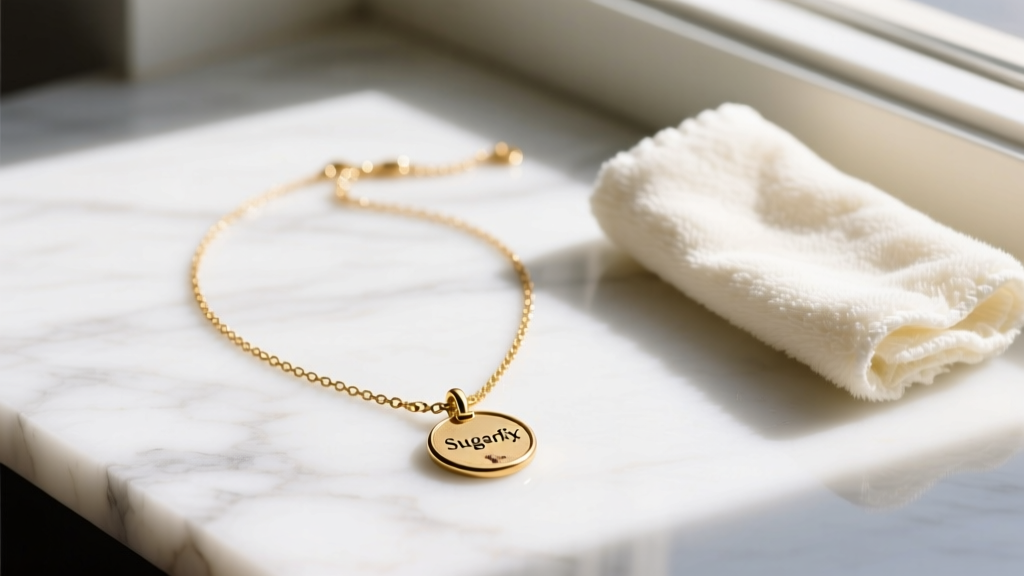
The Metallurgy of Fashion Jewelry: Why Your Sugarfix Necklace Tarnishes
Sugarfix by Danielle Bernstein has dominated the accessible luxury market for years, offering trendy silhouettes like chunky paperclip chains, pavé initial pendants, and layered lariat styles. However, as we navigate the 2026 archival and vintage jewelry resale boom, maintaining mid-tier fashion pieces requires a deep understanding of their metallurgy. Most core Sugarfix necklaces are crafted from a brass base alloy (a mixture of copper and zinc) that is electroplated with a thin layer of gold. Unlike solid 14k gold or heavy gold vermeil (which legally requires a minimum of 2.5 microns of gold over sterling silver), standard fashion jewelry plating often ranges between 0.1 and 0.5 microns.
When this microscopic gold layer wears away at high-friction areas—such as the clasp, the pendant bail, or the links that rest against your collarbone—the underlying copper is exposed to oxygen, sulfur, and the natural acids in your skin. This triggers an oxidation process that results in the dreaded 'green skin' effect and dark, patchy tarnish on the metal. Troubleshooting a Sugarfix necklace is not about replacing it; it is about applying targeted chemical and mechanical fixes to restore its original luster without stripping the remaining plating.
Problem 1: Reversing Brass Oxidation and Tarnish
When your gold-plated brass chain develops dark brown or black patches, abrasive polishing cloths are your worst enemy. Rubbing a tarnished plated chain with a standard jeweler's cloth will simply strip the remaining gold ions, leaving you with a bare, rapidly oxidizing brass chain. Instead, you must use an electrolytic ion-exchange bath to reverse the sulfur bonding without physical abrasion.
The Aluminum Foil Electrolytic Bath
This method uses a simple galvanic reaction to pull sulfur away from the copper alloy and transfer it to a sacrificial anode (the aluminum foil).
- Prepare the Vessel: Line a glass bowl with aluminum foil, ensuring the shiny side faces up. The aluminum will act as the anode in our chemical cell.
- Mix the Solution: Add 1 cup of boiling water, 1 tablespoon of baking soda (sodium bicarbonate), and 1 tablespoon of kosher salt. Stir gently until dissolved. The salt acts as an electrolyte to facilitate the ion transfer.
- Submerge the Chain: Place your tarnished Sugarfix chain into the bowl, ensuring it physically touches the aluminum foil. You will immediately see tiny bubbles forming as the sulfur bonds break.
- Time the Reaction: Leave the necklace in the bath for exactly 3 to 5 minutes. Leaving it longer can cause the brass base to pit or the gold plating to blister.
- Rinse and Dry: Remove the chain with wooden tongs (never metal, which will disrupt the charge), rinse thoroughly in distilled water, and pat completely dry with a microfiber cloth.
Critical Warning: Never submerge pendants featuring cubic zirconia (CZ) or adhesive-set stones in this bath. The heat and chemical reaction will dissolve the jeweler's epoxy holding the stones in place and destroy the silver-foil backing that gives CZ its brilliance.
Problem 2: Untangling Paperclip Chains Without Stretching

The elongated, rectangular links of the paperclip chain are a staple in Sugarfix collections, but their geometry makes them highly susceptible to complex knotting. When multiple links thread through one another, pulling the chain tightens the knot and permanently warps the delicate brass wire, causing the links to gap and catch on clothing.
The Talc and Needle Method
To solve this, you must eliminate the friction between the metal links. Do not use oil, as it will attract dust and degrade the gold plating over time. Instead, use 100% talc-free baby powder (cornstarch-based).
- Lay the tangled section flat on a dark, non-slip silicone mat so you can clearly see the gold links.
- Generously dust the knot with baby powder, using a soft makeup brush to work the powder deep into the center of the tangle.
- Take a 0.30mm stainless steel beading needle. Insert the needle into the exact center of the knot—the link that is holding the tension.
- Gently wiggle the needle to create micro-movements, allowing the cornstarch to coat the interior of the links. Work outward from the center link, never pulling the ends of the chain.
Problem 3: Restoring Cloudy Cubic Zirconia Pavé
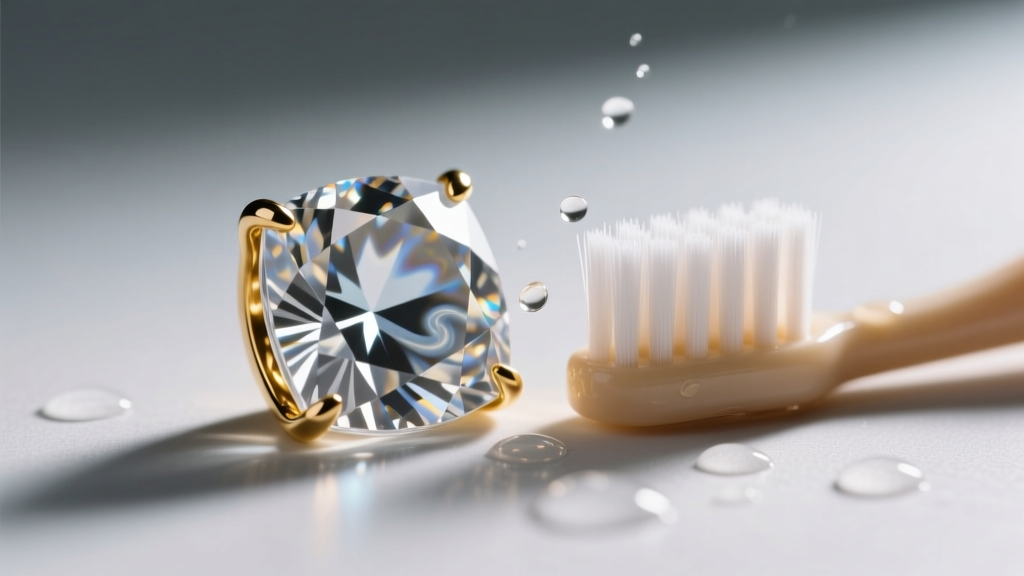
Sugarfix relies heavily on pavé-set cubic zirconia to mimic the look of high-end diamond tennis necklaces and initial pendants. Over time, these stones become cloudy and dull. According to the Gemological Institute of America (GIA), CZ has a high specific gravity and a strong affinity for grease. This means everyday lotions, sebum, and makeup bind directly to the surface of the stone and pack tightly underneath the girdle (the widest part of the stone where the prongs grip it), blocking light return and killing the stone's fire.
The Surfactant Cleaning Technique
Never use ultrasonic jewelry cleaners on Sugarfix pavé pieces. The standard 40 kHz frequency of an ultrasonic bath will shatter the CZ stones or shake them loose from their glued settings. Instead, use a mild surfactant to break down the lipid bonds.
- Mix three drops of original blue Dawn dish soap (a powerful, non-abrasive degreaser) into a bowl of lukewarm water.
- Soak the pendant for 10 minutes to soften the sebum buildup.
- Using an extra-soft baby toothbrush, gently brush the stones in a circular motion, paying special attention to the back of the setting where skin oils accumulate.
- Rinse under a gentle stream of lukewarm water and dry immediately with a lint-free optical cloth to prevent water spots.
Problem 4: Fixing Stiff or Stuck Lobster Clasps
The lobster clasp is the standard closure for most Sugarfix chains, but it is prone to seizing. The internal mechanism consists of a tiny steel spring and a metal trigger. When microscopic debris, dead skin cells, or dried lotion enter the trigger slot, the spring cannot fully retract, leaving the clasp stuck in the open or closed position. Many people mistakenly spray WD-40 into the clasp. WD-40 is a solvent, not a long-term lubricant; it will strip away any existing factory grease, attract heavy dust, and eventually cause the internal spring to rust and snap.
Proper Clasp Lubrication
To fix a stiff clasp, you need a synthetic horological oil. Using a micro-dropper or a toothpick, apply a microscopic amount of synthetic watch oil (such as Moebius 9010) directly into the seam of the trigger. Pump the trigger back and forth twenty times to work the oil into the spring housing. Wipe away any excess oil from the exterior of the gold plating with a cotton swab dipped in rubbing alcohol to prevent it from staining your clothing.
Preventative Maintenance Matrix
As noted in standard care guidelines by Blue Nile, preventing damage to plated fashion jewelry is always more effective than attempting to repair it. Use the matrix below to guide your daily wear and storage habits.
| Activity / Environment | Risk to Sugarfix Plating | Required Action |
|---|---|---|
| Applying Perfume / Hairspray | High (Alcohol dissolves plating binders) | Apply sprays 10 minutes before putting on the necklace. |
| Swimming (Chlorine / Salt) | Critical (Chlorine eats copper alloys instantly) | Remove necklace. Never wear in pools or the ocean. |
| Gym / Heavy Sweating | High (Lactic acid accelerates brass oxidation) | Wipe chain with a damp cloth immediately post-workout. |
| Long-Term Storage | Medium (Airborne sulfur causes slow tarnishing) | Store in an airtight ziplock bag with an anti-tarnish silica strip. |
Final Thoughts on Fashion Jewelry Longevity
A Sugarfix necklace is designed to be an accessible, trend-forward accessory, but that does not mean it cannot last for years if treated with horological-level care. By understanding the electrochemical realities of gold-plated brass, avoiding abrasive mechanical cleaning, and utilizing proper micro-lubrication for the hardware, you can keep your favorite pendants and chains looking pristine. Troubleshooting jewelry is ultimately about respecting the materials; when you treat plated brass with the same chemical caution as solid karat gold, your fashion pieces will continue to elevate your wardrobe season after season.


