The Ultimate Guide to Wearing a Large Silver Heart Necklace
Discover how to choose, style, and care for a large silver heart necklace. Learn about silver grades, chain pairings, and neckline matching.

The Resurgence of the Statement Heart
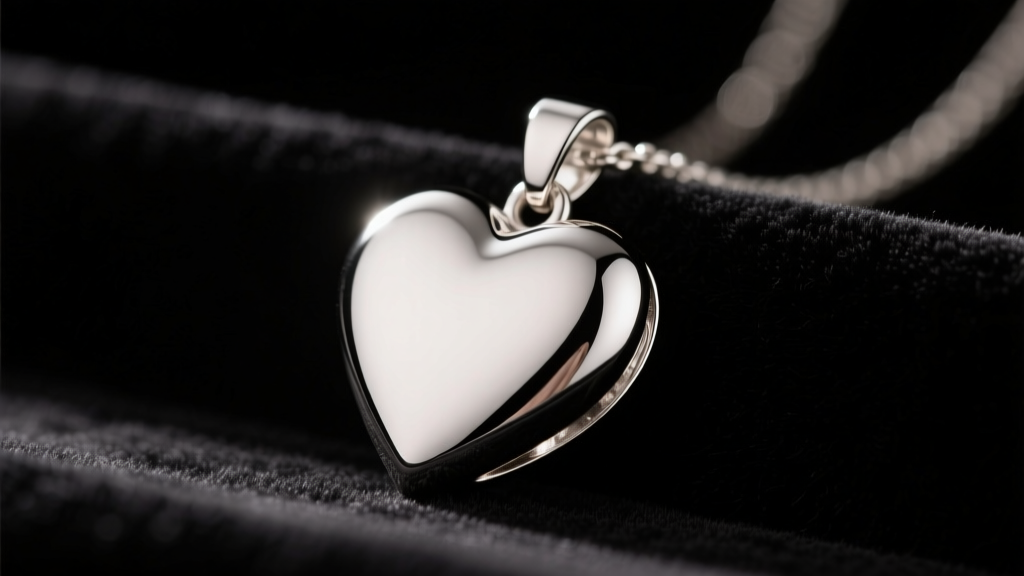
As we navigate the maximalist jewelry trends of 2026, the pendulum has officially swung away from the ultra-dainty, barely-there layering of the previous decade. Today, bold, sculptural pieces are taking center stage, and the large silver heart necklace is leading the charge. No longer relegated to nostalgic teenage lockets or overly sentimental Valentine's Day gifts, the oversized heart pendant has been reclaimed as a legitimate, high-fashion statement piece. However, transitioning from a delicate chain to a heavy, oversized pendant requires a fundamental understanding of jewelry mechanics, metal purity, and proportion. For beginners stepping into the world of statement silver, buying the first piece that catches your eye can lead to broken chains, bent bails, and severe tarnishing. This comprehensive explainer will break down exactly how to select, support, and style a large silver heart necklace so it lasts a lifetime.
Decoding Silver Purity: What Are You Actually Buying?
When shopping for a substantial piece of jewelry, the metal stamp is your most critical data point. Silver is inherently a soft, malleable precious metal. If a large heart pendant were cast in pure silver, its own weight would cause it to warp, scratch, and bend within weeks of daily wear. To counteract this, jewelers alloy silver with other metals—usually copper—to increase its tensile strength. Understanding these grades is non-negotiable when investing in heavy pendants.
| Silver Grade | Stamp | Purity | Best Use Case |
|---|---|---|---|
| Fine Silver | 999 | 99.9% Silver | Ear studs, bezels, or lightweight charms. Too soft for large pendants. |
| Sterling Silver | 925 | 92.5% Silver, 7.5% Copper | The absolute gold standard for large, heavy heart pendants and chains. |
| Britannia Silver | 950 | 95.0% Silver, 5.0% Copper | Rare in modern commercial jewelry; slightly softer than sterling but highly tarnish-resistant. |
| Silver Plated | None / EPNS | Base metal core | Avoid for heavy pendants; the plating will wear off quickly at the bail friction point. |
According to the Federal Trade Commission Jewelry Guides, a piece must contain at least 925 parts per thousand of pure silver to be legally marketed as 'Sterling' in the United States. Always inspect the back of the heart pendant or the inside of the bail for the '925' hallmark. If a vendor cannot verify this stamp, walk away.
Chain Mechanics: Supporting Heavy Pendants
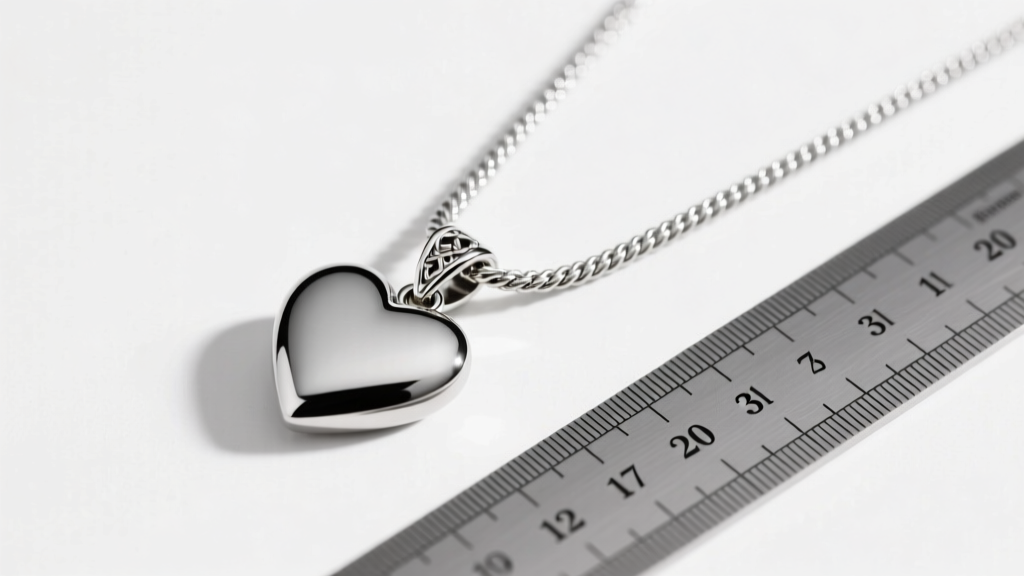
The most common beginner mistake when buying a large silver heart necklace is pairing a heavy, 25-gram pendant with a delicate, 1-millimeter cable chain. This is a structural failure waiting to happen. The bail (the loop at the top of the heart) acts as a friction point. Every time you move, the chain saws back and forth against the inside of the bail. A thin chain will snap under the dynamic load of a heavy pendant.
The Chain Width Formula
For a large heart pendant (typically defined as 35mm to 50mm in width, weighing between 15g and 35g), you need a chain with a minimum width of 2.5mm to 4.0mm. Here are the most structurally sound chain styles for heavy silver pendants:
- Rope Chains: The twisted, helical structure of a 3mm rope chain distributes weight evenly and offers excellent tensile strength. The texture also hides minor scratches.
- Box Chains: Composed of square, interlocking links, a 2.5mm or 3mm box chain provides a modern, geometric contrast to the curved silhouette of a heart. They are highly resistant to kinking.
- Wheat (Spiga) Chains: Featuring woven, oval links, wheat chains are incredibly durable and have a luxurious, vintage feel that pairs beautifully with ornate or hammered heart pendants.
Furthermore, pay attention to the clasp. Discard any chain that uses a tiny spring-ring clasp. You need a sturdy lobster clasp, ideally one that is at least 10mm in length, to bear the weight of the necklace without the internal mechanism failing.
Proportions and Sizing: Defining 'Large'
In the jewelry industry, the term 'large' is relative, but when discussing statement heart pendants, we are generally looking at specific dimensional thresholds. A standard, everyday heart pendant sits around 15mm to 20mm wide. A 'large' heart begins at the 35mm mark and can scale up to an oversized 60mm or more.
When selecting your size, consider your physical frame and the visual weight of the piece. A 50mm solid silver heart will command attention and sit heavily on the sternum. If you prefer a bold look but want to mitigate the physical weight, look for 'puffed' or hollow-backed heart designs. These offer the same massive visual footprint (often 45mm+) but weigh less than 10 grams, allowing you to use slightly lighter chains and reducing neck fatigue during all-day wear.
The Neckline Pairing Framework
A large silver heart necklace is a focal point, meaning it must interact harmoniously with your wardrobe. The wrong chain length against the wrong neckline will create visual clutter. Use this beginner-friendly framework to match your necklace drop to your outfit:
1. The Crew Neck (T-Shirts and Sweaters)
For standard crew necklines, opt for a 20-inch to 24-inch chain. This allows the large heart to rest comfortably on the upper chest, completely clearing the fabric collar. If the chain is too short (16 or 18 inches), the heart will clash with the hem of the shirt, creating a cramped, messy silhouette.
2. The V-Neck and Wrap Dresses
V-necks naturally draw the eye downward, creating a built-in frame for a pendant. Choose an 18-inch chain so the silver heart sits precisely in the negative space of the V, mirroring the geometric angle of the neckline without overlapping the fabric edges.
3. Turtlenecks and High Collars
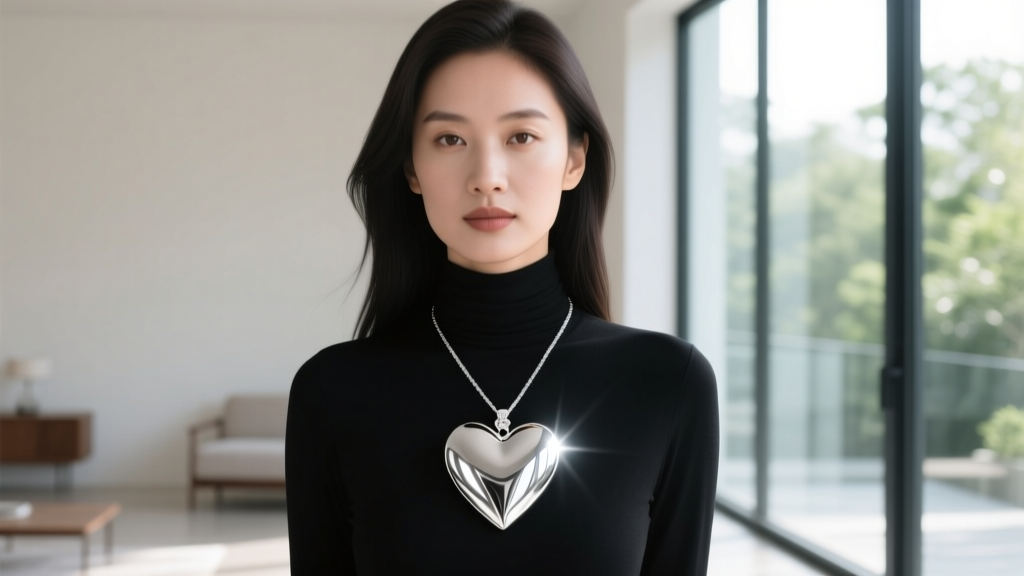
This is where the maximalist 2026 trends truly shine. Pairing a highly polished, oversized silver heart with a dark, tight-fitting turtleneck creates a striking, high-contrast look. Use a 24-inch to 28-inch opera-length chain so the pendant rests over the bust, acting as a bold counterweight to the heavy fabric of the sweater.
Stylist Rule of Thumb: The heavier and larger the pendant, the longer the chain should be when worn over thick winter fabrics. Let the metal breathe against the textile.
Tarnish Prevention and Daily Care
Because 925 sterling silver contains 7.5% copper, it is susceptible to oxidation and tarnishing when exposed to sulfur and moisture in the environment. A large silver heart necklace requires a dedicated care routine to maintain its brilliant, mirror-like finish.
First, invest in a high-quality jeweler's polishing cloth, such as a Sunshine cloth, which contains embedded micro-abrasives and anti-tarnish compounds. Never use tissue paper or paper towels, as the wood fibers will inflict microscopic scratches on the silver's surface. Second, store your necklace in an airtight ziplock bag with a 3M anti-tarnish strip. According to The Silver Institute, limiting exposure to ambient humidity and airborne sulfur is the most effective way to prevent the copper alloy from reacting and turning the metal black. Finally, always remove your necklace before swimming in chlorinated pools or using harsh household cleaning chemicals, which can permanently pit and dull the silver.
Conclusion
Investing in a large silver heart necklace is an exercise in balancing bold aesthetics with structural integrity. By insisting on 925 sterling silver, pairing your heavy pendant with a robust 3mm rope or box chain, and strategically matching your chain length to your neckline, you elevate a simple shape into a masterful style statement. Treat your silver with the metallurgical respect it demands, and this striking piece will remain a cornerstone of your jewelry collection for decades to come.


