Preserving Your Widow's Mite Necklace: Care & Cleaning
Learn expert care, cleaning, and storage tips for your widow's mite necklace. Protect ancient bronze coins from bronze disease and preserve patina.

The Unique Anatomy of a Widow's Mite Necklace
A widow's mite necklace is far more than a simple piece of jewelry; it is a wearable antiquity. The centerpiece of this pendant is an authentic ancient bronze or copper-alloy coin, typically a lepton or prutah minted during the Hasmonean dynasty (circa 103–76 BC). Because these coins are over 2,000 years old, they possess a highly porous, brittle crystalline structure that reacts aggressively to modern environmental factors. The coin is usually housed in a modern bezel—often crafted from 14k gold, 18k gold, or sterling silver—and suspended from a contemporary chain.
Caring for this hybrid artifact requires a dual approach. You must maintain the modern metallic setting while simultaneously acting as a museum conservator for the ancient bronze centerpiece. Standard jewelry cleaning methods, such as ultrasonic baths or commercial silver dips, will irreversibly destroy the coin's historical surface and numismatic value. According to guidelines established by the Getty Conservation Institute, ancient copper alloys require specialized, non-invasive stabilization techniques to survive the microclimates of modern wear.
The Enemy: Understanding Bronze Disease vs. Patina
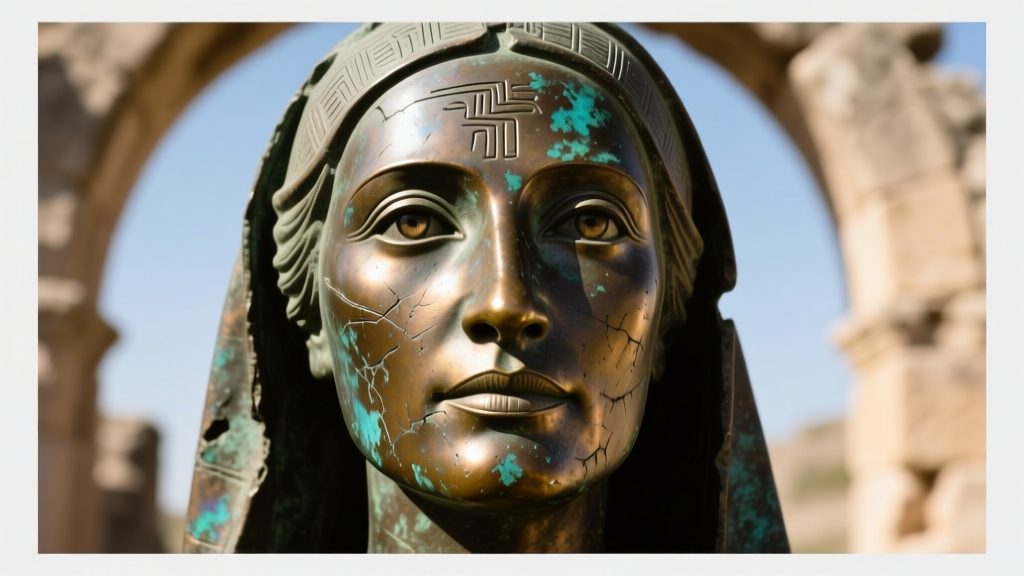
The most critical skill in maintaining your widow's mite necklace is learning to distinguish between a stable, protective patina and active bronze disease. A stable patina is a natural, protective oxidation layer that forms over centuries, usually presenting as a hard, dark brown, malachite green, or azurite blue crust. This layer seals the underlying metal and should never be removed.
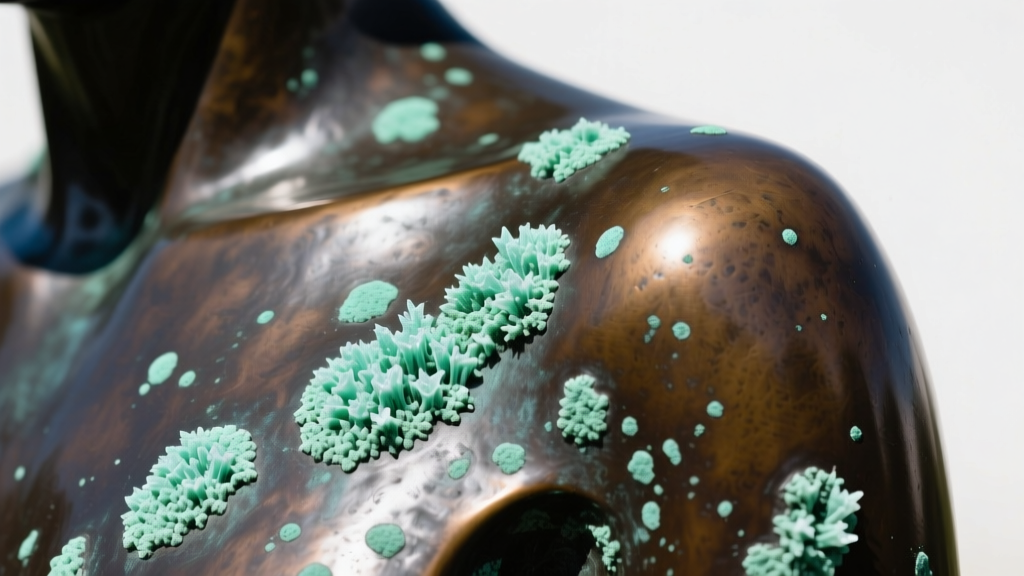
Bronze disease, however, is an active, destructive chemical reaction. It occurs when cuprous chloride (a salt formed from the coin's original burial environment) comes into contact with ambient moisture and oxygen. This triggers a cyclic reaction that produces hydrochloric acid, which literally eats the bronze from the inside out, turning it into a powdery green dust.
| Characteristic | Stable Patina (Safe) | Active Bronze Disease (Destructive) |
|---|---|---|
| Color | Dark green, brown, black, or deep blue | Bright, mint-green or pale powdery green |
| Texture | Hard, smooth, glassy, or firmly adhered crust | Soft, powdery, easily flakes off when touched |
| Reaction to Humidity | Unaffected by normal humidity fluctuations | Spreads rapidly in relative humidity above 45% |
| Required Action | Preserve and seal with micro-crystalline wax | Isolate, desiccate, and consult a professional conservator |
Step-by-Step Cleaning Guide for the Ancient Coin
If your widow's mite coin has accumulated surface dirt, skin oils, or environmental dust, you must clean it using conservation-grade methods. Never use tap water, as the dissolved chlorides and fluorides will trigger bronze disease. Never use baking soda, vinegar, or abrasive polishing cloths, as these will strip the 2,000-year-old patina and leave microscopic scratches that trap future moisture.
The Distilled Water and Soft Brush Method
- Preparation: Purchase distilled or deionized water. Ensure your workspace is clean and lay down a soft microfiber towel to cushion the coin in case it drops.
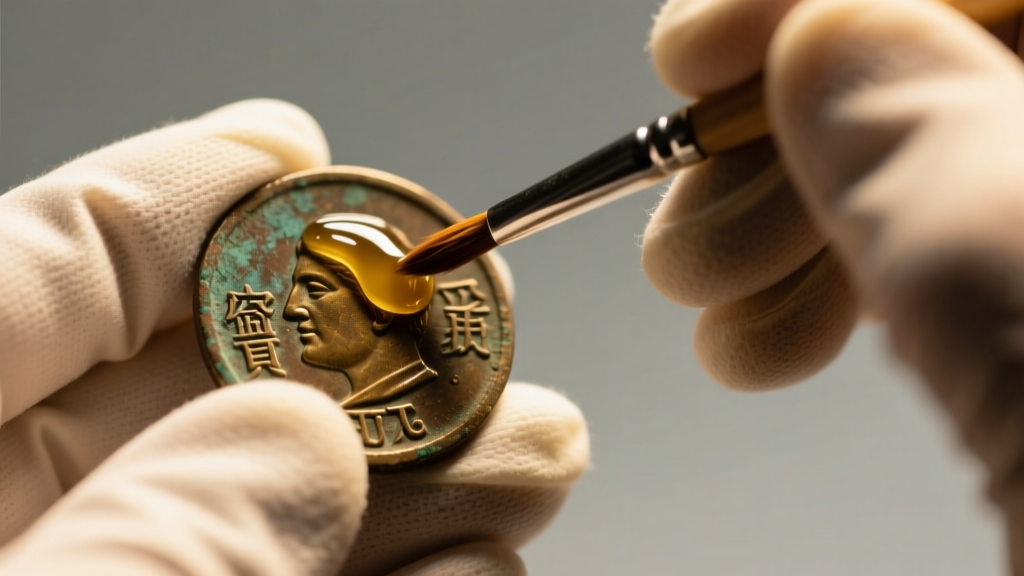
- Application: Dip a soft-bristled natural hair brush (such as a clean makeup brush or a specialized conservation brush) into the distilled water. Gently flick the brush to remove excess moisture; it should be damp, not dripping.
- Cleaning: Lightly sweep the brush over the coin's surface in a circular motion to lift particulate matter. Do not scrub. The goal is to remove loose debris, not to polish the metal.
- Drying: Immediately pat the coin dry with a lint-free cotton swab or a clean microfiber cloth. Follow this by using a hair dryer on the cool setting to ensure no microscopic moisture remains in the coin's porous crevices.
Sealing with Micro-Crystalline Wax
Once the coin is perfectly clean and dry, it must be sealed to block atmospheric moisture. The gold standard for this, as recommended by the American Institute for Conservation, is a micro-crystalline wax, most notably Renaissance Wax. This museum-grade wax is pH-neutral, non-yellowing, and highly resistant to moisture.
Apply a minuscule amount of Renaissance Wax to a soft cotton cloth. Gently dab it onto the surface of the bronze coin, ensuring you cover the edges and the highest relief points of the ancient strike. Allow the wax to dry for 15 to 20 minutes until it forms a dull haze, then gently buff it with a clean, dry microfiber cloth to a soft sheen. This wax barrier should be reapplied every 12 to 18 months, depending on how frequently the necklace is worn.
Treating the Modern Bezel and Chain
While the ancient coin requires delicate conservation, the modern 14k gold or sterling silver bezel and chain require standard precious metal maintenance. The challenge lies in cleaning the setting without exposing the ancient bronze to harsh chemicals.
If the coin is fully enclosed in a sealed bezel (with a glass or crystal cover), you can safely use a standard silver polishing cloth on the metal frame. However, if the coin is held in an open-back or claw prong setting, you must mask the coin. Use a piece of low-tack painter's tape or a cotton swab to shield the bronze while you carefully apply a specialized silver polish to the bezel using a Q-tip. Wipe away all residue immediately. Never submerge the entire necklace in a liquid silver dip, as these acidic thiourea-based solutions will permanently stain and chemically burn the ancient bronze.
Archival Storage and Humidity Control
How you store your widow's mite necklace when it is not being worn is just as important as how you clean it. The primary enemy in storage is Polyvinyl Chloride (PVC). Many cheap jewelry boxes and plastic baggies contain PVC, which off-gasses hydrochloric acid over time. This acid will rapidly induce bronze disease on your ancient coin.
Conservator's Rule of Thumb: Always store ancient copper-alloy artifacts in an environment where the Relative Humidity (RH) is strictly maintained below 40%. Above 45% RH, the chemical reaction that causes bronze disease accelerates exponentially.
To properly store your necklace, place it in an archival-quality, acid-free tissue paper wrap, or seal it in a Mylar (polyester) ziplock bag. Toss a small, jewelry-safe silica gel desiccant packet into the storage bag or jewelry box drawer to actively pull ambient moisture from the air. Replace the silica gel packets every three months to ensure they remain active.
Wearing Precautions: Sweat, Lotions, and Perfumes
Human sweat is highly corrosive to ancient bronze due to its high salinity and lactic acid content. If you wear your widow's mite necklace during intense physical activity, in high-humidity summer weather, or while swimming in chlorinated or salt water, the moisture will penetrate the wax seal and initiate oxidation. Always remove the necklace before exercising or swimming.
Furthermore, the "last on, first off" rule applies strictly to this piece. Apply your perfumes, hairsprays, and body lotions before putting on the necklace. The alcohols and synthetic oils found in modern cosmetics can dissolve the protective micro-crystalline wax layer, leaving the porous bronze exposed to the elements. By treating your widow's mite necklace with the respect due to a museum artifact, you ensure that this tangible piece of ancient history remains intact for generations to come.


