18k Gold Heart Necklace Buying Guide: What to Look For
Discover how to choose the perfect 18k gold heart necklace. Learn about karat purity, chain styles, clasp types, and pricing in our expert buying guide.

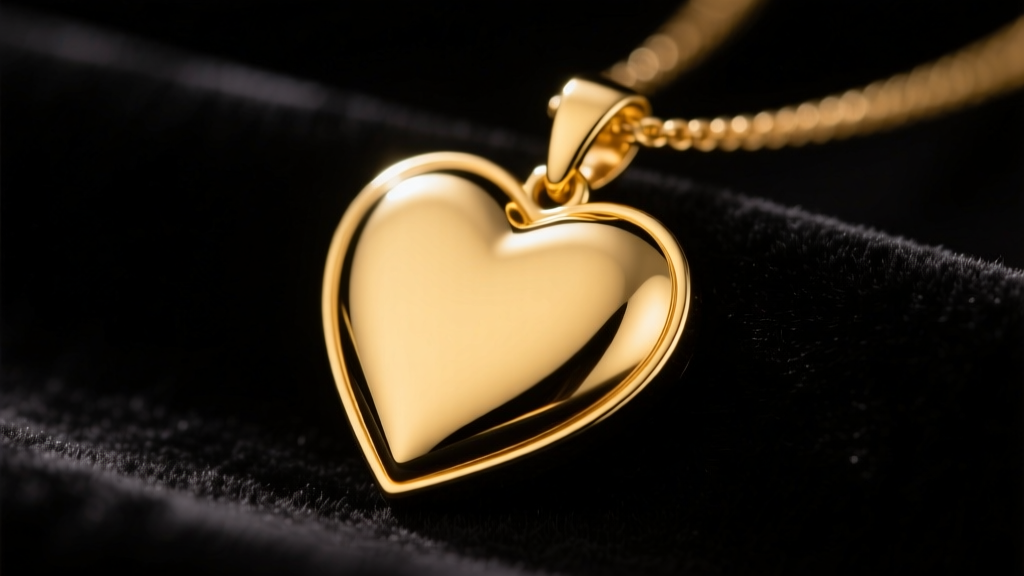
The Metallurgy of Romance: Why Choose 18k Gold?
When investing in a timeless piece like an 18k gold heart necklace, understanding the metallurgy is your first line of defense against overpaying or purchasing a subpar product. Pure 24-karat gold is exceptionally soft, scoring just 25 on the Vickers hardness scale, making it entirely unsuitable for daily-wear jewelry. To create a durable alloy, pure gold is mixed with other metals. An 18-karat gold alloy consists of exactly 75% pure gold and 25% alloy metals, offering the perfect equilibrium between the rich, buttery luster of high-purity gold and the structural integrity required for fine jewelry.
According to the Gemological Institute of America (GIA), the specific alloy metals used dictate not only the durability but also the final color of the piece. For yellow gold, the 25% alloy is typically an even split of silver and copper. For rose gold, the copper content is increased to around 20% to achieve that romantic pinkish hue, while white gold utilizes palladium or nickel, often requiring a rhodium plating to mask the natural yellowish undertone of the gold base. When shopping, always verify the specific alloy composition if you have metal sensitivities, particularly regarding nickel in white gold.
Anatomy of a Heart Pendant: Cast vs. Die-Struck
The manufacturing method of the heart pendant drastically affects its longevity, weight, and price point. There are two primary methods used in modern jewelry fabrication: die-striking and casting.
- Die-Struck (Hollow): These pendants are stamped from thin sheets of 18k gold. They are lightweight, affordable, and have a large visual footprint. However, they are essentially hollow. If dropped on a hard surface or subjected to pressure, the thin gold walls will dent or crush, and they are nearly impossible to repair perfectly.
- Cast (Solid): Created using the lost-wax casting method, solid heart pendants are poured with molten 18k gold. They are significantly heavier, more expensive, and highly durable. A solid cast pendant will survive decades of daily wear and can be easily polished or repaired by a jeweler.
The geometry of a heart shape presents unique structural challenges. The top cleft and the bottom point are natural stress concentrators. In poorly manufactured hollow pendants, these areas are prone to cracking. When inspecting a solid cast pendant, ensure the cleft is smoothly finished without deep, sharp undercuts that could trap dirt or weaken the structural integrity of the mold.
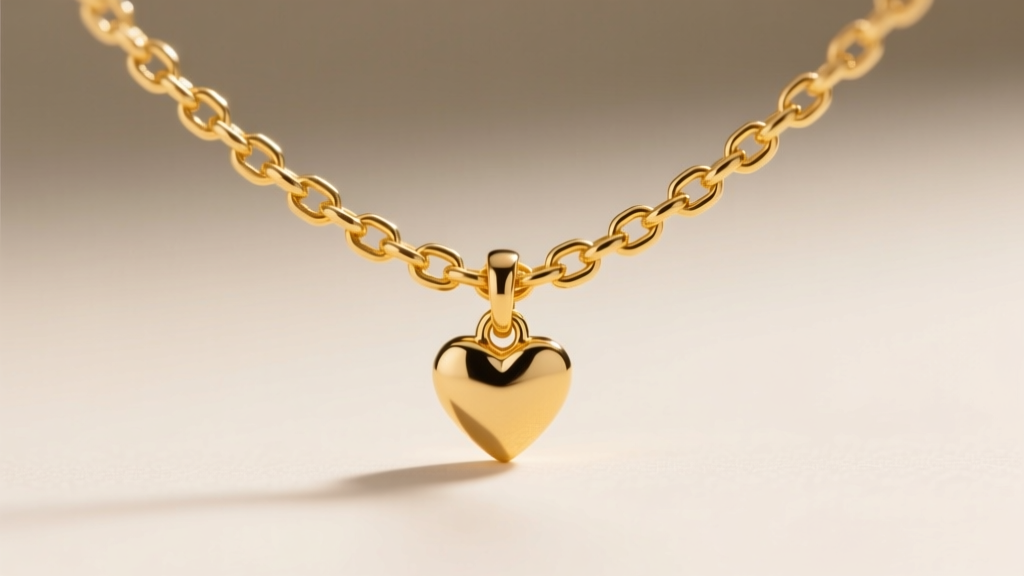
Chain Physics: Matching Tensile Strength to Pendant Weight
A common mistake buyers make is pairing a heavy, solid 18k gold heart pendant with a delicate, lightweight chain. Because 18k gold is softer and more malleable than 14k gold, it has a lower tensile strength. A heavy pendant will slowly stretch the links of a thin chain over time, eventually leading to a catastrophic break and the loss of your pendant.
As a general rule of thumb in jewelry mechanics, the weight of the pendant should never exceed three times the weight of the chain per inch. Below is a structural guide for pairing chains with 18k gold heart pendants based on thickness and link geometry.
| Chain Style | Thickness (mm) | Max Pendant Weight | Durability Rating |
|---|---|---|---|
| Cable | 1.0 - 1.5 | Up to 4g | Moderate |
| Box | 1.2 - 2.0 | Up to 8g | High |
| Rope | 2.0 - 3.0 | Up to 15g | Very High |
| Figaro | 2.5 - 4.0 | 15g+ | Exceptional |
For a standard 5-gram solid heart pendant, a 1.5mm box chain or a 2.0mm rope chain provides the optimal balance of aesthetic delicacy and mechanical security. Always ensure the chain features a sturdy lobster clasp rather than a spring-ring clasp, as the internal spring mechanism in 18k gold spring rings is prone to rapid failure due to the metal's softness.
Decoding Hallmarks and Authenticity
Authentication is critical when purchasing high-karat gold. The Federal Trade Commission (FTC) Jewelry Guides mandate strict accuracy in precious metal marking. In the United States and many international markets, an 18k gold piece must be stamped with a hallmark indicating its purity.
Expert Tip: Look for the '750' stamp. This indicates 750 parts per thousand of pure gold, which is the exact decimal equivalent of 18/24 karats. You may also see '18k' or '18kt'. If a piece lacks a hallmark, or if the stamp looks blurred, shallow, or misaligned, walk away. Counterfeiters often use shallow laser etching that lacks the crisp depth of a traditional metal punch stamp.
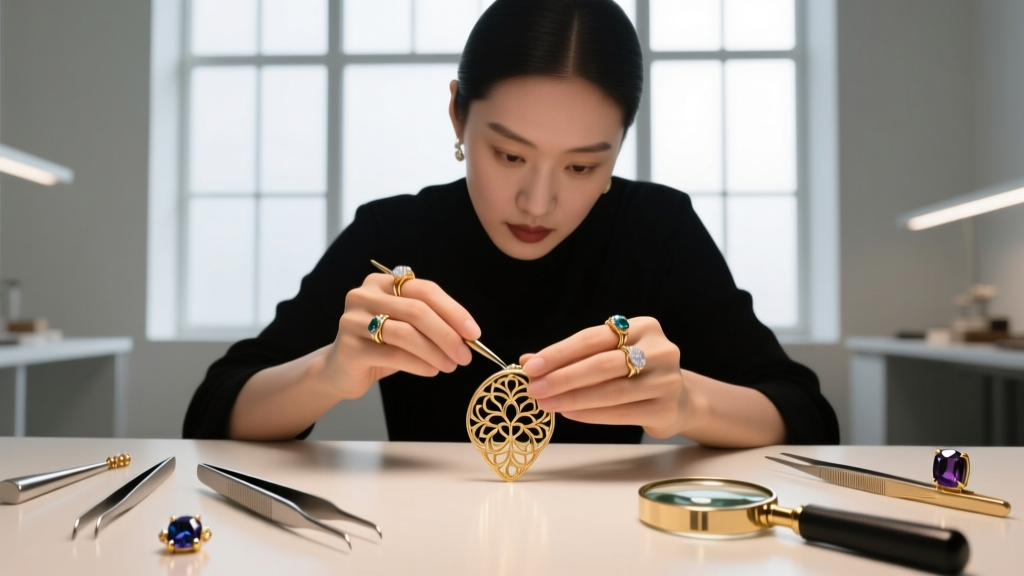
For absolute certainty, reputable jewelers will perform an X-ray Fluorescence (XRF) test or a traditional acid test on an inconspicuous part of the chain or pendant bail to verify the 75% gold content. Never rely solely on a magnet test; while gold is non-magnetic, so are copper and silver, meaning a counterfeit alloy could easily pass a basic magnet check.
The Pricing Matrix: Calculating True Value
Understanding how to price an 18k gold heart necklace prevents you from falling victim to inflated retail markups. The price of any solid gold jewelry piece is built on a transparent formula:
Intrinsic Melt Value: (Total Weight in Grams × 0.75) × Current Spot Price per Gram.
Total Retail Price: Melt Value + Fabrication/Labor Cost + Brand Markup.
For example, if a solid 18k gold heart necklace weighs 10 grams and the current spot price of gold is $65 per gram, the raw gold value is exactly $487.50. A fair retail price for a high-quality, unbranded artisan piece would range from $750 to $950 (a 1.5x to 2x markup to cover casting, polishing, and overhead). However, luxury designer brands often apply a 5x to 10x markup, pushing the price well past $2,500. Decide whether you are paying for the raw material and craftsmanship, or the brand name on the box.
Long-Term Care and Maintenance
Because 18k gold is softer than lower-karat alternatives, it is more susceptible to micro-scratches and surface marring. To maintain the mirror-like finish of your heart pendant, store it in a soft microfiber pouch separate from harder gemstones like diamonds or sapphires, which can easily gouge the gold surface. Avoid ultrasonic cleaners if your heart pendant features any pave diamonds or tension-set stones, as the high-frequency vibrations can loosen the delicate prongs. Instead, clean your necklace weekly using a few drops of mild dish soap, warm water, and an extra-soft baby toothbrush to gently remove sebum and lotion buildup from the intricate curves of the heart design.


