18k Gold Necklace Guide: Karat Comparison & Durability
Discover if an 18k gold necklace is right for everyday wear. We compare 14k, 18k, and 22k gold alloys, durability, pricing, and tarnish resistance.

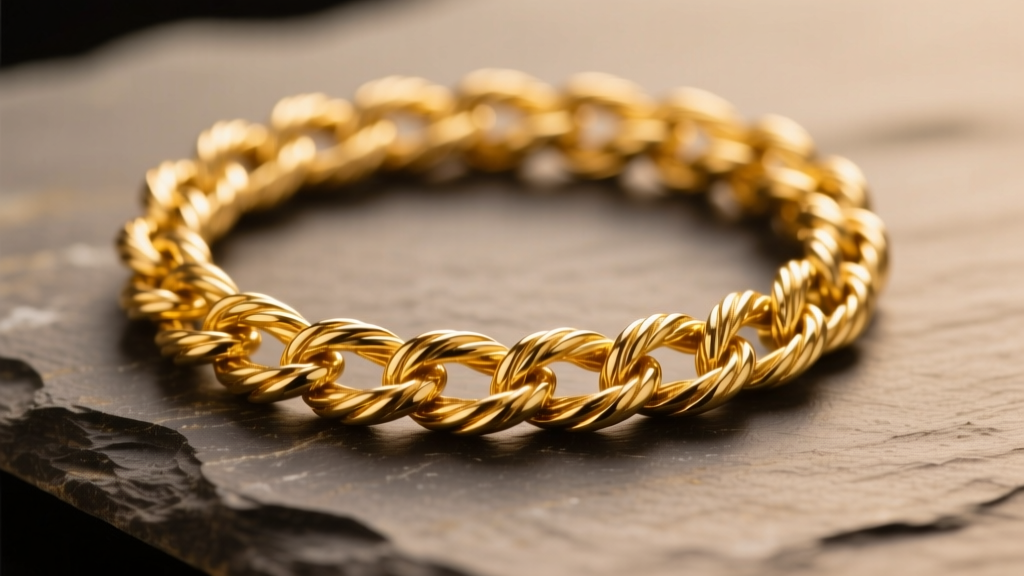
When investing in fine jewelry, the purity of the metal dictates not only its color and value but its structural integrity over decades of wear. An 18k gold necklace occupies a highly specific niche in the jewelry market, balancing the rich, saturated hue of pure gold with the mechanical strength required for everyday use. However, understanding whether 18k is the optimal choice for your specific lifestyle requires a deep dive into metallurgy, alloy compositions, and structural stress points.
In this comprehensive material guide, we deconstruct the properties of 18k gold, compare it against 14k and 22k alternatives, and provide actionable frameworks for selecting the right chain style and clasp mechanism to prevent premature failure.
The Metallurgy of 18k Gold: Understanding the 75/25 Split
Pure gold (24k) possesses a Vickers Hardness (HV) of merely 25 to 30, rendering it entirely unsuitable for structural jewelry components. It will bend, stretch, and warp under minimal tensile stress. To create a functional 18k gold necklace, metallurgists alloy pure gold with other metals. The '18k' designation means the piece is 18 parts pure gold and 6 parts alloy metals, equating to exactly 75% pure gold and 25% alloy metals.
According to the Federal Trade Commission Jewelry Guides, this 75% threshold is the legal minimum to be stamped and sold as 18k gold in the United States. The specific 25% alloy blend is what dictates the necklace's tensile strength, tarnish resistance, and final color. By introducing metals like copper, silver, zinc, and palladium, jewelers can increase the Vickers Hardness of the metal to approximately 120–135 HV, making it durable enough to support pendants and withstand daily friction.
Karat Comparison: 14k vs. 18k vs. 22k
Choosing the right karat for a necklace depends heavily on the intended wear environment. Below is a structural and metallurgical comparison of the most common gold karats used in chain necklaces.
| Property | 14k Gold (58.3% Au) | 18k Gold (75% Au) | 22k Gold (91.6% Au) |
|---|---|---|---|
| Vickers Hardness (HV) | 140 - 160 HV | 120 - 135 HV | 60 - 80 HV |
| Tarnish Susceptibility | Moderate (High alloy content) | Low (Noble metal dominance) | Very Low (Almost pure) |
| Color Saturation | Pale, slightly muted yellow | Rich, warm, deep yellow | Intense, bright orange-yellow |
| Tensile Strength | Excellent for heavy pendants | Good for standard pendants | Poor; prone to link stretching |
| Best Use Case | Active lifestyles, heavy chains | Everyday luxury, fine pendants | Investment pieces, occasional wear |
While 14k gold offers superior scratch resistance due to its higher alloy content, it lacks the deep color saturation and hypoallergenic properties of 18k gold. Conversely, 22k gold is far too soft for delicate chain links, which will easily pull apart under the weight of a pendant.
How Alloy Metals Dictate Color and Wearability
The 25% alloy matrix in an 18k gold necklace is not arbitrary. Jewelers manipulate these secondary metals to achieve specific colors, each with distinct wear characteristics.
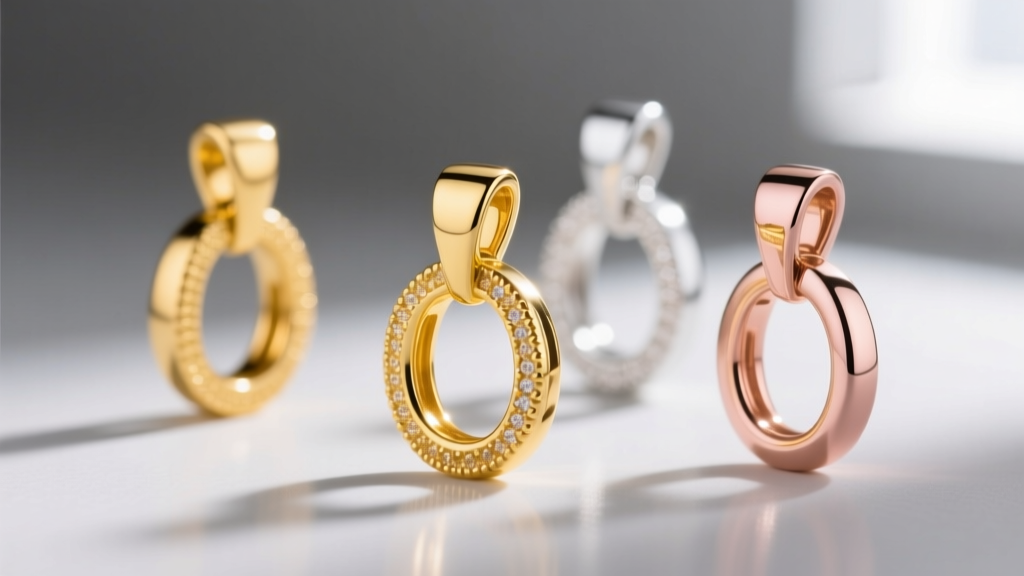
18k Yellow Gold
The classic 18k yellow gold alloy typically consists of 75% gold, 12.5% copper, and 12.5% fine silver. The copper adds warmth and structural rigidity, while the silver tempers the redness of the copper and enhances the metal's ductility. This balanced alloy is highly resistant to stress corrosion but can develop a subtle patina over decades of wear.
18k Rose Gold
To achieve the highly sought-after pinkish hue, metallurgists drastically increase the copper content. A standard 18k rose gold alloy contains 75% gold, 22.25% copper, and just 2.75% silver. Because copper is a highly reactive metal, 18k rose gold necklaces are slightly more prone to surface oxidation and tarnishing if exposed to harsh chemicals, requiring more diligent maintenance than their yellow counterparts.
The White Gold Rhodium Dilemma
18k white gold is created by alloying gold with 'white' metals like palladium, nickel, or silver. However, 75% pure gold inherently retains a yellowish tint, meaning 18k white gold naturally looks like a pale, warm gray. To achieve a brilliant white finish, the necklace is electroplated with a microscopic layer of rhodium. As the Gemological Institute of America (GIA) notes, rhodium plating is not permanent. On a necklace, friction from clothing and skin oils will wear away the rhodium on the back of the chain and near the clasp within 12 to 24 months, necessitating professional re-plating to maintain the stark white appearance.
Structural Integrity: Chain Styles and Clasp Mechanics
Because 18k gold is inherently softer than 14k gold or platinum, the physical architecture of the chain is just as critical as the metal purity. A poorly chosen chain style in 18k gold will suffer from link elongation and eventual snapping.
- Cable and Curb Chains: These rely on single, round or oval links. In 18k gold, a cable chain under 1.5mm in thickness is highly susceptible to stretching if subjected to sudden yanks. They are best reserved for lightweight pendants (under 3 grams).
- Box and Wheat Chains: These are structurally superior for 18k gold. A box chain features square links interlocked at 90-degree angles, distributing tensile stress across multiple planes. A 1.2mm 18k box chain can safely support a much heavier pendant than a 1.5mm cable chain due to this geometric load distribution.
- Rope Chains: While visually stunning, the twisted links of a rope chain create multiple micro-stress points. If an 18k rope chain kinks, it is nearly impossible to repair without visible scarring or structural weakening.
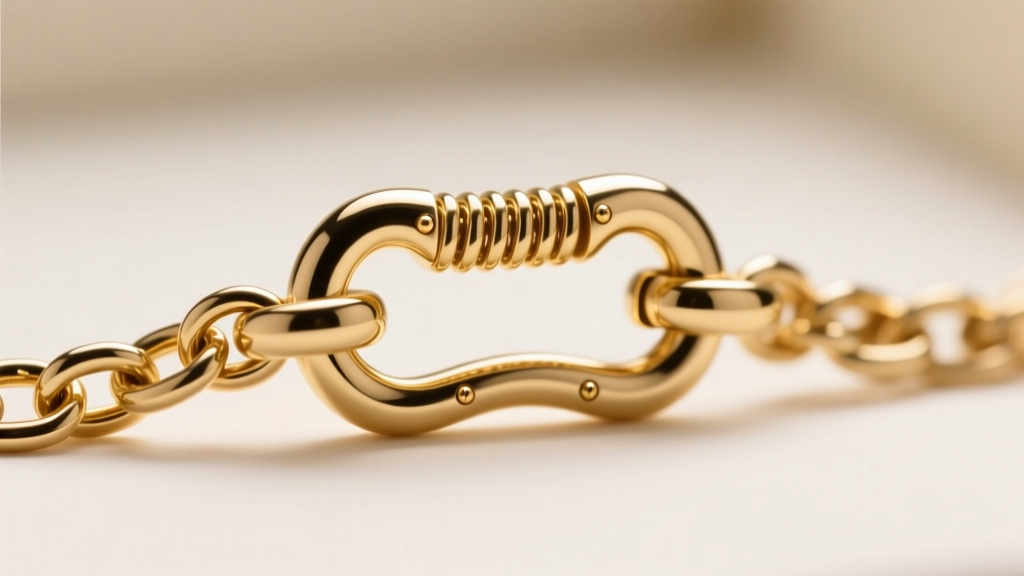
Clasp Failure Points
The clasp is the most common point of failure on any necklace. For 18k gold necklaces, avoid spring-ring clasps on chains thicker than 1.0mm; the internal steel spring can easily overpower the softer 18k gold housing, causing the jump ring to warp open. Instead, opt for a solid 18k lobster clasp or a fold-over safety clasp, which utilizes a mechanical hinge and friction fit rather than a high-tension spring.
Care Protocols: Preventing Stress Corrosion Cracking
The most catastrophic failure mode for an 18k gold necklace is stress corrosion cracking (SCC). This phenomenon occurs when three specific variables intersect: a reactive alloy metal (like copper or silver), a corrosive chemical environment, and physical tension.
Chlorine is the primary enemy of 18k gold. When an 18k gold chain is exposed to chlorinated pool water or harsh household bleach, the chlorine chemically attacks the copper and silver alloys within the 25% matrix. If the chain is simultaneously under tension (such as being worn tightly around the neck or catching on a heavy pendant), microscopic fissures form in the metal. Over time, these fissures propagate, leading to a sudden, clean snap of the chain with no prior visible stretching.
Actionable Maintenance Rules:
- Never wear an 18k gold necklace in swimming pools, hot tubs, or while cleaning with bleach-based products.
- Clean the necklace using only warm water, a few drops of mild, phosphate-free dish soap, and an ultra-soft baby toothbrush.
- Store the necklace laid flat or hung vertically to prevent the links from kinking, which introduces permanent structural tension to the metal.
By respecting the metallurgical boundaries of 18k gold, you ensure that your necklace remains a durable, radiant heirloom rather than a fragile liability.


