The Best Way to Pack Necklaces Without Tangles or Damage
Discover the best way to pack necklaces for travel. Learn expert troubleshooting tips to prevent tangles, chain breakage, and gemstone scratches.

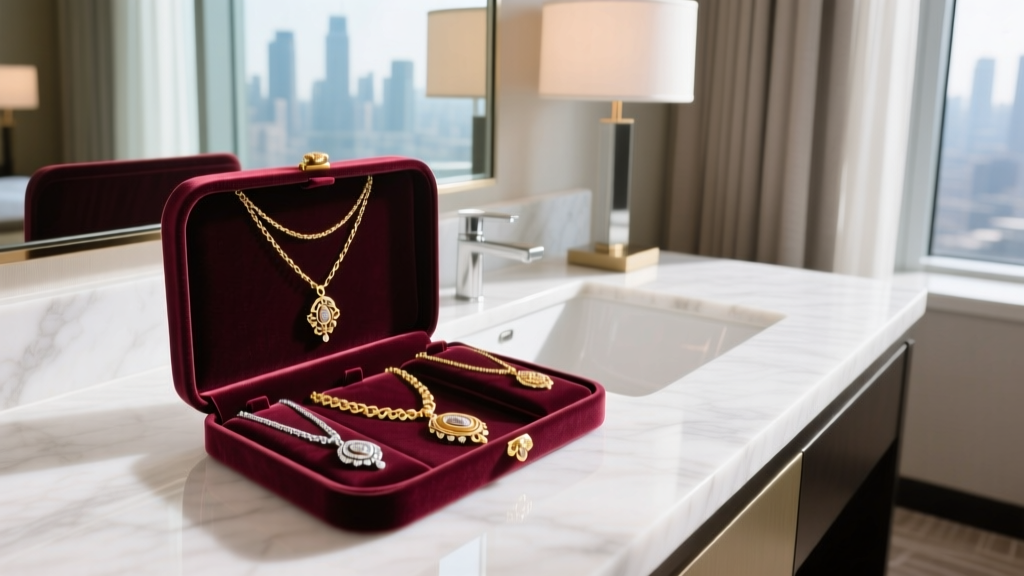
The Frustration of the Travel Jewelry Rat's Nest
There are few things more infuriating to a jewelry enthusiast than arriving at your destination, opening your luggage, and finding your favorite 18-inch gold chain transformed into an impenetrable, micro-knotted ball of metal. When searching for the best way to pack necklaces, most travelers rely on inadequate methods like tossing them into a shared ziplock bag or a generic velvet pouch. This approach doesn't just guarantee tangles; it risks severe structural damage to delicate weaves, clasp failure, and irreversible gemstone scratching.
To truly master travel jewelry packing, we must move beyond generic advice and apply material science, basic physics, and targeted troubleshooting protocols to how we transport our most prized neckwear.
The Physics of Spontaneous Knotting (Why Your Pouch Fails)
Why do necklaces tangle in the first place? It isn't just bad luck; it is a documented physical phenomenon. According to a comprehensive study on spontaneous knotting published in the Proceedings of the National Academy of Sciences (PNAS), strings and chains between 18 and 24 inches in length are mathematically predisposed to forming complex knots when subjected to 3D agitation (like the tumbling environment of a rolling suitcase).
The study found that if a chain is agitated for even a few seconds, the ends weave through the loops, creating a knot in over 95% of scenarios. The only way to prevent this spontaneous knotting is to restrict the chain's degrees of freedom. A loose pouch allows full 3D movement. To stop the tangling, you must immobilize the chain or drastically alter its effective length and stiffness.
The Straw & Clasp Method: Securing Delicate Chains
For lightweight chains (under 2mm in width) such as cable, box, serpentine, and rolo weaves, the plastic straw method remains the undisputed champion of travel hacks. It works by introducing rigid structural integrity to a highly flexible material.
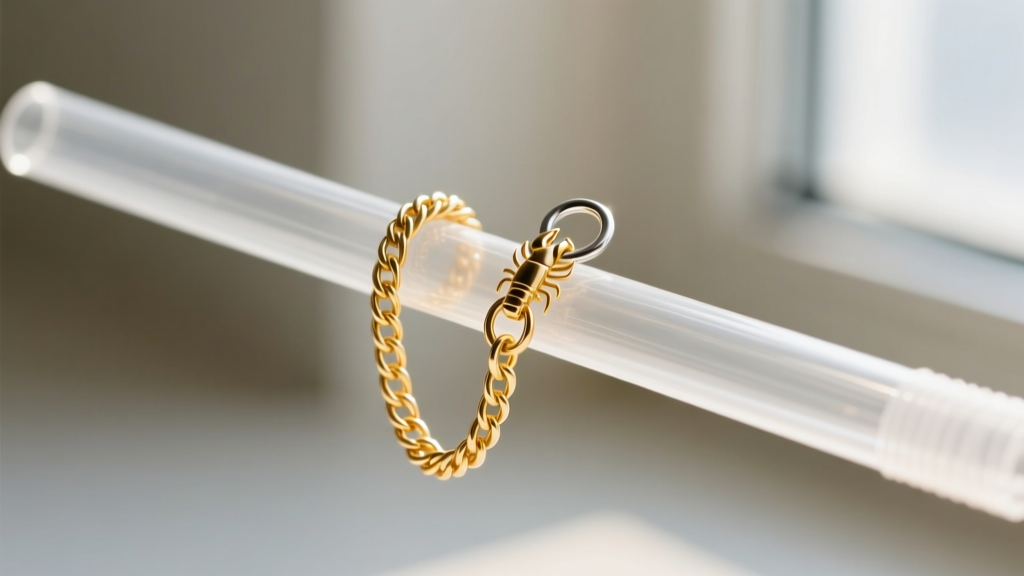
Step-by-Step Execution:
- Thread the Chain: Unclasp the necklace and carefully thread the loose end (the jump ring side) through a standard plastic drinking straw. For choker lengths (14-16 inches), you may need to cut the straw to size.
- Leave the Clasp Exposed: Stop threading when the clasp reaches the top of the straw. Do not force the bulky clasp through the plastic.
- Secure the Ends: Clasp the lobster claw or spring ring directly to the jump ring protruding from the opposite end of the straw. This creates a closed, rigid loop that physically cannot fold back on itself or tangle.
Expert Warning: Never use this method for herringbone, snake, or omega chains. These weaves are constructed of interlocking flat plates or tightly wound metal ribbons. Bending them into the confined curve of a straw will cause permanent, structural kinking.
Material-Specific Packing Matrix
The best way to pack necklaces also depends entirely on the metallurgical and gemological properties of the piece. What protects sterling silver will actively destroy a strand of natural pearls. Use the following matrix to determine your packing strategy:
| Material / Chain Type | Primary Travel Vulnerability | Required Packing Protocol |
|---|---|---|
| Sterling Silver (925) | Oxidation and sulfur-induced tarnish from humid hotel environments. | Airtight ziplock bags with 3M anti-tarnish strips. Never pack with rubber bands. |
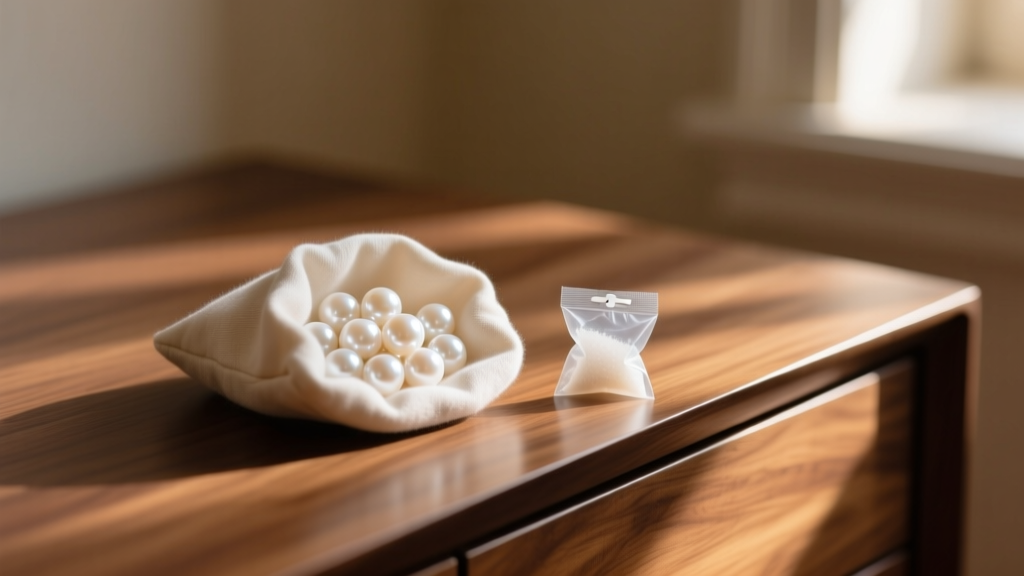
| Natural & Cultured Pearls | Dehydration, chemical degradation from airtight plastics, and surface scratching. | Soft, unbleached cotton or silk pouches. Must be allowed to breathe. Keep away from perfumes. |
| Herringbone / Snake Chains | Irreversible kinking and 'bald spots' where metal scales separate. | Flat-lay only. Use a rigid, hard-shell jewelry case with dedicated flat channels. Never roll. |
| Opals & Emeralds | Impact fracturing and thermal shock from cargo hold temperature shifts. | Individual padded slots in a hard-shell roll. Wrap in acid-free tissue paper first. |
| Heavy Pendants (20g+) | Chain stretch and bail wear from pendulum swinging during transit. | Detach pendant from chain if possible. Pack separately in a microfiber-lined compartment. |
For comprehensive care guidelines regarding organic gems, always refer to the Gemological Institute of America (GIA) pearl care protocols, which explicitly warn against storing pearls in airtight plastic environments, as the lack of humidity can cause the nacre to crack and peel over time.
Troubleshooting Common Packing Disasters
Even with meticulous packing, travel introduces variables that can damage your jewelry. Here is how to troubleshoot and repair the most common transit-related necklace disasters.
Disaster 1: The Kinked Herringbone Chain
If your flat herringbone chain suffered a kink in your luggage, do not attempt to pull it taut to 'straighten' it out. This will snap the delicate woven links. Instead, place the necklace flat on a clean glass surface (like a mirror or glass table). Take a smooth, rigid plastic card (like a credit card) and apply gentle, firm pressure directly over the kink. Stroke outward from the center of the bend in one continuous motion. Repeat this process from multiple angles until the metal scales lay flush against one another again.
Disaster 2: Clasp Snagging and Thread Pulls
Lobster claws and spring ring clasps have tiny levers that easily catch on the silk thread of pearl necklaces or the fibers of your clothing. To troubleshoot this before packing, wrap the clasp entirely in a small square of medical tape or masking tape. This blunts the sharp edges and prevents the lever from accidentally depressing and snagging on adjacent items in your jewelry roll.
Disaster 3: The 'Green Skin' Pre-Tarnish
If your gold-plated or brass necklaces are reacting to the humidity of your destination, causing skin discoloration, the plating has likely worn microscopically thin due to friction during transit. Always pack plated jewelry in individual, soft flannel bags to prevent micro-abrasions against harder metals like stainless steel or solid gold, which will strip the plating away.
Commercial Rolls vs. The Press'n Seal Hack
While high-end commercial jewelry rolls (like those from Wolf or Stackers) offer excellent structural protection, they often lack the customizability needed for oversized, asymmetrical statement pendants. This is where the ultimate DIY hack comes in: Glad Press'n Seal.
To create a custom-molded protective sheath for a complex pendant necklace, lay the piece flat on a sheet of Press'n Seal wrap. Fold the top half of the plastic over the necklace, pressing out all air bubbles so the plastic adheres to itself around the chain and pendant. Cut around the perimeter with scissors, leaving a half-inch border. The necklace is now suspended in a rigid, custom-fitted plastic window that prevents the pendant from swinging, scratching, or tangling, regardless of how roughly your luggage is handled.
Final Pre-Departure Checklist
Finding the best way to pack necklaces isn't about buying the most expensive travel case; it's about understanding the physics of your chains and the chemistry of your metals. Before you zip your bag, ensure you have:
- Threaded all flexible chains (under 2mm) through straws or secured them with the Press'n Seal method.
- Separated sterling silver with anti-tarnish strips.
- Removed pearls and opals from airtight plastics.
- Laid all herringbone and omega chains completely flat in a hard-shell case.
By applying these targeted troubleshooting techniques, you will spend less time picking apart microscopic knots in your hotel room and more time enjoying your jewelry exactly as it was meant to be worn.


