Butterfly Locket Necklace: Anatomy, Metals & Hinge Tech
Explore the technical anatomy of a butterfly locket necklace, from 14k gold metallurgy and hinge mechanisms to precision photo bezel insertion.

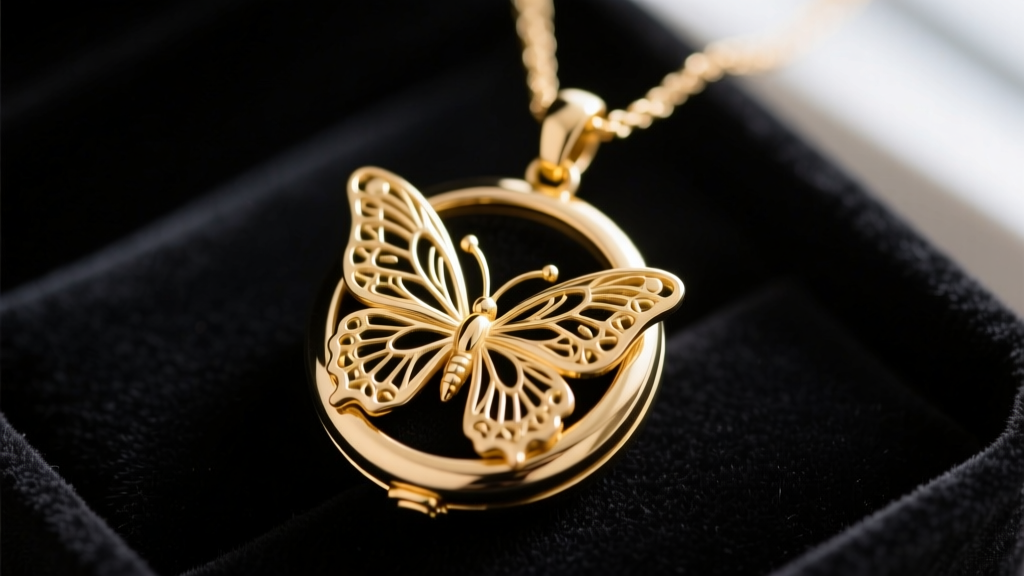
The Metallurgy of High-End Butterfly Lockets
When evaluating a butterfly locket necklace, the untrained eye focuses on the exterior motif, but a true collector examines the metallurgical foundation. The structural integrity of a locket—particularly one meant for daily wear—relies heavily on the precise alloy composition of its metals. While 18k gold (75% pure gold) offers a richer color and higher intrinsic value, its Vickers Hardness (HV) typically hovers around 110-120 HV. This makes it too soft for the high-friction areas of a locket, such as the hinge and the clasp catch.
For heirloom-quality butterfly lockets, master jewelers predominantly utilize 14k gold (58.5% pure gold, alloyed with silver, copper, and zinc). This specific alloy yields a Vickers Hardness of approximately 140-160 HV, providing the necessary tensile strength to prevent the hinge barrel from warping over decades of opening and closing. According to the Gemological Institute of America (GIA), the copper content in 14k yellow gold also enhances the metal's durability, though it requires careful polishing to maintain the luster without degrading the intricate butterfly wing engravings.
For sterling silver variants (92.5% silver, 7.5% copper), the primary technical challenge is sulfide tarnishing. High-end silver lockets are often flash-plated with a microscopic layer of rhodium (0.05 to 0.10 microns thick) to create an inert barrier against atmospheric sulfur, preserving the bright white finish of the butterfly's wings without compromising the metal's natural antimicrobial properties.
Hinge and Clasp Engineering: The Hidden Mechanics
The hinge is the mechanical heart of any butterfly locket necklace. Mass-produced lockets typically employ a simple single-knuckle pin hinge, which is prone to lateral wobble and eventual pin migration. In contrast, expert bench jewelers construct a continuous 'piano hinge' or a multi-knuckle drawn hinge.
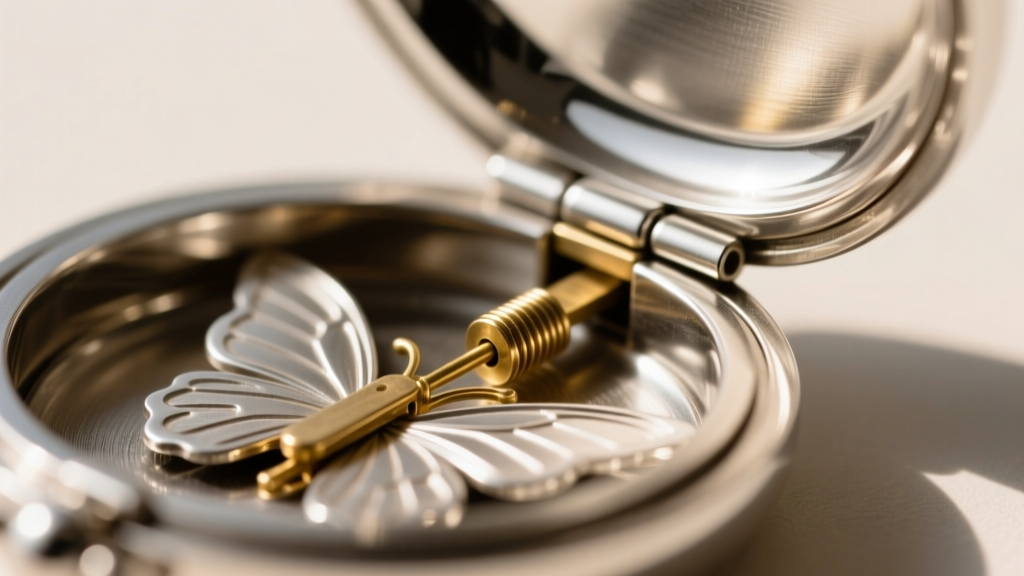
A premium multi-knuckle hinge features interlocking barrels (usually three on the lid, two on the base) that are perfectly aligned using a specialized jig. The pin itself is rarely made of the same karat gold as the body; instead, a drawn brass or hardened steel pin is used for its superior shear strength. The ends of the pin are peened (hammered flat) or capped with micro-soldered gold beads to prevent the pin from sliding out during use.
The clasp mechanism also requires precise tension engineering. A high-quality butterfly locket utilizes a 'friction catch' rather than a simple snap. This involves a tiny, spring-loaded gold wire or a precisely filed friction groove on the inner rim of the lid that catches a corresponding lip on the base. The ideal tension requires approximately 1.5 to 2.0 pounds of force to open—secure enough to prevent accidental popping when bumped, yet smooth enough to open with a single thumbnail.
The Inner Bezel and Photo Retention System
The interior architecture of a butterfly locket necklace dictates how well it preserves its contents. The method used to secure photographs or woven hair is a critical point of differentiation between commercial and bespoke jewelry. There are three primary retention systems utilized in modern and vintage lockets:
| Retention System | Mechanism | Durability & Archival Quality |
|---|---|---|
| Snap Bezel (Tension Ring) | A separate inner ring that snaps into a recessed groove over the photo. | Excellent. Allows tool-free photo changes without bending the metal. |
| Soldered Frame | The inner lip is permanently soldered; photo must be slipped behind a thin metal retaining lip. | Poor for frequent changes. Repeated bending of the retaining lip causes metal fatigue and tearing. |
| Friction Fit (Glued) | Photo is cut to exact size and pressed in, sometimes secured with archival adhesive. | Fair. Adhesives can off-gas and degrade photographic emulsions over time. |
For archival preservation, the snap bezel is the undisputed standard. Furthermore, when inserting a photograph into a sterling silver butterfly locket, it is vital to place a barrier of acid-free, lignin-free paper behind the image. Direct contact between the copper alloys in sterling silver and the acidic compounds in standard photo paper can cause irreversible chemical staining on the photograph's surface.
Enameling Techniques: Guilloché vs. Champlevé
Many premium butterfly locket necklaces feature vitreous enamel on the wings to introduce vibrant color. Understanding the enameling technique is essential for assessing the piece's value and fragility.
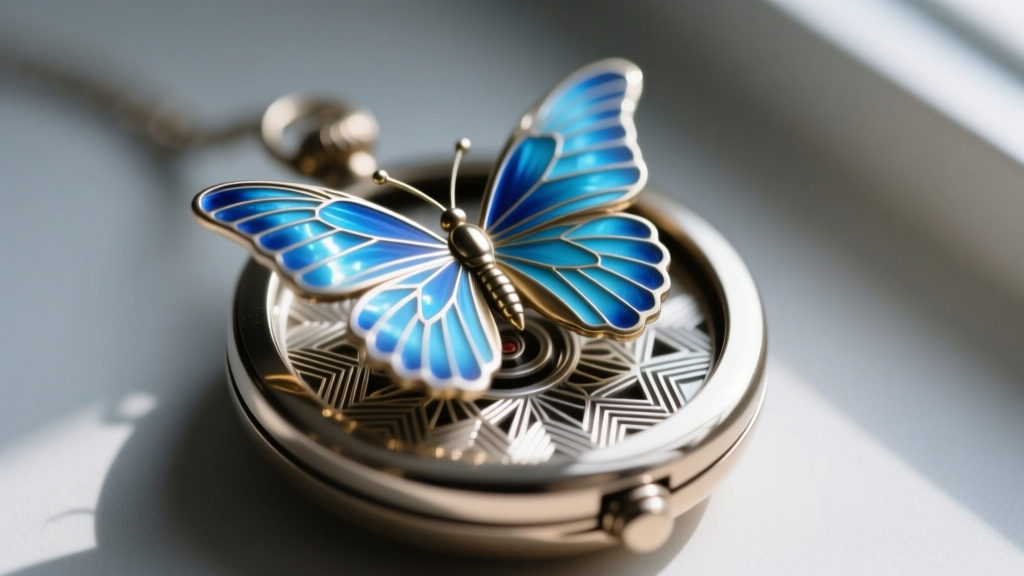
Guilloché Enameling: This technique involves engine-turning (mechanically engraving) a precise geometric pattern into the gold or silver base metal. Translucent enamel—often colored with cobalt oxide for deep blues or copper for greens—is then sifted over the pattern and fired in a kiln at temperatures between 750°C and 850°C. The light refracts through the glass-like enamel and reflects off the engraved grooves, creating a mesmerizing, three-dimensional optical effect. However, because the enamel is essentially fused glass, it is highly susceptible to thermal shock and impact fracturing.
Champlevé Enameling: In this method, troughs are carved or etched into the thick metal base of the butterfly wings, leaving raised metal walls (cloisons). Opaque enamel is packed into these recesses and fired. Champlevé is generally more durable for daily-wear lockets, as the raised metal walls protect the enamel surface from direct abrasion. Master enamelists, as noted by resources like Rio Grande Jewelry Supply, must carefully control the coefficient of thermal expansion between the metal base and the silica-based enamel to prevent 'crazing' (micro-cracking) as the locket cools.
Chain Pairing and Bail Weight Ratios
A common failure point in wearing a heavy butterfly locket necklace is the mismatch between the locket's mass and the chain's tensile strength. A solid 14k gold locket measuring 25mm in diameter can easily weigh between 12 and 18 grams. Suspending this weight on a delicate 1.0mm hollow rope chain will inevitably lead to chain deformation, bail wear, and eventual catastrophic failure.
Technical Pairing Guidelines:
- Bail Dimensions: Ensure the locket's bail (the loop the chain passes through) has an inner diameter of at least 4mm x 6mm to accommodate a sturdy chain without causing abrasive friction.
- Chain Style: Opt for solid-link constructions. A 2.5mm solid wheat chain or a 2.0mm solid cable chain offers a tensile breaking strength of 35 to 50 pounds, providing a massive safety margin for a 20-gram locket.
- Clasp Proportions: The chain's clasp should be a solid lobster claw or a spring-ring with a minimum width of 5mm. A weak clasp will fail long before the chain links stretch.
Sourcing and Pricing Tiers
Understanding the technical anatomy of a butterfly locket necklace directly informs its market pricing. Mass-produced, cast-alloy lockets with hollow interiors and glued photo inserts typically retail between $40 and $120. These pieces lack structural longevity and are prone to hinge failure within months of daily wear.
Mid-tier lockets, featuring solid 14k gold construction, basic machine engraving, and snap-bezel interiors, generally range from $450 to $900, depending on the gold weight and chain inclusion. True bespoke or antique heirloom lockets—characterized by hand-engraved guilloché wings, multi-knuckle drawn hinges, and master-level enameling—command prices starting at $2,500 and can easily exceed $8,000 for custom-commissioned pieces. When investing at this level, always request the manufacturer's specifications regarding alloy hardness, hinge pin material, and enamel firing techniques to ensure you are acquiring a true mechanical marvel disguised as a delicate accessory.


