Gold and Pearl Cross Necklace Guide: Metals, Pearls & Settings
An expert technical guide to choosing a gold and pearl cross necklace, covering karat durability, pearl nacre grades, and setting mechanics.

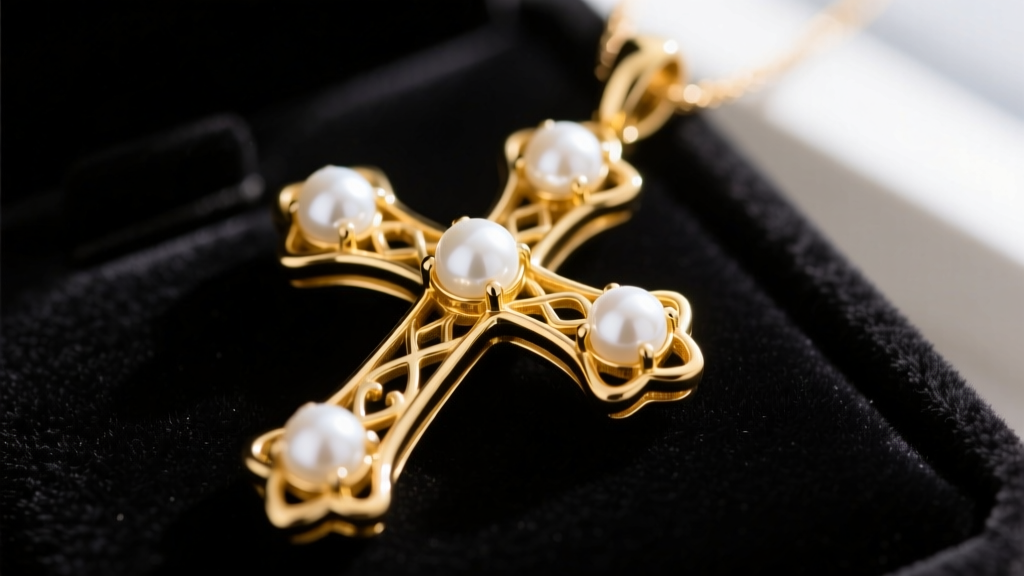
The gold and pearl cross necklace remains one of the most enduring symbols of faith and elegance in fine jewelry. However, beneath the surface of this classic design lies a complex matrix of metallurgical choices, gemological grading, and structural engineering. As we navigate the 2026 fine jewelry market, mass-produced pendants with compromised structural integrity frequently sit alongside master-crafted heirlooms. To make a truly informed investment, buyers must look beyond the aesthetic and scrutinize the technical specifications of the gold alloy, the nacre quality of the pearls, and the mechanical security of the settings.
Decoding the Gold: Karat Weight and Alloy Composition
The foundation of any premium gold and pearl cross necklace is its metallic framework. While 24k gold is pure, it is far too malleable (with a Vickers hardness of roughly 25 HV) to securely hold pearls or withstand daily tension. Therefore, jewelers rely on specific alloy mixtures to balance color, purity, and tensile strength.
14k vs. 18k Gold: The Durability Matrix
For cross pendants featuring mechanical prong settings, 14k gold (58.5% pure gold) is structurally superior. The higher concentration of alloying metals like copper, silver, and zinc increases the Vickers hardness to approximately 140 HV. This rigidity ensures that prongs gripping the pearls will not easily bend or snag, which is a common failure mode in softer metals.
Conversely, 18k gold (75% pure gold) offers a richer, deeper yellow hue and superior hypoallergenic properties, but it sits at a softer 125 HV. If your cross necklace utilizes 18k gold, it is imperative that the pearls are secured in bezel settings or fully enclosed mechanical mounts rather than delicate micro-prongs. According to the Gemological Institute of America (GIA), understanding these alloy properties is critical for predicting how a piece will wear over decades.
Pearl Selection: Nacre Thickness and Luster Grading
The pearls inlaid into a cross pendant dictate its optical brilliance and long-term survivability. A cross design typically requires four to five perfectly matched pearls, making uniformity in nacre thickness and overtone a strict requirement.
Akoya vs. Freshwater: Technical Distinctions
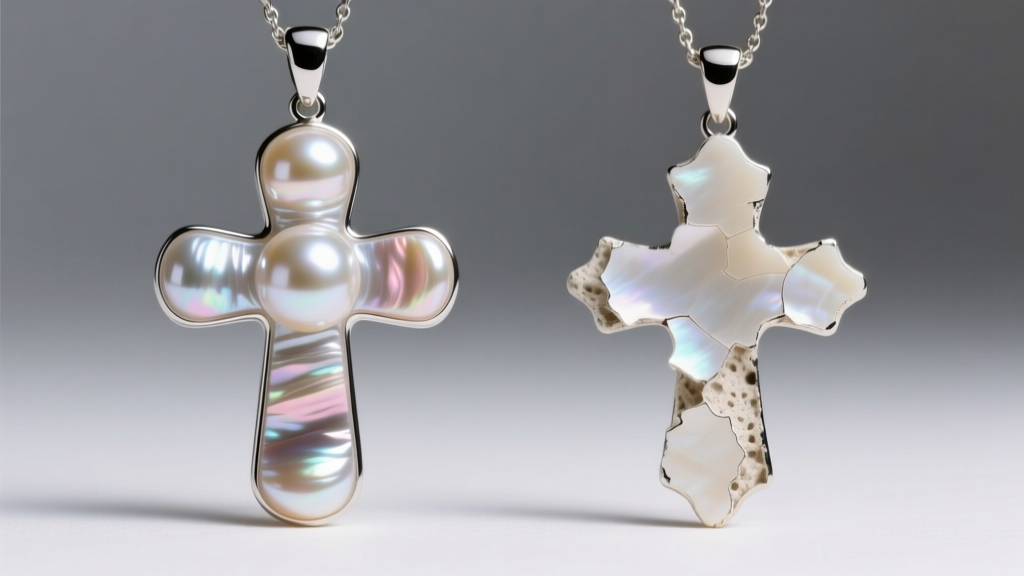
High-end gold and pearl cross necklaces predominantly feature Japanese Akoya pearls. Akoya pearls are bead-nucleated, resulting in a perfectly spherical shape essential for the geometric symmetry of a cross. When evaluating Akoya pearls, demand a minimum nacre thickness of 0.4mm, though premium Hanadama-certified strands will boast 0.6mm to 0.8mm of nacre. Nacre thinner than 0.3mm will eventually chip or peel at the drill holes due to friction against the gold mounting posts.
Freshwater pearls, while often more affordable and composed of solid nacre, historically lack the mirror-like luster of Akoya. However, modern Edison freshwater pearls (grown with bead nucleation) have narrowed this gap. When selecting a freshwater cross pendant, verify that the luster is 'sharp'—meaning reflections on the pearl's surface have crisp, defined edges rather than a chalky, diffused blur. The GIA Pearl Quality Factors scale remains the industry benchmark for evaluating these optical properties.
Structural Integrity: Setting Styles and Failure Modes
How the pearl is attached to the gold cross is the most common point of catastrophic failure in mass-market jewelry. There are two primary setting methods used in pearl crosses, and understanding the difference will save you from future repairs.
"Epoxy degradation is the silent killer of pearl jewelry. Thermal cycling from body heat to winter air causes the adhesive to become brittle, leading to sudden stone loss." — Master Bench Jeweler
Peg Settings (The Adhesive Method)
In a peg setting, a gold post is inserted into a drilled hole in the pearl and secured with two-part jeweler's epoxy. While this allows for a seamless, minimalist gold design, it is inherently temporary. Over 5 to 10 years, environmental factors and skin oils degrade the epoxy bond. If you purchase a peg-set cross, ensure it is easily serviceable by a local jeweler who can safely steam off the old adhesive and re-epoxy the pearls without damaging the nacre.
Prong and Bezel Settings (The Mechanical Method)
For an heirloom-grade gold and pearl cross necklace, mechanical settings are mandatory. Bezel settings feature a thin rim of gold pushed tightly over the pearl's equator, while prong settings use tiny metal claws. These methods rely on physical tension rather than chemical adhesives, ensuring the pearls remain secure for generations, provided the gold is periodically checked for metal fatigue.
Chain Mechanics: Gauge, Links, and Clasp Security
A heavy gold cross pendant requires a chain with sufficient tensile strength to support its weight without stretching or snapping. The relationship between pendant weight and chain gauge is frequently overlooked by consumers.
Chain Gauge vs. Pendant Weight Matrix
| Chain Gauge (mm) | Link Style | Max Pendant Weight | Best For |
|---|---|---|---|
| 0.8mm - 1.0mm | Cable / Rope | Up to 3 grams | Delicate, micro-pearl crosses |
| 1.2mm - 1.5mm | Box / Wheat | 3 to 8 grams | Standard Akoya pearl crosses |
| 1.8mm - 2.2mm | Curb / Figaro | 8 to 15+ grams | Heavy solid gold, South Sea pearl crosses |
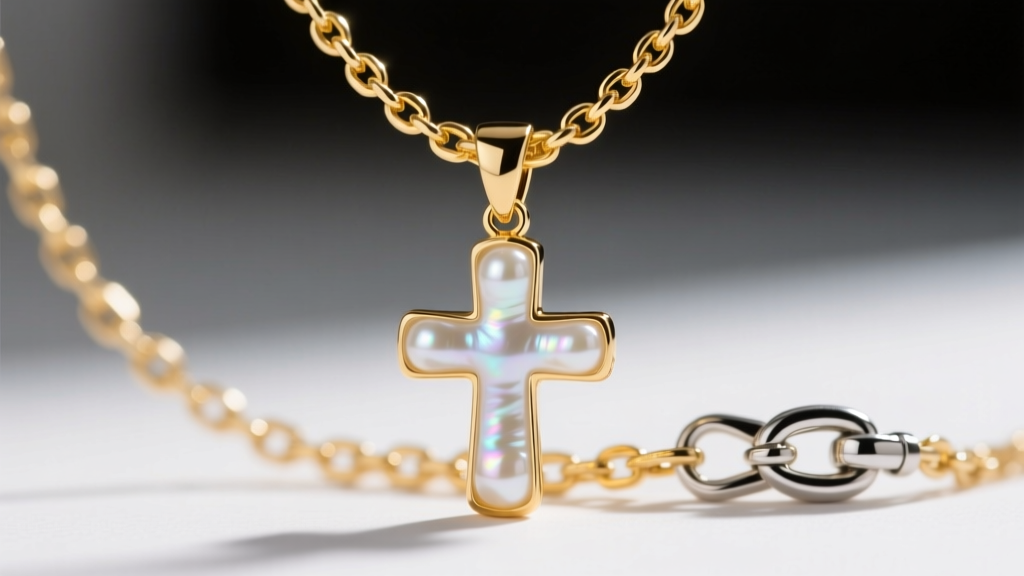
Furthermore, the clasp mechanism must match the chain's gauge. Spring-ring clasps are notorious for failing under the pendulum-like swinging motion of a heavy cross. Always insist on a lobster clasp with a reinforced soldered jump ring for any gold and pearl cross necklace exceeding 4 grams.
Sizing and Proportion: The Golden Ratio for Cross Pendants
Aesthetically, the proportions of the cross and the pearls must adhere to classical design principles. The most visually balanced crosses utilize pearls that occupy roughly 60% to 75% of the total width of the cross's arms. If a cross arm is 6mm wide, the pearls should be between 4mm and 5mm in diameter.
Additionally, the bail (the loop connecting the pendant to the chain) must have an inner diameter at least 0.5mm larger than the outer width of the chain. A 1.5mm box chain requires a bail with a minimum 2.0mm inner clearance to prevent friction wear against the gold, which can eventually saw through the bail over years of movement.
Maintenance and Failure Prevention
Preserving a gold and pearl cross necklace requires strict adherence to gemological care protocols. Pearls are organic gemstones with a Mohs hardness of just 2.5 to 3.0, making them highly susceptible to scratching and chemical erosion.
- Never use ultrasonic cleaners: The high-frequency vibrations will shatter the nacre and instantly dissolve the epoxy in peg-set crosses.
- Avoid steam cleaning: Extreme heat can cause the water content within the pearl's conchiolin protein to evaporate, leading to irreversible cracking and 'crazing' on the surface.
- Routine Prong Audits: Have a certified gemologist inspect the mechanical prongs or bezels every 18 months. Gold wears away through friction against clothing, and a prong that has lost 0.2mm of thickness may no longer exert sufficient pressure on the pearl.
By prioritizing metallurgical hardness, demanding thick nacre, and insisting on mechanical settings, you elevate the gold and pearl cross necklace from a mere accessory to a structurally sound, multi-generational asset.


