Hog Tusk Necklace Buying Guide: Sourcing, Care & Styles
Discover what to look for when buying a hog tusk necklace. Learn about ethical sourcing, tusk mounting techniques, and proper care for organic jewelry.

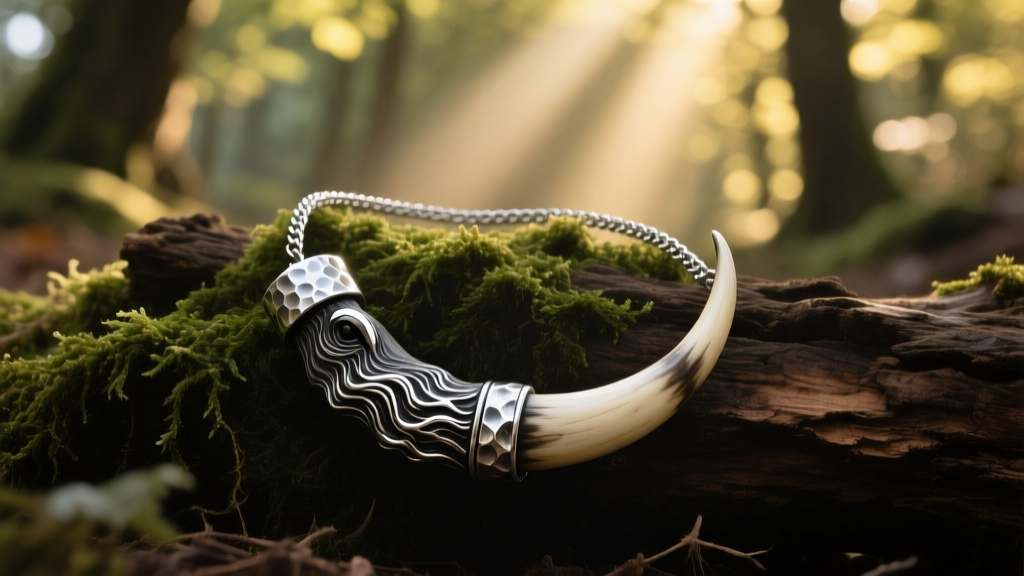
The Primal Appeal of Organic Jewelry
The hog tusk necklace occupies a unique space in the world of men’s and rustic jewelry. Straddling the line between hunting heritage, Nordic revivalism, and primal fashion, a wild boar tusk pendant is more than a mere accessory—it is a conversation piece rooted in organic gemology. However, buying a hog tusk necklace requires a vastly different skill set than purchasing a cast silver chain or a faceted gemstone. Because you are dealing with dentine, enamel, and natural curvature, the risks of cracking, improper mounting, and legal customs issues are high.
In this comprehensive buying guide, we break down the exact specifications, material grades, and structural integrity checks you need to make before investing in a premium wild boar tusk pendant.
Organic Gemology: Understanding Dentine and Enamel
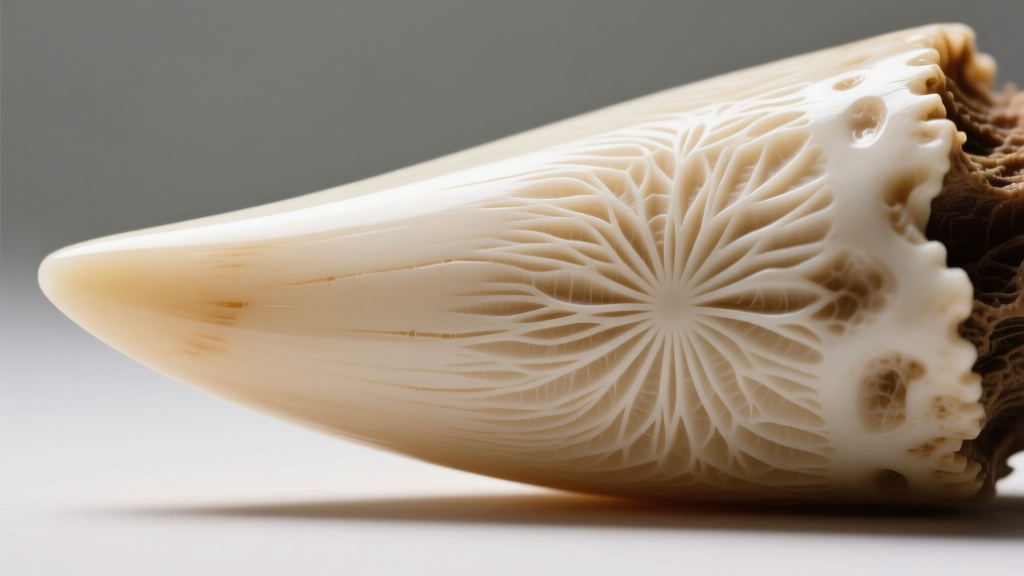
To evaluate a tusk, you must understand its biological composition. According to the Gemological Institute of America (GIA), tusks are primarily composed of dentine—a porous, calcified tissue—encased in a thin, brittle outer layer of enamel. The inner core contains the pulp cavity.
When inspecting a hog tusk necklace, look closely at the cross-section or the polished surface. Genuine wild boar (*Sus scrofa*) dentine will often exhibit subtle, cross-hatch patterns known as Schreger lines, though they are much tighter and less pronounced than those found in elephant ivory. The natural color should range from a creamy off-white to a warm, aged amber. Beware of blindingly white tusks; these have likely been bleached with hydrogen peroxide, which degrades the organic matrix and makes the tusk highly susceptible to micro-fractures.
Ethical Sourcing and 2026 Legal Considerations
While wild boar are abundant and not listed as endangered, international trade in any animal tooth or tusk is heavily scrutinized. Under the CITES Ivory Control System, customs agents in 2026 frequently use portable Raman spectroscopy and XRF scanners at borders to identify organic materials. If you are purchasing a hog tusk necklace from an international artisan or importing one, the seller must provide explicit documentation proving the material is *Sus scrofa* (wild boar) and not a restricted species like walrus or elephant.
What to Ask the Seller:
- Origin: Was the animal wild-harvested or farmed? Wild-harvested tusks from mature boars are denser, larger, and more durable than those from farmed pigs.
- Age and Curing: A freshly pulled tusk retains high moisture content. If it was not slow-cured in a controlled environment for 6 to 12 months, it will warp and split longitudinally once exposed to the dry air of a modern home.
- Documentation: Always request a commercial invoice that explicitly states "Wild Boar Tusk (Sus scrofa)" to avoid customs confiscation.
Evaluating Tusk Quality and Structural Integrity
Not all tusks are created equal. The lower canines of a mature male wild boar grow continuously and self-sharpen against the upper canines. When shopping, apply this three-point inspection checklist:
- The Root (Base): The hollow pulp cavity at the base of the tusk must be completely cleaned, sterilized, and sealed. If you see dark, unsealed hollows, moisture and bacteria will become trapped, leading to internal rot and a foul odor over time.
- The Crown (Tip): Inspect the tip for micro-fissures. Because the enamel is brittle, a tusk dropped on a hard surface will develop hairline cracks at the tip that eventually propagate downward.
- The Curve: A symmetrical, sweeping curve is highly prized. Asymmetrical or twisted tusks are less desirable for jewelry, though some artisan makers embrace the irregularity for a rugged aesthetic.
Mounting Techniques: The Make-or-Break Factor
How the tusk is attached to the necklace cord dictates its lifespan. Organic materials expand and contract with humidity changes. Rigid mounting methods will cause the tusk to shatter. Below is a comparison of the three most common mounting techniques used by jewelers and taxidermists.
| Mounting Method | Durability | Aesthetic | Risk to Tusk | Best For |
|---|---|---|---|---|
| Center-Drilled | Low | Rustic / Primitive | High (Creates stress fractures) | Cheap souvenirs, temporary wear |
| Wire-Wrapped | Medium | Artisan / Bohemian | Medium (Wire cuts into dentine) | Small to medium tusks |
| Metal-Capped | High | Premium / Heritage | Low (Protects the vulnerable root) | Heirloom pieces, daily wear |
Why Metal Capping is the Gold Standard
For a premium hog tusk necklace, a custom-fitted metal cap is mandatory. The cap—usually cast in 925 sterling silver, bronze, or brass—slides over the hollow root and is secured with a flexible, jewelry-grade epoxy and a hidden stainless steel pin. This method protects the most fragile part of the tusk while providing a heavy-duty bail or loop for the chain. If you opt for a bronze or brass cap, ensure the interior is coated with a clear sealant; the natural acids in your sweat can cause copper alloys to develop verdigris (a green patina), which will permanently stain the porous dentine.
Choosing the Right Cordage and Chain
The weight of a mature boar tusk (often 30 to 60 grams) combined with the metal cap requires robust cordage. Thin leather cords will stretch, degrade from neck sweat, and eventually snap.
- Leather: If you prefer leather, choose a minimum 4mm thick, vegetable-tanned hide with a sealed edge. Avoid suede, which absorbs oils and rots.
- Paracord: Type III (550 lb test) paracord is highly recommended for outdoor and hunting aesthetics. It is impervious to sweat, water, and UV degradation.
- Metal Chains: If mounting on a silver or steel chain, the jump ring connecting the chain to the tusk bail must be at least 16-gauge (1.2mm thick) and soldered shut. A standard 20-gauge jump ring will pull apart under the pendulum-like swinging motion of a heavy tusk.
Maintenance: Preventing Organic Decay
Dentine is hygroscopic, meaning it absorbs and releases moisture from the air. Rapid fluctuations in humidity will cause the tusk to warp or split. To preserve your necklace:
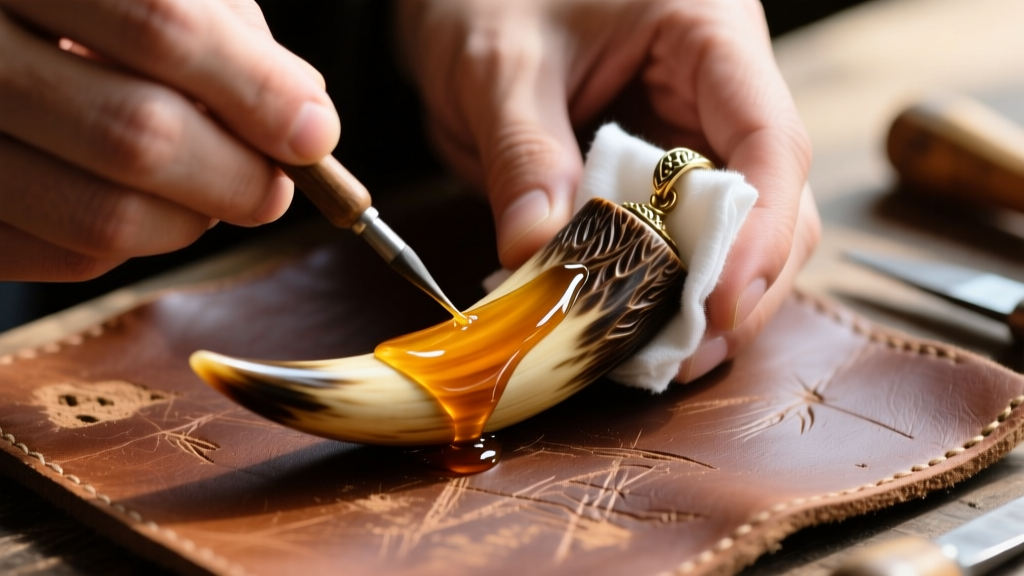
- Seal the Surface: Once a year, apply a microcrystalline wax (such as Renaissance Wax) using a soft cotton cloth. This creates a breathable barrier that stabilizes moisture content without yellowing the material like polyurethane or mineral oil.
- Avoid Ultrasonic Cleaners: Never use ultrasonic jewelry cleaners or harsh chemical dips. The high-frequency vibrations will shatter the enamel, and the chemicals will strip the natural oils from the dentine.
- Storage: When not wearing the necklace, store it in a breathable cotton pouch in a room with stable humidity (around 40-50%). Avoid leaving it on a car dashboard or in direct sunlight, as UV radiation will bleach and brittle the organic structure.
Final Verdict
A well-crafted hog tusk necklace is a striking, heritage-grade piece of jewelry that connects the wearer to the natural world. By prioritizing slow-cured dentine, custom metal capping over drilling, and proper hygroscopic maintenance, you ensure that your pendant survives not just as a hunting memento, but as a durable, lifelong accessory. Always demand clear species documentation from your jeweler to guarantee ethical sourcing and hassle-free travel.


