Brown Jade Necklace Value: 2026 Pricing & Buyer Guide
Discover the true value of a brown jade necklace in 2026. Learn to spot authentic sugar nephrite, avoid dyed simulants, and understand market pricing.

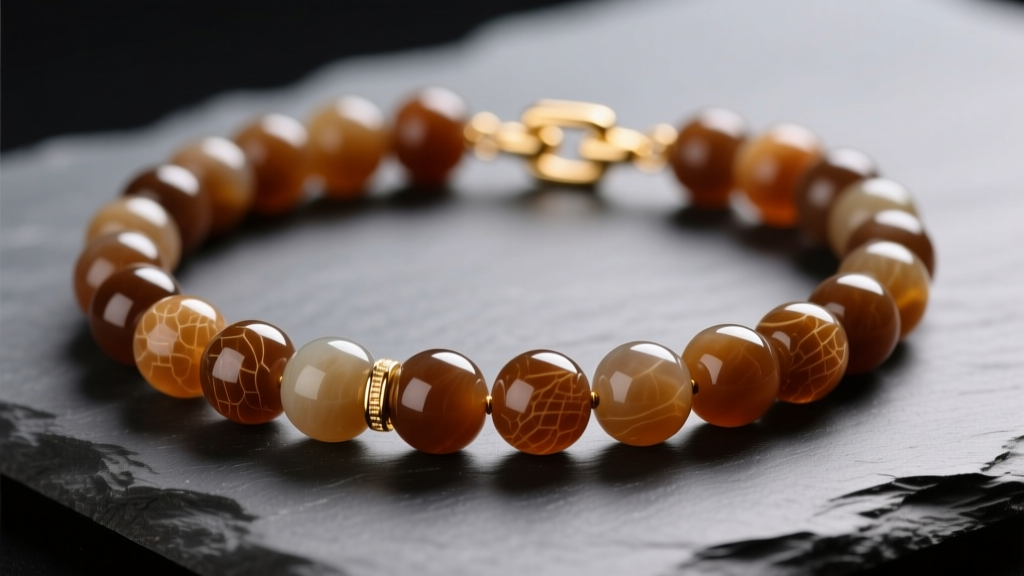
The Truth About Brown Jade: Nephrite, Jadeite, or Simulant?
When evaluating a brown jade necklace, the first hurdle is geological authenticity. In the gemological community, the term 'jade' is strictly reserved for two distinct minerals: nephrite and jadeite. However, the commercial jewelry market frequently mislabels brown serpentine, jasper, and even dyed quartz as jade to inflate prices. Understanding the material composition is the foundation of any accurate budget and value assessment.
Authentic brown jade primarily manifests in nephrite as 'Sugar Jade' (known in Chinese as Tang Yu). This occurs when iron-rich groundwater permeates the nephrite matrix over millennia, creating a rich, caramel-to-dark-molasses coloration. High-quality Hetian sugar nephrite is highly prized, with a dense, fibrous interlocking structure that yields a greasy, luminous luster. Conversely, brown jadeite is exceptionally rare as a primary color; it usually appears as a secondary 'skin' or rind caused by surface oxidation. Most solid brown jadeite beads on the market are either heavily included, low-grade material, or entirely simulated.
The most common budget trap is brown serpentine (often sold as 'new jade' or 'bowenite'). While serpentine is a beautiful stone, its Mohs hardness (3.5 to 5.5) is vastly inferior to nephrite (6.0 to 6.5) and jadeite (6.5 to 7.0). According to the Gemological Institute of America (GIA), serpentine also has a lower specific gravity (2.40-2.80) compared to jadeite (3.30-3.38) and nephrite (2.90-3.03). If a brown jade necklace feels suspiciously light for its volume, you are likely holding serpentine or glass, not true jade.
Decoding the Treatments: Type A vs. Type B vs. Type C
Value assessment in jade is impossible without addressing chemical treatments. The market categorizes jade into three distinct tiers, which directly dictate the necklace's financial worth and structural longevity.
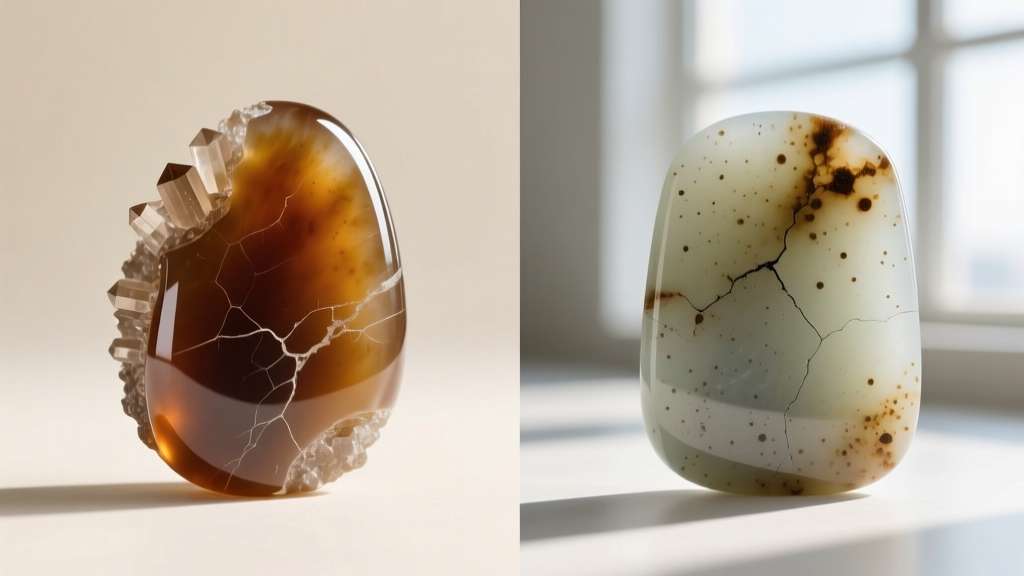
Type A: Completely Untreated
Type A brown jade has undergone no chemical alteration. It may be cut, polished, and strung, but its internal crystalline structure remains intact. A Type A sugar nephrite necklace is an investment-grade asset. The value lies in the stone's natural translucency, the evenness of the brown hue, and the absence of harsh chemical processing. These pieces retain their value and often appreciate, provided the provenance and gemological certification are intact.
Type B: Bleached and Polymer-Impregnated
Type B jade is soaked in hydrochloric acid to remove brown or yellow iron stains, then injected with sodium silicate or polymer resin to fill the resulting microscopic voids. While this process is sometimes used to 'clean up' brown jade, it fundamentally destroys the stone's structural integrity. Over 5 to 10 years, the polymer yellows, shrinks, and cracks, leaving the beads brittle and dull. A Type B brown jade necklace has virtually zero resale value and is strictly a temporary fashion accessory.
Type C: Dyed
Type C jade is artificially colored. In the brown jade market, merchants often dye pale, low-grade nephrite or quartzite to mimic the highly sought-after 'antique' or 'sugar' brown hues. The dye concentrates in the microscopic fractures of the stone. Under a 10x jeweler's loupe, Type C beads reveal telltale 'spiderweb' patterns of dark brown dye trapped in surface cracks. Mason-Kay, a premier jade authority, strongly advises against purchasing Type C jade, as the dyes are unstable, can leach onto the skin, and fade rapidly under UV exposure.
2026 Market Pricing: What Should You Actually Pay?
Pricing a brown jade necklace requires parsing the intersection of material, treatment, and bead size. The table below outlines the 2026 retail pricing landscape for a standard 16-to-18-inch beaded necklace.
| Material & Grade | Treatment Status | Bead Size (8mm-10mm) | 2026 Price Range (USD) | Value Retention |
|---|---|---|---|---|
| Hetian Sugar Nephrite (Top) | Type A (Untreated) | 10mm+ | $2,500 - $8,000+ | Excellent |
| Sugar Nephrite (Commercial) | Type A (Untreated) | 8mm - 10mm | $400 - $1,500 | Good |
| Brown Jadeite (Opaque) | Type A (Untreated) | 8mm - 12mm | $150 - $600 | Fair |
| Bleached/Polymer Jade | Type B | Any | $50 - $150 | Poor |
| Dyed Quartz/Serpentine | Type C / Simulant | Any | $15 - $45 | None |
Budget Assessment Rule of Thumb: If you encounter a 'vintage brown jade' necklace priced under $100 featuring perfectly uniform, deeply saturated beads, it is almost certainly dyed serpentine or glass. True sugar nephrite exhibits natural color zoning, subtle inclusions, and varying degrees of opacity that mass-produced simulants cannot replicate.
Red Flags in Budget Brown Jade Necklaces
- The 'Thermal Shock' Test: Real jade feels distinctly cold to the touch and takes several seconds to warm up in your hand. Glass and plastic simulants warm almost instantly.
- The Scratch Test (Proceed with Caution): A steel knife (Mohs 5.5) will easily scratch brown serpentine or glass, but it will glide harmlessly off authentic nephrite or jadeite.
- Acoustic Resonance: Gently clinking two Type A jade beads together produces a deep, resonant, musical chime. Type B (polymer-filled) beads produce a dull, plastic 'clack' due to the resin dampening the acoustic vibration.
Hardware & Stringing: Hidden Costs and Failure Modes
A common oversight in budget assessment is ignoring the necklace's structural hardware. Jade is a dense, heavy material. A 10mm sugar nephrite bead weighs approximately 3.5 grams; a 60-bead necklace carries over 200 grams of sheer kinetic force on the stringing medium.
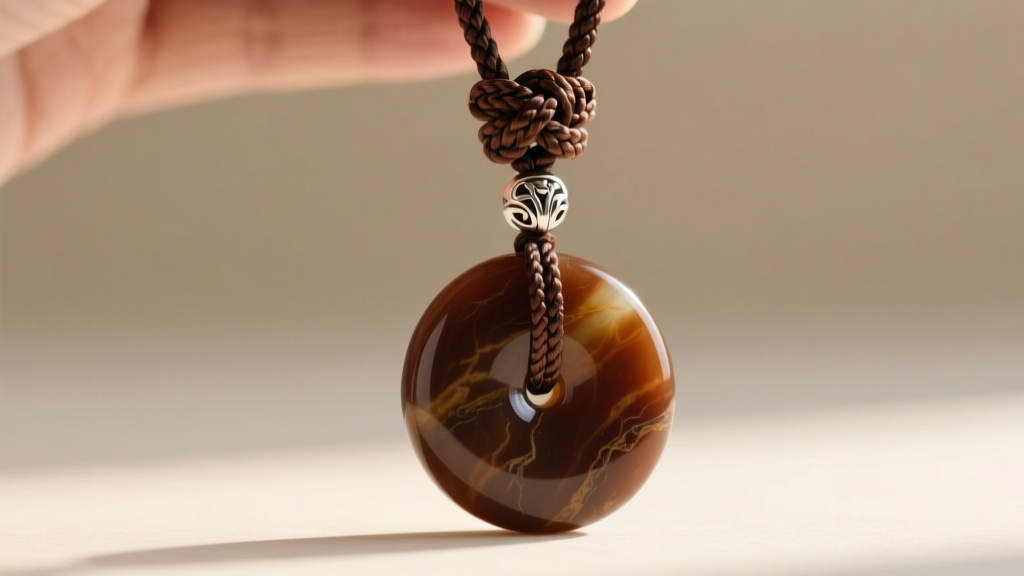
Cheap brown jade necklaces are frequently strung on monofilament nylon or elastic cords. This is a catastrophic failure mode. The drill holes in jade beads, especially those created via high-speed ultrasonic drilling, often possess sharp, unpolished internal edges. Over time, the sheer weight of the brown jade beads acts like a guillotine against cheap nylon, leading to sudden string breakage and lost stones.
The Gold Standard for Stringing: High-value brown jade necklaces must be strung on multi-strand silk or high-tensile Kevlar thread, with individual hand-tied knots between every single bead. This traditional technique serves two purposes: it prevents the heavy beads from abrading one another (which dulls the polish over decades), and it ensures that if the cord snaps, you lose only one bead rather than the entire strand. When assessing value, factor in $75 to $150 for professional silk-knotting services if the necklace comes on a cheap, unknotted wire.
Final Verdict: Is a Brown Jade Necklace Worth the Investment?
A brown jade necklace can be a profound sartorial and financial asset, provided you navigate the market with gemological skepticism. For the budget-conscious buyer, a commercial-grade Type A sugar nephrite strand ($400-$800) offers the best balance of authentic geological rarity, durability, and aesthetic warmth. It pairs exceptionally well with autumn wardrobes, gold hardware, and minimalist modern fashion.
However, you must ruthlessly avoid Type B and Type C treatments. The moment a brown jade bead has been acid-bleached or dyed, it transitions from a semi-precious gemstone to a degraded piece of costume jewelry. Always demand a gemological certificate from a reputable lab (such as GIA, NGTC, or Gubelin) for any brown jade necklace priced above $500. By prioritizing untreated nephrite and proper silk-knotted construction, you secure a piece that will outlast fleeting trends and retain its intrinsic value for generations.


