Jingle Bells Necklace Value: 2026 Pricing & Buying Guide
Discover the true value of a jingle bells necklace in 2026. We break down pricing tiers, metal grades, and what to look for before you buy.

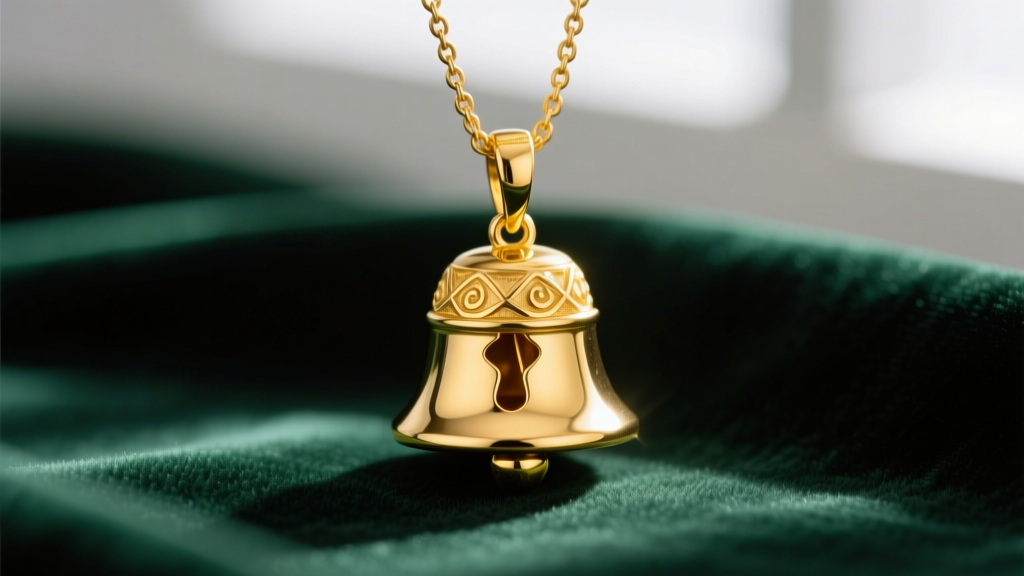
The Anatomy of a Jingle Bells Necklace: Solid Cast vs. Functional Mechanics
When evaluating the true market value of a jingle bells necklace, the first distinction a savvy buyer must make is between decorative solid-cast charms and functional acoustic pendants. In the realm of fine jewelry, a bell that actually produces a sound is a marvel of micro-engineering. Unlike a static holiday novelty charm produced via simple rubber mold casting, a functional bell requires a multi-step manufacturing process. The jeweler must create the outer shell, insert a loose internal clapper or metal shot (in the case of a sleigh bell), and then seamlessly close the structure using precision laser welding. This trapped-bead technique ensures the internal components remain free to move without melting the outer precious metal shell.
Because of this labor-intensive process, a functional 14k or 18k gold jingle bells necklace commands a significant premium over its silent, solid-cast counterparts. If you are paying fine jewelry prices for a bell that does not jingle, you are overpaying for a basic novelty shape. According to the FTC Jewelry Guides, consumers must be clearly informed about the material composition and manufacturing origins of precious metals, yet the mechanical complexity of the pendant is rarely disclosed on the retail tag. Understanding this mechanical difference is your first line of defense against inflated holiday markups.
2026 Pricing Tiers: What Should You Actually Pay?
The market for bell pendants is heavily segmented by material purity and manufacturing origin. Below is a comprehensive breakdown of the 2026 pricing landscape, helping you align your budget with realistic material expectations.
| Material Grade | Purity / Stamp | 2026 Price Range | Tarnish Risk | Value Retention |
|---|---|---|---|---|
| Base Metal / Alloy | Unstamped / Brass | $15 - $45 | High | None |
| Sterling Silver | 925 | $85 - $280 | Medium | Low / Moderate |
| 14k Solid Gold | 14k / 585 | $650 - $1,400 | None | High |
| 18k Solid Gold | 18k / 750 | $1,500 - $3,200 | None | Very High |
Tier 1: Fashion & Base Metals ($15 - $45)
At the entry-level, you are looking at mass-produced holiday novelties. These are typically made from brass or zinc alloys and plated with a microscopic layer of gold or silver. While they capture the festive aesthetic, they possess zero intrinsic melt value. The plating will inevitably wear off against the friction of your neckline, exposing the base metal beneath. These are strictly seasonal wear items and should never be evaluated as long-term investments.
Tier 2: Sterling Silver & Artisan Craft ($85 - $280)
Sterling silver (92.5% pure silver alloyed with copper for strength) offers the best intersection of affordability and genuine jewelry value. In this tier, you can find authentic, functional sleigh bells crafted by independent silversmiths. A well-made 15mm sterling silver sleigh bell pendant should weigh between 4 and 6 grams. If the pendant feels suspiciously light (under 2 grams), it is likely a hollow electroformed shell that is prone to denting and cannot be repaired if crushed.
Tier 3: Solid Gold & Fine Jewelry ($650 - $3,200+)
Solid gold jingle bells necklaces are heirloom-quality pieces. As detailed by the Gemological Institute of America (GIA), 14k gold provides an excellent balance of durability and rich color, making it ideal for a pendant that will experience kinetic movement and occasional impacts. An 18k gold sleigh bell will be heavier, softer, and significantly more expensive due to the higher gold spot price and the increased difficulty of laser-welding softer alloys. Expect to pay a 40% to 60% premium for the trapped-bead mechanical engineering in solid gold compared to a standard cast gold charm of the exact same weight.
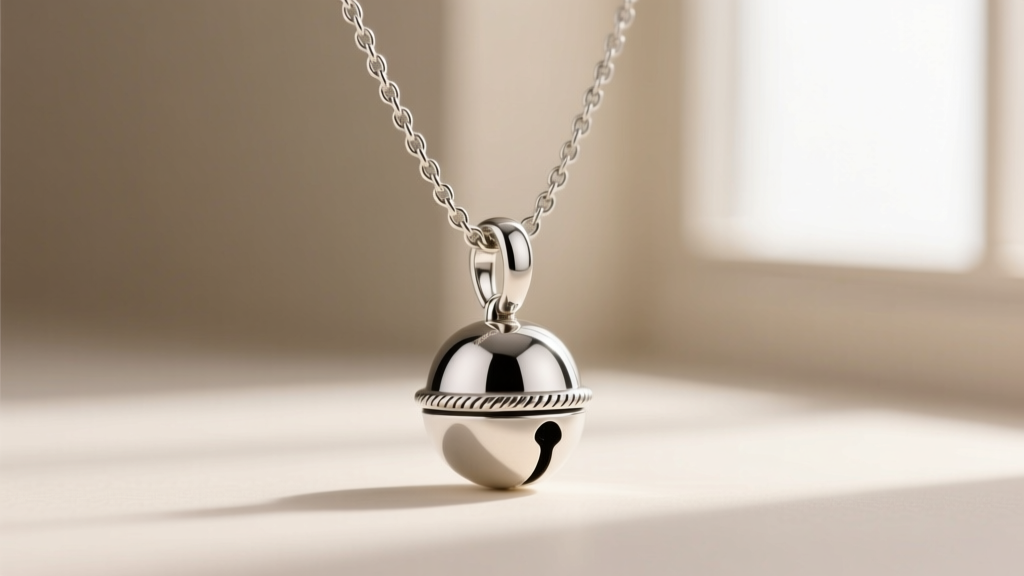
The 'Clapper' Factor: Assessing Mechanical Value
Not all bells are created equal, and the internal mechanism dictates both the sound profile and the manufacturing cost. There are two primary types of functional bell pendants:
- The Traditional Clapper Bell: Features a single teardrop or spherical metal piece suspended on a tiny internal hinge or loop. This requires a microscopic soldering job inside the bell cavity before the bottom rim is sealed.
- The Sleigh Bell (Crotal Bell): Contains multiple small metal 'shot' or beads trapped inside a hollow sphere with a slit at the bottom. This is the classic 'jingle' sound. Manufacturing a fine gold sleigh bell is exceptionally difficult, as the jeweler must trap multiple micro-beads inside the sphere and use a laser welder to fuse the seam shut without fusing the internal beads to the outer wall.
Expert Insight: If a retailer is charging over $1,000 for a gold bell pendant, demand proof of the internal mechanism. A high-value piece should have a visible seam where the laser welding occurred, and you should be able to hear the distinct rattle of loose shot or a swinging clapper when gently shaken.
Chain Pairings: Hidden Costs That Inflate the Budget
A common budgeting mistake when purchasing a jingle bells necklace is underestimating the cost and necessity of an appropriate chain. Bell pendants, particularly solid gold or thick sterling silver sleigh bells, are unusually dense and heavy for their size. A standard 1mm cable chain will eventually snap under the kinetic stress of a swinging bell.
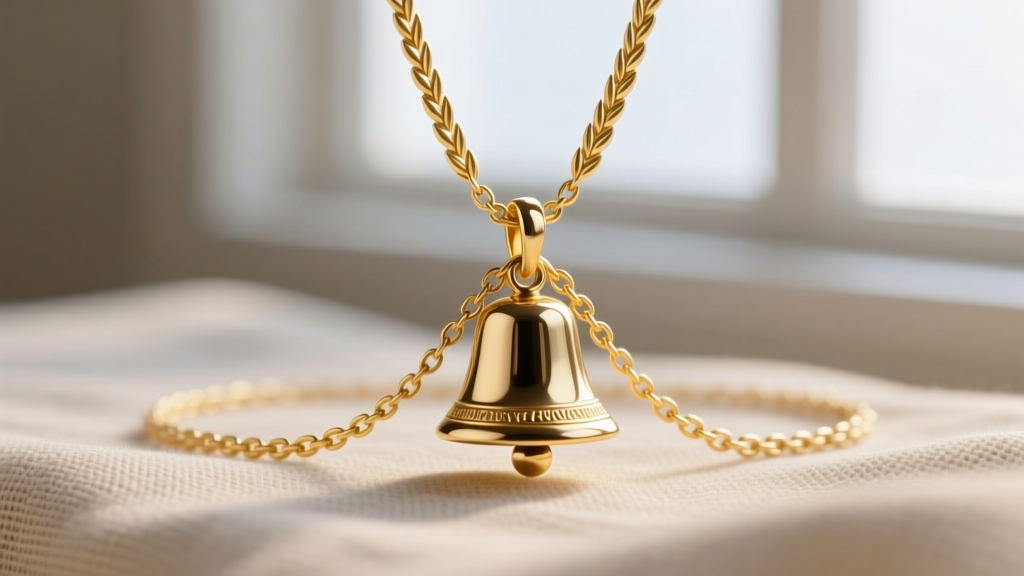
To ensure longevity, you must pair the pendant with a chain that has a high tensile strength. We recommend a 1.5mm to 2.0mm Rolo, Wheat, or Figaro chain. However, upgrading from a lightweight 1mm chain to a sturdy 2mm solid gold wheat chain can add $300 to $600 to your total budget. Always verify whether the listed retail price includes a proportionate chain or just the bare pendant. Many fine jewelers sell the bell pendant separately, meaning your final out-of-pocket cost will be significantly higher than the initial display tag.
Hallmarking and Avoiding Holiday Markups
The holiday season brings a surge in demand for bell-themed jewelry, which unfortunately invites predatory pricing tactics. Some boutique brands will sell gold-plated brass bells for upwards of $120, relying on festive packaging and aggressive marketing to mask the base materials. To protect your budget, always inspect the bail (the loop that connects the pendant to the chain) for a stamped hallmark.
Legitimate precious metals will bear a stamp such as '925', '14k', '585', or '750'. If the piece lacks a hallmark, or if the seller uses vague terminology like 'gold-tone', 'gold-finished', or 'silver-colored', you are looking at a Tier 1 base metal item. Never pay Tier 2 or Tier 3 prices for unstamped metals.
Maintenance and Acoustic Care
Polishing a functional bell requires caution. Traditional silver polishing pastes can seep into the slits of a sleigh bell or the hinge of a clapper, drying into a hard residue that deadens the sound and restricts movement. Instead, use a treated microfiber polishing cloth designed for precious metals, gently buffing the exterior without applying pressure to the seams. For internal debris, a brief blast of compressed air can dislodge dust without introducing moisture. By focusing on material density, mechanical complexity, and proper hallmarking, you can confidently navigate the market and secure a jingle bells necklace that offers genuine acoustic charm and lasting financial value.


