A Step-by-Step Guide to Storing Statement Necklaces Safely
Learn the expert step-by-step method for storing statement necklaces to prevent tangling, tarnishing, and structural damage to heavy gems.

The Hidden Dangers of Improper Necklace Storage
Statement necklaces are not just accessories; they are complex structural assemblies of mixed metals, porous gemstones, heavy glass, and delicate threading. When it comes to storing statement necklaces, tossing them into a standard jewelry box is a recipe for catastrophic damage. The sheer weight of these pieces—often exceeding 150 to 300 grams—creates unique physical and chemical vulnerabilities that standard storage methods fail to address.
The most common failure modes include galvanic corrosion (which occurs when dissimilar metals like sterling silver and brass touch in a humid environment), silk thread creep (permanent stretching caused by hanging heavy pieces), and PVC off-gassing (where cheap plastic organizers release hydrochloric acid that pits soft metals and dissolves pearl nacre). To protect your investment, you must adopt an archival-level approach to jewelry preservation. This guide breaks down the exact, step-by-step methodology used by museum conservators and high-end jewelers to preserve complex, heavy necklaces.
Step 1: Pre-Storage Cleaning and Material Assessment
Never store a statement necklace without first removing the invisible layer of skin oils, lotions, and environmental pollutants that accumulate during wear. These organic acids accelerate tarnishing and can permanently stain porous stones. However, cleaning must be strictly tailored to the materials present in the piece.
Material-Specific Cleaning Rules
- 925 Sterling Silver & Brass: Wipe down with a lint-free microfiber cloth. For heavy tarnish on brass components, use a specialized brass polish, but ensure it is completely buffed away before it touches any adjacent gemstones. According to the Jewelers of America, residual chemicals left on metal can cause severe pitting over time.
- Porous Gemstones (Turquoise, Malachite, Lapis Lazuli): Never use water or liquid cleaners. Use a soft, dry makeup brush to gently sweep away dust and oils from the crevices of the stone settings.
- Resin and Acrylic Elements: Wipe with a slightly damp cloth and dry immediately. Avoid any alcohol-based cleaners, which will cloud and craze the surface of acrylics.
Once cleaned, inspect the structural integrity. Check the crimp beads and wire-wrapping loops. If you notice any fraying on silk threads or loosening on heavy gauge links (typically 4mm to 8mm in statement chains), address these repairs before storage to prevent the piece from collapsing under its own weight while in the drawer.
Step 2: Structural Support and Tangle Prevention
The architecture of a statement necklace often features large, heavy clasps and uneven weight distribution. If laid flat without support, a heavy magnetic clasp can easily crush softer beads, such as amber or dyed howlite, resting beneath it.
The 'Tissue Nest' Method
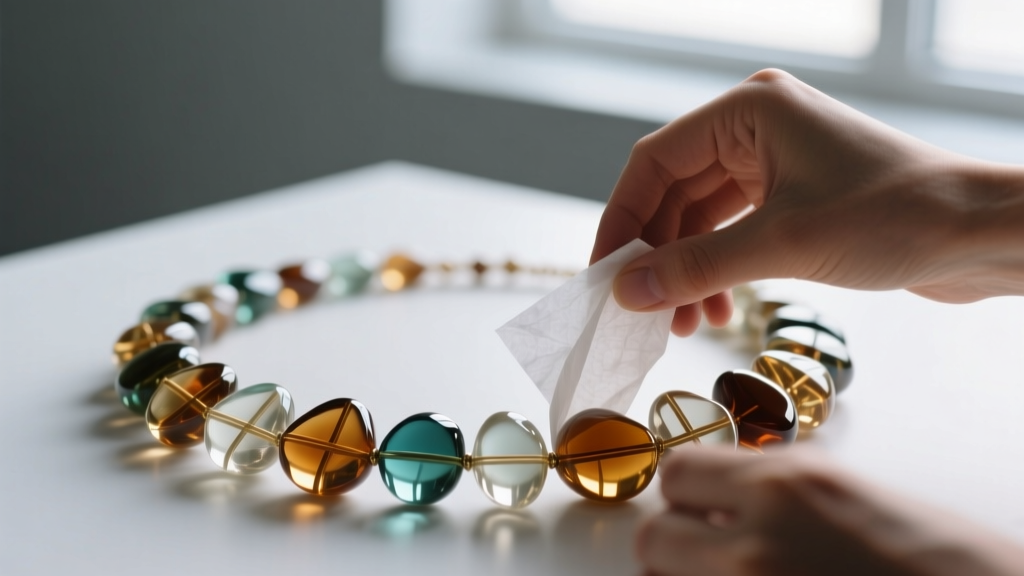
To prevent crushing and tangling, use unbuffered, acid-free tissue paper (available from archival supply stores for about $12 per ream). Do not use standard gift-wrapping tissue, as it is highly acidic and will transfer dyes to your jewelry.
- Lay the necklace completely flat on a clean surface.
- Gently stuff hollow elements (like large resin beads or filigree metal domes) with small wads of acid-free tissue to prevent them from being crushed if pressure is applied from above.
- Wrap the heavy clasp in a dedicated piece of tissue and tuck it away from the main body of the beads.
- Roll the necklace loosely from the bottom up, or fold it in gentle, wide loops. Never fold a piece at a sharp angle, as this will kink the internal memory wire or snap the silk threading.
Step 3: Selecting the Right Storage Environment
The environment inside your storage container is just as critical as the physical handling. Tarnish is primarily caused by hydrogen sulfide in the air reacting with copper alloys (like the 7.5% copper in sterling silver). Furthermore, humidity fluctuations cause organic materials like wood, bone, and pearls to expand and contract, leading to micro-fractures.
According to the Gemological Institute of America (GIA), maintaining a stable environment is paramount for mixed-media jewelry. You must control both the atmospheric chemistry and the moisture levels.
| Material Type | Primary Vulnerability | Ideal Storage Condition | Strictly Avoid |
|---|---|---|---|
| Sterling Silver / Brass | Sulfide tarnishing, galvanic corrosion | Airtight PE bags with 3M anti-tarnish strips | Open-air display, PVC plastics |
| Pearls & Coral | Dehydration, acid etching | 40-50% RH, soft cotton pouches | Airtight plastic (causes suffocation/yellowing) |
| Resin / Enamel | Scratching, chemical off-gassing | Individual polyethylene zip bags | Direct sunlight, PVC organizers |
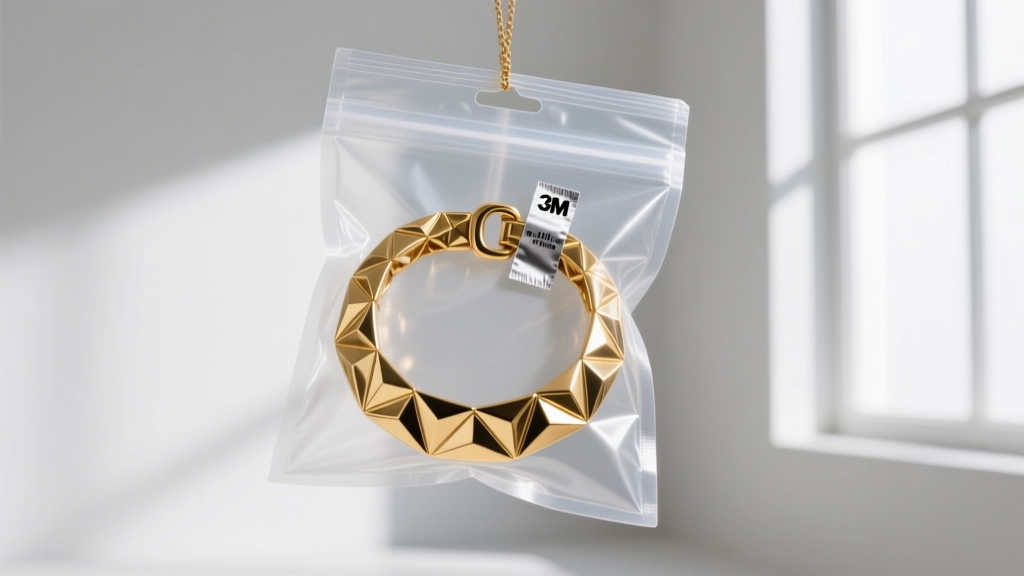
Actionable Setup: Purchase archival-quality polyethylene (PE) or polypropylene (PP) zip bags. Avoid PVC (polyvinyl chloride) at all costs; it off-gasses plasticizers that create a sticky, acidic film on metals. Place a small strip of 3M Anti-Tarnish paper (roughly $8 for a pack of 10) inside each PE bag. These strips absorb airborne sulfides and will protect the metals for up to 12 months before needing replacement.
Step 4: The Physical Storage Method (Flat vs. Hanging)
A common misconception is that all necklaces should be hung on hooks to prevent tangling. For lightweight chains, this is true. For statement necklaces, hanging is often a death sentence.
When a 250-gram multi-strand necklace is hung, gravity exerts continuous downward force on the threading. Over a period of three to six months, this causes 'creep'—a permanent, irreversible stretching of nylon or silk threads. Once the thread stretches, the necklace loses its drape, and the tension on the clasp loop weakens, eventually leading to a catastrophic snap.
The Drawer Divider System
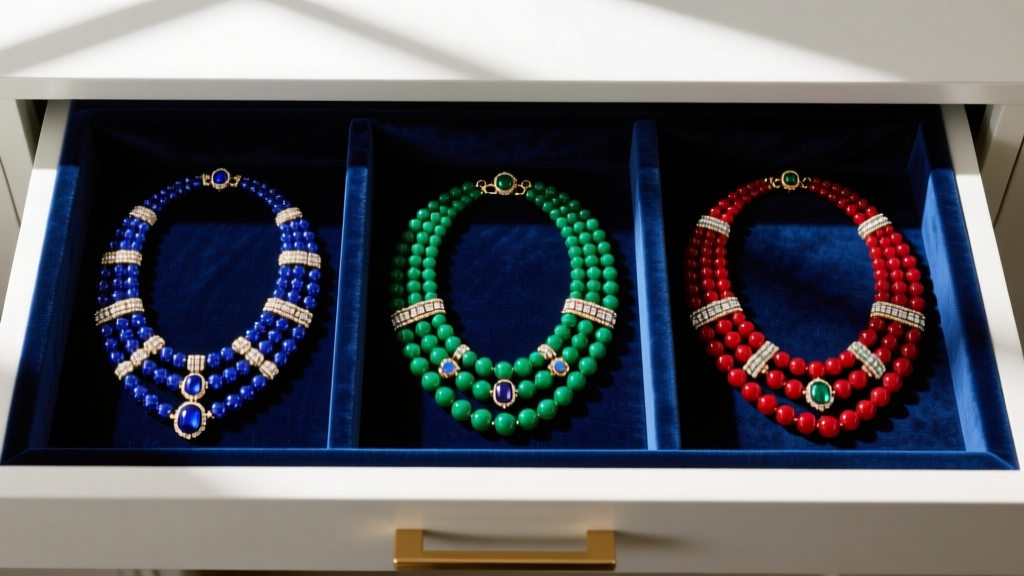
Flat storage is mandatory for any statement piece weighing over 100 grams. Use a shallow drawer (at least 2 inches deep) equipped with adjustable velvet-lined dividers. Configure the dividers to create individual compartments that are just slightly larger than the folded necklace. This prevents the pieces from sliding around when the drawer is opened and closed, which is the primary cause of tangling and micro-scratches on high-polish metals.
If you must store pieces in a safety deposit box or a stacked tray system, ensure that no heavy metal components rest directly on top of softer gemstones. Use a layer of acid-free tissue or a soft, unbleached cotton flannel cloth between stacked trays to absorb shock and prevent abrasion.
Troubleshooting Common Storage Disasters
Even with the best intentions, storage mishaps happen. Here is how to triage common issues:
- Galvanic Corrosion (Green/White Crust at Metal Joints): If you stored a sterling silver chain with copper or brass beads in a humid room, you may see a crusty buildup. Do not scrub this with a hard brush. Use a cotton swab lightly dipped in distilled water and a drop of mild dish soap to gently dissolve the salts, then dry immediately with a hairdryer on a cool setting. Separate the dissimilar metals in the future.
- Stuck Zippers on Storage Pouches: If the zipper on your PE storage bag snags on a delicate chain link, do not pull. Use a pair of fine-tipped, smooth-jawed jewelry pliers to gently bend the zipper tooth away from the chain, then apply a tiny dab of beeswax to the zipper track to lubricate it.
- Cloudy Acrylic or Resin: If your resin elements have become cloudy from improper storage near PVC plastics, you can sometimes restore the shine by gently polishing the surface with a microfiber cloth and a tiny amount of plastic polish (like Novus No. 1). Test on an inconspicuous area first.
Final Thoughts on Preserving Your Collection
Storing statement necklaces requires a shift in mindset from casual organization to active preservation. By understanding the specific chemical and physical needs of your materials—using inert polyethylene plastics, anti-tarnish technology, and flat structural support—you ensure that your boldest, heaviest, and most intricate pieces remain in pristine condition for decades. Treat your jewelry archive with the same respect a museum curator treats an exhibit, and your collection will continue to make a flawless statement every time you wear it.


