How to Clean a Blue and White Bead Necklace Safely
Learn expert cleaning, storage, and maintenance tips to protect the glaze, dye, and stringing of your blue and white bead necklace.

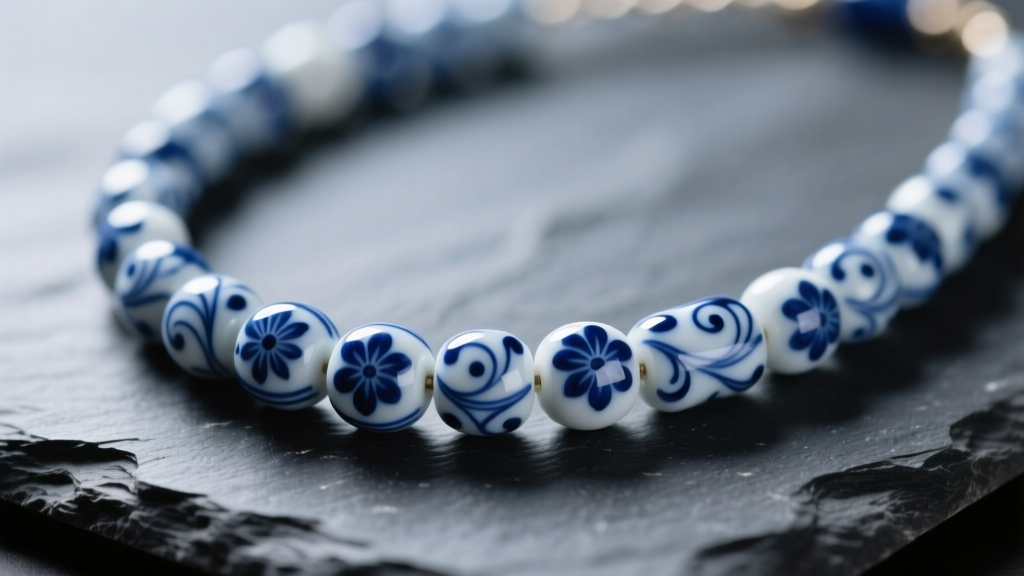
Blue and white bead necklaces represent some of the most striking contrast in jewelry design. Whether you are wearing antique Delft porcelain, traditional Jingdezhen ceramics, natural lapis lazuli with white calcite matrices, or dyed howlite, the visual appeal is undeniable. However, as of 2026, jewelry conservationists continue to warn against the 'one-size-fits-all' cleaning approaches that ruin these diverse materials. The term 'blue and white bead necklace' encompasses vastly different mineralogical and ceramic profiles, each with unique vulnerabilities to water, chemicals, and mechanical stress.
Proper care requires identifying your exact bead composition and understanding the chemistry of your stringing medium. In this comprehensive guide, we break down the precise maintenance protocols required to preserve the structural integrity, color vibrancy, and stringing tension of your necklace.
Material Identification: The Foundation of Care
Before applying any moisture or cleaning agent, you must determine what your beads are actually made of. The blue and white aesthetic is achieved through several completely different mediums, each reacting differently to standard jewelry cleaners.
- Glazed Porcelain and Ceramic: Fired at extreme temperatures, these beads are generally non-porous if the glaze is fully intact. The blue is typically cobalt oxide. They are durable but susceptible to 'crazing' (micro-fractures in the glaze) from sudden temperature changes.
- Lapis Lazuli with Calcite: A natural metamorphic rock where the deep blue lazurite is interspersed with white calcite veins. Calcite is calcium carbonate, making it highly reactive to even mild acids.
- Dyed Howlite: A naturally white, porous stone dyed blue to mimic turquoise or lapis. The dye is superficial and can bleed, fade, or strip entirely if exposed to harsh solvents or prolonged moisture.
- Lampwork Glass: Hand-torched glass beads featuring white and blue frit. While non-porous, they are highly sensitive to thermal shock and mechanical impacts.
Material Vulnerability Matrix
| Material | Mohs Hardness | Porosity | Acid Sensitivity | Ultrasonic Safe? |
|---|---|---|---|---|
| Glazed Porcelain | 6.0 - 7.0 | None | Low | Yes (with caution) |
| Lapis Lazuli | 5.0 - 6.0 | Moderate | High (Calcite) | No |
| Dyed Howlite | 3.5 | High | High | No |
| Lampwork Glass | 5.5 - 7.0 | None | Low | No (Thermal shock) |
The Step-by-Step Wet Cleaning Protocol
For porous, dyed, or natural stone beads, full immersion in water is strictly prohibited. Moisture can seep into the drill holes, trapping water against the stringing material and causing internal rot or metal oxidation. Instead, follow this targeted surface-cleaning method.
Step 1: Dry Dusting. Use a clean, soft-bristled makeup brush to gently sweep away surface dust, skin cells, and cosmetic powders from the bead surfaces and the crevices around the clasp.
Step 2: Prepare a pH-Neutral Solution. Mix one cup of distilled water (tap water contains chlorine and dissolved minerals that can leave white deposits on porous stones) with a single drop of pH-neutral dish soap. Avoid any commercial jewelry dips, as they often contain ammonia or thiourea, which will strip dyes and etch calcite.
Step 3: Damp Wiping. Dampen a lint-free microfiber cloth in the solution and wring it out until it is barely moist. Never apply liquid directly to the beads.
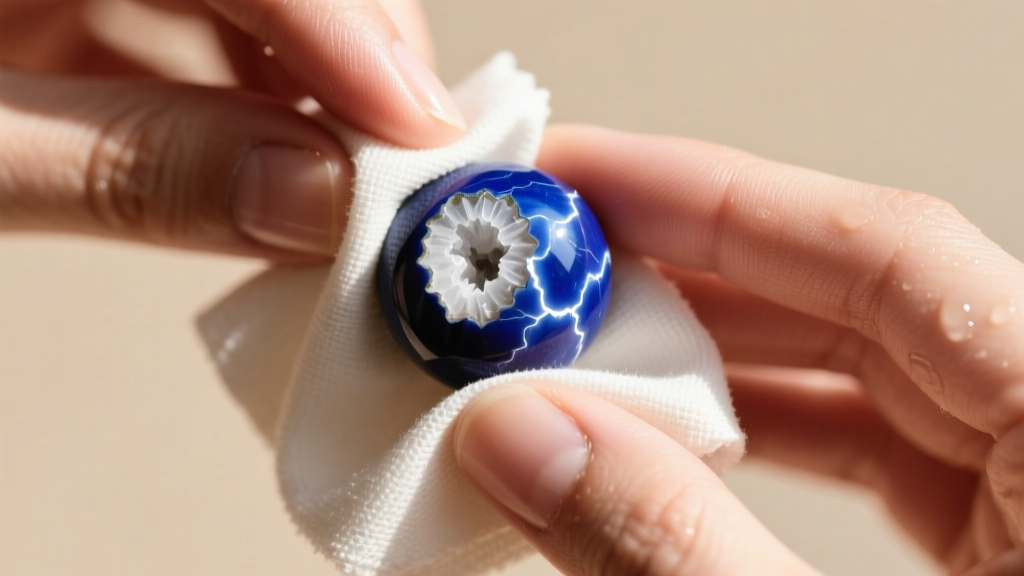
Step 4: Targeted Cleaning. Gently wipe each bead individually, taking care to avoid saturating the drill holes. For stubborn grime on glazed porcelain, a soft cotton swab lightly dampened with the solution can be used to trace the raised cobalt patterns.
Step 5: Immediate Drying. Follow immediately with a dry microfiber cloth to buff the beads and remove any residual moisture. Allow the necklace to lay flat on a dry towel in a well-ventilated area for 24 hours before storing.
The Dangers of Ultrasonic and Steam Cleaners
It is a common misconception that ultrasonic cleaners are safe for all hard stones. According to the Gemological Institute of America (GIA), ultrasonic cleaners rely on cavitation—the rapid formation and collapse of microscopic bubbles in a liquid medium. While this safely dislodges dirt from solid diamonds or gold, it is catastrophic for mixed-mineral stones like lapis lazuli.
The violent micro-jets created by collapsing cavitation bubbles can literally chip the softer white calcite inclusions right out of a lapis bead, leaving pitted, rough craters that ruin the stone's polish and structural integrity.
Furthermore, steam cleaners introduce sudden, localized heat. For ceramic and lampwork glass beads, this rapid thermal expansion and contraction causes 'crazing'—a permanent network of microscopic fractures in the glaze or glass matrix that traps dirt and weakens the bead.
Stringing Material Degradation and Care
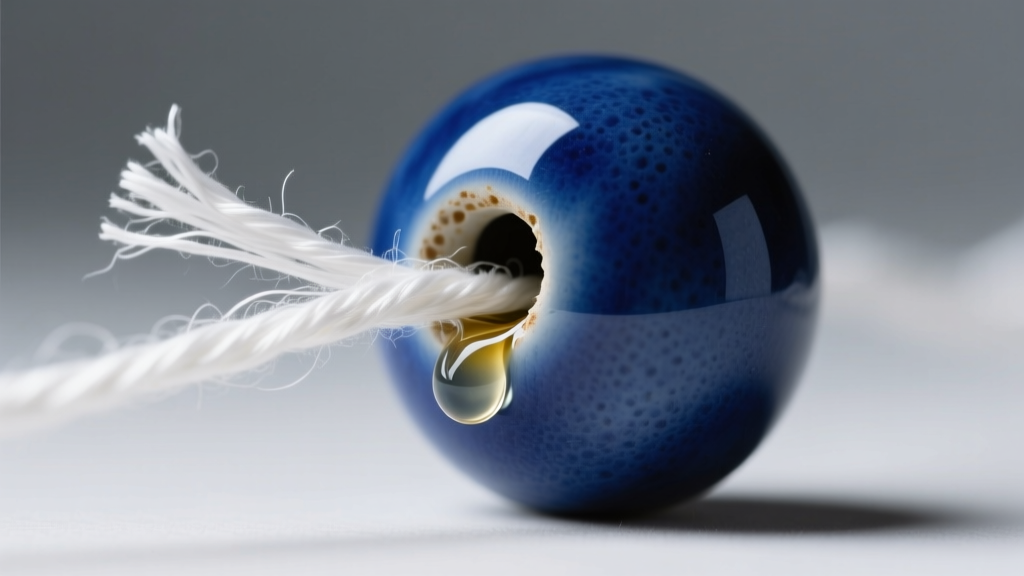
The longevity of your blue and white bead necklace is often dictated not by the beads themselves, but by the stringing medium. Skin oils, which typically have an acidic pH ranging from 4.5 to 6.2, slowly break down organic and synthetic threads over time.
Silk Thread
Traditional silk offers a beautiful, supple drape that allows ceramic and porcelain beads to sit elegantly on the collarbone. However, silk is highly hygroscopic and absorbs oils and moisture. Never wet-clean a silk-strung necklace. Moisture stretches the silk and accelerates degradation. Jewelers of America recommends professional restringing of silk-threaded necklaces every 12 to 24 months, depending on wear frequency.
Nylon and Synthetic Threads
Modern alternatives like Power Pro or WildFire (thermally fused polyethylene) are hydrophobic and resist body oils. These can withstand the damp-wiping cleaning protocol outlined above without losing tensile strength. They are the ideal choice for lapis lazuli or howlite necklaces worn in humid climates.
Nylon-Coated Stainless Steel Wire
Brands like Accu-Flex use multi-strand stainless steel coated in nylon. While impervious to water and oils, wire is prone to kinking if stored improperly. Never hang a wire-strung necklace; always store it flat to maintain the wire's memory and prevent the nylon coating from cracking.
Clasp and Hardware Maintenance
The metal findings on your necklace require a different approach than the beads. If your necklace features a sterling silver clasp, it will naturally oxidize and tarnish when exposed to sulfur in the air and skin.
To clean the clasp without damaging the adjacent blue and white beads, use a dry silver polishing cloth treated with micro-abrasives. Fold the cloth and carefully rub only the metal hardware. Avoid liquid silver dips entirely, as capillary action can draw the harsh chemical solution into the drill hole of the nearest bead, causing irreversible chemical burns to porous stones or dyed howlite.
Storage: Preventing UV Fading and Environmental Damage
How you store your necklace between wears is just as critical as how you clean it. UV radiation from direct sunlight is the primary enemy of dyed howlite and certain stabilized lapis lazuli treatments, causing the vibrant blue to bleach into a dull, chalky grey over time.
Store your blue and white bead necklace in a dark, climate-controlled environment. Use an archival-quality, acid-free jewelry box lined with untarnished flannel. For added protection against humidity—which can weaken silk threads and cause base-metal clasps to seize—place a small, replaceable silica gel desiccant packet in the storage compartment. Avoid plastic poly-bags, as they can trap moisture and emit volatile organic compounds (VOCs) that may react with delicate ceramic glazes or porous stones over prolonged periods.
By respecting the specific material science behind your beads and stringing, your blue and white bead necklace will maintain its striking contrast and structural beauty for decades to come.


