Ultimate Care Guide for Your Vintage Owl Necklace
Discover expert tips to clean, restore, and store your vintage owl necklace. Learn how to safely polish silver, brass, and enamel without damaging patina.

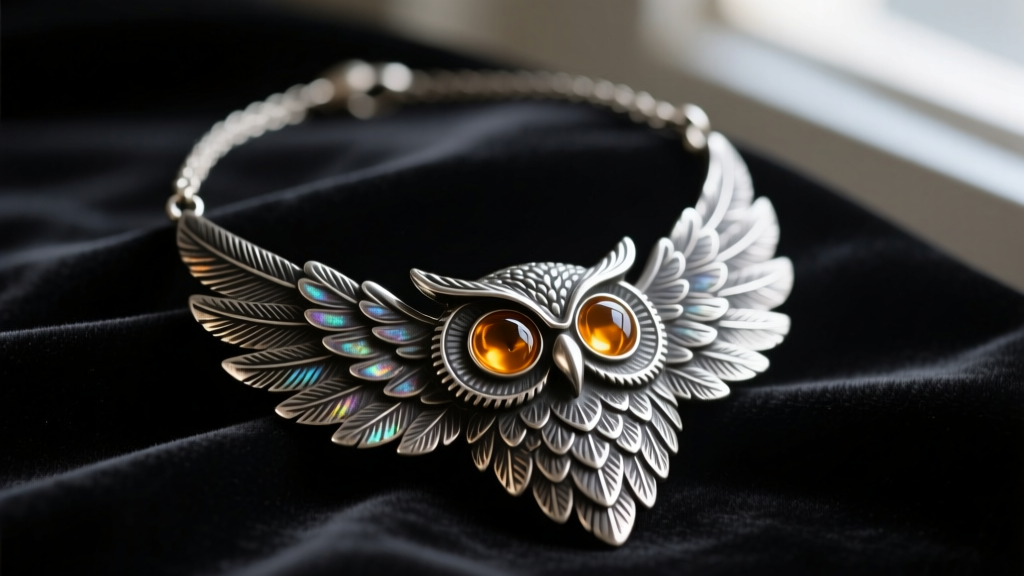
Owning a vintage owl necklace is like holding a piece of wearable history. Whether your pendant stems from the Victorian revival era, the Art Nouveau movement, or the whimsical 1970s costume jewelry boom, these intricate avian designs require specialized maintenance. The deep crevices used to sculpt feathers, the delicate enamel work, and the fragile glass or rhinestone eyes all trap skin oils, cosmetics, and environmental pollutants. According to the Victoria and Albert Museum's conservation guidelines, improper cleaning is the leading cause of irreversible damage to vintage jewelry. This comprehensive guide will teach you how to clean, restore, and store your vintage owl necklace while preserving its historical integrity and material value.
Identifying Your Necklace Materials
Before applying any cleaning solution, you must accurately identify the metals and accents used in your piece. Vintage owl pendants are typically crafted from a few specific materials, each reacting differently to moisture and chemicals:
- Oxidized Sterling Silver (925): Often treated with liver of sulfur to create dark, antiqued shadows in the feather details.
- Brass or Bronze: Common in mid-century pieces, prone to developing a greenish verdigris patina when exposed to skin acids.
- Guilloché or Cold Enamel: Used to add vibrant color to the owl's wings or chest. Guilloché is fired glass, while cold enamel is essentially a hardened resin or paint.
- Foil-Backed Rhinestones or Cabochons: Frequently used for the owl's eyes. The foil backing is highly susceptible to water damage and chemical stripping.
The Golden Rule: Preserve the Patina
The most common mistake collectors make is aggressively polishing a vintage owl necklace until it shines like new. In vintage jewelry, the dark tarnish trapped in the recessed areas is called patina or antiquing. This contrast is what gives the owl's feathers their three-dimensional depth. If you use harsh silver dips or abrasive polishing cloths, you will strip this intentional oxidation, leaving the piece looking flat, harsh, and significantly less valuable. Always aim to clean the surface dirt and oils while leaving the recessed darkening completely intact.
Step-by-Step Cleaning Guide by Material
Cleaning Oxidized Silver and Brass Bodies
For the main metal body of the owl, avoid commercial liquid silver dips entirely. These thiourea-based chemicals strip all oxidation and can cause micro-pitting in older, softer metals. Instead, use a mild surfactant approach.
- Mix three drops of phosphate-free dish soap (like Dawn) into a bowl of lukewarm distilled water. Tap water contains chlorine and minerals that can cause spotting.
- Submerge the metal portion of the necklace for no more than three minutes to loosen sebum and cosmetic buildup.
- Using an extra-soft baby toothbrush, gently agitate the surface of the feathers. Do not scrub the recessed areas. Brush only the high points where the metal would naturally experience wear.
- Rinse briefly under a gentle stream of distilled water.
- Dry immediately using a lint-free microfiber cloth, followed by a blast of compressed air to force moisture out of the intricate feather crevices.
Protecting Enamel and Rhinestone Eyes
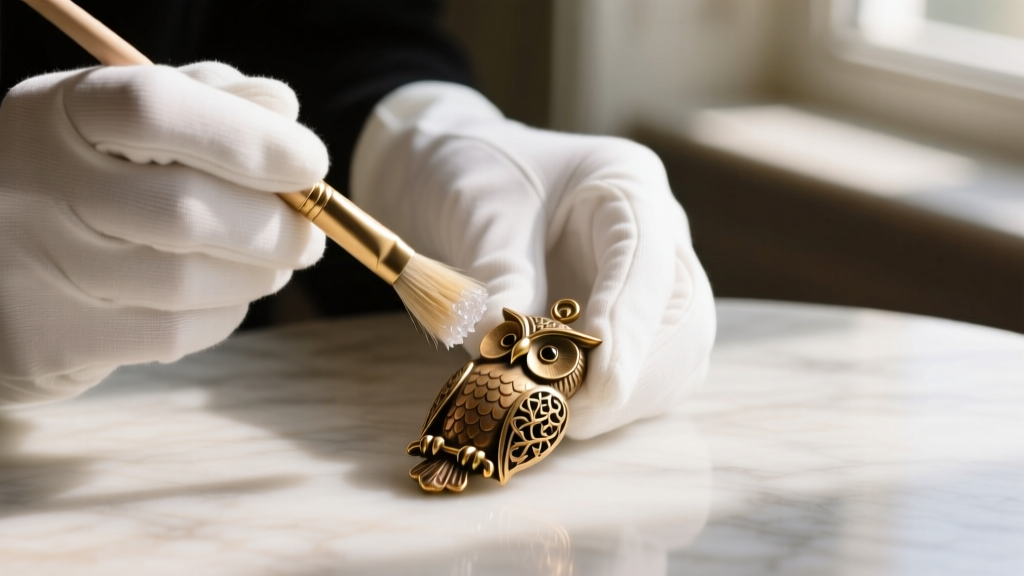
Never submerge a vintage owl necklace if it features rhinestone eyes or cold enamel. Water will seep beneath the prongs, causing the delicate silver foil backing on rhinestones to oxidize and turn black, effectively killing the stone's sparkle. Furthermore, ultrasonic cleaners will shatter glass enamel through high-frequency vibrations. To clean these delicate accents, use a dry, soft-bristled makeup brush to dust away loose debris. For stubborn grime around the prongs, lightly dampen a cotton swab with isopropyl alcohol and carefully trace the bezel, ensuring no liquid touches the stone's base or the enamel surface. For deeper insights into gemstone and accent care, the Gemological Institute of America (GIA) strongly advises against using chemical solvents on porous or backed vintage stones.
Tools and Solutions: What to Use and Avoid
Having the right conservation-grade tools on hand is critical for maintaining vintage jewelry. Refer to the table below to ensure you are using safe materials.
| Material | Safe Cleaning Agents | Strictly Avoid |
|---|---|---|
| Oxidized Silver | Mild dish soap, distilled water, microfiber | Silver dip, baking soda paste, toothpaste |
| Brass / Bronze | Wright's Brass Polish (high points only) | Lemon juice, vinegar, ammonia |
| Guilloché Enamel | Dry microfiber, soft makeup brush | Ultrasonic cleaners, steam, alcohol |
| Foil-Backed Stones | Dry cotton swab, compressed air | Water submersion, liquid jewelry cleaners |
Maintaining the Chain and Clasp
Vintage owl pendants are often paired with period-correct chains, such as woven snake chains or delicate rolo links. Snake chains are notorious for trapping skin oils between their tightly interlocking plates, leading to a stiff, tarnished necklace. To clean a snake chain, lay it flat on a microfiber towel and use a soft brush dipped in your soapy distilled water solution, brushing in the direction of the links. For the spring-ring or lobster clasp, a tiny drop of sewing machine oil applied with a pin to the internal spring mechanism will restore a snappy, secure closure. Wipe away any excess oil immediately to prevent dust attraction.
Sealing and Protecting the Finish
Once your vintage owl necklace is clean and completely dry, you can apply a protective barrier to slow down future tarnish and protect the metal from your skin's natural acidity. Museum conservators frequently use Renaissance Wax, a microcrystalline wax developed by the British Museum. Apply a minuscule amount of the wax to a soft cotton cloth and gently buff it over the high points of the owl's feathers and the chain. Allow it to haze for five minutes, then buff it to a soft, natural luster. This creates an invisible, non-yellowing barrier that repels moisture and sulfur in the air.
Proper Storage to Prevent Tarnish and Damage
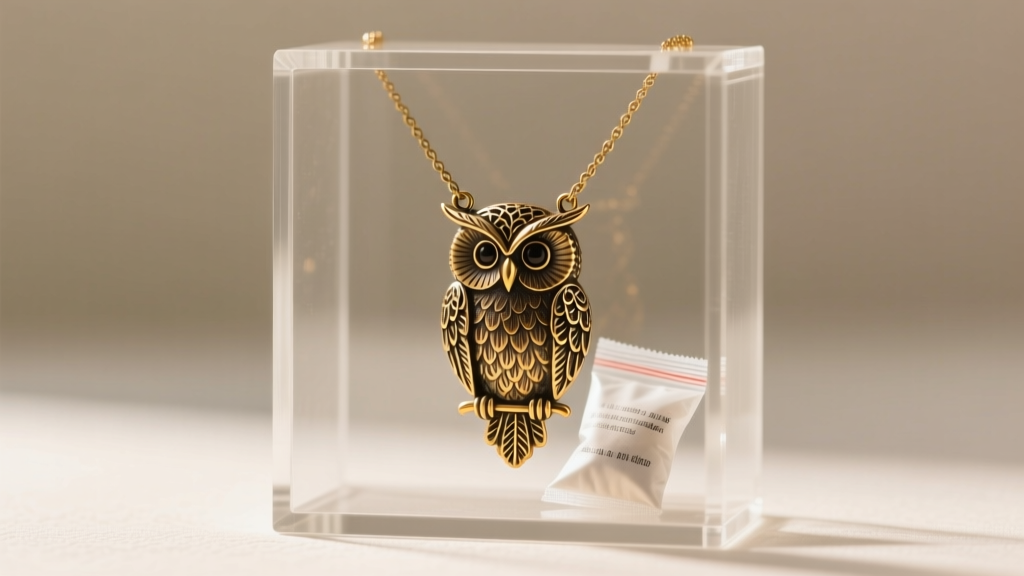
How you store your vintage owl necklace is just as important as how you clean it. Silver and brass tarnish when exposed to hydrogen sulfide in the air and high humidity. Follow these archival storage protocols:
- Control the Climate: Store your jewelry in an environment with a relative humidity (RH) between 40% and 50%. High humidity accelerates galvanic corrosion, especially on mixed-metal pieces.
- Use Anti-Tarnish Strips: Place 3M or Pacific Silvercloth anti-tarnish strips inside your storage container. These strips absorb sulfur gases before they can react with your metals. Replace them every six months.
- Avoid PVC and Cardboard: Never store vintage jewelry in cheap plastic bags or standard cardboard boxes. PVC off-gasses chlorides that cause irreversible green corrosion on brass and bronze, while the acids in cardboard degrade metal over time.
- Prevent Mechanical Damage: Store the necklace flat or hung on a padded velvet hook. Tossing it into a drawer can cause the owl's beak or wings to snag on other chains, bending the vintage metal or chipping the enamel.
When to Seek Professional Restoration
While routine cleaning and maintenance can be safely performed at home, certain issues require the hands of a master jeweler who specializes in antique restoration. If you notice loose prongs holding the owl's glass eyes, a hairline fracture in the enamel, or a compromised solder joint where the bail meets the pendant, stop wearing the piece immediately. Attempting to clean a structurally compromised necklace can result in the total loss of a stone or the snapping of a fragile, century-old chain. A professional can re-tip prongs and stabilize enamel using conservation-grade adhesives that are reversible, ensuring the historical integrity of your vintage owl necklace remains intact for generations to come.


