Navaratna Necklace Trends: Styling the 9-Gem Classic in 2026
Discover how the traditional navaratna necklace is evolving in 2026. Explore modern styling, gemstone grading, and contemporary layering techniques.

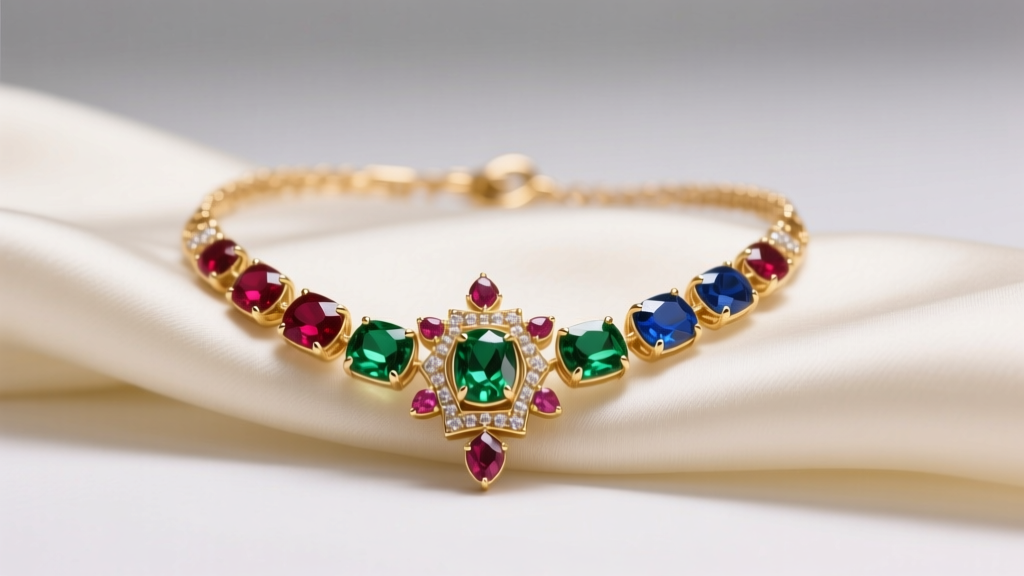
The Evolution of the Navaratna Necklace in Contemporary Fashion
For centuries, the navaratna necklace has been a cornerstone of Vedic astrological jewelry, revered not just for its breathtaking visual complexity, but for its purported ability to harmonize the wearer's cosmic energies. Translating to 'nine gems' in Sanskrit, this traditional piece features a specific arrangement of diamonds, rubies, emeralds, corals, pearls, yellow sapphires, blue sapphires, hessonites, and cat's eyes. Historically, these necklaces were heavy, rigid, and crafted in 22-karat gold using intricate Kundan or temple-style settings, largely reserved for bridal trousseaus or religious ceremonies.
However, as we navigate the style landscape of 2026, the navaratna necklace is undergoing a radical renaissance. Contemporary jewelry designers are stripping away the bulky heritage silhouettes and reimagining the nine-gem configuration for the modern, minimalist wardrobe. The current trend focuses on fluid, asymmetric collars, sleek bezel settings, and mixed-metal chains that allow the wearer to layer this astrological powerhouse with everyday fine jewelry. This shift represents a broader movement in the luxury market: consumers want pieces that carry deep personal and spiritual significance without sacrificing daily wearability or modern aesthetic sensibilities.
Anatomy of a Modern Navaratna: Gemstone Grades and Settings
To truly appreciate the 2026 iterations of the navaratna necklace, one must understand the strict gemological and astrological rules that govern its creation. According to Vedic traditions, the ruby (representing the Sun) must always occupy the center of the arrangement. Crucially, the ruby must be set in a way that allows it to physically touch the wearer's skin to facilitate energy transfer. This requirement poses a unique design challenge for modern jewelers who prefer closed-back bezel settings for structural integrity.
To solve this, contemporary designers are utilizing open-back cathedral settings or crafting custom contoured backplates that allow the ruby's pavilion to make direct contact with the clavicle while keeping the rest of the stones securely enclosed. Furthermore, the arrangement of the remaining eight stones traditionally follows a specific clockwise planetary alignment. Today's avant-garde designers are playing with this geometry, scattering the stones along a lariat drop or embedding them into an asymmetrical half-moon choker, while still maintaining the ruby's central, skin-touching dominance.
Gemological Realities: What to Expect in the Current Market
Sourcing natural, untreated stones for all nine positions is exceptionally rare and prohibitively expensive. Therefore, understanding the acceptable treatments for each gemstone is critical for buyers. According to the GIA Gem Encyclopedia, treatments vary wildly across the navaratna spectrum, and knowing what to look for can save you from overpaying for artificially enhanced stones.
| Gemstone | Planet | Ideal 2026 Cut | Market Price Range (per carat) | Common Treatments & Red Flags |
|---|---|---|---|---|
| Ruby | Sun | Oval Cabochon / Cushion | $2,500 - $15,000+ | Lead-glass filling (avoid); minor heat is standard. |
| Pearl | Moon | Round / Baroque | $150 - $1,500 | Bleaching and irradiation; avoid dyed freshwater substitutes. |
| Red Coral | Mars | Cabochon | $50 - $300 | Dyeing (wipe with acetone to test); plastic impregnation. |
| Emerald | Mercury | Emerald Step Cut | $1,000 - $8,000 | Cedar oil or resin filling (clarity enhancement is expected). |
| Yellow Sapphire | Jupiter | Oval Brilliant | $300 - $2,500 | Beryllium diffusion (must be disclosed; drastically lowers value). |
| Diamond | Venus | Round Brilliant | $1,500 - $10,000+ | Laser drilling or fracture filling; stick to GIA-certified stones. |
| Blue Sapphire | Saturn | Oval / Cushion | $1,000 - $12,000 | High-heat treatment; lattice diffusion (avoid for astrological use). |
| Hessonite | Rahu | Emerald Cut / Oval | $50 - $400 | Generally untreated; watch for glass imitations. |
| Cat's Eye | Ketu | Cabochon | $100 - $1,500 | Synthetic quartz substitutes; ensure it is natural chrysoberyl. |
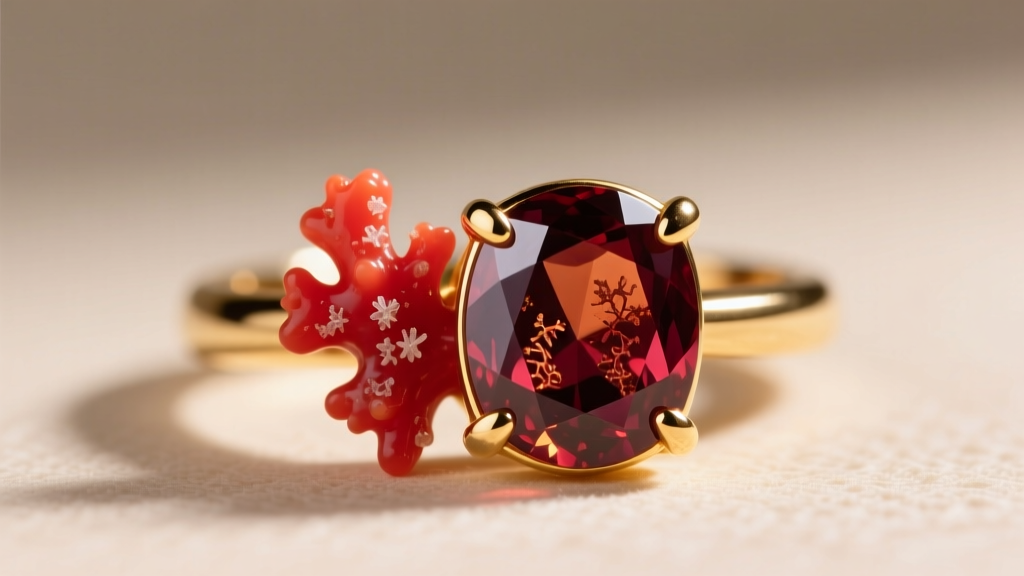
2026 Trend Report: Three Ways to Style the Nine Gems
The days of pairing a heavy navaratna necklace exclusively with traditional silk sarees are behind us. The 2026 styling ethos champions juxtaposition—mixing the ancient spiritual weight of the nine gems with relaxed, contemporary silhouettes. As noted in recent trend analyses by Vogue, heritage jewelry is finding new life in unexpected, casual contexts.
- The Asymmetric Collar: Instead of a symmetrical pendant, designers are setting the nine stones in a graduating line that wraps around one side of the collarbone. This looks stunning over a crisp, oversized white poplin button-down or a deep V-neck cashmere sweater, allowing the stones to act as a vibrant, structured focal point against neutral fabrics.
- The Lariat Drop: A delicate 18k gold chain that plunges into a deep Y-shape, ending in a vertical stack of the navaratna gems. The ruby is placed at the very bottom tip, resting against the sternum. This style elongates the neck and pairs beautifully with minimalist slip dresses or tailored blazers.
- Mixed-Metal Layering: The biggest trend of 2026 is mixing metal tones. A navaratna pendant crafted in warm 18k yellow gold is being layered with cool 14k white gold paperclip chains and matte platinum herringbone links. This breaks up the visual density of the colored stones and integrates the piece into a modern, multi-textural stack.
Metal Choices: 22K Heritage vs. 18K Contemporary Durability
When commissioning or purchasing a modern navaratna necklace, the choice of metal alloy fundamentally dictates both the aesthetic and the longevity of the piece. Traditional Indian jewelry heavily favors 22-karat gold (91.6% pure gold). While 22k gold offers that unmistakable rich, buttery yellow hue and holds immense intrinsic value, it is inherently soft. In a navaratna piece, which requires securing nine different stones of varying hardness levels, 22k gold prongs are prone to bending, catching on clothing, and eventually releasing the stones.
For the 2026 consumer prioritizing daily wear, 18-karat gold (75% pure gold) is the superior choice. The addition of copper, silver, or zinc provides the necessary tensile strength to support secure bezel settings, micro-pave diamond halos, and sleek, modern prongs. Furthermore, 18k white gold and 18k rose gold are increasingly popular for the navaratna, offering a muted, sophisticated backdrop that allows the vivid hues of the blue sapphire, emerald, and ruby to command attention without competing with the yellow metal.
'The true mastery of a contemporary navaratna piece lies not just in the astrological alignment of the stones, but in the metallurgical engineering required to keep them secure while maintaining an open-back setting for the central ruby.'
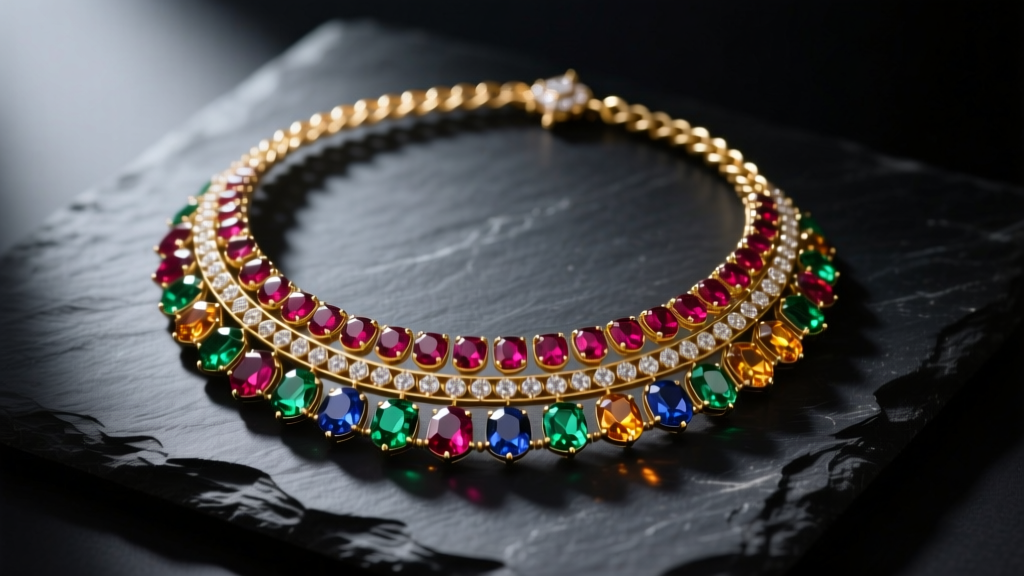
Buying Guide: Avoiding Treated and Synthetic Pitfalls
Because a genuine navaratna necklace requires a diverse array of gemstones, it is a prime target for fraudulent substitutions and undisclosed treatments. When shopping for high-end pieces, always demand individual gemological reports for the primary stones (Ruby, Emerald, Blue Sapphire, and Diamond). For the semi-precious stones (Coral, Hessonite, Cat's Eye), a comprehensive invoice detailing any enhancements is mandatory.
Beware of 'composite' or 'glass-filled' rubies, which are heavily fractured stones infused with lead glass to improve transparency. These are worth a fraction of the price of heat-treated or unheated rubies and are highly susceptible to damage from everyday chemicals like citrus or perfume. Similarly, red coral is frequently dyed to mimic the highly sought-after 'ox-blood' hue. A simple magnification check revealing dye concentration in the coral's natural pores is a clear indicator of artificial coloring.
Final Thoughts on Wearing Vedic Astrology Jewelry
The navaratna necklace in 2026 is a testament to the enduring power of cultural heritage when filtered through the lens of modern design. By prioritizing 18k gold for structural integrity, demanding transparency in gemstone treatments, and embracing asymmetric, layered styling, today's jewelry enthusiasts can wear this ancient talisman with confidence and contemporary flair. Whether you are drawn to its astrological promises or simply its unmatched chromatic brilliance, the modern navaratna is a masterclass in meaningful luxury.


