How to Buy and Authenticate an Italian Necklace Chain
Learn how to authenticate, weigh, and clean a solid Italian necklace chain. Expert tips on hallmarks, link styles, and avoiding hollow fakes.

The Legacy of Italian Chain Manufacturing
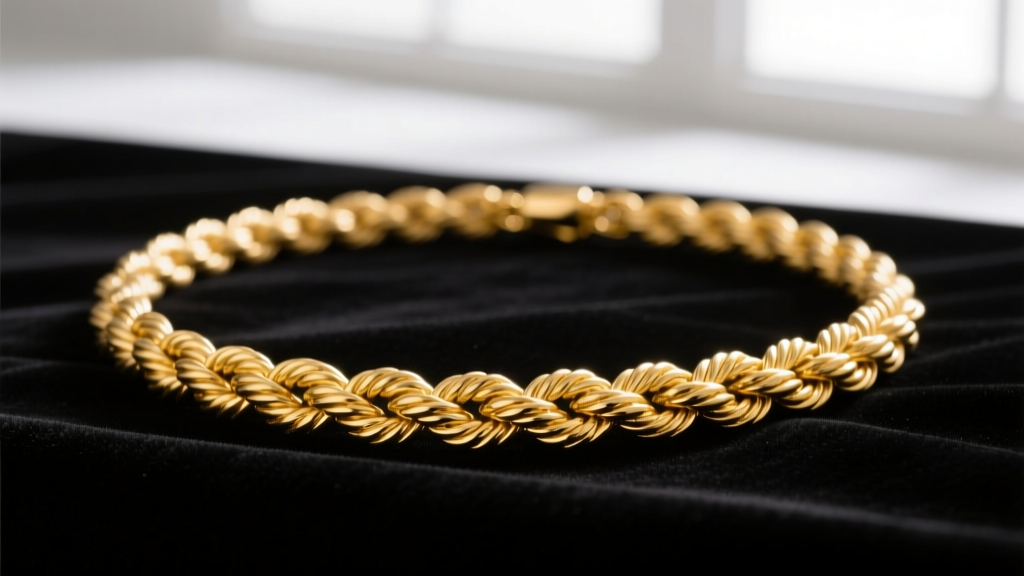
When jewelry collectors and enthusiasts speak of the gold standard in chain making, they are invariably referring to Italian craftsmanship. Italy produces roughly 70% of the world's high-quality gold jewelry, with the cities of Arezzo, Vicenza, and Valenza serving as the undisputed epicenters of this trade. An authentic Italian necklace chain is not merely an accessory; it is a feat of micro-engineering. Unlike mass-produced cast chains, genuine Italian chains are often woven on specialized CNC knitting machines or meticulously soldered link-by-link, resulting in unparalleled tensile strength and fluid drape.
However, the prestige of Italian manufacturing has led to a saturated market of counterfeits, gold-plated imitations, and fragile hollow chains masquerading as solid investments. Whether you are purchasing a vintage 18K gold Figaro or a modern sterling silver box chain, knowing how to properly authenticate, evaluate, and care for your jewelry is essential. This step-by-step guide will teach you how to verify the provenance and structural integrity of your chain.
Step 1: Decoding Hallmarks and Stamps
The first step in authenticating any precious metal jewelry is examining the hallmarks. Under Italian Legislative Decree 251/1999, all precious metals must carry specific purity and maker marks. According to the Gemological Institute of America (GIA), understanding these stamps is your primary defense against fraud.
The 750 and 925 Standards
In the United States, you are accustomed to seeing "14K" or "18K" stamped on gold. In Italy, the millesimal fineness system is strictly enforced. An 18K gold Italian necklace chain will be stamped with "750" (indicating 75% pure gold), while 14K will read "585". Sterling silver will bear the "925" stamp. Crucially, authentic pieces will also feature the word "ITALY" or the maker's unique polygonal registration mark (often an oval, known as the Ovalle), which includes the province code (e.g., "AR" for Arezzo or "VI" for Vicenza).
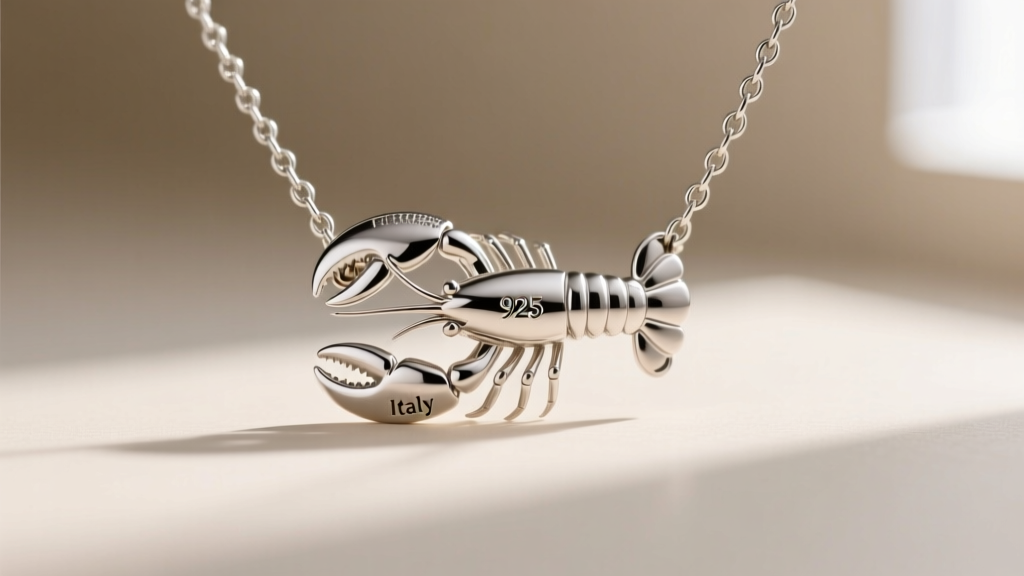
Red Flags to Avoid: If your chain is stamped "18K HGP" (Heavy Gold Plated), "18K GP", or "925 Italy" but exhibits a magnetic pull, it is not solid precious metal. Furthermore, if the stamp looks blurred, stamped over an existing mark, or is located on the links rather than the clasp or end tag, proceed with extreme caution.
Step 2: Evaluating Weight and Link Integrity
Once the hallmarks are verified, you must assess the physical construction. Italian manufacturers are famous for both solid and hollow (catene vuote) chains. Hollow chains are created via electroforming, allowing for massive, voluminous links at a fraction of the gold weight. While they offer a bold look for a lower price, they are notoriously fragile and nearly impossible to repair if crushed. A solid chain, conversely, is soldered or woven and will last generations.
To evaluate integrity, use the following benchmark table for standard 18-inch solid chains:
| Link Style | Avg. Weight (Solid 18K, 2mm) | Durability Rating | Best Use Case |
|---|---|---|---|
| Rope (Corda) | 5.8g - 7.2g | High | Heavy pendants, daily wear |
| Figaro | 8.5g - 10.0g | Very High | Standalone statement piece |
| Box (Cuba) | 4.1g - 5.5g | Medium | Delicate layering, light pendants |
| Curb (Gourmette) | 11.0g - 14.5g | Extreme | Heavy pendants, heirloom investment |
The Pinch Test: Gently run your fingers along the chain. A solid Italian rope or Figaro chain should feel dense, cool to the touch, and exhibit a fluid, liquid-like drape. If the chain feels unusually light, stiff, or makes a hollow "clicking" sound when dropped on a glass surface, it is likely electroformed or filled.
Step 3: The Proper Cleaning Protocol
Italian chains, particularly those with diamond-cut (sfaccettato) facets, require specific cleaning methods to maintain their brilliant light reflection without damaging the metal. Ultrasonic cleaners, while popular, can actually shake loose the microscopic solder joints on delicate Italian box chains or cause irreversible damage to hollow links.

Follow this expert-approved, step-by-step cleaning protocol recommended by industry professionals at Jewelers of America:
- Prepare the Solution: Mix three parts lukewarm distilled water with one part mild, phosphate-free dish soap (like Dawn) in a ceramic bowl. Avoid metal bowls, which can scratch the gold or silver.
- Soak: Submerge the Italian necklace chain for exactly 15 minutes. This loosens sebum, lotions, and environmental dust trapped in the intricate link gaps.
- Agitate Gently: Use a baby-soft toothbrush to gently sweep along the links. For diamond-cut chains, brush in the direction of the facets to avoid dulling the sharp edges.
- Rinse and Dry: Rinse thoroughly under a gentle stream of lukewarm water. Pat dry with a lint-free microfiber cloth, then lay it flat on a towel to air-dry completely before storing.
Step 4: Layering with Precision
An authentic Italian necklace chain is a versatile anchor for any jewelry wardrobe. To master the art of layering without causing the chains to tangle or abrade one another, you must follow the "Two-Inch Rule." Never layer chains that are within two inches of the same length.
- The Choker (14-16 inches): Use a delicate 1mm solid Italian box chain. It sits flush against the collarbone and provides a minimalist base.
- The Princess (18 inches): This is the standard length. A 2.5mm diamond-cut Italian Figaro chain works beautifully here, catching the light just above the neckline.
- The Matinee (20-24 inches): Anchor the stack with a heavier 4mm Italian rope chain. This length draws the eye downward and pairs exceptionally well with V-neck garments or open blouses.
Pro-Tip on Friction: If you are layering a gold Italian necklace chain with a silver one, be aware that the harder silver can slowly wear down the softer gold over years of continuous friction. Use a multi-strand clasp to keep them separated if you plan to wear them daily.
Final Thoughts on Sourcing
Investing in a genuine Italian necklace chain is a commitment to quality, heritage, and enduring style. By meticulously checking the millesimal hallmarks, evaluating the physical weight against known benchmarks, and adhering to proper maintenance protocols, you ensure your piece remains a pristine heirloom. For further education on global precious metal standards and manufacturing hubs, resources like the Vicenza Oro trade show archives offer unparalleled insight into the evolution of Italian goldsmithing.


