From Necklace Clip Art to Reality: Gifting Custom & Clip-On Charms
Translate digital necklace clip art into stunning custom charm necklaces. Explore our expert gift guide for clip-on pendants and enhancer bails.

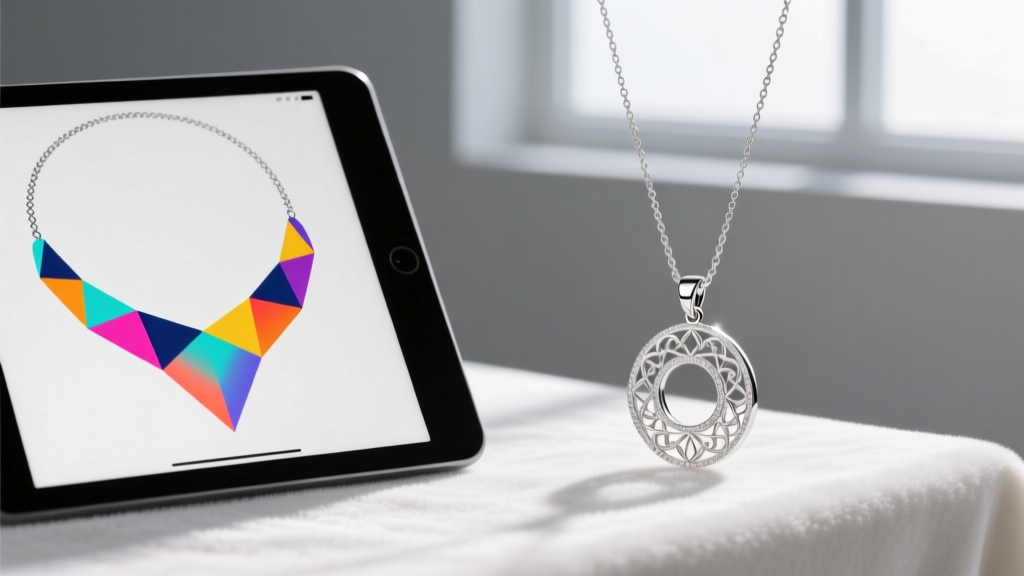
The Intersection of Digital Design and Physical Jewelry
When planning a personalized jewelry gift, the journey often begins long before metal is cut or cast. For many DIY jewelers, boutique owners, and custom design enthusiasts, the conceptualization phase relies heavily on digital assets. Searching for high-quality necklace clip art provides a foundational library of vector templates, silhouette outlines, and pendant schematics. These digital blueprints are essential for visualizing how a 2D concept will translate into a 3D wearable gift. But how do you bridge the gap between a flat digital graphic and a tangible, heirloom-quality piece of jewelry? This guide explores the technical translation of digital designs into physical clip-on charms, enhancer bails, and custom pendants, ensuring your gift-giving is both structurally sound and emotionally resonant.
Software and Preparation: Editing Vector Templates
Before any metal is cut, the digital necklace clip art must be properly prepared for manufacturing. Most free or premium vector templates downloaded from design repositories are scaled for print, not fabrication. To prepare a file for laser cutting or CNC milling, you must use vector software like Adobe Illustrator or the open-source alternative, Inkscape.
The most critical step is managing the 'kerf'—the width of material removed by the laser beam. For a standard 20-gauge sheet metal, a typical fiber laser has a kerf of approximately 0.004 inches. If your digital template features interlocking puzzle-piece charms or tight negative-space filigree, you must offset your vector lines by half the kerf width. Failing to account for this will result in charms that do not fit together or delicate prongs that melt away during the cutting process. Always convert all text and stroke paths to solid outlines before sending the file to the fabricator.
Translating Digital Vectors into Physical Blanks
To turn flat designs into a physical pendant, you must understand metal sheet gauges and cutting methods. Most vector templates are scaled for 20-gauge (0.81mm) or 22-gauge (0.64mm) sheet metal. According to manufacturing guidelines from Rio Grande, 20-gauge 925 sterling silver is the industry sweet spot for custom stamped and laser-cut charms. It provides enough rigidity to hold a deep hand-stamped font without warping, yet remains lightweight enough for delicate 1.5mm cable chains.
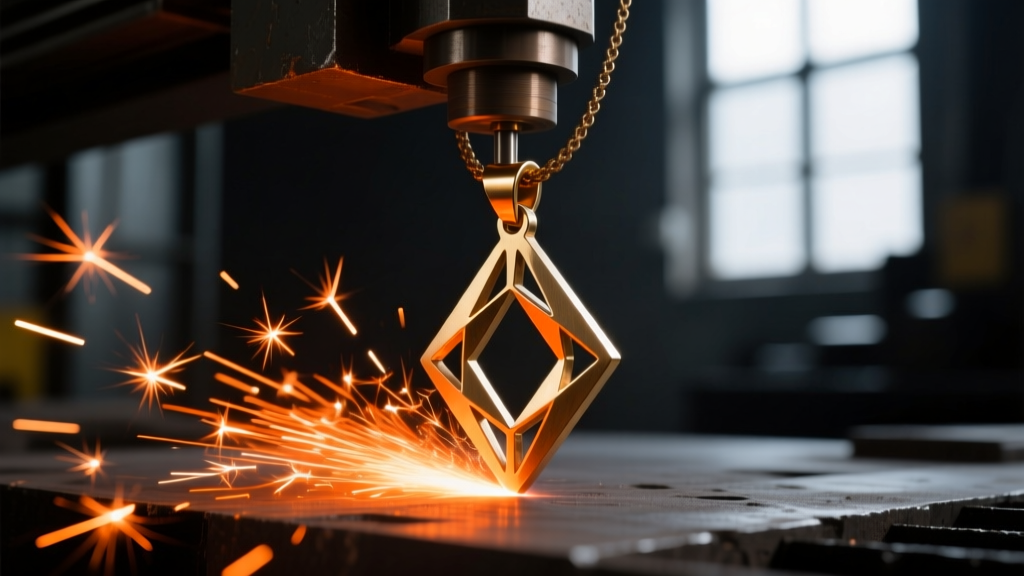
If your digital art features intricate, lace-like patterns, manual stamping will fail; you must utilize CNC laser cutting. When preparing your vector file (usually an SVG or DXF), ensure all lines are converted to paths and set to a 0.001-inch stroke width so the laser recognizes them as cut lines rather than engraving markers. After cutting, the blanks will have a rough, oxidized edge that requires tumbling in a rotary barrel with stainless steel shot and burnishing compound to achieve a professional jewelry finish.
The Mechanics of Clip-On Charms and Enhancer Bails
While the term 'clip' in digital searches refers to graphics, in physical jewelry, 'clip-on' refers to a highly specific and incredibly giftable hardware category: enhancer bails and clip-on charm carriers. Unlike static pendants that are permanently threaded onto a chain, clip-on mechanisms feature a hinged bail with a spring-loaded or snap-ring closure. This allows the wearer to easily swap pendants between different necklaces, maximizing the utility and interactive nature of your gift.
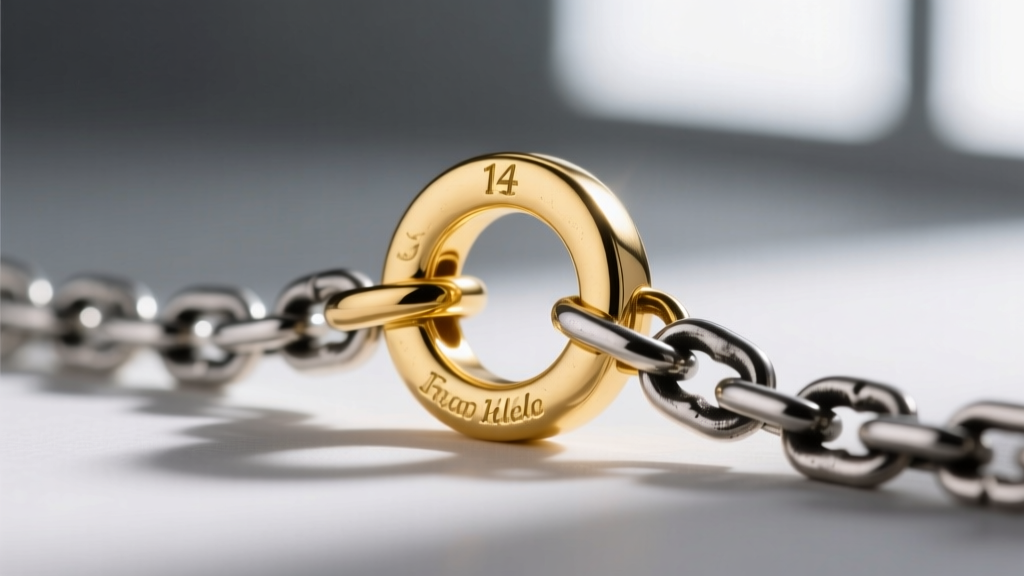
Sizing Guide: Matching Bails to Chains
The most common failure in custom jewelry gifting is a mismatched bail and chain. A beautiful custom pendant is useless if the enhancer bail cannot clear the chain's clasp or thickness. A standard 5mm lobster clasp is actually 6.5mm wide at its fattest point. Therefore, a 5mm inner diameter (ID) enhancer bail will not fit over it. You must use a 6mm ID bail or a specialized open-ring bail.
| Chain Thickness | Clasp Type | Required Bail Inner Diameter (ID) | Recommended Chain Style |
|---|---|---|---|
| 1.0mm - 1.5mm | Spring Ring (4mm) | 3mm or 4mm Snap-Ring Bail | Cable, Box, or Curb |
| 2.0mm - 3.0mm | Lobster (5mm) | 5mm Hinged Enhancer Bail | Rolo, Wheat, or Figaro |
| 4.0mm - 5.0mm | Lobster (7mm) | 6mm+ Hinged Bail or Open Loop | Heavy Rolo, Cuban Link |
Material Grades for Custom Stamped and Cut Charms
When bringing your designs to life, material selection dictates both the budget and the longevity of the gift. Understanding metal purity standards is crucial for setting recipient expectations.
- 925 Sterling Silver: The baseline for fine jewelry gifts. Composed of 92.5% pure silver and 7.5% copper. It takes a high polish and is ideal for deep stamping. However, the copper content means it will tarnish when exposed to sulfur and moisture, requiring occasional polishing.
- 14/20 Gold-Filled: Not to be confused with gold-plated. As defined by the Federal Trade Commission (FTC) Jewelry Guides, gold-filled items must have a gold layer that constitutes at least 1/20th of the total metal weight. This provides decades of wear without flaking, making it a premium choice for milestone anniversary gifts.
- Jeweler's Brass (NuGold): An excellent, budget-friendly alternative that mimics the warm tone of 14k rose gold. It is highly malleable, making it perfect for beginners practicing hand-stamping from their digital templates, though it requires a protective lacquer coating to prevent oxidation.
Occasion Matching: Gifting the Perfect Modular Necklace
Modular, clip-on charm necklaces are the ultimate versatile gift. Because the recipient can mix and match, you are essentially gifting an interactive experience rather than a static object.
Milestone Anniversaries
For a 10th or 25th anniversary, design a set of three interlocking clip-on charms based on geometric vector art. Use 14k yellow gold-filled enhancers on a heavy 4.5mm oxidized sterling rolo chain. The weight and presence of the chain elevate the gift to luxury status, while the clip-on mechanism allows the recipient to wear one charm for the office and all three for evening events.
New Mother Push Presents
Utilize minimalist, line-art necklace clip art to laser-cut the initials or birth flowers of the newborn. Pair these lightweight 22-gauge pendants with a 3mm snap-ring bail and a delicate 1.2mm box chain. The snap-ring mechanism ensures the mother can easily unclip the pendant and slide it onto a bracelet or diaper bag zipper for safety while holding the baby, ensuring the sentimental piece is never lost.
Troubleshooting Common Clip Mechanism Failures
When designing or sourcing clip-on hardware for your custom pendants, be aware of mechanical wear. Anticipating these issues will save you from gifting a flawed piece.
Spring-Ring Tension Loss
Cheap imported bails often use low-grade steel springs inside the hinge. Over time, the tension degrades, causing the bail to pop open and lose the pendant. Always source bails with stainless steel or titanium internal springs, and test the tension by snapping the bail shut repeatedly before assembling the final gift.
Hinge Pin Shearing
If the wearer frequently forces a 5mm bail over a thick 6mm clasp, the lateral stress will eventually shear the brass hinge pin. Always include a small jewelry care card with your gift, instructing the recipient to open the bail fully rather than stretching it over thick clasps.
Pro-Tip for Jewelers: If you are hand-fabricating the hinge mechanism from your vector templates, use a 0.8mm stainless steel wire for the hinge pin rather than brass. Brass pins will bend under the torque of daily clipping and unclipping, leading to catastrophic failure of the enhancer bail.
By thoughtfully translating digital concepts into precisely engineered physical realities, you transform simple graphics into deeply meaningful, structurally sound heirlooms. The next time you browse for inspiration, remember that the right technical knowledge can turn any piece of digital art into a breathtaking, modular jewelry gift.


