Eiffel Tower Necklace Value Guide: Metals, Price & Quality
Discover the true value of an Eiffel Tower necklace. Compare pricing tiers, metal grades, and chain quality to avoid overpaying for novelty jewelry.

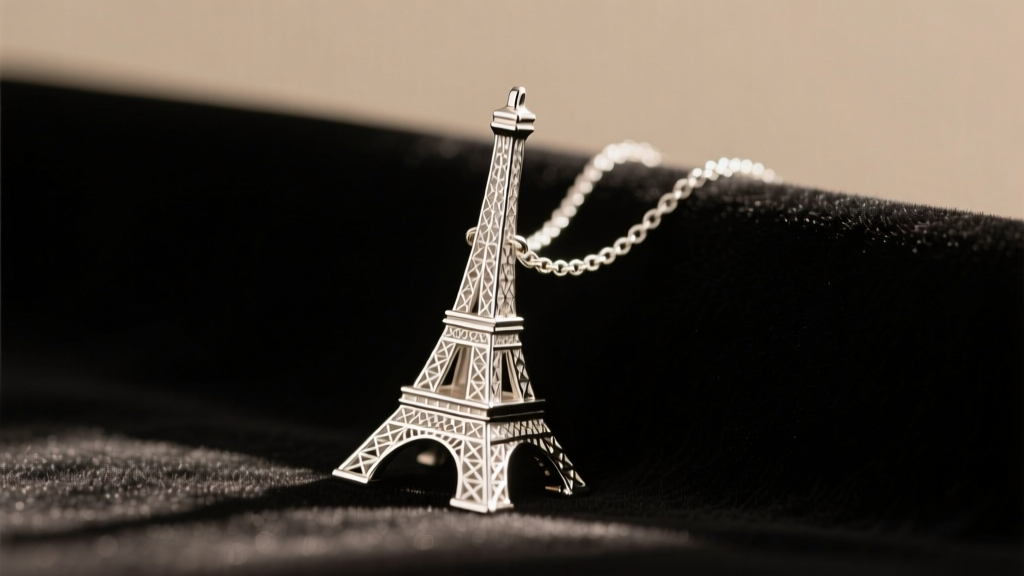
The Allure and the Markup: Understanding Novelty Jewelry Value
The Eiffel tower necklace remains one of the most recognizable and heavily searched novelty pendants in the global jewelry market. Whether purchased as a Parisian souvenir or a romantic gift, the architectural silhouette carries undeniable sentimental weight. However, from a strict budget and value assessment perspective, the Eiffel tower pendant is a masterclass in retail markup disparity. A piece that costs $4 to manufacture in base metals can easily retail for $45 in a boutique, while a solid 14k gold iteration might be aggressively overpriced at $800 due to the "tourist tax" applied to recognizable landmarks.
To accurately assess the value of an Eiffel tower necklace, buyers must strip away the emotional branding and evaluate the piece based on metallurgical composition, casting weight, chain integrity, and hallmark authenticity. This guide deconstructs the pricing tiers of Eiffel tower jewelry, providing you with the exact metrics needed to determine if you are paying for precious metal or simply funding a marketing margin.
Material Breakdown: From Pot Metal to Precious Metals
The most critical factor in valuing an Eiffel tower necklace is the base material. The market is saturated with deceptive terminology designed to make cheap alloys sound premium. Here is how the materials break down across three distinct pricing tiers.
Tier 1: Zinc Alloy, Brass, and "Tibetan Silver" (Under $25)
If an Eiffel tower necklace is priced under $25, it is almost certainly cast from zinc alloy, brass, or a copper-nickel blend often deceptively marketed as "Tibetan Silver" or "Alpaca." These base metals contain zero elemental silver. They are typically flash-plated with a microscopic layer of rhodium or silver-colored paint to mimic the look of sterling silver.
Value Assessment: Poor. The plating will wear off within 3 to 6 months of daily wear, exposing the copper-rich core. When copper reacts with the natural acidity and sulfur in human sweat, it causes the infamous green skin discoloration and can trigger contact dermatitis in those with nickel sensitivities. The melt value of these pieces is effectively zero.
Tier 2: Sterling Silver and Vermeil ($30 - $120)
This is the sweet spot for value-conscious buyers seeking genuine precious metals. A standard 30mm to 40mm Eiffel tower pendant cast in solid 925 sterling silver typically weighs between 2.2 and 4.5 grams. At current silver spot prices, the raw melt value of the pendant is roughly $1.80 to $3.50. Therefore, a retail price of $45 to $85 is highly justified when factoring in CAD modeling, 3D wax printing, casting, tumbling, hand-polishing, and the inclusion of a matching chain.
According to the Gemological Institute of America (GIA), sterling silver will naturally tarnish when exposed to airborne sulfur compounds. However, unlike base metals, tarnish on 925 silver is purely superficial and can be easily removed with a polishing cloth, preserving the structural integrity of the lattice metalwork.
Tier 3: Solid Gold and Diamond Accents ($250 - $1,500+)
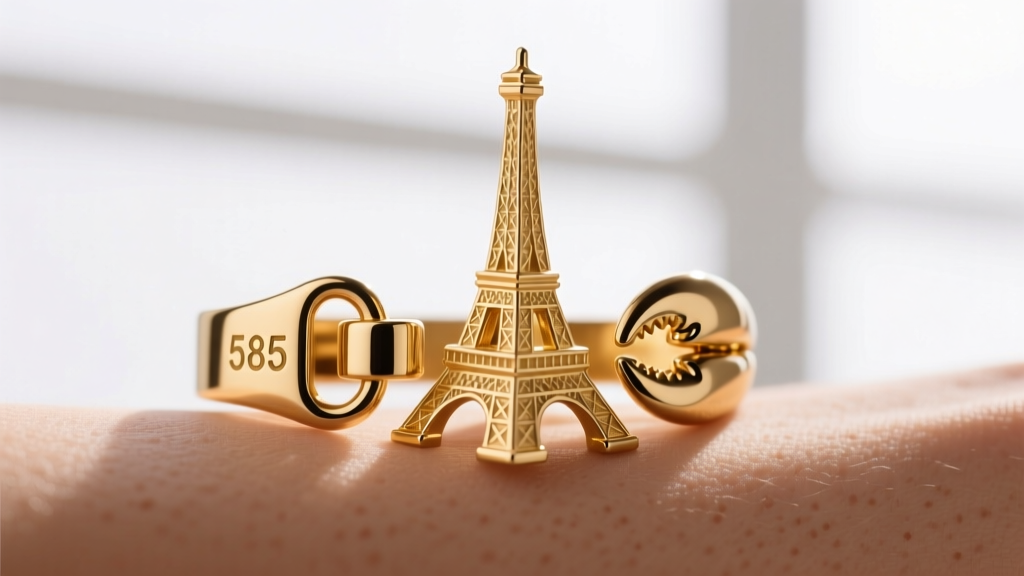
Solid 14k (585) or 18k (750) gold Eiffel tower necklaces are usually produced via hollow electroforming or lightweight 3D printing to keep the gram weight—and thus the retail price—manageable. A solid 14k gold pendant of this size should weigh between 1.5 and 3.0 grams. If a jeweler is charging over $600 for a 2-gram 14k gold novelty pendant, you are paying a massive premium for the design rather than the intrinsic gold value.
The Chain and Clasp: Hidden Cost Drivers
A common trap when buying novelty pendants is focusing entirely on the Eiffel tower silhouette while ignoring the chain. The pendant acts as a pendulum, creating kinetic stress on the chain links and clasp. A flimsy chain will inevitably snap, turning a valuable pendant into a lost asset.
- Avoid Snake Chains (0.8mm - 1.0mm): While they look sleek, snake chains are notorious for kinking and snapping under the dynamic weight of a structured pendant like an Eiffel tower.
- Opt for Rolo or Box Chains (1.2mm - 1.5mm): A 1.2mm rolo chain or a 1.5mm box chain provides the necessary tensile strength to support a 3-gram pendant without stretching.
- Clasp Mechanics: Discard any necklace featuring a spring-ring clasp for pendants over 2 grams. Spring rings have weak internal springs that fail easily. Insist on a lobster claw clasp, which offers a secure, locking mechanism that prevents accidental drops.
Price vs. Material Matrix: What You Should Actually Pay
Use this matrix to benchmark the fair market value of an Eiffel tower necklace based on its material composition and weight. Prices reflect direct-to-consumer artisan jewelers, not inflated tourist boutique markups.
| Material Grade | Average Weight (Pendant) | Expected Chain Type | Fair Market Value Range | Resale / Melt Value |
|---|---|---|---|---|
| Zinc Alloy / Base Metal | 5.0g - 8.0g | Cable (Spring Ring) | $8 - $18 | $0.00 |
| 925 Sterling Silver | 2.2g - 4.5g | Box / Rolo (Lobster) | $45 - $85 | $1.80 - $3.50 |
| 14k Solid Gold (585) | 1.5g - 3.0g | Box Chain (Lobster) | $220 - $450 | $90 - $180 |
| 18k Solid Gold (750) | 2.0g - 4.0g | Rope Chain (Lobster) | $400 - $850 | $140 - $280 |
How to Authenticate Metal Stamps and Avoid Fakes
The Federal Trade Commission (FTC) Jewelry Guides strictly prohibit the stamping of "925," "Sterling," or karat marks on items that do not meet the precise elemental thresholds. However, counterfeit stamping is rampant in imported novelty jewelry.
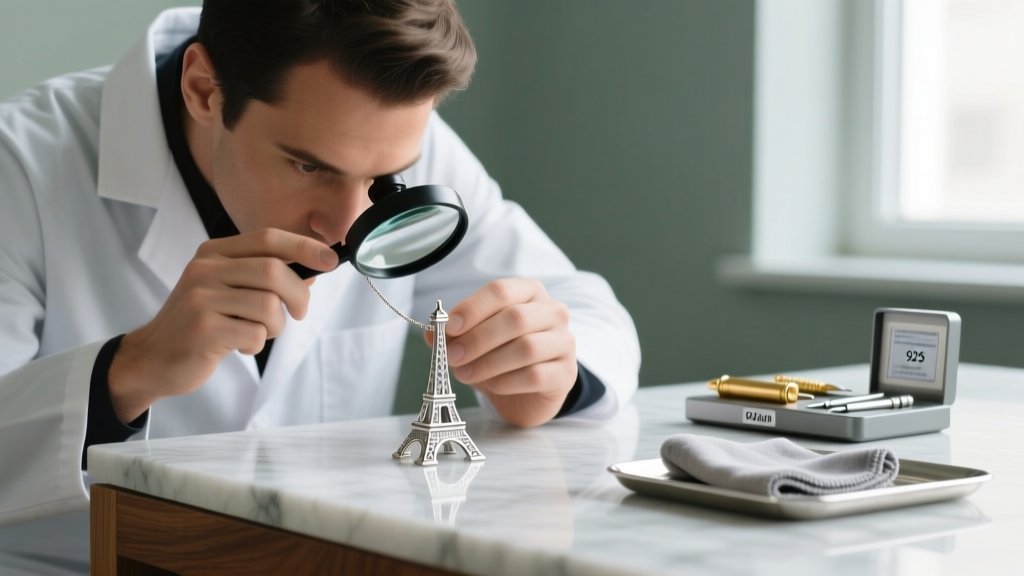
To verify the authenticity of an Eiffel tower necklace, follow these professional appraisal steps:
- Locate the Stamp: Genuine pendants will have a microscopic "925" or "14K" stamped on the back of the tower base or directly on the jump ring. Use a 10x jeweler's loupe to check for crisp, clean lettering. Blurry or shallow stamps often indicate a cast copy of a genuine master mold.
- Check the Clasp: The clasp should also bear a quality mark and, ideally, a maker's mark. According to The London Assay Office, a full hallmark includes the sponsor's mark, the metal purity, and the assay office mark, providing a traceable chain of custody.
- The Magnet Test: Precious metals like silver and gold are non-magnetic. If your Eiffel tower pendant sticks to a neodymium magnet, it contains a ferromagnetic core (like iron or steel) and is definitively not solid precious metal, regardless of what the stamp claims.
Final Verdict: Is an Eiffel Tower Necklace Worth the Investment?
From a pure investment standpoint, novelty jewelry—including the Eiffel tower necklace—carries a poor resale value. You will rarely recoup the retail premium paid for the design and craftsmanship when selling on the secondary market. The value of this piece lies entirely in its wearability and sentimental resonance.
Expert Appraisal Tip: If you are buying an Eiffel tower necklace as a gift, allocate your budget toward a high-quality 925 sterling silver or 14k gold piece with a robust box chain. Avoid gold-plated or vermeil versions of this specific design; the deep crevices and lattice structure of the Eiffel tower make it nearly impossible to re-plate once the gold layer inevitably wears away from friction and polishing.
Ultimately, a well-cast sterling silver Eiffel tower necklace in the $50 to $75 range offers the best intersection of durability, material authenticity, and aesthetic charm, ensuring the piece remains a staple in your jewelry rotation for decades rather than months.


