How to Layer and Care for Authentic African Bead Necklaces
Learn how to layer, restring, and care for authentic African bead necklaces with our step-by-step guide to preserving trade beads and glass gems.

The Cultural and Material Anatomy of African Beadwork
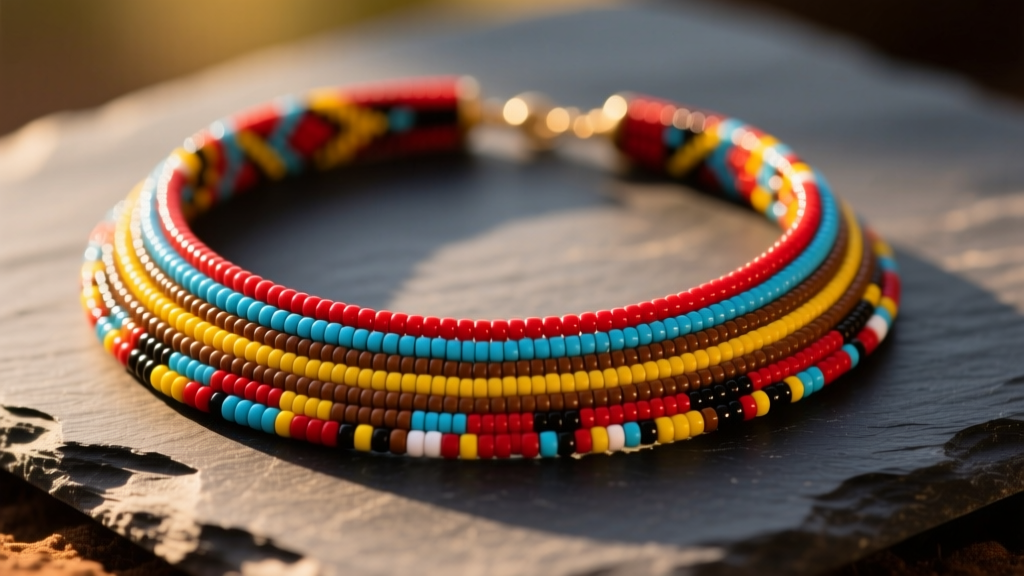
African bead necklaces are far more than mere accessories; they are historical artifacts, indicators of social status, and masterclasses in artisanal craftsmanship. From the intricate, geometric seed bead collars of the Maasai in East Africa to the heavy, recycled powder glass trade beads of the Krobo people in Ghana, these pieces carry immense cultural weight. According to the Smithsonian National Museum of African Art, beads have historically served as currency, spiritual talismans, and rites-of-passage markers across the continent.
However, integrating these substantial, often heavy pieces into a modern jewelry wardrobe requires an understanding of their unique material properties. Antique African trade beads, particularly Bodom and Keta awuagazi beads, are characterized by their organic, pitted textures and irregular, hand-punched drill holes. While visually stunning, these very features create unique engineering challenges for jewelry wearers, most notably the frequent snapping of standard necklace threads. To wear and layer these pieces confidently in 2026 and beyond, one must master both the structural maintenance and the aesthetic styling of African beadwork.
The Engineering Problem: Why African Trade Beads Break
The most common failure mode for heavy African bead necklaces is catastrophic tensile failure at the drill hole. Traditional stringing materials like nylon monofilament, silk thread, or standard cotton cord are entirely unsuited for antique Krobo or Tuareg ebony and silver necklaces. The interior of a hand-made African trade bead is rarely smooth; it often contains microscopic shards of glass, sand, or hardened clay left over from the molding process.
When the necklace moves, these sharp interior edges act like micro-saws, slowly fraying the stringing material until it snaps, sending hundreds of dollars worth of rare beads scattering across the floor. Authentic antique Krobo powder glass strands can easily range from $40 to $120 per strand on the collector's market, making proper restringing a critical investment. To solve this, we must abandon traditional threading and transition to aerospace-grade micro-braided wire.
Step-by-Step Guide to Restringing Heavy Trade Beads
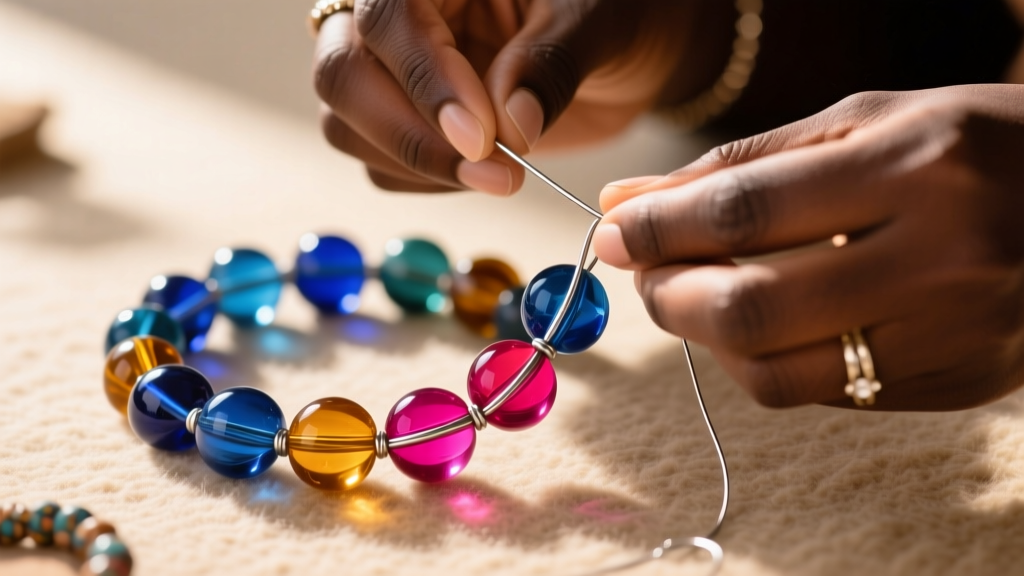
Restringing heavy African beads requires specific materials designed to withstand high tensile weight and abrasive drill holes. You will need a 49-strand micro-braided stainless steel beading wire (0.024-inch diameter), 2mm sterling silver crimp tubes, a bead tip or French wire (gimp), and a specialized crimping tool.
Step 1: Prepare the Wire and Clasp Protection
Cut a length of 0.024-inch 49-strand wire roughly 4 inches longer than your desired finished necklace length. Thread a crimp tube and a piece of French wire (a tiny, hollow metal coil) onto the end. The French wire is non-negotiable; it creates a protective, flexible metal shield over the wire where it loops through the clasp ring, preventing the metal-on-metal friction that eventually causes wire fatigue.
Step 2: Secure the First Clasp
Pass the wire back through the crimp tube and the French wire, forming a small loop. Use your crimping tool to compress the tube into a U-shape, then fold it in on itself to create a secure, rounded bead. Trim the excess tail wire flush with the crimp.
Step 3: Thread the Beads with Spacers
Begin threading your African beads. If you are mixing heavy glass trade beads with lighter materials, use small, soft leather or rubber spacers between the glass beads. This prevents the heavy beads from grinding against one another, which can chip the edges of fragile antique powder glass.
Step 4: Finish and Crimp
Once all beads are strung, thread the second crimp tube and French wire, attach your clasp, and pull the wire taut (but not overly tight, as the necklace needs to drape). Crimp the second tube, trim the tail, and inspect the piece for structural integrity.
The 3-Tier Layering Framework for Modern Styling
Layering African bead necklaces requires a strategic approach to visual weight and texture. Wearing multiple strands of identical, heavy glass beads will overwhelm the neckline and cause the necklaces to tangle and grind against each other. Instead, utilize the 'Rule of Thirds' framework, mixing solid color blocks with textured focal pieces and linear elongators.
| Tier | Length | Bead Type | Visual Weight |
|---|---|---|---|
| Base (Tier 1) | 14" - 16" | Maasai Seed Bead Collar | High (Solid Color Block) |
| Mid (Tier 2) | 20" - 24" | Krobo Powder Glass Discs | Medium (Textured Focal) |
| Long (Tier 3) | 30" - 36" | Carved Bone or Tuareg Ebony | Low (Linear Elongation) |

By anchoring the look with a tight, vibrant Maasai seed bead choker, you draw the eye upward. The mid-length Krobo glass beads provide an organic, earthy texture that bridges the gap between the collar and the chest. Finally, a long strand of carved bone, horn, or Tuareg silver and ebony beads creates a vertical line that elongates the torso, preventing the layered look from feeling visually 'heavy' or suffocating.
Cleaning and Preserving Porous and Glass Beads
The cleaning protocol for African beads must be strictly dictated by the material's porosity. A common mistake is treating all beads like modern, sealed gemstones and tossing them into ultrasonic cleaners or chemical baths.
- Powder Glass and Clay Beads: These are highly porous. Never submerge them in water. Moisture can become trapped in the microscopic air pockets and drill holes, leading to internal mold or structural degradation over time. Clean them using a soft, dry makeup brush to gently sweep dust from the pitted surfaces.
- Carved Bone, Horn, and Wood: These organic materials are sensitive to extreme humidity changes, which can cause warping or cracking. Wipe them with a barely damp microfiber cloth and immediately dry them. Once a year, apply a microscopic amount of natural jojoba oil to prevent the bone or wood from drying out and splintering.
- Modern Sealed Glass and Brass: These can be safely cleaned with a drop of pH-neutral Castile soap and warm water. Use a soft toothbrush to gently clean the brass elements, which often develop a beautiful, intentional patina that should not be aggressively polished away.
Sourcing Authentic Pieces: What to Look For
As the demand for global, artisanal jewelry grows, so does the market for mass-produced replicas. When sourcing authentic African bead necklaces, look for the hallmarks of traditional manufacturing. Genuine Krobo powder glass beads will feature slight asymmetries, organic pitting, and a matte, talc-like finish that is achieved by grinding the glass with sand and water after firing. Replicas, often manufactured in factories overseas, will have uniform shapes, glossy finishes, and visible mold seams.
For definitive reference on historical bead trajectories and authentic craftsmanship, the Metropolitan Museum of Art's Arts of Africa, Oceania, and the Americas collection provides an invaluable digital archive. By understanding the deep history and specific material realities of these pieces, you can curate, preserve, and style a collection of African bead necklaces that honors their origins while seamlessly integrating into a contemporary wardrobe.