Flat Stone Necklace Guide: Lapidary Cuts & Setting Mechanics
Master the mechanics of a flat stone necklace. Explore lapidary cuts, bezel setting metallurgy, chain gauges, and Mohs scale durability.

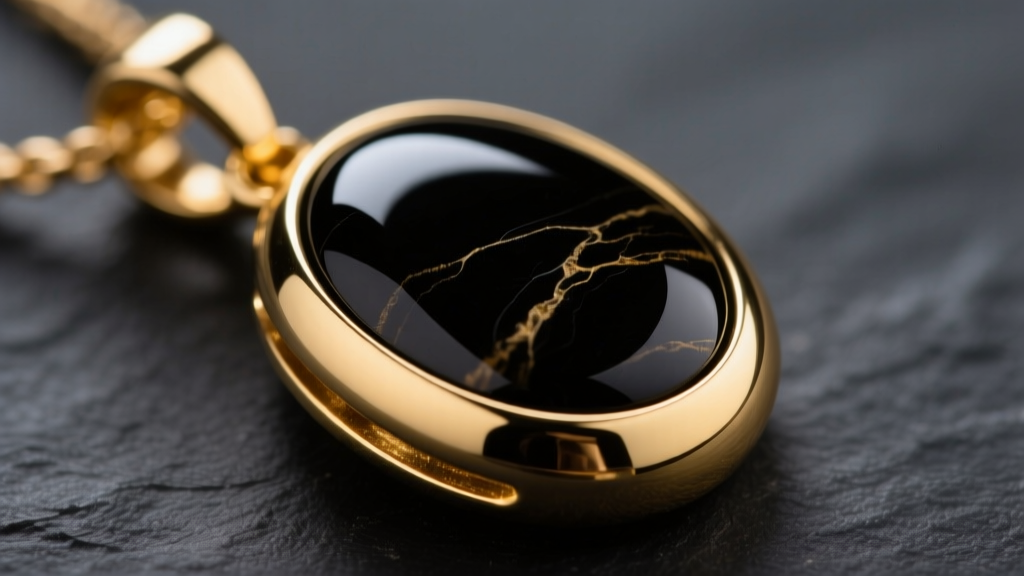
The Engineering Behind the Flat Stone Necklace
The flat stone necklace represents a triumph of low-profile ergonomics and geometric lapidary art. Unlike traditional brilliant-cut pendants that rely on deep pavilions for light return, flat-profile stones—encompassing table-cuts, rose-cuts, and low-dome cabochons—prioritize surface area, color saturation, and seamless integration with the wearer’s neckline. However, designing and wearing a flat stone pendant introduces unique structural challenges. Because the center of gravity sits flush against the skin, the setting must manage torque differently, and the exposed planar surfaces are highly susceptible to micro-abrasions. This guide deconstructs the lapidary science, metallurgical setting requirements, and chain engineering necessary to evaluate, craft, or purchase a high-quality flat stone necklace.
Lapidary Profiles: Table-Cut, Rose-Cut, and Cabochon
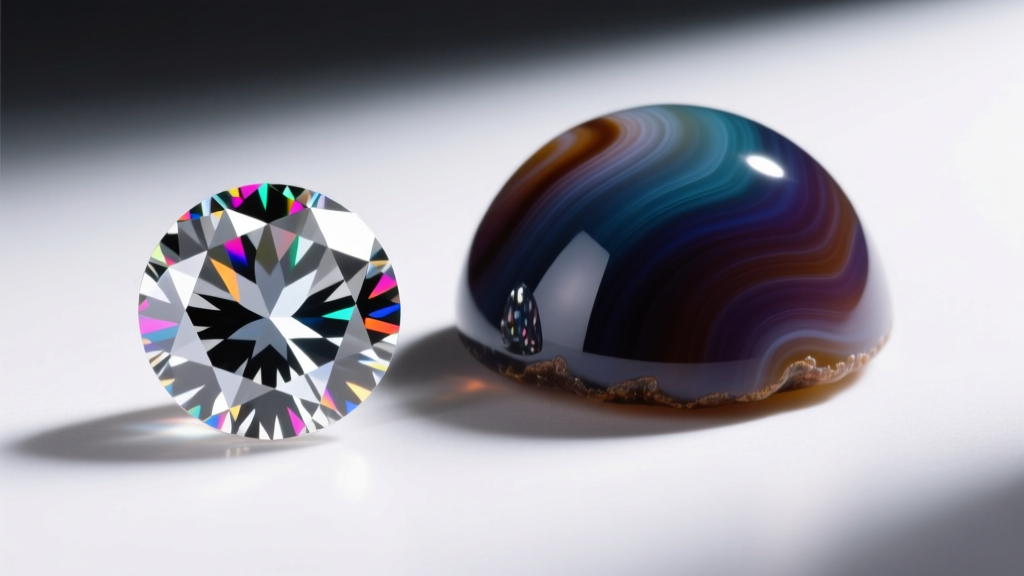
Understanding the optical physics of a flat stone necklace begins with the lapidary profile. According to the Gemological Institute of America (GIA), the way a stone is shaped dictates its interaction with ambient light. For flat pendants, three primary cuts dominate the market:
- Table-Cut: Features a single, broad, flat facet on the crown with a completely flat pavilion. This cut acts as an optical window, showcasing deep internal color and inclusions. It is best suited for highly transparent stones like emeralds or aquamarines.
- Rose-Cut: Characterized by a completely flat base and a dome covered in triangular facets. Rose-cuts offer a subtle, diffused scintillation without the aggressive sparkle of a brilliant cut. They are exceptionally popular in antique-style and alternative bridal jewelry.
- Cabochon (Low-Dome): A smooth, polished surface with a flat or slightly convex base. Cabochons are the standard for opaque or translucent materials like lapis lazuli, turquoise, and moonstone, relying on surface polish and optical phenomena (like adularescence) rather than internal refraction.
When selecting a flat stone, the lack of depth means the cutter cannot hide flaws deep within the pavilion. Therefore, material clarity and color uniformity are paramount, often driving the price per carat higher than standard calibrated stones.
Setting Mechanics: Why Bezel Reigns Supreme
The most critical failure point in a flat stone necklace is the setting. Traditional prong settings are fundamentally incompatible with most flat-cut stones. Because flat stones lack a deep girdle and pronounced pavilion, prongs struggle to grip the stone securely, leading to gapping, snagging on textiles, and eventual stone loss. Furthermore, prongs cast shadows that disrupt the uninterrupted surface aesthetic of a flat pendant.
The bezel setting is the undisputed standard for flat stones. A bezel involves a continuous strip of metal that wraps around the stone's perimeter, securing it via a burnished lip. For lapidaries and jewelers, the choice of bezel wire gauge and hardness dictates the longevity of the piece.
Bezel Wire Specifications and Metallurgy
According to technical guidelines from Rio Grande, the metallurgy of the bezel wire must be matched to the stone's fragility:
| Wire Gauge | Temper (Hardness) | Best Application | Durability Profile |
|---|---|---|---|
| 24-Gauge (0.51mm) | Dead Soft | Delicate rose-cuts, opals, and thin table-cuts | Low impact resistance; high precision |
| 22-Gauge (0.64mm) | Half-Hard | Standard cabochons, agates, and quartz | Optimal balance of malleability and strength |
| 20-Gauge (0.81mm) | Half-Hard | Heavy, large-diameter flat stones (e.g., 40mm+ onyx) | High impact resistance; requires annealing |
For stones with a Mohs hardness below 6.5, a dead-soft 24-gauge wire is preferred because it requires less downward pressure to burnish over the stone's edge, reducing the risk of cleaving or chipping the girdle.
Chain Gauge, Bail Engineering, and Weight Distribution
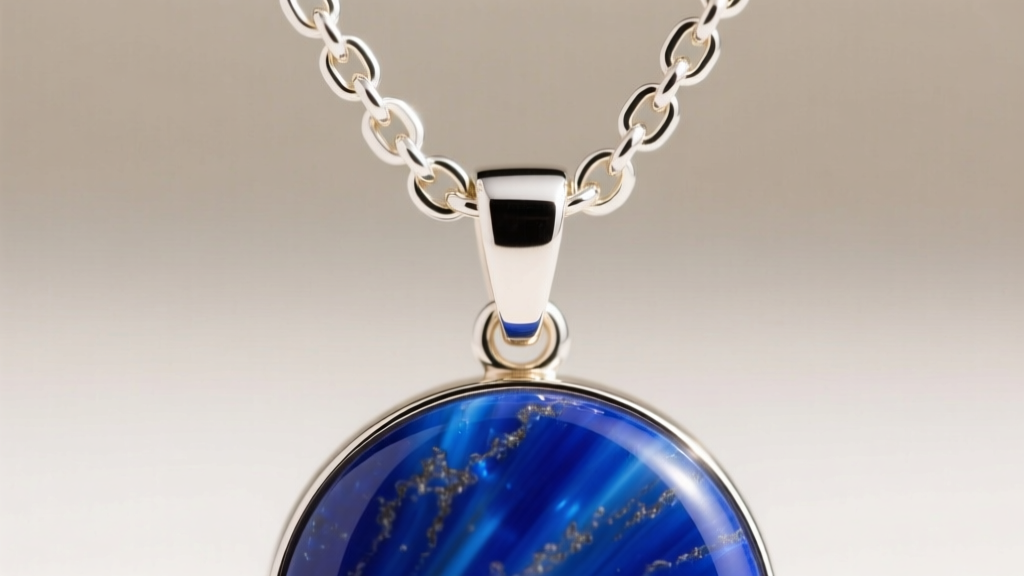
A flat stone necklace behaves differently on the body than a teardrop or spherical pendant. The broad, flat back creates friction against the skin and clothing, which can cause the pendant to flip upside down if the bail (the loop connecting the stone to the chain) is poorly engineered.
Bail Placement and Torque
To prevent flipping, the bail must be positioned slightly above the stone's true center of gravity. For a perfectly symmetrical flat stone, this means placing the bail approximately 15% to 20% above the vertical midpoint. Hidden bails—soldered directly to the flat back of the stone using a high-temperature hard solder—are highly recommended for table-cuts, as they maintain the uninterrupted visual plane of the pendant from the front.
Chain Selection and Tensile Strength
Because flat stones often feature a wider surface area, they carry more overall mass than calibrated brilliant cuts of the same carat weight. A flimsy chain will stretch or snap under the dynamic torque of daily wear.
- Recommended Gauges: 1.2mm to 1.5mm is the sweet spot for most flat pendants weighing between 10 and 30 grams.
- Link Styles: Rolo, cable, and curb chains offer excellent tensile strength and resist kinking.
- Styles to Avoid: Snake chains and omega chains. The rigid, interlocking plates of a snake chain are highly prone to permanent kinking when subjected to the lateral pulling force of a wide, flat pendant.
Mohs Scale and Surface Scratch Vulnerability
The most significant drawback of a flat stone necklace is its vulnerability to surface wear. In a brilliant-cut stone, the numerous angled facets scatter light, effectively masking micro-scratches. In a flat table-cut or smooth cabochon, any abrasion on the primary surface is immediately visible, appearing as a dull, cloudy patch that disrupts the polish.
When evaluating a flat stone for daily wear, the GIA Gem Encyclopedia suggests strict adherence to the Mohs scale of mineral hardness. Environmental dust contains quartz particles, which sit at a 7 on the Mohs scale. Therefore, any flat stone with a hardness below 7 will inevitably accumulate micro-scratches from routine contact with dust and airborne particulates.
- Highly Durable (Mohs 8-9): Sapphire, ruby, spinel, and topaz. These can withstand daily wear as flat table-cuts or rose-cuts with minimal degradation to the polish.
- Moderate Risk (Mohs 6.5-7.5): Quartz varieties (amethyst, citrine), garnet, and tourmaline. Suitable for flat cuts, but will require professional repolishing every 3 to 5 years if worn daily.
- High Risk (Mohs < 6.5): Opal, turquoise, lapis lazuli, and malachite. If cut into a flat profile, these stones should be reserved for occasional wear or set behind a protective bezel lip that slightly overlaps the top edge to guard against direct frontal impacts.
Market Pricing and Valuation Tiers
The cost of a flat stone necklace is heavily influenced by the precision of the lapidary work. Cutting a perfectly flat table requires immense skill to avoid "windowing" (where light leaks through the stone, making it look washed out) or creating an uneven girdle. Below is a general pricing framework for custom and commercial flat stone pendants in the current market:
| Material & Cut Profile | Commercial Pricing (Mass-Produced) | Custom/Bespoke Pricing (Hand-Cut) |
|---|---|---|
| Sterling Silver + Agate Cabochon | $45 - $120 | $180 - $350 |
| 14k Gold + Rose-Cut Moonstone | $300 - $650 | $800 - $1,400 |
| 18k Gold + Flat Table-Cut Sapphire | $1,200 - $2,500 | $3,500 - $8,000+ |
When investing in the higher tiers, always request a loupe inspection of the stone's girdle. A master lapidary will ensure the girdle is perfectly level, allowing the jeweler to create a flush, gapless bezel that guarantees the structural integrity of your flat stone necklace for decades to come.


