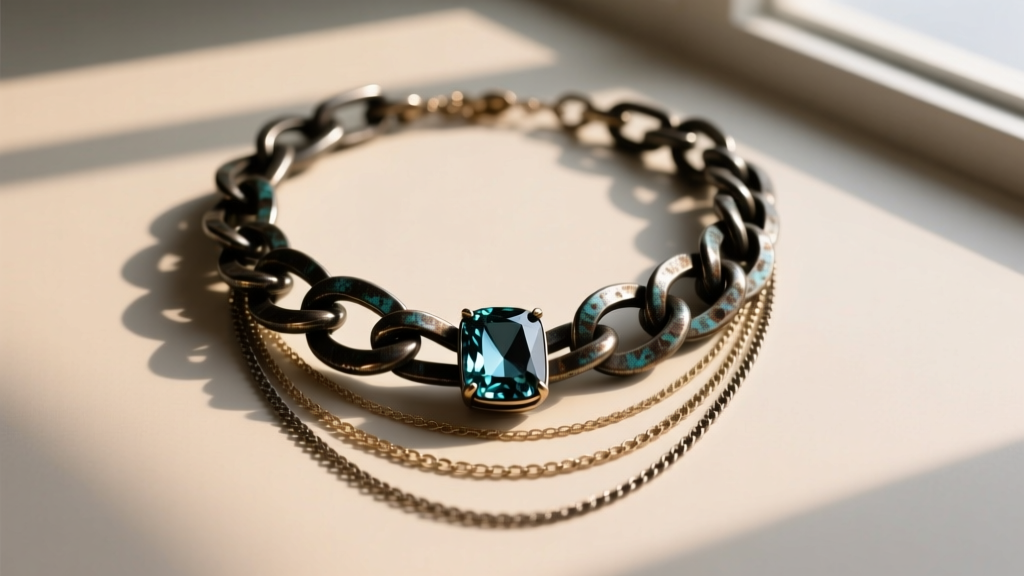
How Material Impacts Your 18 Inch Necklace Size And Drape
Discover how metal choice impacts your 18 inch necklace size. Compare gold, silver, and titanium weights, drape, and durability for the perfect collarbone fit.

The Physics of the Princess Length: Why 18 Inches is the Baseline
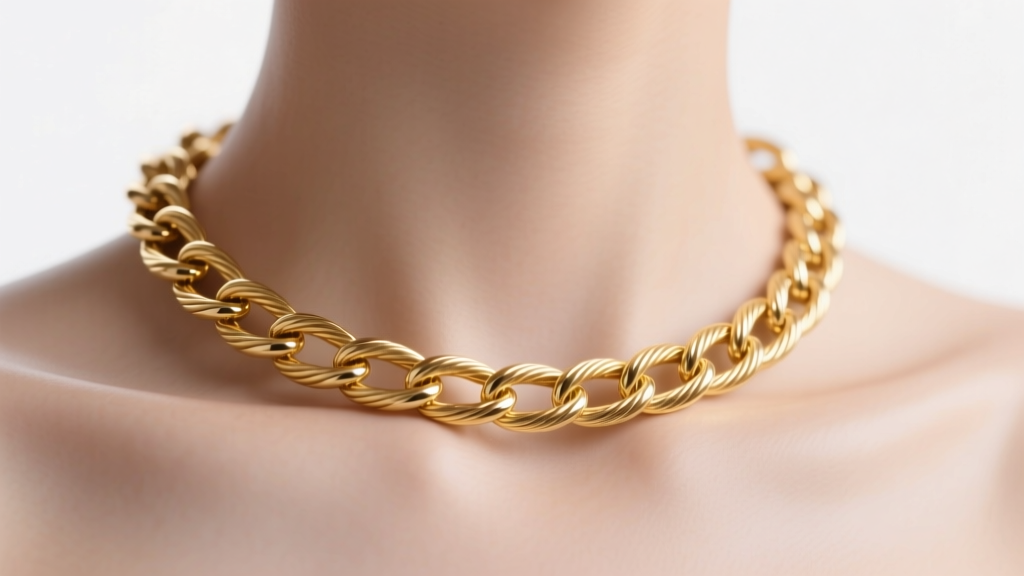
In the jewelry industry, the 18 inch necklace size is universally classified as the 'princess' length. For the majority of wearers, this specific measurement dictates that the chain will rest precisely at the base of the throat or directly on the collarbone (clavicle). However, treating all 18-inch necklaces as identical is a fundamental mistake. The physical behavior, drape, and longevity of an 18-inch chain are entirely dictated by the metallurgical properties of the material used.
At exactly 18 inches, a necklace reaches a critical anatomical pivot point. It transitions from hanging vertically down the neck to resting horizontally across the collarbone. This transition zone experiences the highest degree of lateral friction and bending stress. Therefore, the tensile strength, specific gravity, and Vickers hardness (HV) of the metal will determine whether your 18-inch necklace lays flat, kinks, stretches, or ultimately snaps. According to manufacturing standards outlined by Rio Grande, a premier jewelry supplier, the alloy composition directly impacts chain articulation and memory.
Metal Density and Weight Distribution
The 'drape' of an 18 inch necklace size is heavily influenced by specific gravity—the density of the metal relative to water. A heavier metal will pull the chain taut, creating a sleek, deliberate silhouette, while a lighter metal may result in a looser, more fluid drape that shifts with movement.
| Metal Alloy | Specific Gravity | Approx. Weight (18' 2mm Cable) | Drape Profile at 18 Inches |
|---|---|---|---|
| 18k Yellow Gold | 15.6 | 4.8 - 5.2 grams | Heavy, taut, luxurious pull |
| 14k Yellow Gold | 13.4 | 4.1 - 4.5 grams | Balanced, structured drape |
| Sterling Silver | 10.3 | 3.1 - 3.4 grams | Fluid, soft, prone to shifting |
| Titanium (Grade 5) | 4.4 | 1.3 - 1.5 grams | Ultra-light, rigid articulation |
As the data illustrates, swapping from 14k gold to titanium for the exact same 18 inch necklace size reduces the weight by nearly 70%. This drastically alters the tactile feedback and how the chain interacts with the slope of the clavicle.
Material Breakdown: How Specific Metals Behave at 18 Inches
14k and 18k Gold: The Heavy Hitters
Gold remains the benchmark for fine jewelry, but its karatage changes the physical behavior of an 18-inch chain. The Gemological Institute of America (GIA) notes that pure 24k gold is far too soft for chain links. Therefore, alloys are introduced. 18k gold (75% pure gold) is denser and possesses a rich, buttery drape. However, because it is softer (approx. 130 HV), an 18-inch 18k gold rope chain is susceptible to 'stretching' over time if the links are thin, as the weight of the 18-inch span pulls on the individual soldered joints.
Conversely, 14k gold (58.3% pure gold) is alloyed with higher amounts of copper and zinc, increasing its hardness to roughly 150 HV. An 18-inch 14k gold box chain will hold its geometric shape far better than its 18k counterpart, resisting the crushing forces that occur when the wearer leans forward and the chain presses against the collarbone.
Sterling Silver and Argentium: The Fluid Drapers
Sterling silver (92.5% silver, 7.5% copper) is highly malleable, with a Vickers hardness of only about 65 HV in its annealed state. When crafted into an 18 inch necklace size, silver chains offer a beautifully fluid, liquid-like drape. Snake chains and omega chains in sterling silver lay flawlessly against the skin.
However, this malleability is a double-edged sword. Silver work-hardens rapidly. If an 18-inch silver snake chain is bent past a 45-degree angle, the internal crystalline structure of the metal fractures, leading to permanent kinking. Furthermore, the copper content in standard sterling silver causes oxidation. Because the 18-inch mark rests in the 'pulse point' zone of the lower neck where body heat and perspiration are highest, silver chains at this length require frequent polishing to prevent accelerated tarnishing. Upgrading to Argentium silver (which replaces some copper with germanium) vastly improves tarnish resistance while maintaining the desired fluid drape.
Titanium and Tungsten: The Rigid Alternatives
Alternative metals have surged in popularity, but they behave uniquely at the 18-inch mark. Titanium (specifically Grade 5, Ti-6Al-4V) boasts an incredible strength-to-weight ratio and a hardness of roughly 350 HV. An 18-inch titanium chain will not stretch, kink, or tarnish. However, because it is so light and rigid, it lacks the 'swing' and fluid articulation of precious metals. The links do not glide over one another smoothly; instead, they move with a mechanical stiffness. For an 18 inch necklace size, which requires flexibility to contour to the collarbone, titanium can sometimes feel rigid or sit awkwardly if the link design is not perfectly engineered.
Chain Link Styles vs. Material Tensile Strength
The material you choose must be matched with an appropriate link style, especially at the 18-inch length where lateral stress is highest.
- Cable and Curb Links: Excellent for all metals. The simple, round or oval links distribute stress evenly. An 18-inch 14k gold curb chain is practically indestructible under normal wear.
- Box Chains: Rely on sharp 90-degree folds in the metal. In soft metals like high-karat gold or pure silver, these folds can crush or dent. In 14k gold or platinum, an 18-inch box chain maintains its crisp, reflective geometry.
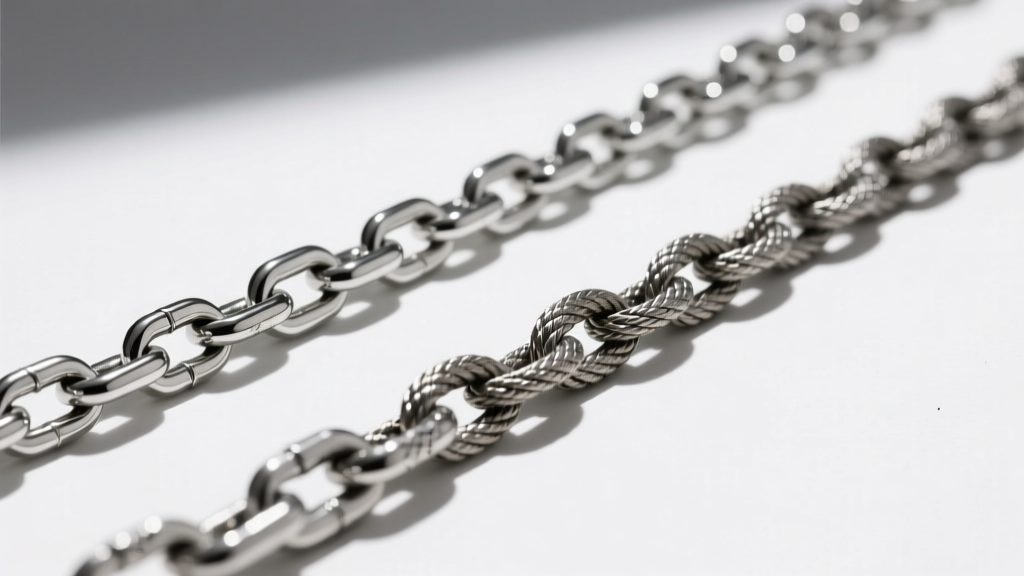
- Rope Chains: Created by twisting woven links. The failure mode for an 18-inch rope chain is almost always at the laser-welded jump rings near the clasp. Because the 18-inch length creates a specific pendulum effect, the torque applied to the clasp joint is magnified. Always ensure the end rings are soldered, not just pressed closed.
Clasp Mechanics and the 18-Inch Stress Point
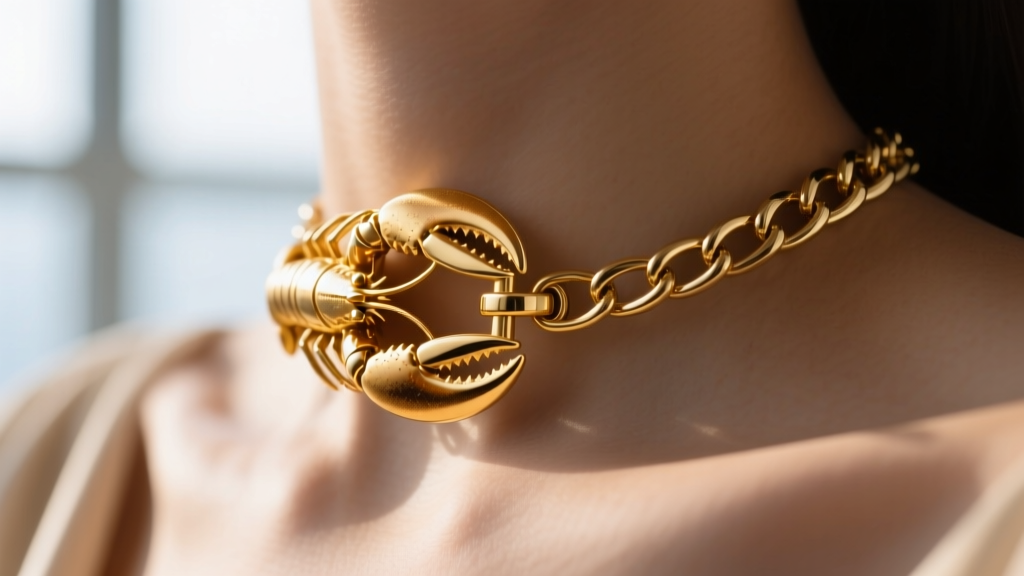
The clasp is the weakest point of any necklace, and the 18 inch necklace size presents a unique mechanical challenge. Because 18 inches sits on the sloped clavicle, the chain naturally wants to slide forward or to the side, dragging the clasp along the nape of the neck. This creates continuous friction and pulling.
If you are wearing a dense metal like 18k gold or platinum, the weight of the 18-inch chain will easily overpower a standard 5mm spring ring clasp, causing the internal spring mechanism to fatigue and fail. For heavy metals at this length, a 7mm or 9mm solid lobster clasp is mandatory. Conversely, if you opt for an 18-inch titanium or hollow-tube silver chain, a heavy lobster clasp will act as a counterweight, constantly dragging the chain backward and forcing the front of the necklace to ride up uncomfortably high on the throat. In these cases, a lightweight magnetic clasp or a small spring ring is actually the superior engineering choice to maintain the balance of the drape.
Final Verdict: Matching Metal to Your Lifestyle
Selecting the right 18 inch necklace size is not just about measuring your neck; it is about understanding the physics of the materials you are wearing. If you desire a heavy, luxurious, and structured drape that commands attention, 14k or 18k gold cable and curb chains are unmatched. If you prefer a lightweight, fluid, and skin-hugging silhouette for everyday layering, sterling silver or Argentium snake and box chains are ideal, provided you maintain them. For those with active lifestyles or metal sensitivities, Grade 5 titanium offers unparalleled durability, though you must sacrifice the traditional fluid drape of precious metals. By aligning the metallurgical properties of your chosen metal with the mechanical realities of the 18-inch pivot point, you ensure your necklace remains both beautiful and structurally sound for decades.