Expert Care and Cleaning Tips for a Bird Cage Necklace
Learn expert cleaning and maintenance tips for your bird cage necklace. Protect intricate filigree, hinges, and gemstones with our detailed guide.

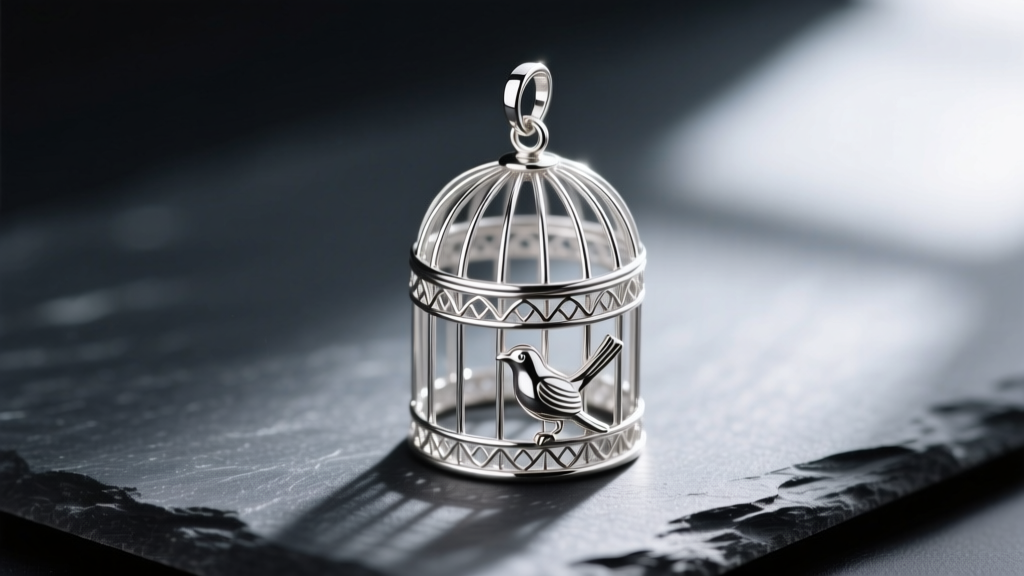
The Unique Maintenance Challenges of 3D Filigree Jewelry
A bird cage necklace is a stunning statement piece, often characterized by intricate 3D filigree, delicate wirework, and sometimes functional micro-hinges that allow the cage to open and close. While these pendants are visually captivating, their complex architecture makes them notorious traps for skin oils, cosmetic residues, and environmental dust. Unlike flat pendants that can be quickly wiped down, the multi-dimensional wires and hidden crevices of a bird cage necklace require a specialized, methodical approach to cleaning and maintenance. If neglected, the accumulation of debris can lead to accelerated tarnishing, stiff hinges, and even structural weakening of the fine gauge wires.
In this comprehensive guide, we break down the exact protocols for cleaning, lubricating, and storing your bird cage necklace to ensure its longevity. Whether your piece is crafted from 925 sterling silver, gold vermeil, or antique brass, understanding the material science behind your jewelry is the first step in preserving its intricate beauty.
Understanding the Anatomy and Materials
Before applying any cleaning solution, you must identify the base metal and any secondary inlays. Most high-quality bird cage necklaces are constructed from one of three materials, each with distinct chemical properties:
- 925 Sterling Silver: Composed of 92.5% pure silver and 7.5% copper. The copper alloy provides the necessary tensile strength for drawing fine 24-gauge (0.51mm) filigree wires, but it is also responsible for tarnishing. When exposed to hydrogen sulfide in the air and sulfur compounds in human sweat, the copper reacts to form silver sulfide, creating a dark, stubborn patina.
- Gold Vermeil: A thick layer of gold (typically 2.5 microns or more) plated over a sterling silver base. Vermeil requires extreme gentleness; aggressive polishing will strip the gold layer, exposing the silver underneath and ruining the pendant's aesthetic.
- Jeweler's Brass: An alloy of copper and zinc that develops a warm, vintage patina over time. Unsealed brass can oxidize rapidly and may leave a harmless but unsightly green residue on the skin if the protective lacquer coating wears off.
The Step-by-Step Filigree Cleaning Protocol
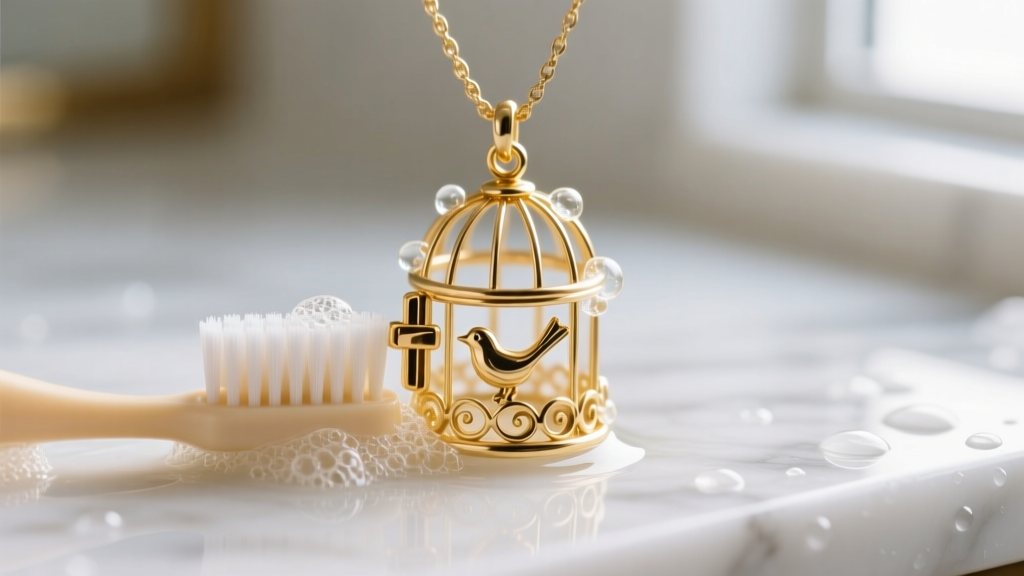
To safely remove trapped sebum and lotions without damaging delicate wirework, avoid harsh chemical dips. Instead, rely on a gentle, surfactant-based cleaning method recommended by the Gemological Institute of America (GIA).
Required Tools
- Phosphate-free, mild dish soap (e.g., original blue Dawn)
- Distilled water (tap water contains minerals that leave hard water spots in crevices)
- Extra-soft baby toothbrush (bristles approximately 0.003mm thick)
- Wooden toothpicks (for dislodging debris without scratching metal)
- Lint-free microfiber cloth and a can of compressed air
The Cleaning Process
- Prepare the Bath: Mix one cup of lukewarm distilled water with three drops of mild dish soap in a glass bowl. Avoid hot water, which can expand metal microscopically and loosen any glued gemstone inlays inside the cage.
- Soak Briefly: Submerge the bird cage necklace for no more than 3 to 5 minutes. This allows the surfactant to break down lipid bonds in skin oils.
- Agitate Gently: Using the baby toothbrush, lightly sweep the bristles across the filigree wires. Always brush in the direction of the wire grain, never aggressively scrubbing back and forth, which can bend 26-gauge decorative wires.
- Target Crevices: For stubborn grime trapped at the solder joints or hinge points, use the blunt end of a wooden toothpick to gently lift the debris. Never use metal needles or safety pins, as they will scratch the finish.
- Rinse and Dry: Rinse thoroughly under a slow stream of distilled water. Pat dry with a microfiber cloth, then use a can of compressed air to blow moisture out of the deep, hollow sections of the cage. Trapped moisture is the primary catalyst for rapid oxidation.
Micro-Hinge and Clasp Maintenance
Many vintage and artisan bird cage necklaces feature a functional door that opens via a micro-hinge and secures with a tiny friction latch. Over time, these mechanical points accumulate grit, leading to friction, stiffness, and eventually, metal fatigue or snapping.
To maintain the hinges, first clear any visible debris with a toothpick. Next, apply a microscopic drop of synthetic watch oil (such as Moebius) or high-grade sewing machine oil directly to the hinge pin using the tip of a needle. Never use WD-40 or standard hardware lubricants. These products contain volatile solvents that evaporate quickly, leaving behind a gummy resin that will attract more dust and permanently seize the hinge. After oiling, gently open and close the cage door a few times to distribute the lubricant, then wipe away any excess oil with a cotton swab to prevent it from staining your clothing.
Material and Gemstone Care Matrix
Different materials and inlays require vastly different care approaches. Use the table below as a quick-reference decision framework before attempting to clean your specific piece.
| Material / Inlay | Tarnish / Damage Risk | Recommended Cleaner | Ultrasonic Safe? | Polishing Cloth Safe? |
|---|---|---|---|---|
| 925 Sterling Silver | High (Silver Sulfide) | Mild Soap + Distilled Water | Yes (if no stones) | Yes (untreated cloth) |
| Gold Vermeil | Medium (Plating Wear) | Mild Soap Only | No | No (will strip gold) |
| Jeweler's Brass | High (Oxidation/Patina) | Lemon Juice + Baking Soda | Yes | Yes |
| Pearl Inlay (Inside Cage) | Extreme (Acid/Alkali) | Damp Cloth Only | No (will shatter) | No |
| Opal / Turquoise | Extreme (Porosity) | Dry Soft Brush Only | No | No |
The Danger of Ultrasonic Cleaners and Porous Stones
It is a common misconception that ultrasonic jewelry cleaners are safe for all metal pieces. While a solid silver cage without inlays might survive the 40-45 kHz cavitation waves of an ultrasonic bath, many bird cage necklaces are designed to cradle a central gemstone, such as a pearl, moss agate, opal, or turquoise. According to Jewelers of America, porous and water-bearing gemstones are highly susceptible to the microscopic shockwaves generated by ultrasonic cleaners. These vibrations can cause internal fracturing, shattering, or severe surface pitting in delicate stones. Furthermore, if your bird cage necklace features any enamel work or glued components, the heat and vibration of an ultrasonic bath will melt the adhesives and crack the enamel. Always default to the manual, soft-bristle cleaning method outlined above to eliminate this risk entirely.
Structural Storage Solutions to Prevent Crushing
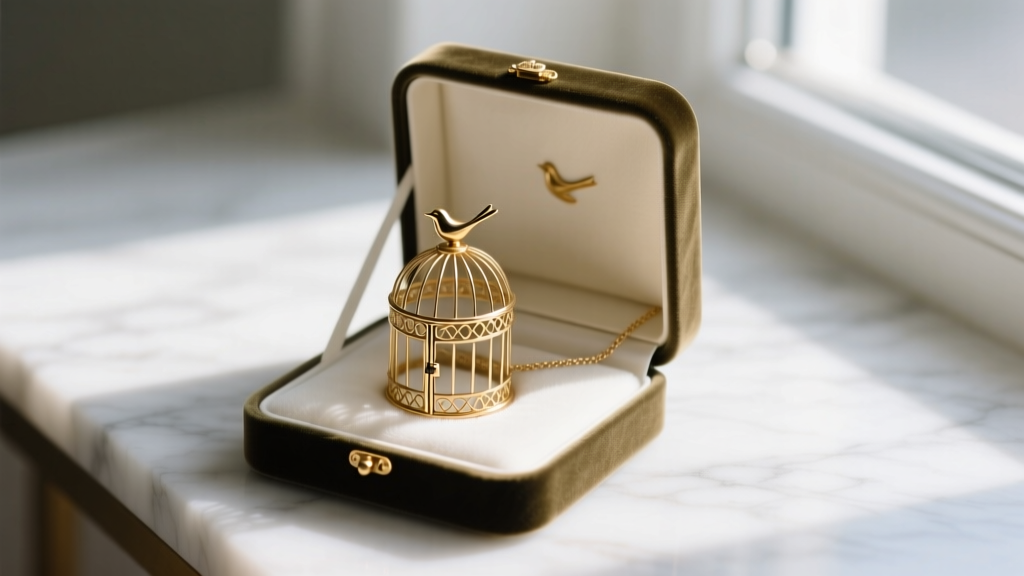
The 3D nature of a bird cage necklace makes it highly vulnerable to crushing. Storing it in a standard, flat jewelry drawer where heavier items can rest on top will inevitably lead to bent wires, misaligned doors, and broken solder joints.
Best Practices for Long-Term Storage
- Hard-Shell Compartmentalization: Store the necklace in a dedicated, hard-shell jewelry box with individual, plush-lined cubbies. The rigid exterior protects the 3D structure from external pressure.
- Suspension Hanging: If hanging the necklace on a jewelry stand, ensure the chain is fully extended and the pendant hangs freely without resting against a hard surface that could dent the filigree.
- Atmospheric Control: For sterling silver and brass pieces, place the necklace inside a sealed ziplock bag along with a 3M anti-tarnish strip and a small silica gel desiccant packet. The anti-tarnish strip absorbs airborne sulfur compounds, while the silica gel eliminates ambient moisture, effectively halting the oxidation process before it begins.
When to Seek Professional Jeweler Repair
While routine maintenance can be performed at home, certain issues require the steady hand of a master jeweler. Because the decorative wires on a bird cage pendant are often as thin as 26-gauge (0.40mm), attempting to bend them back into shape with standard pliers can cause work-hardening, leading the metal to snap cleanly in half.
"If your bird cage necklace suffers a structural break, a professional jeweler will use laser welding rather than traditional torch soldering. Laser welding allows for pinpoint heat application, repairing microscopic wire breaks without melting the surrounding intricate filigree or damaging heat-sensitive gemstones trapped inside the cage."
Additionally, if your gold vermeil bird cage necklace has begun to show heavy silver spotting due to friction and wear, a professional can safely strip the remaining plating and re-plate the piece with a fresh 2.5-micron layer of gold, restoring it to its original factory condition. By combining gentle, consistent at-home cleaning with professional structural assessments, your bird cage necklace will remain a flawless, functional heirloom for decades to come.


