The 18th Necklace: Technical Guide to Georgian Antiques
Explore the technical anatomy of the 18th necklace. Learn about Georgian foil-backed gems, Pinchbeck alloys, and closed-back settings in this guide.

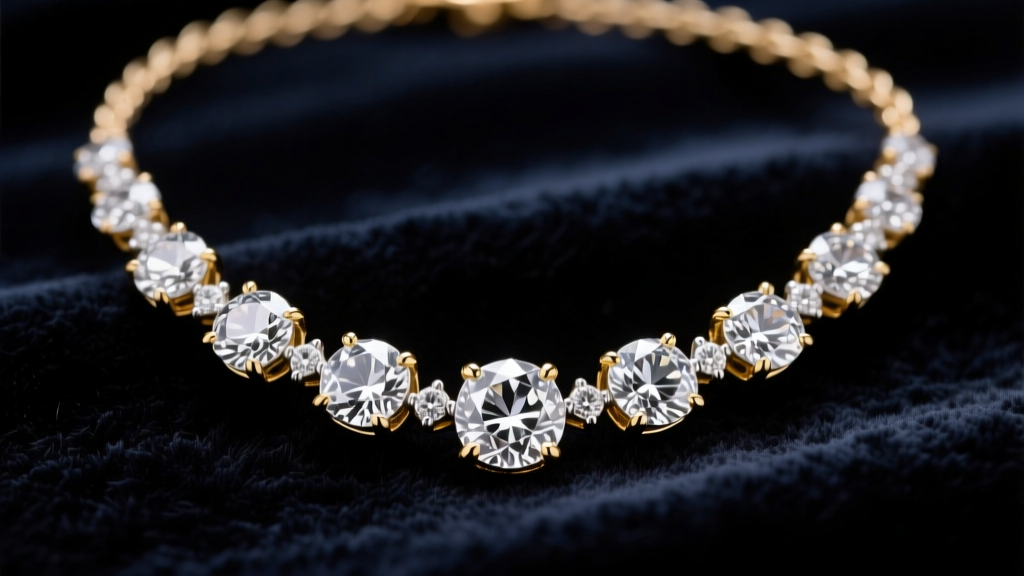
The Anatomy of an 18th Necklace
When a serious collector acquires an 18th necklace, they are not merely purchasing an accessory; they are securing a masterclass in pre-industrial metallurgy and lapidary art. The 18th century, broadly categorized under the Georgian era (1714–1837), represents a pivotal transition in jewelry craftsmanship. Unlike modern jewelry, which relies on standardized prong settings and open-back designs to maximize light return, the 18th necklace was engineered around the limitations and innovations of its time. The defining characteristic of this era is the closed-back collet setting, a structural necessity born from the widespread use of delicate metallic foils to enhance gemstone brilliance.
During the early to mid-1700s, the Victoria and Albert Museum notes that diamond cutting was still in its relative infancy. Rose-cut and table-cut diamonds dominated the market. Because these cuts lacked the deep pavilions of modern brilliant cuts, they appeared dark or glassy without external light manipulation. Jewelers solved this by placing the stones in completely enclosed silver or gold cups (collets) lined with reflective metallic foils. Understanding this foundational architecture is critical for anyone looking to authenticate, appraise, or preserve antique necklaces from this period.
The Science of Foil-Backing and Collet Settings
The collet setting is the structural backbone of the authentic 18th necklace. A collet is a thin metal band that wraps entirely around the girdle of the gemstone, with a solid metal backing that seals the stone off from the wearer's skin. The interior of this cup was lined with foil—typically made of thin sheets of silver, copper, or tinted alloys—to act as a mirror, bouncing ambient light back through the crown of the stone.
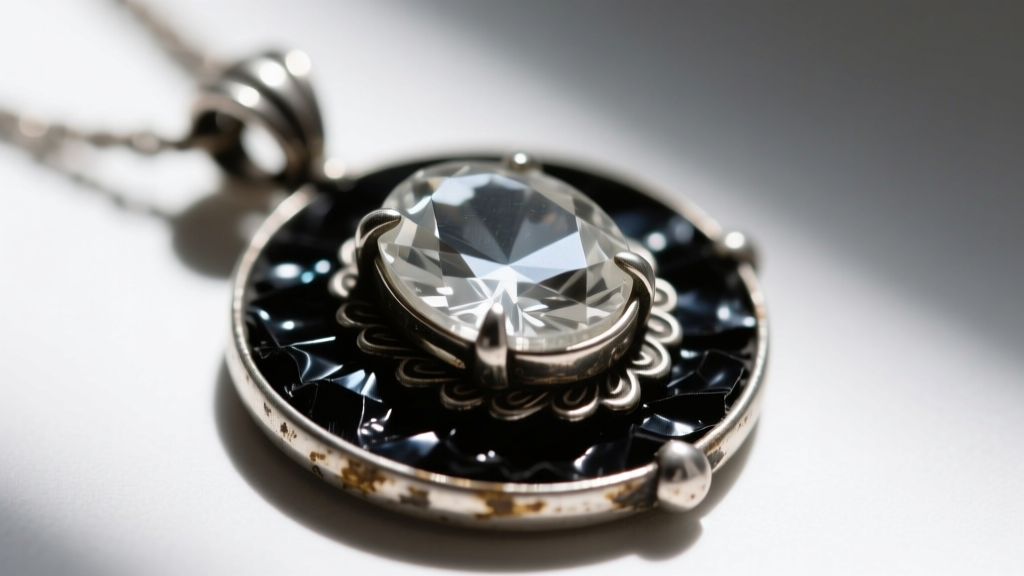
The Vulnerability of the Seal
The greatest technical challenge of the 18th necklace is the vulnerability of the foil. If moisture, skin oils, or soap penetrates the collet seal, the foil oxidizes rapidly, turning black and effectively killing the stone's brilliance. To combat this, 18th-century jewelers used meticulous crimping techniques, folding the top edge of the metal collet over the girdle of the stone to create a watertight seal. In high-quality pieces, a natural resin or pitch was sometimes applied to the outer seam for added waterproofing. Today, finding an 18th necklace with its original, untarnished foil intact is exceptionally rare and commands a massive premium at auction.
According to conservation records at the Gemological Institute of America (GIA), the greatest threat to surviving 18th-century foil-backed jewelry is not physical impact, but the microscopic intrusion of modern humidity and skin oils into compromised collet settings.
Material Alchemy: Pinchbeck and Lead Paste
Beyond diamonds and precious gems, the 18th necklace frequently featured revolutionary alternative materials that mimicked high-end luxury. Two materials, in particular, define the era's technical ingenuity: Pinchbeck and Paste.
Pinchbeck: The Gold Illusion
Invented by London clockmaker Christopher Pinchbeck in the early 1700s, this alloy was a closely guarded secret. True Pinchbeck consists of exactly 89% copper and 11% zinc. Unlike standard brass, which tarnishes to a dull brown, Pinchbeck retains a warm, rich golden hue that closely mimics 18k gold. It was highly prized for the intricate, hand-repoussé links and girandole pendants found in daytime 18th necklace sets. Collectors must use X-ray fluorescence (XRF) testing to differentiate true 18th-century Pinchbeck from later 19th-century brass imitations, which typically contain higher zinc concentrations (up to 30%) and lack the distinct, fine-grained surface patina of the original alloy.
Paste: The Mastery of Lead Glass
Paste is not a derogatory term in antique jewelry; it refers to a highly specific type of leaded glass with a high refractive index. Invented by Georges Frédéric Strass in the 1720s, paste was cut and polished with the same meticulous care as diamonds. Because paste is softer than quartz, lapidaries could cut it into complex, tightly clustered shapes that were impossible with natural diamonds at the time. A black dot was often painted on the culet (the flat bottom) of the paste stone to simulate the deep optical center of a brilliant-cut diamond, a technique known as 'black dot paste'.
Authentication Framework: Spotting the True 18th Necklace
Distinguishing a genuine 18th necklace from a 19th-century revival piece or a modern reproduction requires a systematic diagnostic approach. The table below outlines the critical structural markers that appraisers use to verify provenance.
| Diagnostic Feature | Authentic 18th Century | 19th/20th Century Reproduction |
|---|---|---|
| Collet Settings | Hand-cut, uneven crimping, fully enclosed back | Machine-stamped, uniform prongs, open-back |
| Chain Linkages | Hand-forged figure-eight or barrel links, visible solder seams | Machine-drawn wire, seamless jump rings |
| Gemstone Faceting | Irregular rose-cuts (often 12-24 facets), flat bases | Brilliant cuts, machine-calibrated symmetry |
| Foil Condition | Tarnished, flaking, or missing; sealed with pitch/resin | Pristine mylar or modern metallic paints |
| Hallmarks | Rarely hallmarked; relied on maker's reputation | Standardized assay marks (e.g., post-1854 UK laws) |
The Linkage Test
One of the most reliable indicators of an authentic 18th necklace is the chain linkage. Before the invention of modern wire-drawing and jump-ring machinery, every link in a Georgian riviere or festoon necklace was hand-forged. Under a 10x loupe, authentic links will show slight asymmetries, file marks, and a distinct solder seam where the wire was joined. If the links are perfectly uniform, seamlessly welded, or made of machine-extruded tubing, the piece is almost certainly a later reproduction or has been heavily restored.
Preservation Protocols for Modern Collectors
Wearing an 18th necklace in the 21st century requires strict adherence to conservation protocols. The modern environment is hostile to foil-backed gems. Aerosol sprays, perfumes, lotions, and even the natural pH of human sweat can degrade the collet seal over time.

Rules for Wear and Storage
- The 'Last On, First Off' Rule: An 18th necklace must be the final item put on after all cosmetics, hairsprays, and perfumes have fully dried, and the first item removed upon returning home.
- Moisture Avoidance: Never wear foil-backed jewelry in high-humidity environments. Avoid wearing it on rainy days or in steam-filled rooms.
- Ultrasonic Ban: Ultrasonic cleaners will instantly destroy the foil backing and shatter the delicate crimping of the collet. Clean only with a dry, untreated microfiber cloth.
- Archival Storage: Store the necklace flat in an acid-free, unbleached cotton pouch. Avoid airtight plastic bags, which can trap ambient moisture and accelerate foil oxidation.
Ultimately, the 18th necklace remains a triumph of historical engineering. By understanding the metallurgical and lapidary constraints of the Georgian era, collectors can properly identify, appreciate, and preserve these luminous artifacts for future generations.


