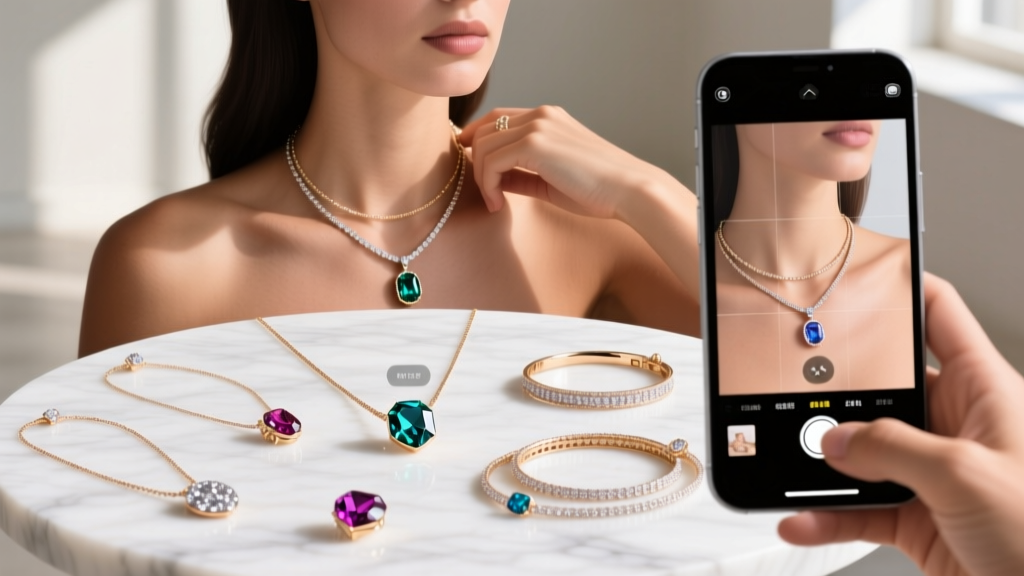
Styling a Chastity Key on Necklace: 2026 Trend Guide
Discover how to style a chastity key on necklace in 2026. Explore chain gauges, stealth kink aesthetics, secure clasps, and dark romance layering tips.

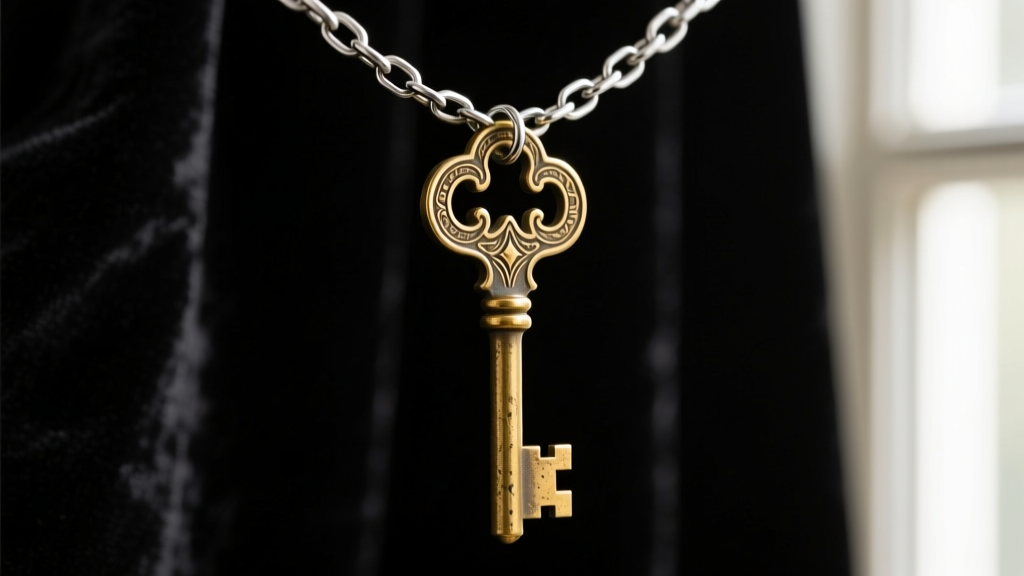
The Sociology of Stealth Kink and Dark Romance
In the 2026 alt-fashion landscape, the boundaries between intimate lifestyle accessories and mainstream streetwear have completely dissolved. The 'stealth kink' and 'dark romance' aesthetics have propelled the practice of wearing a chastity key on necklace chains from a private subcultural signal into a bold, mainstream fashion statement. This trend plays heavily on themes of gothic revival, Victorian romance, and modern power dynamics. However, transitioning an intimate object into a daily-wear pendant requires a rigorous understanding of jewelry mechanics, metallurgy, and styling frameworks. Unlike standard decorative pendants, a functional or semi-functional key carries unique weight distribution issues and security requirements that demand expert-level hardware selection.
Fashion sociologists and trend forecasters note that the mainstreaming of these symbols aligns with a broader cultural shift toward 'hidden in plain sight' jewelry. According to trend analyses featured on Vogue's fashion directory, modern consumers are increasingly drawn to pieces that hold deep personal or relational significance while maintaining an outwardly elegant, avant-garde silhouette. The chastity key serves as the ultimate nexus of this movement: to the untrained eye, it is a vintage-inspired skeleton key or a sleek industrial cylinder; to those in the know, it is a profound symbol of trust and devotion.
Metallurgy of the Key: Zinc Alloys vs. Solid Steel
The most common failure mode for novices entering this trend is purchasing mass-produced 'vintage' keys from fast-fashion retailers. These are typically cast from zinc alloy and finished with a thin antiqued brass or silver plating. While they look ornate, zinc alloy is brittle. The bail (the loop at the top of the key where the chain threads) is highly susceptible to snapping under the pendulum stress of daily walking and movement.
For a key that will be worn daily on the body, you must upgrade your materials. According to metallurgical standards outlined by the Gemological Institute of America (GIA), 316L surgical stainless steel is the benchmark for durable, hypoallergenic lifestyle jewelry. A solid 316L steel vintage replica key will typically weigh between 18 and 28 grams, providing a satisfying, premium drape against the sternum. For those who prefer a heavier, more substantial feel without the risk of nickel allergies, Grade 23 (Ti-6Al-4V ELI) titanium is the ultimate upgrade. The International Titanium Association notes that Grade 23 titanium offers an exceptional strength-to-weight ratio, making it ideal for intricate, heavy-duty pendants that will not irritate the skin during 24/7 wear.
Chain Gauges, Clasps, and Catastrophic Failure Modes
Losing the key is not just a fashion faux pas; in the context of this specific lifestyle, it is a catastrophic security failure. Therefore, the chain and clasp system must be engineered to hold at least 35 grams of dead weight while resisting snagging. Standard 1.5mm cable chains and box chains are strictly prohibited—box chains, in particular, are notorious for kinking and snapping when subjected to the lateral torque of a heavy, swinging pendant.
Instead, opt for a 2.5mm to 3.5mm welded curb chain or a 2.0mm solid rope chain. The welding ensures that the links will not pull apart under stress. Furthermore, the clasp is your weakest point of failure. Standard lobster claw clasps rely on a tiny internal spring and a lever that can easily catch on a sweater or seatbelt, snapping open and dropping the key.
| Chain Type & Gauge | Weight Capacity | Recommended Clasp | Security Rating |
|---|---|---|---|
| 1.5mm Box Chain | ~8 grams | Spring Ring | Critical Failure Risk |
| 2.5mm Welded Curb | ~45 grams | Locking Lobster | Moderate (Daily Wear) |
| 3.5mm Cuban Link | ~90+ grams | Threaded Screw-Lock | Maximum (24/7 Wear) |
| 2.0mm Solid Rope | ~60 grams | Permanent Weld | Absolute (No Clasp) |
For absolute security, transition to a threaded screw-lock clasp, where the two ends of the chain screw together via a micro-threaded barrel, or visit a professional jeweler for a permanent jewelry weld, which uses a pulse arc welder to fuse the chain into a continuous, unbreakable loop.
Length, Layering, and Neckline Pairing
Styling a chastity key requires careful consideration of chain length and the garments you wear. The heavy nature of the pendant means it will naturally pull the chain into a sharp 'V' shape, which can cause thinner chains to dig into the back of the neck. To counteract this, a wider chain profile or a leather cord backing is recommended for lengths under 18 inches.
The Matinee Drop and High-Neck Pairing
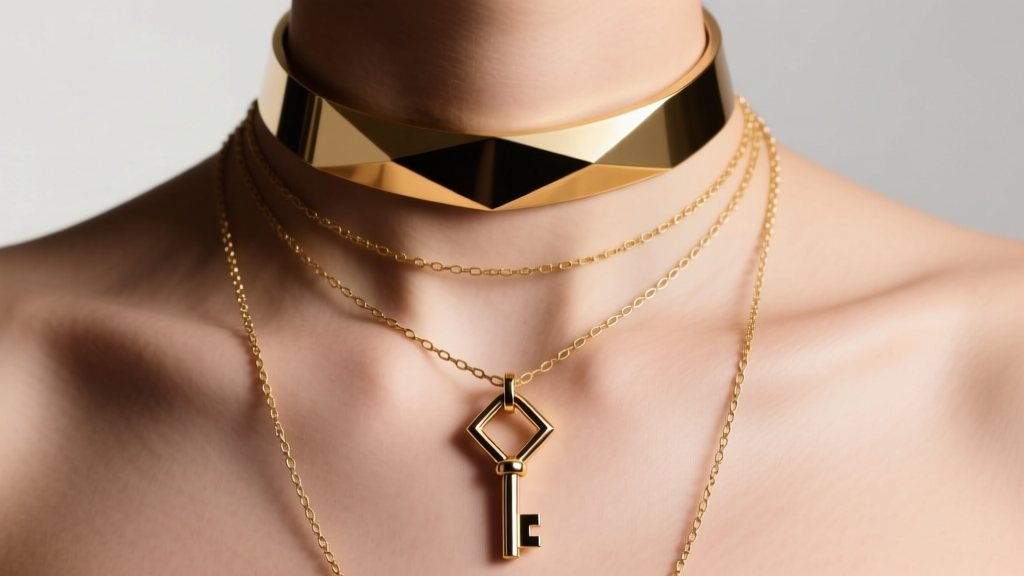
In 2026, the most prominent styling technique for this trend is the 'Matinee Drop' over structured knitwear. A 20-inch to 24-inch chain allows the key to rest squarely on the sternum or slightly below, perfectly framing a high-neck turtleneck or a structured blazer. This length keeps the key visible while preventing it from catching on the collar. When layering, pair the heavy 22-inch key chain with a delicate 14-inch 1.0mm satellite choker. The contrast between the ultra-fine choker and the heavy, industrial matinee chain creates a striking visual hierarchy that anchors the 'dark coquette' aesthetic.
The Choker and Off-The-Shoulder Silhouette
For a more aggressive, gothic-punk presentation, a 16-inch choker length forces the key to rest high on the collarbone. This requires a lighter, hollow-core titanium key to prevent neck strain. This high placement is best showcased with off-the-shoulder tops or deep scoop necklines, allowing the metal to rest directly against bare skin, creating a stark, romantic contrast between the cold steel and the wearer's anatomy.
Key Pendant Aesthetics: Ornate vs. Minimalist
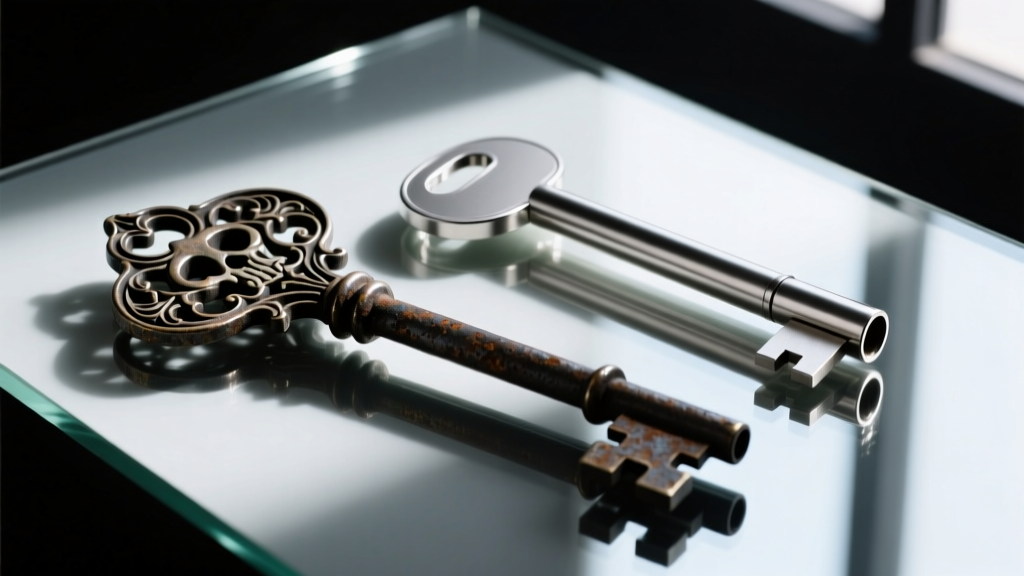
The visual language of the key itself dictates the overall vibe of the outfit. The market is currently bifurcated into two distinct design philosophies:
- The Victorian Skeleton Key: Featuring elaborate trefoil bows, intricate shaft detailing, and complex bit designs. These are usually finished in oxidized silver or antiqued brass. They pair flawlessly with lace, velvet, corsetry, and the broader dark romance aesthetic.
- The Tubular Modernist Key: Sleek, geometric, and often resembling a high-security hex key or a minimalist cylinder. These are typically polished 14k white gold or mirror-finished titanium. They bridge the gap into cyberpunk, avant-garde streetwear, and minimalist high fashion.
Maintenance, Tarnish, and Skin Reactions
Because a chastity key on a necklace is often worn continuously—including through showers, workouts, and sleep—tarnish and soap scum buildup are inevitable. Zinc alloys and copper-based brasses will oxidize rapidly when exposed to the pH of human sweat, often leaving a green or black residue on the sternum. This is not dangerous, but it is aesthetically displeasing and ruins the illusion of high-end jewelry.
To maintain a pristine appearance, stick strictly to 316L stainless steel, Grade 23 titanium, or solid 14k/18k gold. These materials are impervious to water and sweat. For cleaning, a simple ultrasonic jewelry cleaner filled with warm water and a drop of mild dish soap will remove sebum and dead skin cells from the intricate crevices of a vintage skeleton key in under three minutes. Avoid harsh chemical silver dips, as they can strip the intentional oxidized detailing from the recesses of gothic-style keys.
Final Thoughts on Intimate Symbolism in Public Fashion
Wearing a chastity key on necklace chains in 2026 is a masterclass in personal storytelling through accessorizing. It requires the wearer to act as both a stylist and an engineer, balancing the romantic, symbolic weight of the object with the harsh physical realities of gravity, friction, and metallurgy. By investing in proper chain gauges, securing threaded clasps, and understanding the interplay between chain length and garment necklines, you transform a private token into an unshakable, avant-garde fashion statement that commands respect and intrigue.