2 Carat Diamond Pendant Necklace: 2026 Buying Guide
Discover expert tips for buying a 2 carat diamond pendant necklace in 2026. Compare natural vs. lab-grown, 4C grades, settings, and chain pairings.

Why a 2 Carat Diamond Pendant Necklace Requires a Unique Strategy
When investing in a 2 carat diamond pendant necklace, the rules of diamond buying shift dramatically compared to engagement rings or earrings. A pendant rests flat against the sternum, meaning the diamond's crown (top facet) must do 100% of the heavy lifting for light performance. Unlike a ring that constantly tilts and catches ambient light from multiple angles, a necklace relies entirely on its cut precision to project fire and brilliance straight outward. At roughly 8.1mm in diameter, a 2-carat round brilliant is a commanding centerpiece that demands expert proportioning, secure setting architecture, and a chain robust enough to support its weight without stretching over time.
The Physics of Pendant Light Performance
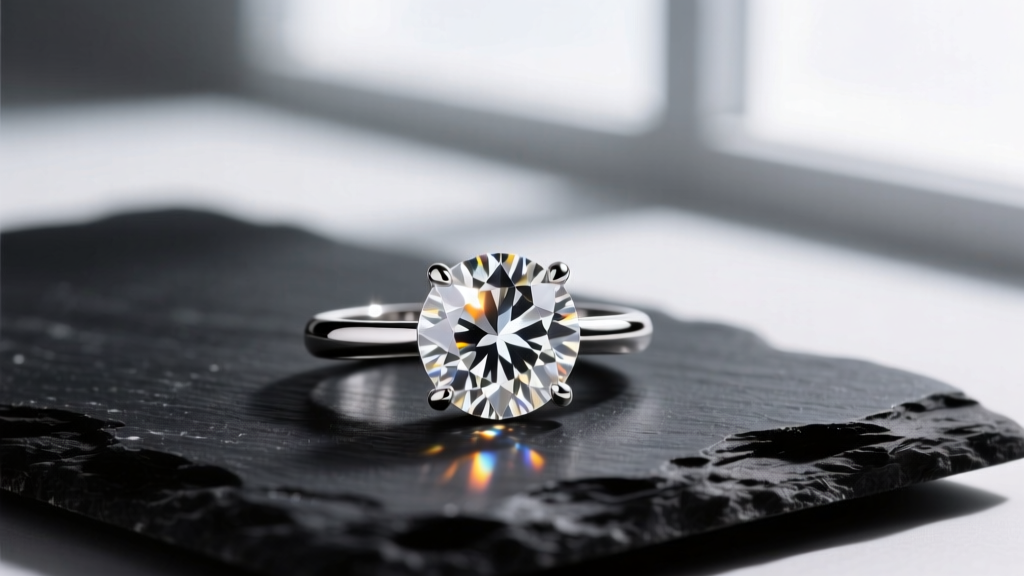
The distance between the diamond and the observer's eye fundamentally changes how we should evaluate the 4Cs. A pendant hangs roughly 18 to 24 inches away from the person you are speaking to. Because of this distance, microscopic inclusions that would be glaringly obvious in an engagement ring (viewed at 6 inches) become completely invisible to the naked eye in a necklace. Conversely, cut quality becomes even more critical. If a diamond is cut too shallow or too deep, it will leak light and appear as a dark, glassy void against the chest. According to the Gemological Institute of America (GIA), a diamond's brilliance is dictated by how efficiently it returns light through the crown. For pendants, prioritize crown angles between 34° and 35° and a table percentage between 54% and 58% to maximize face-up sparkle.
Decoding the 4Cs: Where to Splurge and Where to Save
Allocating your budget correctly is the hallmark of a smart jewelry buyer. Below is a strategic framework for selecting a 2 carat diamond pendant necklace in 2026, whether you are opting for a mined stone or a lab-grown alternative.
| 4C Grade | Natural Diamond Target | Lab-Grown Diamond Target | Expert Rationale |
|---|---|---|---|
| Cut | Excellent / Ideal | Ideal (e.g., GCAL 8X) | Non-negotiable for pendants; poor cut results in a lifeless stone against the chest. |
| Color | G - H | D - F | Lab diamonds are cheap in colorless grades; natural buyers save 20% by dropping to near-colorless. |
| Clarity | VS2 / SI1 (Eye-Clean) | VVS2 / VS1 | Pendants sit 18+ inches from the observer's eye, making SI1 inclusions virtually invisible. |
| Carat | 1.90 - 1.99ct | 2.00ct+ | Avoid 'magic sizes' (exactly 2.00ct) in naturals to dodge price premiums; seek 1.95ct for value. |
Setting Architecture: Securing a 2-Carat Centerpiece
A 2-carat diamond weighs approximately 0.4 grams, but the leverage it exerts on a setting when snagged on clothing is substantial. The setting you choose dictates both the security and the visual spread of the stone.
4-Prong vs. 6-Prong Solitaires
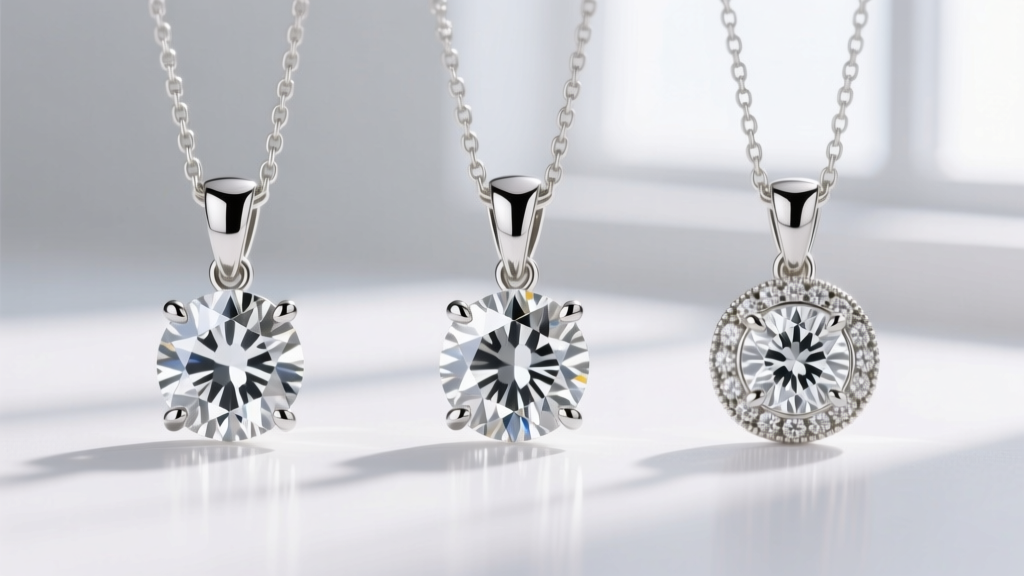
A 4-prong setting allows more light to enter the pavilion (bottom) of the diamond, maximizing brilliance and making the stone appear slightly larger. However, if one prong fails, the stone is lost. A 6-prong setting offers redundancy; if one prong breaks, the remaining five will hold the 8.1mm stone securely. For a 2-carat pendant that swings and moves with the wearer's body, a 6-prong platinum setting is the gold standard for security.
The Bezel Alternative
A full bezel setting wraps a metal rim entirely around the diamond's girdle. While it offers unparalleled protection against snags and impacts, it reduces the visible surface area of the diamond by up to 10% and restricts side-light entry. If you choose a bezel for a 2-carat stone, ensure the metal rim is knife-edged and ultra-thin (under 1mm) to preserve the stone's visual footprint.
Chain Mechanics: Gauge, Length, and Clasp Engineering
The chain is the structural foundation of your necklace. A delicate 0.8mm chain will eventually stretch, warp, or snap under the dynamic weight of a 2-carat pendant.
- Gauge & Width: Opt for a chain width between 1.2mm and 1.5mm. This provides the tensile strength needed to support the pendant without visually overpowering it.
- Chain Style: Box chains and cable chains are superior for pendants. Box chains offer excellent structural integrity due to their interlocking square links, while rope chains, though beautiful, tend to trap skin hairs and are difficult to repair if they kink.
- Clasp Selection: Never use a spring-ring clasp for a 2-carat diamond. The internal spring mechanism is prone to failure over time. Always upgrade to a lobster clasp or a locking box clasp with a safety figure-eight catch.
- Length: A 16-inch chain sits at the collarbone (choker style), which can make a 2-carat stone feel overwhelming. An 18-inch chain places the diamond perfectly in the sternal notch, offering the most elegant and balanced presentation.
2026 Market Pricing: Natural vs. Lab-Grown Diamonds
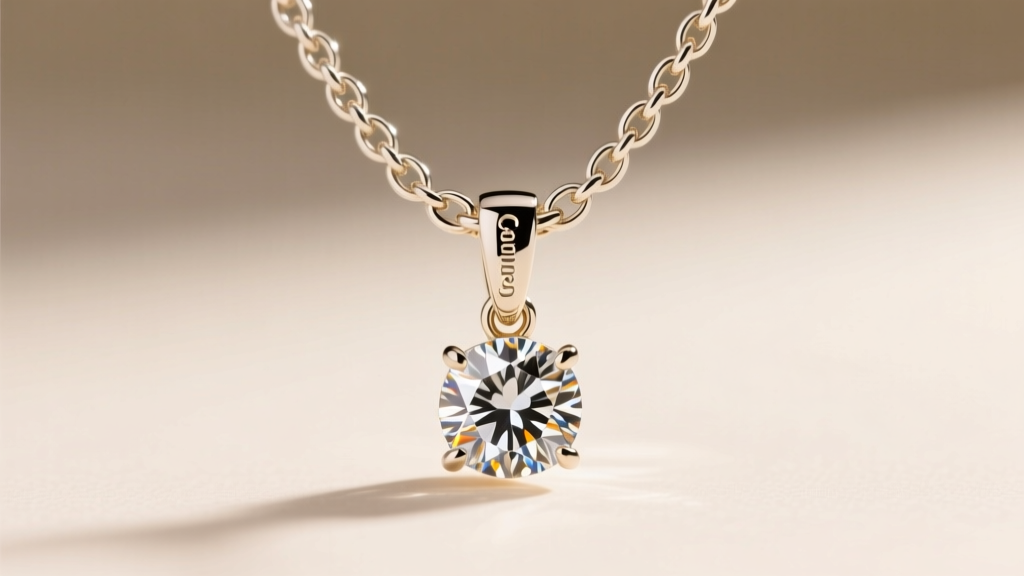
The pricing landscape for a 2 carat diamond pendant necklace has bifurcated significantly. Understanding these brackets prevents you from overpaying for brand markups.
- Natural Diamonds (G Color, VS2 Clarity): Expect to pay between $14,000 and $22,000 for the loose stone, plus $800 to $1,500 for a quality platinum setting and chain. Natural diamonds retain a degree of resale value and carry traditional prestige.
- Lab-Grown Diamonds (G Color, VS2 Clarity): Prices have stabilized in 2026, with high-quality 2-carat lab stones ranging from $900 to $1,800. Total necklace cost, including a premium 18k white gold setting, typically falls under $3,500. Lab-grown diamonds are chemically and optically identical to mined stones but currently hold negligible resale value.
When purchasing lab-grown, the Federal Trade Commission (FTC) requires clear disclosure. Ensure your receipt explicitly states 'lab-grown' or 'man-made' to guarantee transparency and proper insurance valuation.
Certification and Red Flags to Avoid
Never purchase a 2-carat diamond without an independent grading report. For natural diamonds, the GIA remains the undisputed benchmark for color and clarity grading consistency. For lab-grown diamonds, the International Gemological Institute (IGI) and GCAL provide highly detailed reports, with GCAL offering a certified '8X' cut grade that guarantees superior light performance.
Red Flags at the Jeweler:
- EGL or In-House Certificates: These labs are notorious for over-grading color and clarity by 1 to 2 grades. An EGL 'G/VS2' might actually be a GIA 'J/SI2'.
- Milky or Fluorescent Stones: Strong blue fluorescence in lower color grades (I-J) can make the stone look oily or milky in daylight. Inspect the diamond in natural sunlight before finalizing the purchase.
- Pre-Set 'Mall' Jewelry: Mass-market jewelers often use commercial-grade diamonds with poor cut grades (Fair/Poor) hidden beneath heavy bezels. Always buy the loose diamond first, inspect its proportions, and have it set custom.
Final Verdict
A 2 carat diamond pendant necklace is a generational piece that commands attention. By prioritizing an Ideal cut, leveraging the distance-to-eye ratio to save on clarity, and pairing the stone with a robust 1.5mm box chain and lobster clasp, you ensure your investment is both breathtaking and structurally sound for decades to come.


