Mastering the 22 Necklace: Technical Fit, Drape, and Chain Weaves
Discover the technical nuances of the 22 necklace length. Expert insights on chain weaves, drape physics, clasp mechanics, and ideal neckline pairings.

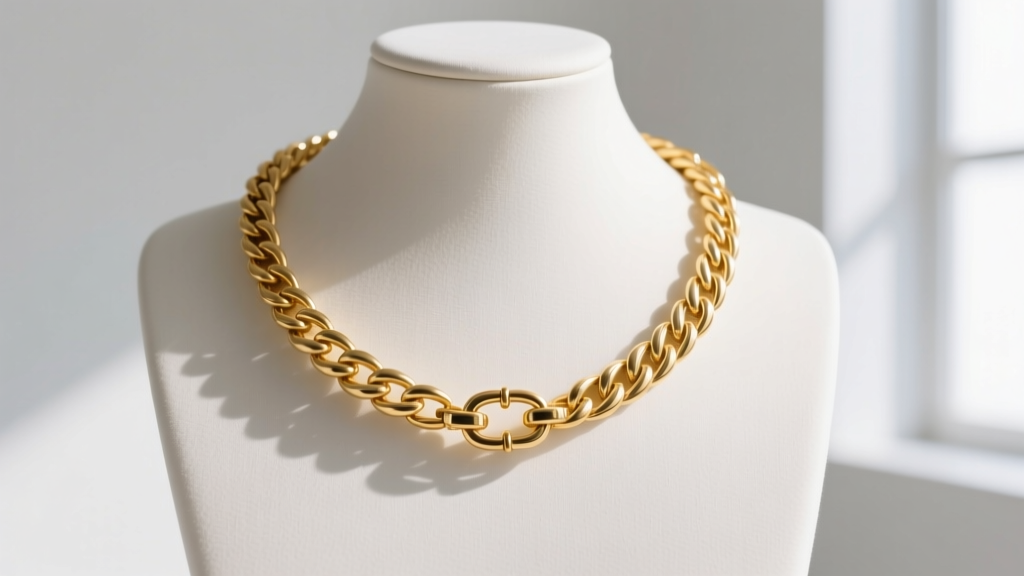
The jewelry industry often categorizes standard lengths into rigid buckets: the 16-inch choker, the 18-inch princess, and the 24-inch matinee. However, the 22 necklace occupies a highly specific, often misunderstood middle ground. Sitting precisely on the border between the princess and matinee categories, a 22 necklace presents unique engineering and styling challenges. It is long enough to interact with the bustline and torso geometry, yet short enough to require precise weight distribution to prevent the dreaded 'choke and slide' effect. In this expert deep dive, we deconstruct the physics, metallurgy, and styling architecture required to master the 22 necklace length.
The Physics of the 22 Necklace Drape
Understanding how a 22 necklace behaves requires a basic grasp of torso mapping and drape physics. On a standard 5'4" female torso, a 22-inch chain typically falls 4.5 to 5.5 inches below the clavicle (collarbone). This places the lowest point of the drape directly at the sternum or the upper slope of the bust. According to standard sizing charts published by Jewelers of America, this length is designed to elongate the neck without plunging into the deep V of a traditional opera chain.
However, torso length drastically alters this baseline. On a wearer with a longer torso (5'8" or above), the 22 necklace will sit higher, mimicking the behavior of an 18-inch princess chain on a shorter frame, resting just below the collarbone. Conversely, on a petite frame with a shorter torso, the chain will dip lower, potentially resting directly on the bust apex. This variability means that when designing or purchasing a 22 necklace, one must account for the 'swing radius'—the lateral movement of the chain across the chest during walking or reaching.
Chain Weave Stability at 22 Inches
Not all chain weaves are engineered to handle the increased surface area and friction of a 22-inch drop. At this length, the chain is highly susceptible to tangling, flipping, and knotting. The structural geometry of the links dictates how the metal behaves in motion.
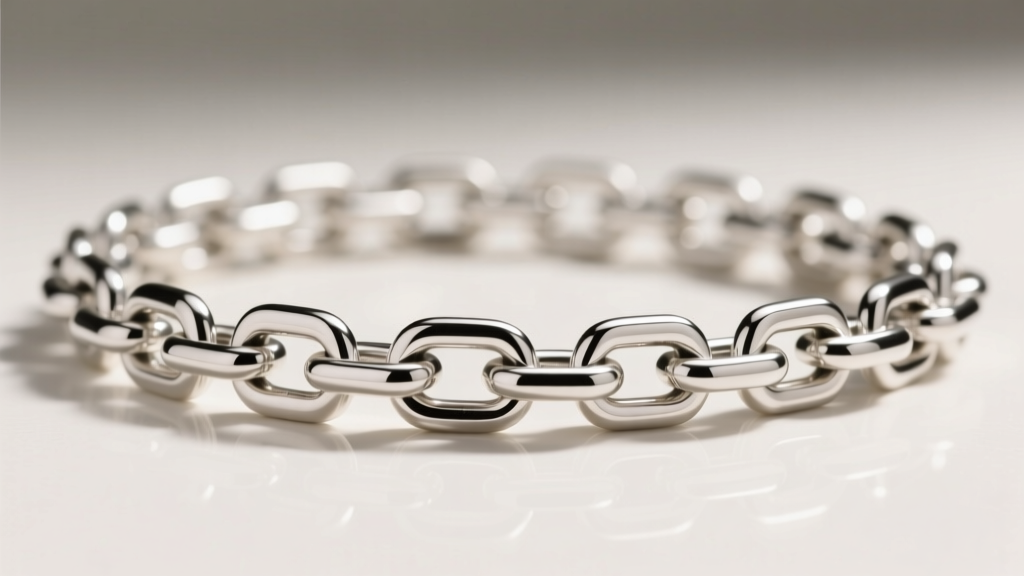
Flimsy, high-mobility weaves like the standard cable chain or the delicate figaro are notorious for tangling at 22 inches. The increased length provides more links that can catch on one another due to static friction and body movement. To combat this, jewelers recommend weaves with restricted link mobility or interlocking geometries.
| Chain Weave | Link Geometry | Tangle Resistance (at 22") | Recommended Thickness |
|---|---|---|---|
| Box Chain | 90-degree rigid squares | Excellent | 1.5mm - 2.5mm |
| Wheat (Spiga) | Woven, directional loops | Very High | 1.2mm - 2.0mm |
| Rope Chain | Twisted, helical links | Moderate | 2.0mm - 3.5mm |
| Cable Chain | Uniform oval links | Poor | Not recommended over 18" |
As highlighted by metallurgical guidelines from the Gemological Institute of America (GIA), the structural integrity of longer chains relies heavily on the solder points of each link. For a 22 necklace, laser-welded links in 14k or 18k gold provide the necessary tensile strength to withstand the pendulum effect of daily wear without stretching.
The Pendulum Effect: Pendant Weight Ratios
One of the most common technical failures of the 22 necklace is the backward slide. If the front of the chain is not properly anchored by a pendant or a heavy center motif, the friction of clothing will gradually pull the chain backward, causing the clasp to migrate to the front of the neck and the chain to tighten against the throat.
To prevent this, we apply the Pendant Weight Ratio (PWR). For a 22-inch chain, the pendant (including the bail) should weigh a minimum of 1.5 times the total weight of the bare chain. For example, if a 22-inch 18k gold box chain weighs 4.2 grams, the pendant must be at least 6.3 grams. This weight differential creates a gravitational anchor at the sternum, keeping the drape centered and the clasp securely at the nape of the neck.
Bail Mechanics and Sizing
The bail—the loop connecting the pendant to the chain—must be sized appropriately for a 22 necklace. Because the chain sits at a wider angle across the chest compared to a choker, a standard 5mm bail may cause the pendant to sit at an awkward, tilted angle. A tapered or hidden bail that allows the chain to pass through closer to the pendant's center of gravity ensures the stone or metal motif lays perfectly flat against the sternum.
Clasp Engineering for Mid-Length Chains
The clasp is the weakest point of any jewelry piece, and the 22 necklace subjects clasps to unique lateral torque. When pulling a 22-inch chain over the head (a common practice for chains lacking sufficient clasp clearance), spring ring clasps are highly prone to snapping or warping.
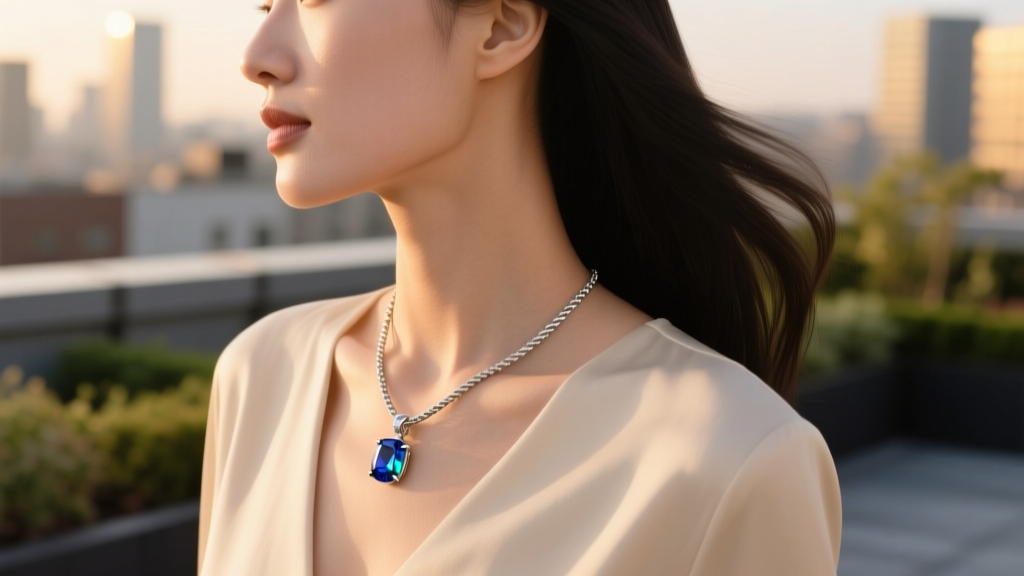
For chains ranging from 1.5mm to 3.0mm in thickness, a 5mm or 7mm Lobster Clasp is the industry standard. The internal spring mechanism of a lobster clasp is shielded, and the trigger requires deliberate force to open, preventing accidental unclasping during the 'over-the-head' maneuver. For heavier 22 necklace designs exceeding 4.0mm in width, a custom box clasp with a figure-eight safety catch is required to handle the sheer tensile load of the metal.
Neckline Architecture: A Data-Driven Approach
Styling a 22 necklace requires an understanding of garment architecture. The goal is to create parallel lines or complementary geometric intersections with the clothing's neckline.
- The V-Neck: The ideal pairing. A 22 necklace naturally mimics and elongates the V-shape of the garment, drawing the eye downward and creating a slimming optical illusion. Ensure the pendant sits at least one inch above the garment's hemline to avoid visual clutter.
- The Scoop Neck: A 22 necklace will typically rest just inside or directly on the upper edge of a standard scoop neck. This creates a layered, framed effect that highlights the collarbone.
- The Boat Neck (Bateau): Proceed with caution. A boat neck cuts horizontally across the collarbone. A 22 necklace will intersect this horizontal line, creating a stark geometric cross. This works exceptionally well with minimalist, geometric pendants but can look chaotic with ornate, vintage-inspired pieces.
- The Crew Neck: A 22 necklace is generally too long to be worn inside a tight crew neck t-shirt, where it will bunch up awkwardly. It is best worn over the fabric, acting as a statement piece against the solid cotton backdrop.
Maintenance and Longevity of the 22 Inch Drop
Because the 22 necklace rests in the 'high friction' zone of the body—interacting with seatbelts, desk edges, and the natural swing of the arms during walking—routine maintenance is critical. Every six months, the jump ring connecting the clasp to the chain should be inspected for gapping. Furthermore, ultrasonic cleaning is recommended for intricate weaves like the wheat or rope chain to remove accumulated sebum and cosmetic residues that can degrade the metal's luster and increase link friction over time.
"The success of a mid-length chain lies not in the karat of the gold, but in the precision of its link geometry and the gravitational balance of its components."
By respecting the technical parameters of drape, weight distribution, and weave stability, the 22 necklace transforms from an awkward transitional length into a sophisticated, highly engineered staple of modern jewelry design.


