Decoding The Marie Antoinette Necklace Scandal & Statement Gems
Uncover the truth behind the marie antoinette necklace scandal, the 2800-carat diamond masterpiece, and how to wear dramatic statement necklaces today.

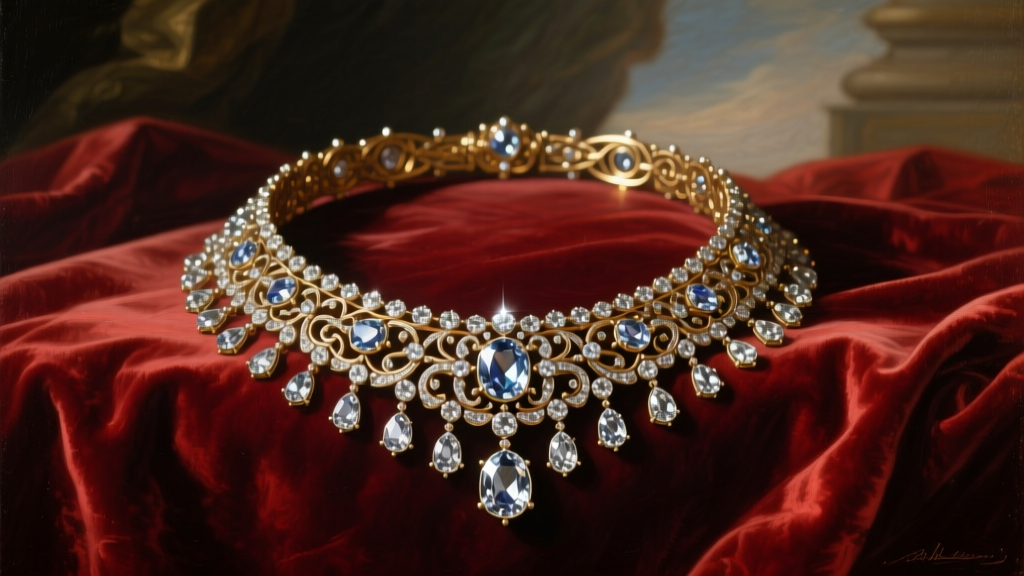
The Infamous Affair: What Was the Marie Antoinette Necklace Scandal?
When we think of royal jewelry, few pieces carry the weight of historical infamy quite like the centerpiece of the marie antoinette necklace scandal. Known formally as the Affair of the Diamond Necklace (1784–1785), this elaborate con job did not just ruin reputations; it fundamentally fractured the public’s perception of the French monarchy and helped ignite the spark of the French Revolution. But before we dive into the espionage and forged letters, we must understand the object of desire itself: a diamond collar so massive and breathtaking that it blinded the Cardinal de Rohan to an obvious trap.
The scandal began with Charles Auguste Böhmer and Paul Bassange, Parisian jewelers who had spent years assembling a staggering diamond masterpiece. Originally commissioned by King Louis XV for his mistress, Madame du Barry, the king died before the final payment was made. Left with a financially crippling asset, the jewelers desperately sought a buyer, setting the stage for one of history’s most audacious frauds.
Anatomy of a Royal Masterpiece: The 2,800-Carat Diamond Collar
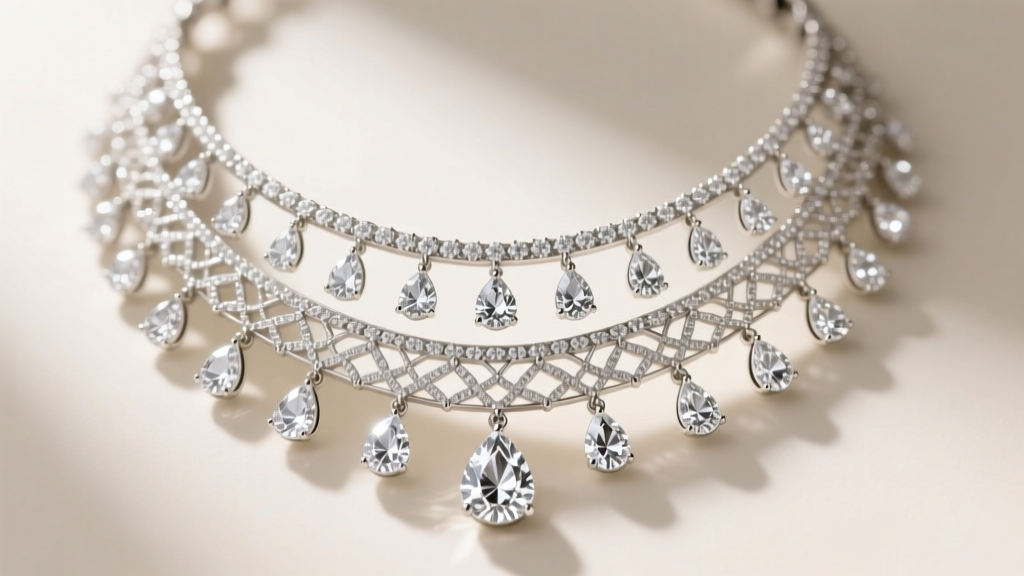
To understand why the Cardinal de Rohan was willing to risk his position to acquire this piece for the Queen, you have to understand the sheer scale of the jewelry. According to the Gemological Institute of America (GIA), historical high jewelry of this era prioritized sheer volume and intricate silverwork. The Böhmer necklace was not a simple pendant; it was a multi-tiered bib and collar hybrid.
Material & Craftsmanship Breakdown
The necklace consisted of over 540 individual diamonds, weighing an estimated 2,800 carats in total. In the 18th century, diamonds were set almost exclusively in silver rather than gold or platinum. Silversmiths used a technique called 'closed-back foiling' or polished silver bezels to reflect light back through the rose-cut stones, maximizing their brilliance in candlelight. However, silver tarnishes rapidly, meaning the necklace required constant, meticulous maintenance by royal jewelers to prevent the metal from turning black against the wearer's skin.
| Feature | Original 1784 Böhmer Necklace | Modern 2026 High Jewelry Equivalent |
|---|---|---|
| Total Carat Weight | ~2,800 Carats | 150 - 300 Carats (Statement Collars) |
| Diamond Cut | Rose Cut & Old Mine Cut | Modern Brilliant & Antique Cushion |
| Primary Metal | Silver (with gold backing) | Platinum or 18k White Gold |
| Estimated Value | 1.6 Million Livres | $5 Million - $25 Million+ |
| Clasp Mechanism | Ribbon tie / Hook and Eye | Hidden Box Clasp with Figure-8 Safeties |
The Fallout: How the Scandal Shook the French Monarchy
The con was orchestrated by Jeanne de Valois-Saint-Rémy, the Countess de la Motte. She convinced the ambitious Cardinal de Rohan that Queen Marie Antoinette secretly desired the necklace but could not purchase it publicly due to the crown's financial scrutiny. Jeanne forged letters, staged midnight meetings in the gardens of Versailles using a lookalike prostitute, and ultimately took possession of the necklace on behalf of the 'Queen.' Instead of delivering it, Jeanne’s husband dismantled the 2,800-carat masterpiece and smuggled the diamonds to London to sell them on the black market.
When Böhmer demanded payment from the Queen, the plot unraveled. The subsequent public trial, documented extensively in Britannica's historical archives, exposed the corruption of the royal court. Though Marie Antoinette was entirely innocent, the public believed her capable of such extravagance. The scandal permanently destroyed her reputation, proving that a single piece of jewelry could alter the course of global history.
Modern Statement Necklaces: Channeling Royal Drama Safely
You do not need to be a French royal to appreciate the drama of a massive diamond collar. As of 2026, the high jewelry and bridal markets have seen a massive resurgence in 'scandal-worthy' statement bibs and chokers, heavily inspired by historical archives. However, wearing a heavy, multi-tiered necklace requires an understanding of jewelry biomechanics and proportion.
Sizing & Proportion Guide for Statement Collars
Unlike the delicate chains we wear daily, a statement collar acts as a structural garment. Here is how to select the right dimensions based on your neckline and anatomy:
- The Collar (12-13 inches): Sits tightly against the base of the neck. Best paired with V-neck or strapless gowns. Avoid if you have a shorter neck, as it will visually truncate your silhouette.
- The Choker (14-16 inches): Rests just below the Adam's apple. The most versatile length for heavy pendants and diamond bibs. Pairs beautifully with sweetheart necklines.
- The Princess / Bib (17-19 inches): Drapes over the collarbone. Ideal for multi-tiered diamond festoons that require space to cascade without bunching.
The Biomechanics of Heavy Jewelry: How to Wear 100+ Carats
One of the lesser-known facts about historical royal jewelry is the physical toll it took on the wearer. A 2,800-carat diamond necklace set in solid silver could easily weigh over a pound. Today, master jewelers employ specific engineering techniques to ensure modern statement pieces remain comfortable and secure.
Weight Distribution & Clasp Security
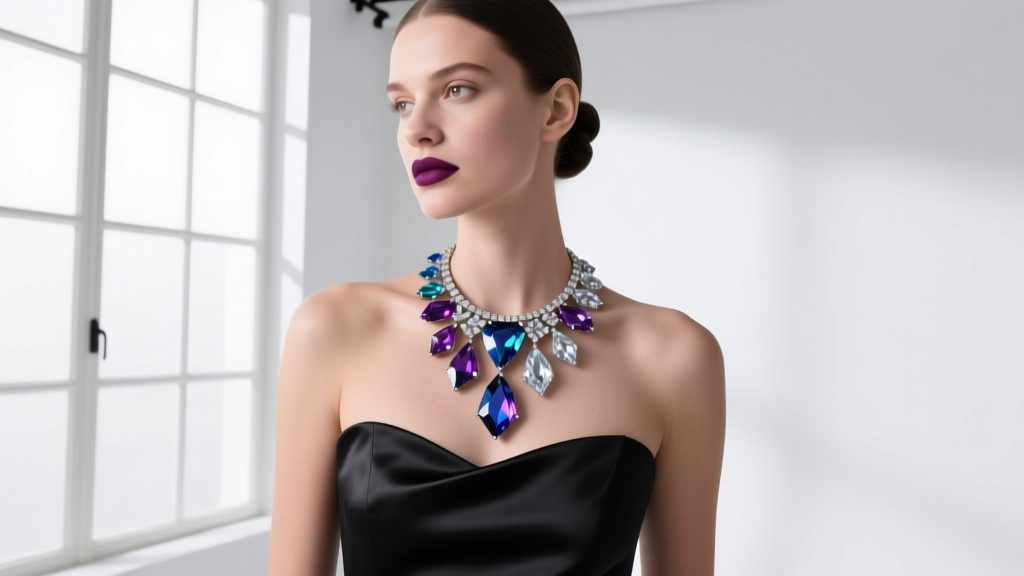
If you are investing in a heavy gemstone collar or a lab-grown diamond replica (which have become incredibly popular for red-carpet events), look for these structural hallmarks:
- Articulated Links: The necklace must feature flexible, hinged segments. Rigid metal will dig into the clavicle and fail to drape properly.
- Suede or Silicone Backing: High-end houses often line the inner metalwork with medical-grade silicone or ultra-thin suede. This creates friction against the skin, preventing the heavy front of the necklace from sliding downward and choking the wearer.
- Counterweight Pendants: To keep the clasp from migrating to the front of the neck, modern jewelers integrate a heavy decorative counterweight or a secondary tassel at the nape of the neck.
- Double Safety Catches: Never rely on a single lobster clasp for a piece weighing more than 50 grams. Look for a box clasp reinforced with dual figure-eight safety wires.
Where to Find 'Scandal-Worthy' High Jewelry Today
While the original Böhmer necklace was dismantled and lost to history, its legacy lives on in the archives of the Palace of Versailles and the vaults of modern heritage houses. Brands like Dior and Chanel frequently release 'High Jewelry' collections featuring multi-tiered diamond collars that echo the festoon style of the 1780s. For those seeking the royal aesthetic without the royal price tag, the 2026 market offers exceptional alternatives.
Lab-grown diamond manufacturers now produce rose-cut and antique-cushion stones that perfectly mimic the candlelight brilliance of the 18th century. A 50-carat lab-grown diamond statement collar, set in rhodium-plated 18k white gold for that authentic silver-look, can now be commissioned for between $4,000 and $8,000—a fraction of the 1.6 million livres that nearly toppled a monarchy.
Final Thoughts on Royal Jewelry History
The marie antoinette necklace scandal remains the ultimate cautionary tale about the intoxicating power of high jewelry. It reminds us that necklaces are never just adornments; they are symbols of status, desire, and sometimes, destruction. Whether you are studying the intricate silverwork of the 1700s or selecting a modern crystal collar for your next gala, remember the engineering, artistry, and sheer drama that goes into creating a masterpiece worthy of a queen. Wear your statement pieces with confidence, but perhaps leave the forged letters and black-market diamond smuggling in the past.


