Cross Tattoo Necklace Buying Guide: What to Look For
Discover how to choose the perfect cross tattoo necklace. Our buying guide covers metal grades, chain gauges, and blackwork enamel techniques.

The Evolution of the Cross Tattoo Necklace
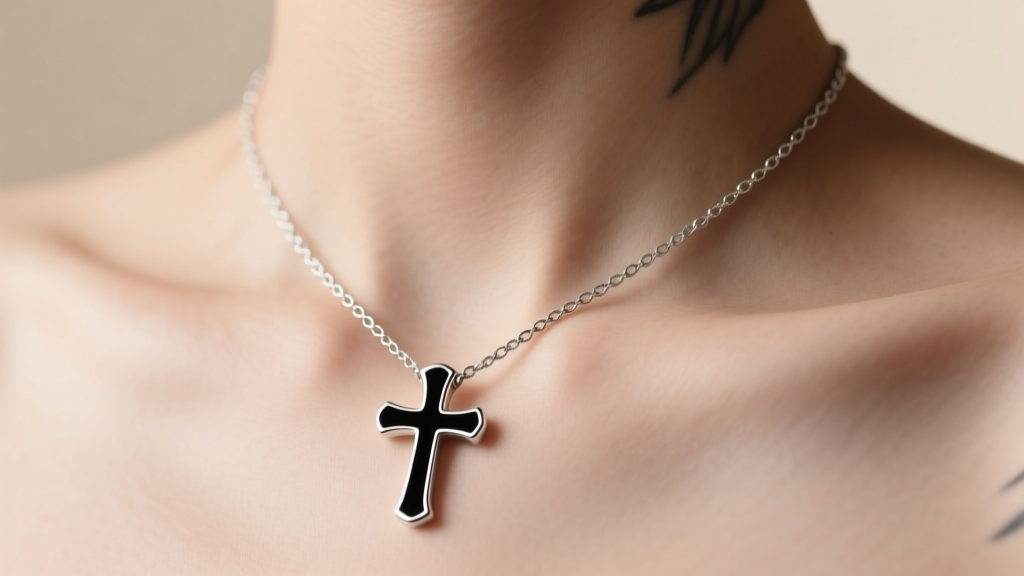
The concept of a cross tattoo necklace has undergone a radical transformation. While the 1990s popularized the stretchy plastic tattoo choker, the 2026 jewelry market has elevated this aesthetic into the realm of fine and demi-fine jewelry. Today, a tattoo-style cross necklace does not mean a plastic band; it refers to meticulously crafted pendants and chokers that mimic the intricate, inked appearance of fine-line, blackwork, or tribal tattoos directly on the skin. Whether you are drawn to the spiritual symbolism of the cross or the edgy, alternative appeal of tattoo art, buying the right piece requires a deep understanding of metallurgy, engraving techniques, and chain gauges.
In this comprehensive buying guide, we break down exactly what to look for when investing in a cross tattoo necklace, ensuring you get a piece that offers the illusion of body art with the longevity of heirloom-quality jewelry.
Decoding the Tattoo Aesthetic: Artistic Styles
When shopping for a tattoo-inspired cross, the first decision is the artistic style. Jewelers use different manufacturing techniques to replicate specific tattoo genres:
Fine-Line and Single-Needle
This style mimics the delicate, minimalist tattoos popularized by modern artists. To achieve this, jewelers use CNC laser engraving on ultra-thin (1mm to 1.5mm) sterling silver or gold plates. The lines are incredibly shallow and precise. Look for pieces that use matte finishes on the background to make the polished or blackened lines pop, simulating ink settling into the skin.
Blackwork and Tribal
Blackwork relies on heavy, solid areas of black contrasted with negative space. In jewelry, this is achieved through deep recesses filled with black enamel or via PVD (Physical Vapor Deposition) coating. Tribal crosses often feature sweeping, geometric curves that require 3D CAD modeling and casting to ensure the edges are sharp and intentional, not rounded and soft.
Neo-Traditional and Gothic
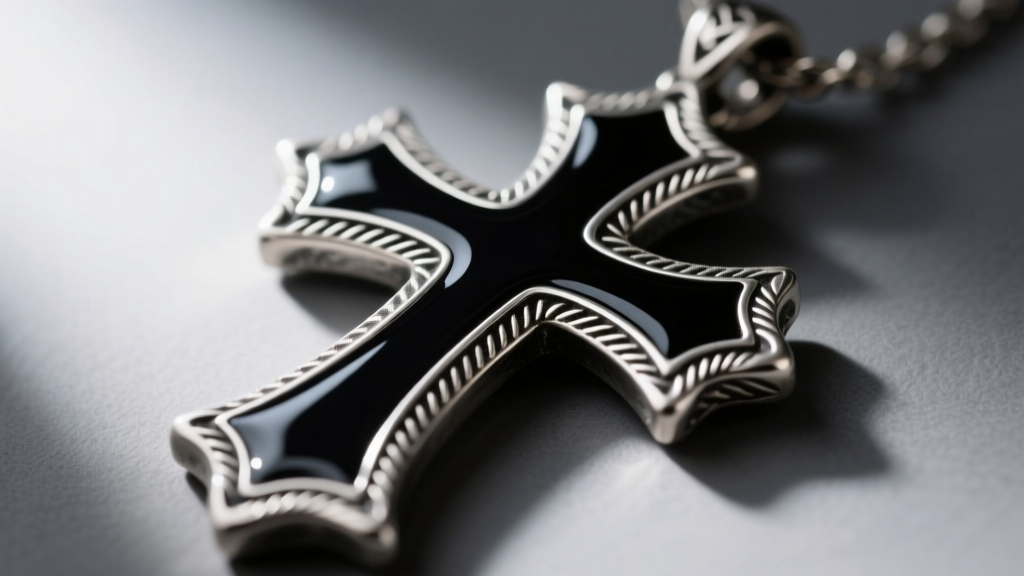
These styles feature bold outlines with intricate shading. Jewelers replicate this using guilloché engraving—a technique where repetitive, precise patterns are carved into the metal and then flooded with translucent or opaque black vitreous enamel. The result is a rich, multi-dimensional cross that looks like a masterwork tattoo.
The Metallurgy of 'Ink': Blackened Finishes Explained
The most critical factor in a cross tattoo necklace is how the black 'ink' effect is achieved. Not all black metals are created equal, and the wrong choice will lead to fading, chipping, or skin irritation. Below is a comparison of the three primary methods used in 2026.
| Technique | Material Base | Durability | Best For |
|---|---|---|---|
| Black Rhodium | Sterling Silver, Gold | High (2-5 years) | Fine-line crosses, luxury pieces |
| Oxidized Silver | 925 Sterling Silver | Low-Medium | Gothic, rustic, or vintage styles |
| Vitreous Enamel | Silver, Gold, Steel | Very High | Blackwork, bold outlines, color fills |
| PVD Coating | 316L Stainless Steel, Titanium | Extreme | Everyday wear, tribal, waterproof pieces |
Deep Dive: Oxidation vs. Rhodium
Oxidized silver is treated with liver of sulfur (potassium sulfide) to create a dark, matte black patina. While beautiful, oxidation is a surface-level chemical reaction. Friction from your skin and clothing will gradually polish the high points back to bright silver. This can create a cool, worn-in look, but if you want a crisp, tattoo-like contrast, you must avoid rubbing the pendant.
Black rhodium, a platinum-group metal, is electroplated onto the jewelry. According to the Gemological Institute of America (GIA), rhodium plating provides a highly durable, dark gunmetal-to-black finish that resists tarnishing. However, it will eventually wear off on high-contact areas and requires professional re-plating every few years.
Chain Selection: Maintaining the Illusion
A tattoo necklace fails if the chain looks like a heavy, traditional rope. The chain must either mimic the thin, precise lines of a tattoo or disappear entirely against the skin. Here are the exact specifications to look for:
- Gauge Thickness: Opt for chains between 0.8mm (20-gauge)1.2mm (18-gauge). Anything thicker than 1.5mm will immediately break the tattoo illusion and look like a standard pendant necklace.
- Chain Style: Cable chains offer a classic, minimalist line. Box chains provide a slightly more modern, geometric look that pairs well with tribal crosses. Avoid wheat or rope chains, as their complex textures distract from the pendant.
- Clasp Hardware: Ensure the lobster clasp is proportionate (around 4mm to 5mm). For choker styles, look for seamless magnetic clasps or hidden bayonet clasps that maintain an unbroken line around the neck.
Sizing and Placement: Choker vs. Standard Drop
The placement of your cross tattoo necklace drastically changes its visual impact. In tattoo culture, placement is everything, and the same applies to jewelry.
The Neck Choker (14 to 15 Inches)
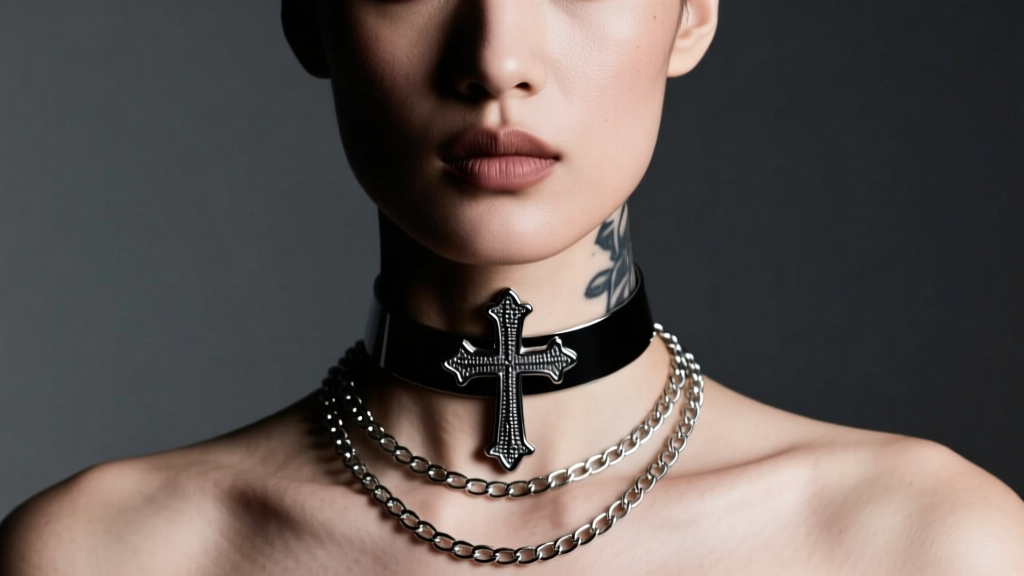
A choker-length cross necklace mimics a front-neck or throat tattoo. This is a bold, highly visible statement. When buying a choker, ensure the pendant is relatively small (under 1 inch) so it doesn't overwhelm the collarbone or flip upside down during movement. A flat-backed pendant is essential here to prevent it from catching on the skin.
The Princess Drop (17 to 18 Inches)
This length places the cross right at the hollow of the throat or upper chest, mimicking a traditional sternum or chest piece tattoo. This is the most versatile length, allowing the pendant to rest over crewneck t-shirts or peek out from unbuttoned collars. Pendants in the 1.5-inch to 2-inch range work best at this length.
Red Flags: What to Avoid When Buying
The market is flooded with cheap imitations that use deceptive manufacturing shortcuts. Protect your investment by avoiding these common red flags:
- Painted or Lacquered Black: If the description mentions 'black paint,' 'acrylic fill,' or 'lacquer,' walk away. These will chip, peel, and flake off within weeks of wear, leaving a messy, uneven appearance.
- Nickel Flash Underplating: Some manufacturers use a cheap nickel layer under black rhodium to help it adhere. Nickel is a leading cause of contact dermatitis. According to DermNet NZ, nickel allergies can develop over time and cause severe rashes. Always verify that the piece is nickel-free or hypoallergenic.
- Weak Jump Rings: The jump ring connecting the pendant to the chain should be soldered shut or made of thick wire (at least 0.6mm). Thin, unsoldered jump rings will easily pull apart, resulting in a lost pendant.
Care and Maintenance for Blackened Metals
To keep your cross tattoo necklace looking like fresh ink, proper maintenance is non-negotiable. Blackened metals require different care than traditional bright silver or gold.
Expert Tip: Never use standard silver polishing cloths or liquid silver dips on an oxidized or black rhodium cross. These products are mildly abrasive and chemically designed to strip tarnish—they will instantly remove the black 'tattoo' finish from your pendant.
Instead, clean your necklace using a few drops of mild, phosphate-free dish soap and warm water. Gently agitate with a soft-bristled baby toothbrush to remove skin oils and lotion from the engraved crevices. Pat dry with a microfiber cloth. Always remove your necklace before swimming in chlorinated pools or hot tubs, as harsh chemicals will accelerate the degradation of both enamel and rhodium plating.
Final Verdict: Investing in the Illusion
A high-quality cross tattoo necklace is a masterclass in jewelry design, blending the rebellious spirit of body art with the permanence of fine metals. By prioritizing vitreous enamel or PVD coatings for longevity, selecting ultra-fine 1mm chains to maintain the illusion, and avoiding cheap nickel under-layers, you can secure a piece that looks as striking in 2026 as it will a decade from now. Whether you choose a minimalist fine-line choker or a heavy blackwork sternum drop, the right materials will ensure your 'ink' never fades.


