Is a Diamond Pearl Necklace Worth It? 2026 Budget & Value Guide
Discover the true value of a diamond pearl necklace in 2026. We break down pearl grades, diamond accents, and pricing to help you budget wisely.

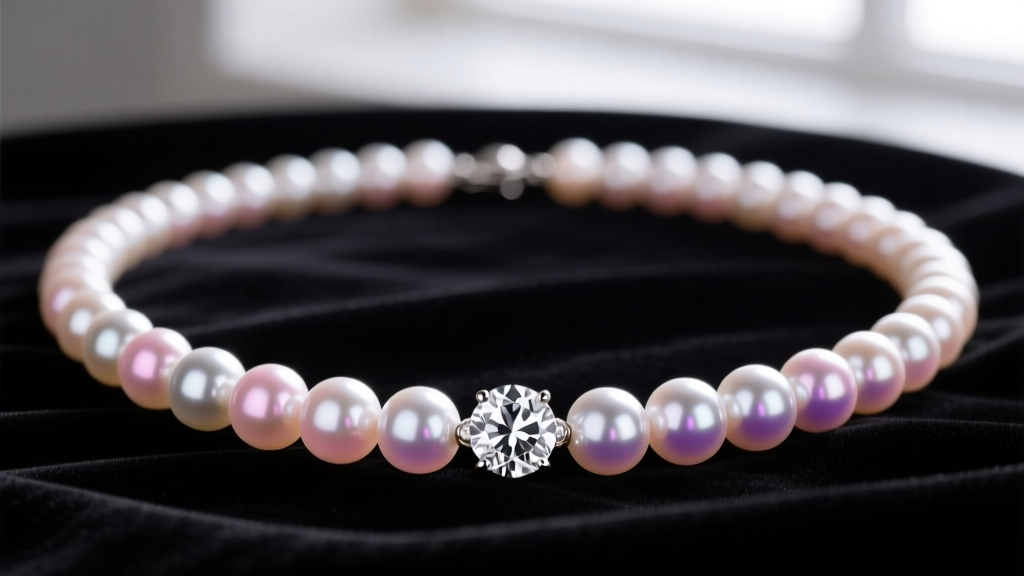
The Anatomy of a Diamond Pearl Necklace's Price Tag
When evaluating a diamond pearl necklace, the retail price is rarely a simple reflection of the materials. In 2026, the market is saturated with everything from $150 mass-produced freshwater strands to $50,000 bespoke South Sea collections. To assess true value, you must deconstruct the piece into its three core cost drivers: the pearl variety and nacre quality, the diamond accent specifications, and the precious metal hardware. Understanding the intersection of these elements is the only way to separate a genuine heirloom investment from an overpriced fashion accessory.
Pearl Varieties and Their 2026 Market Value
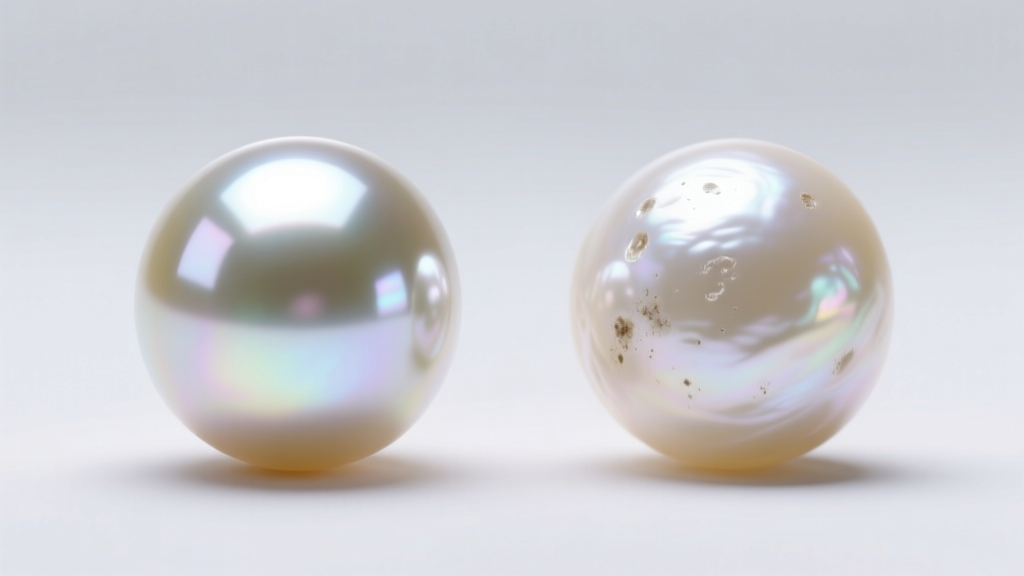
The foundation of your necklace's value lies in the pearl type. The price per millimeter increases exponentially as you move from freshwater to saltwater varieties. According to the Gemological Institute of America (GIA), luster and nacre thickness are the paramount indicators of a pearl's longevity and beauty.
Freshwater Pearls: The Budget-Friendly Workhorse
Modern Edison and bead-nucleated freshwater pearls have vastly improved in luster, often mimicking saltwater varieties to the untrained eye. However, they remain the most budget-friendly option. A high-quality 8mm freshwater strand typically ranges from $200 to $600. While the nacre is thick (often solid nacre), the luster tends to be softer and more "satiny" rather than mirror-like.
Akoya Pearls: The Classic Standard
Akoya pearls are the traditional choice for a classic diamond pearl necklace. Valued for their sharp, mirror-like luster and perfectly round shapes, a premium 7.5mm to 8.5mm Akoya strand with AAA grading will cost between $1,200 and $3,500. For the absolute best light reflection, look for the "Hanadama" certification, which guarantees a nacre thickness of at least 0.4mm and minimal blemishes.
South Sea and Tahitian Pearls: The Luxury Tier
If your budget exceeds $5,000, you enter the realm of South Sea (white and golden) and Tahitian (dark) pearls. These pearls range from 10mm to 16mm. A diamond-accented South Sea necklace is a heavy luxury investment, often starting at $8,000 and climbing past $25,000 for top-tier gem grades. The value here is driven by the rarity of the large oyster species and the extended 2-to-3-year cultivation period.
Evaluating the Diamond Accents: Melee vs. Solitaire
The diamond component in a diamond pearl necklace usually manifests in two ways: a single diamond pendant featuring a pearl halo, or a strand of pearls secured by a diamond-studded clasp. The value assessment for these diamonds differs drastically from standalone diamond jewelry.
The Melee Diamond Reality
Most diamond clasps and pearl halos utilize "melee" diamonds—stones weighing less than 0.15 carats each. In 2026, the wholesale price for commercial-grade melee is relatively low. Unscrupulous jewelers often inflate prices by claiming their melee diamonds are "VVS clarity" or "D color." This is a budget trap. Because melee diamonds are so small, inclusions and color variations are invisible to the naked eye. You should never pay a premium for VVS/VS clarity or D-F color in a diamond pearl necklace clasp. SI1-SI2 clarity and G-H color represent the optimal value sweet spot, offering brilliant sparkle without the unnecessary microscopic premiums.
Total Carat Weight (TCW) vs. Individual Stone Size
Always ask for the exact TCW of the diamonds. A clasp featuring 20 tiny 0.01ct diamonds (0.20 TCW) will look like a solid wall of sparkle but costs significantly less to manufacture than a clasp featuring four 0.05ct diamonds. Ensure the diamonds are prong-set or flush-set securely; glue-set diamonds in pearl jewelry are a major red flag indicating poor craftsmanship and inevitable stone loss.
2026 Pricing Matrix: What Should You Actually Pay?
Use this matrix to benchmark retail prices. These ranges assume 14k or 18k solid gold hardware and properly knotted silk or advanced synthetic thread. Prices reflect fair market value from reputable online and specialized brick-and-mortar jewelers in 2026.
| Pearl Type & Size | Diamond Accent (TCW) | Metal Hardware | Fair Market Value (2026) |
|---|---|---|---|
| Freshwater (8-9mm) | 0.10ctw (Clasp or Bail) | 14k Yellow/White Gold | $350 - $750 |
| Akoya AAA (7.5-8mm) | 0.25ctw (Diamond Clasp) | 18k White Gold | $1,800 - $3,200 |
| Akoya Hanadama (8-8.5mm) | 0.50ctw (Pave Clasp) | Platinum | $3,500 - $5,500 |
| White South Sea (11-13mm) | 0.75ctw (Articulated Clasp) | 18k White Gold | $9,000 - $18,000 |
| Tahitian (10-12mm) | 0.30ctw (Diamond Bail on Pendant) | 18k Rose Gold Chain | $1,500 - $3,500 |
Red Flags and Overpaying Traps
The pearl market is notorious for misleading terminology. To protect your budget, arm yourself with the knowledge to spot these common retail traps.

The "Saltwater" Mislabeling Trick
Some retailers will label high-end, bead-nucleated freshwater pearls (often called "Edison" pearls) as "saltwater" or "Akoya-style" to justify a 300% markup. Always demand a grading report or a clear, written specification of the pearl's origin. If the retailer cannot definitively state the oyster species (e.g., Pinctada fucata martensii for Akoya), walk away.
Gold-Filled and Vermeil Hardware
A genuine diamond pearl necklace should never be strung on gold-filled or vermeil chains, nor should it feature plated clasps. The moisture from the skin and the friction of the pearls will wear through plating within a few years. If a piece features diamonds but uses 14k gold-filled chains, the diamonds are likely low-grade industrial melee, and the overall value of the piece is negligible.
Machine-Knotted vs. Hand-Knotted Silk
According to the American Gem Society (AGS), proper knotting between pearls prevents total loss if the strand breaks and protects the pearl nacre from friction. While machine-knotted synthetic threads are acceptable for budget freshwater strands, luxury Akoya and South Sea necklaces must be hand-knotted with silk. Hand-knotting adds $150 to $300 in labor costs to the final price, but it is a non-negotiable hallmark of fine jewelry.
Where to Buy for the Best Value in 2026
For the best budget-to-value ratio, bypass traditional mall jewelers, whose overhead costs necessitate markups of 300% to 500% on pearl jewelry. Instead, look to specialized online pearl importers and direct-to-consumer estate jewelers. Online specialists who source directly from pearl farms in Japan, Australia, and French Polynesia can offer Hanadama Akoya and South Sea diamond pearl necklaces at 40% less than luxury retail brands.
When purchasing online, ensure the vendor provides high-resolution, unedited macro photography of the exact strand you are buying, alongside a clear return policy. A true diamond pearl necklace is an exercise in balanced luxury; by prioritizing mirror luster over microscopic diamond clarity, and demanding solid gold hardware, you secure a piece that will retain both its physical beauty and its financial value for generations.


