The Ultimate Guide to Buying a Gold Shark Tooth Necklace
Discover how to choose the perfect gold shark tooth necklace. Learn about karat weights, ethical sourcing, chain pairings, and styling tips.

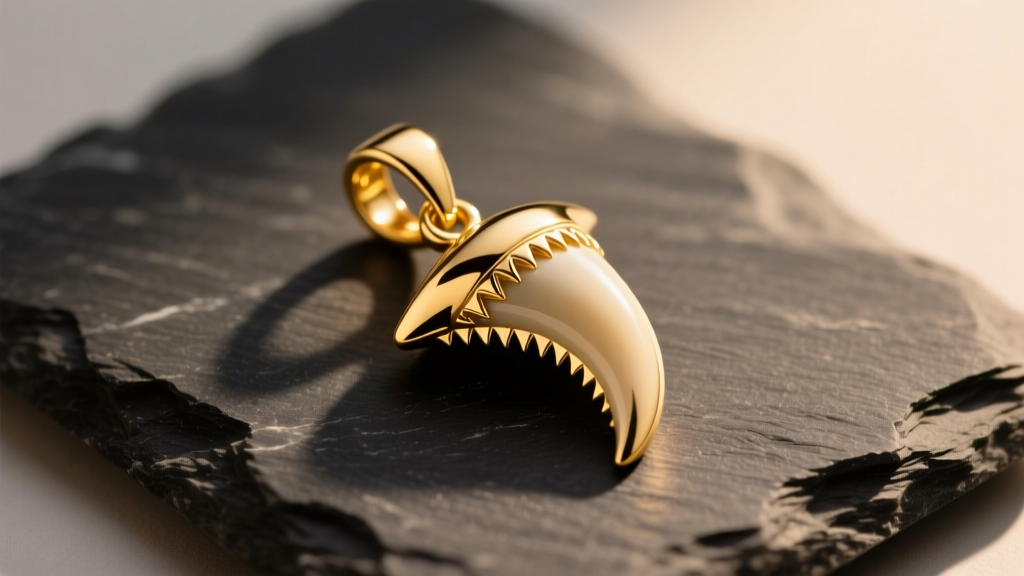
The Enduring Appeal of the Gold Shark Tooth Necklace
Once a staple of 1970s surf culture and coastal counterculture, the gold shark tooth necklace has evolved into a sophisticated staple in modern jewelry wardrobes. Today, this iconic pendant bridges the gap between edgy streetwear, relaxed coastal grandmother aesthetics, and high-end minimalist fashion. Whether you are drawn to the raw, predatory symbolism of the shark or simply appreciate the striking geometric silhouette of the tooth, selecting the right piece requires a nuanced understanding of materials, craftsmanship, and ethical sourcing.
For beginners navigating the jewelry market, the sheer volume of options can be overwhelming. From mass-produced gold-plated replicas to bespoke fossilized Megalodon teeth wrapped in solid 14k gold, the price points and quality vary drastically. This comprehensive guide will break down the metallurgical specifics, chain pairing mechanics, and conservation laws you need to know before making your purchase.
Real Fossil vs. Cast Gold: Understanding Your Options
The most critical decision you will make is choosing between a cast gold replica and a genuine fossilized tooth. It is a common misconception that jewelers dip real, modern shark teeth in gold. In reality, modern teeth are rarely used in fine jewelry due to ethical concerns and the fact that organic bone material degrades over time. Instead, the market is dominated by two distinct categories: solid gold castings and fossilized Megalodon teeth.
Cast gold pendants are created using the lost-wax casting method. A jeweler sculpts or 3D-prints a tooth model, creates a mold, and pours molten gold into the cavity. This results in a highly durable, uniform pendant that captures the serrated edges and enamel texture of a real tooth, typically modeled after the Great White or Mako shark. These pendants usually measure between 15mm and 25mm in length, making them perfect for everyday layering.
Conversely, fossilized Megalodon (Otodus megalodon) teeth are millions of years old, mineralized with quartz and iron phosphate, and boast deep, earthy tones ranging from slate grey to bourbon brown. Because they are heavy and fragile, they are not cast in gold but rather secured using custom 14k or 18k gold wire wrapping or heavy bezel settings.
Material and Pricing Breakdown
| Pendant Type | Material Composition | Average Price Range | Durability & Weight | Best For |
|---|---|---|---|---|
| Gold Vermeil Cast | Thick 14k/18k gold over sterling silver | $60 - $150 | Moderate; prone to eventual wear | Budget-conscious buyers, trend testing |
| Solid 10k Gold Cast | 41.7% pure gold, high alloy content | $150 - $280 | Extremely high; scratch-resistant | Everyday wear, active lifestyles |
| Solid 14k Gold Cast | 58.3% pure gold, optimal alloy balance | $350 - $750 | High; excellent tarnish resistance | Heirloom quality, fine jewelry collectors |
| Fossil Megalodon | Mineralized fossil with 14k gold wrap | $600 - $2,500+ | Fragile stone; heavy weight (20g-50g+) | Statement pieces, history enthusiasts |
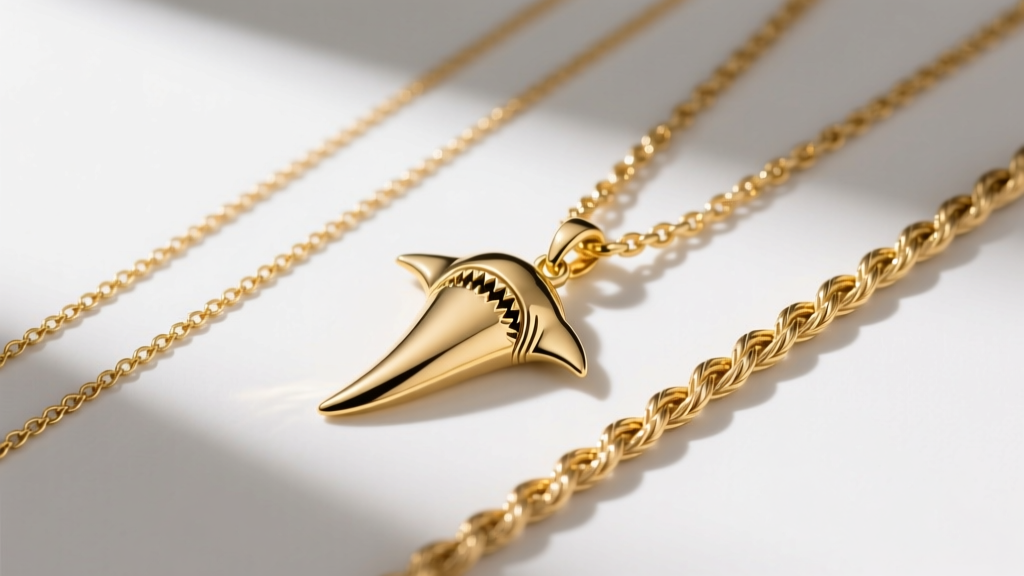
Decoding Gold Purity: 10k, 14k, and 18k Explained
When investing in a solid gold shark tooth necklace, understanding karat weight is essential for balancing color, cost, and structural integrity. Pure 24k gold is far too soft for jewelry; it would easily bend or scratch against the body. Therefore, it is alloyed with metals like copper, zinc, and silver.
10k Gold (41.7% Pure Gold): This is the most durable option available. Because it contains a higher percentage of strengthening alloys, a 10k gold tooth pendant will resist scratches and dents exceptionally well. However, it has a slightly paler yellow hue and may cause skin irritation for those with nickel or copper allergies.
14k Gold (58.3% Pure Gold): According to the Gemological Institute of America (GIA), 14k gold is the industry standard for fine jewelry in the United States. It offers the perfect equilibrium between a rich, warm yellow color and the tensile strength required to support the intricate, sharp serrations of a cast shark tooth without them wearing down over decades of use.
18k Gold (75% Pure Gold): Prized for its deep, luxurious yellow tone and hypoallergenic properties, 18k gold is softer. If you choose an 18k cast tooth, be aware that the fine tips and serrated edges are more susceptible to micro-abrasions if the pendant frequently rubs against zippers, buttons, or other jewelry.
Ethical Sourcing and Marine Conservation Laws
As a conscious consumer, you must consider the environmental impact of your jewelry. The global decline in shark populations has led to strict international regulations. The Convention on International Trade in Endangered Species (CITES) heavily restricts the trade of many modern shark species, including the Great White and Basking shark.
Reputable jewelers will never use teeth from protected, modern species. If a vendor claims to sell a "real Great White tooth" without extensive, verifiable documentation of its pre-CITES origin or legal bycatch status, it is likely illegal or a counterfeit. This is precisely why cast gold replicas have surged in popularity—they offer the exact aesthetic without contributing to marine depletion or navigating complex wildlife trafficking laws.
Expert Tip: If you prefer the organic look of a real tooth, opt for fossilized Megalodon or Otodus teeth. These are excavated from ancient riverbeds and phosphate mines, primarily in the Carolinas and Morocco, making them 100% ethical and entirely outside the scope of modern wildlife conservation laws.

Chain Pairing: Matching the Perfect Bail and Chain
A heavy cast gold tooth or a dense fossilized pendant requires a chain with adequate tensile strength. The bail (the loop at the top of the pendant) dictates which chains can physically slide through, but the weight of the pendant dictates which chains will survive long-term wear. A standard 20mm solid 14k gold cast tooth weighs between 4 and 8 grams, which is enough to snap a delicate chain over time.
- Box Chains (2.0mm - 3.0mm): Composed of interlocking square links, box chains are incredibly strong and distribute weight evenly. They are the top recommendation for heavy pendants because they resist kinking and snapping.
- Rope Chains (1.5mm - 2.5mm): Twisted links create a beautiful, reflective drape that complements the organic curves of the shark tooth. However, ensure the links are soldered; otherwise, the tooth's weight can pull the links apart.
- Cable Chains (Avoid under 2.0mm): While classic, thin cable chains have weak points at each soldered link. A heavy gold tooth swinging against the chest will eventually cause a thin cable chain to fracture at the clasp or bail.
- Leather Cords: For a rugged, surf-inspired look, a 2mm braided leather cord with a 14k gold tube clasp is an excellent, lightweight alternative to metal chains, particularly for fossilized teeth.
Styling Your Pendant for Everyday Wear
The versatility of the gold shark tooth necklace lies in its ability to adapt to various necklines and layering configurations. For a modern, curated look, utilize the "rule of thirds" in layering. Start with a 14-inch or 16-inch choker featuring a small, minimalist gold bead or coin. Add your shark tooth pendant on a 18-inch chain so it rests precisely on the collarbone. Finally, anchor the stack with a 22-inch or 24-inch heavy curb chain or a larger medallion.
When wearing the necklace with apparel, consider the neckline. A 20mm gold shark tooth pops beautifully against the negative space of a deep V-neck or an unbuttoned linen shirt. Conversely, if you are wearing a high crew neck or a turtleneck, opt for a longer chain (22 inches or more) to ensure the pendant rests on the fabric rather than getting tangled in the collar, which can cause unnecessary friction and wear on the gold bail.
Care and Maintenance to Prevent Tarnish and Grime
While solid 14k and 18k gold will not rust or corrode, the intricate anatomy of a shark tooth pendant—specifically the deep serrations and the concave root area—acts as a magnet for skin oils, lotions, and environmental dust. Over time, this buildup will dull the metal's natural luster.
To clean your necklace, avoid harsh chemical dips or ultrasonic cleaners, especially if your piece features a fossilized tooth, as the vibrations can fracture the mineralized enamel. Instead, create a solution of warm water and a few drops of mild, phosphate-free dish soap. Submerge the pendant for ten minutes, then gently agitate the serrations using a soft-bristled baby toothbrush. Rinse thoroughly with distilled water to prevent hard water spots, and pat dry with a microfiber cloth. Store the necklace flat in a soft pouch to prevent the sharp tip of the tooth from scratching other pieces in your jewelry box.


