Preserving The Necklace Story: Heirloom Care & Cleaning Guide
Learn how to clean, store, and maintain vintage and sentimental jewelry to preserve the necklace story, patina, and structural integrity.

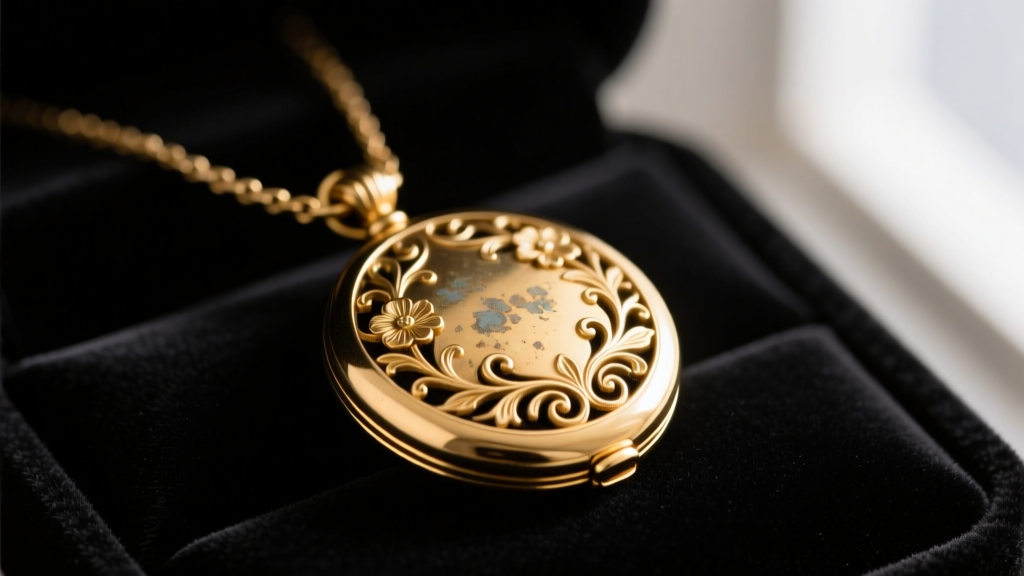
Every heirloom piece of jewelry carries a narrative. Whether it is a Victorian-era mourning locket, an Art Deco diamond pendant, or a mid-century gold chain passed down through generations, the physical artifact is intrinsically tied to its history. When we talk about preserving the necklace story, we are not just talking about keeping the metal shiny; we are talking about archival care. Aggressive commercial cleaning methods can strip away historical evidence, weaken antique solder joints, and permanently alter the surface of vintage gemstones.
This comprehensive guide moves beyond generic jewelry cleaning advice. We will explore the metallurgical and gemological realities of maintaining antique and sentimental necklaces, ensuring their provenance and physical integrity survive for the next century.
The Patina Debate: Why 'Dirty' Isn't Always Bad
In the world of archival conservation, patina is not tarnish—it is a historical record. According to the American Institute for Conservation, the surface oxidation and micro-abrasions on antique metals provide crucial context regarding the piece's age, environment, and authenticity.
Silver and the 'French Gray' Ideal
Sterling silver (92.5% silver, 7.5% copper) naturally reacts with sulfur compounds in the air to form silver sulfide. In the crevices of an engraved pendant or the links of a complex rope chain, this oxidation creates a dark contrast known as 'French gray.' This contrast highlights the craftsmanship of the engraver. Using electrochemical cleaning methods—such as the popular internet hack involving aluminum foil, boiling water, and baking soda—forces a chemical reduction that converts silver sulfide back into raw silver. While this makes the piece uniformly bright, it entirely strips the French gray, leaving the necklace looking flat, modern, and historically compromised.
Gold and Platinum Micro-Scratches
Unlike silver, 18k gold and platinum do not tarnish. However, they do develop a soft, satiny luster over decades of wear due to microscopic surface scratches. Polishing an antique platinum chain with a high-speed buffing wheel and jeweler's rouge will remove the patina, but it also removes microscopic layers of the metal, softening crisp milgrain edges and erasing the sharp facets of hand-cut chains.
Material-Specific Cleaning Protocols for Heirloom Chains
To preserve the necklace story, you must tailor your cleaning approach to the specific metallurgical profile of the piece.
14k and 18k Gold Chains
Gold is highly resistant to corrosion, but the alloys used to strengthen it (copper, zinc, silver) can react to cosmetics, perfumes, and skin acids, creating a dull film.
- The Solution: Mix a few drops of mild, phosphate-free dish soap (like Dawn) in lukewarm distilled water.
- The Tool: Use an extra-soft baby toothbrush. Standard toothbrushes have bristles that are too stiff and can lodge between tight links of a box chain, potentially stretching weakened antique solder joints.
- The Warning: Never use ultrasonic cleaners on hollow gold chains (like vintage herringbone or snake chains). The high-frequency vibrations can cause internal structural collapse, permanently kinking the necklace.
Sterling Silver Maintenance
For routine maintenance of heirloom silver, avoid liquid dips entirely. Instead, use a high-quality, non-abrasive polishing cloth impregnated with anti-tarnish agents, such as those made by Town Talk or Hagerty. Gently rub the high points of the pendant and chain links, intentionally avoiding the deep crevices to preserve the dark, contrasting patina that gives the piece its antique character.
Gemstone and Pendant Care: Avoiding Catastrophic Damage
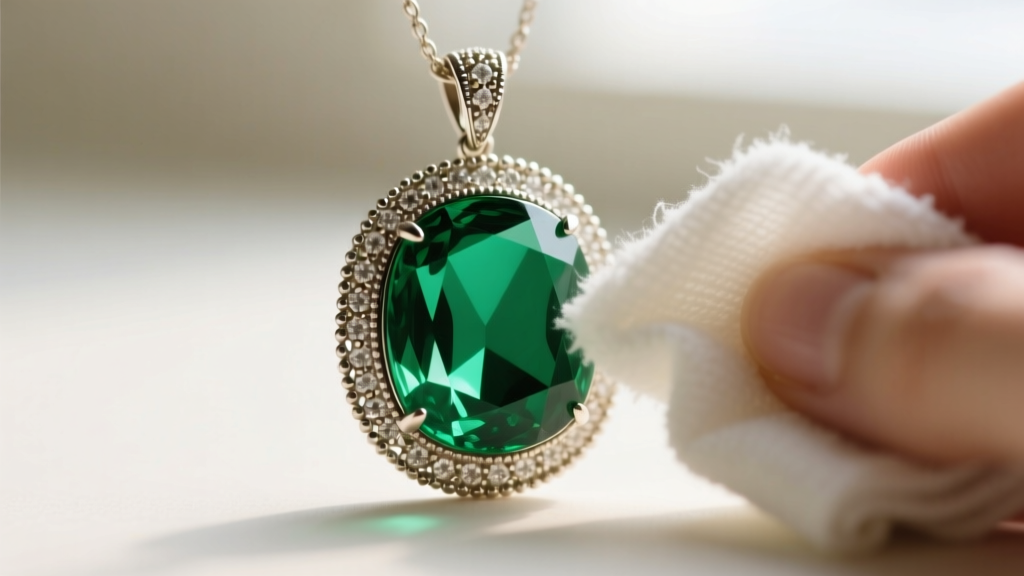
The pendant is often the focal point of the necklace story, and it is usually the most vulnerable component. The Gemological Institute of America (GIA) heavily emphasizes that gemstone hardness (Mohs scale) is only one factor in durability; toughness and stability are equally critical.
| Gemstone | Mohs Hardness | Stability & Treatments | Safe Cleaning Method | Ultrasonic Safe? |
|---|---|---|---|---|
| Emerald | 7.5 - 8 | Poor toughness. Almost always fracture-filled with cedar oil or resin. | Damp microfiber cloth only. No heat. | NO (Will strip oil) |
| Opal | 5.5 - 6.5 | Contains up to 20% water. Highly sensitive to thermal shock. | Dry, soft cloth. Avoid prolonged water exposure. | NO (Will cause crazing) |
| Pearl | 2.5 - 3.0 | Organic. Dissolves in mild acids. Sensitive to dehydration. | Wipe with damp cloth. Never submerge. | NO (Will dissolve nacre) |
| Diamond | 10 | Excellent stability, but has perfect cleavage planes. | Warm soapy water, soft brush. | Yes (If no fractures) |
| Sapphire | 9 | Excellent. Heat-treated sapphires are stable. | Warm soapy water, soft brush. | Yes (Usually) |
Crucial Warning on Emeralds: Many vintage necklaces feature emeralds that have been treated with natural cedar oil to mask surface-reaching fissures. If you place an emerald pendant in an ultrasonic cleaner or use warm soapy water, the detergent will emulsify and strip the oil, leaving the stone looking heavily fractured, cloudy, and significantly devalued.
Advanced Storage Techniques to Halt Degradation
How you store your heirloom necklaces when they are not being worn dictates how fast they degrade. The jewelry box that came with your purchase is often the enemy of long-term preservation.
The PVC Danger
Many cheap plastic jewelry organizers and zip bags are made from Polyvinyl Chloride (PVC). PVC contains plasticizers and chlorine compounds that naturally off-gas over time. In an enclosed space, this off-gassing releases hydrogen chloride vapor, which reacts with moisture to form hydrochloric acid. This causes rapid, severe tarnishing on silver and can lead to a destructive corrosion cycle on copper-heavy gold alloys. Always ensure your storage plastics are made from Polyethylene (PE) or Polypropylene (PP), which are chemically inert and archival-safe.
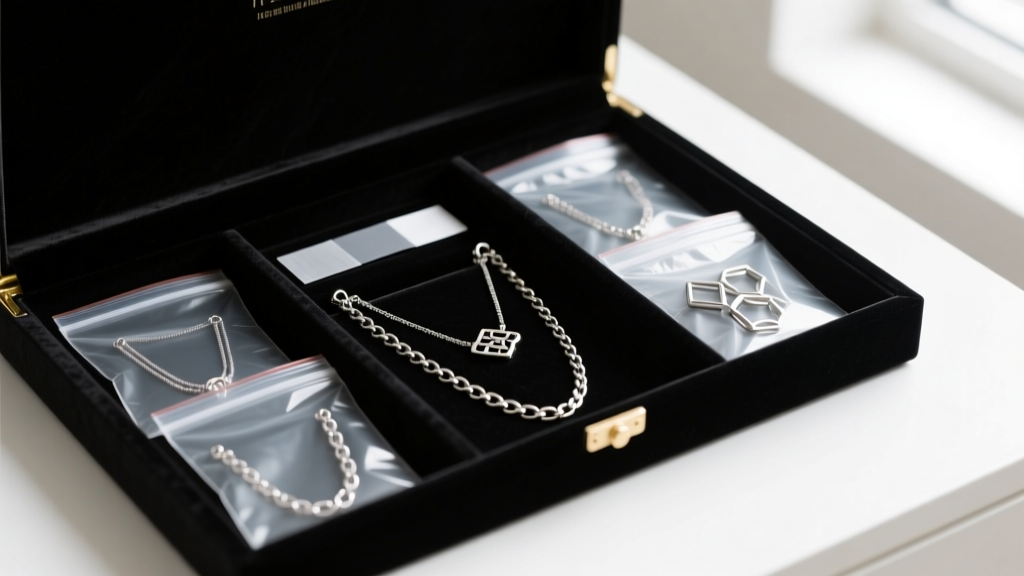
Climate and Chemical Control
To properly archive your necklaces, follow this protocol:
- Individual Housing: Place each necklace in its own polyethylene zip bag. This prevents chains from tangling and stops harder metals from scratching softer ones.
- Active Tarnish Inhibition: Insert a 3M Anti-Tarnish strip into each bag. These strips utilize copper-based particles to aggressively absorb sulfur and chloride gases from the ambient air before they can reach the silver or gold.
- Moisture Regulation: If you live in a high-humidity environment, include a small, color-indicating silica gel packet in the storage drawer (not directly touching the metal) to keep relative humidity below 45%.
When to Seek a Master Jeweler for Archival Restoration
Part of preserving the necklace story is knowing when a piece is too fragile for at-home maintenance. Antique clasps, such as the early 20th-century C-clasp or push-pull tube clasp, often fail due to metal fatigue.
If a link snaps on a delicate 1920s filigree chain, do not allow a standard jeweler to use a traditional butane or oxy-acetylene torch for soldering. Traditional soldering requires heating a large area of the metal to the flow point of the solder, which can easily melt the intricate, paper-thin lattice of antique filigree work or cause thermal shock to nearby gemstones. Instead, seek out a master jeweler who specializes in laser welding. Laser welders use a highly focused beam of light to fuse metal at a microscopic level, generating virtually no ambient heat and allowing for the seamless repair of fragile, heat-sensitive heirloom chains without dismantling the surrounding links.
Prong Retipping and Bezel Integrity
If the pendant's gemstone rattles, the prongs or bezel have worn thin. Archival restoration involves 'retipping'—adding a tiny bead of matching metal to the tip of the worn prong using a laser or micro-soldering technique, then carefully filing it to secure the stone without altering the original profile of the antique setting.
Conclusion
Preserving the necklace story requires a shift in mindset from 'making it look new' to 'keeping it intact.' By understanding the specific vulnerabilities of antique alloys, respecting the historical value of patina, and utilizing chemically inert storage methods, you ensure that the physical artifact continues to carry its unique narrative for generations to come. Treat your heirloom necklaces not just as accessories, but as wearable archives.


