Eyeglass Holder Necklace Value Guide: Budget Picks 2026
Discover the true value of an eyeglass holder necklace. We break down materials, clasp durability, and price tiers to help you find the best budget picks.

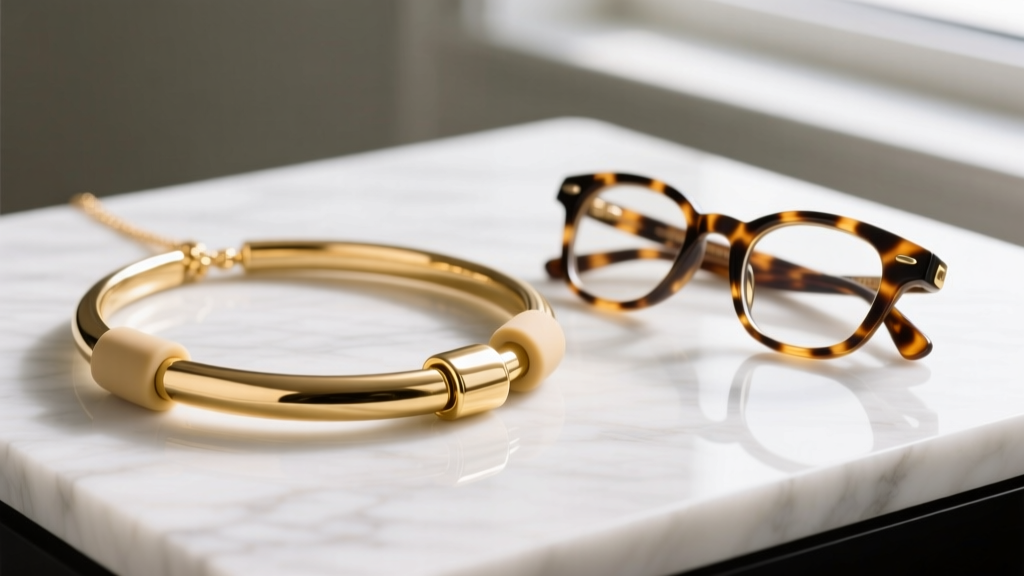
The Hidden Costs of Cheap Eyeglass Chains
The market for functional eyewear accessories has exploded, transforming the once-dated "granny chain" into a staple of modern accessorizing. However, as the popularity of the eyeglass holder necklace has surged, so has the influx of poorly engineered, ultra-cheap alternatives. When assessing budget and value, consumers often make a critical miscalculation: they evaluate the chain in isolation rather than considering the value of the item it protects.
A standard pair of prescription acetate reading glasses costs between $150 and $400. If you rely on a $6 fast-fashion lanyard to secure them, you are risking a high-value optical device on a low-value tether. The true cost of a cheap chain is not the $6 you spent on it; it is the $300 replacement cost when a poorly soldered jump ring snaps, sending your lenses crashing onto a concrete floor. In 2026, smart consumers are shifting their focus from the absolute lowest price to the highest reliability-to-cost ratio, demanding structural integrity alongside aesthetic appeal.
Material Breakdown: What Justifies the Price Tag?
Not all metals and polymers are created equal. The material of your eyeglass holder necklace dictates its lifespan, skin compatibility, and resistance to environmental degradation. Below is a comparative assessment of the most common materials used in today's market.
| Material | Price Range | Durability & Failure Modes | Best Use Case |
|---|---|---|---|
| Medical-Grade Silicone | $12 - $25 | High elasticity; resists sweat. Fails if exposed to prolonged UV or harsh alcohols, leading to dry rot and snapping. | Active lifestyles, gym-goers, and casual daily wear. |
| 14k Gold-Filled (Brass Core) | $35 - $65 | Excellent longevity. The gold layer is mechanically bonded and constitutes 1/20th of the weight. Will not flake like plated alternatives. | Office environments, professional settings, and daily luxury. |
| Surgical Stainless Steel (316L) | $20 - $40 | Nearly indestructible under normal tensile loads. Hypoallergenic. Can feel heavy if the chain links are overly thick. | Heavy acetate frames and industrial-chic fashion aesthetics. |
| Cellulose Acetate Beads | $25 - $55 | Lightweight and lens-safe. The stringing wire (often nylon or steel) is the weak point, not the beads themselves. | Fashion-forward layering and protecting anti-reflective lens coatings. |
According to the Jewelers Vigilance Committee, buyers must be wary of the term "gold-plated" when shopping for budget jewelry. Plated chains feature a microscopic layer of gold that will quickly rub off against the natural oils and friction of the neck, leaving a dull, tarnished base metal. Gold-filled chains, while slightly more expensive upfront, offer a lifespan measured in years rather than weeks, making them the undisputed champions of mid-tier value.
The Weakest Link: Clasp and End-Loop Engineering
The chain itself rarely breaks; the failure almost always occurs at the connection points. Understanding the engineering of the end-loops (the part that grips the glasses) and the neck clasp is crucial for a proper budget assessment.
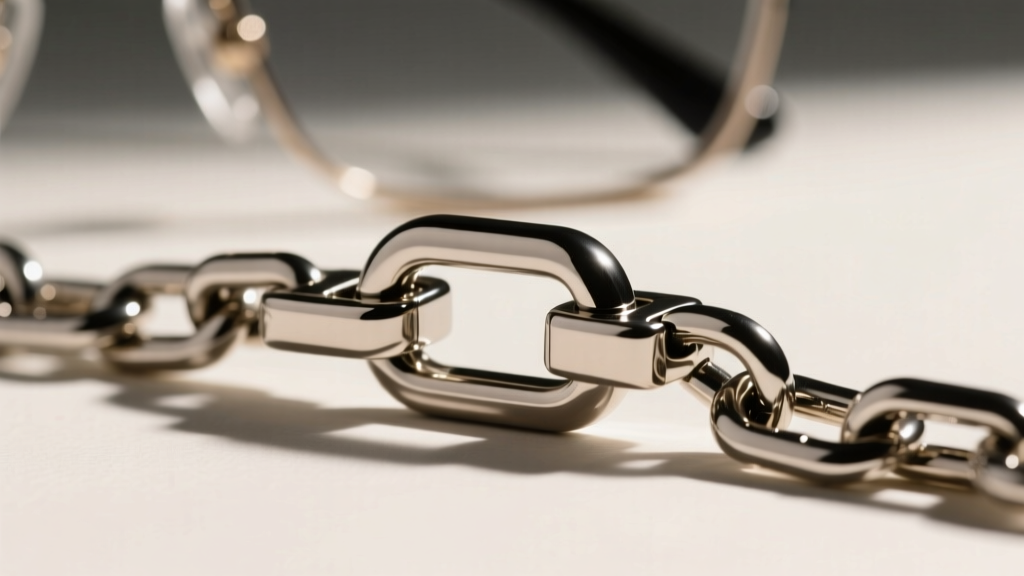
End-Loop Tension and Material Science
Modern thick-rimmed acetate frames can weigh anywhere from 35 to 55 grams. When you lean forward and the glasses drop to the end of the chain's arc, kinetic energy multiplies the static load, exerting up to 3 Newtons of downward force on the end-loops.
- Silicone Temple Grips: The industry standard for budget chains. Look for loops made from 50A to 60A Shore hardness silicone. Anything softer will stretch and slip off the temple arms; anything harder will lack the friction needed to grip smooth acetate.
- Metal Jump Rings: Often found on ultra-cheap beaded chains. These scratch the temple arms and frequently fail because manufacturers use 22-gauge or 24-gauge wire that easily pries open under a 40-gram load. Always demand 18-gauge or 16-gauge soldered jump rings if you opt for metal end-loops.
Neck Clasp Mechanics
The clasp at the nape of your neck is a high-stress friction zone. Traditional spring-ring clasps are notorious for failing because their internal coil springs degrade, or the tiny lever snaps off. For the best value, upgrade to a lobster claw clasp or a neodymium magnetic clasp. If choosing a magnetic closure, ensure the product specifies the use of N52-grade neodymium magnets; weaker N35 magnets will detach when you pull a heavy winter sweater over your head.
Protecting Your Lenses: The Impact of Bead Dynamics
Value is also about preservation. The American Optometric Association emphasizes the importance of protecting delicate anti-reflective (AR) and anti-scratch coatings on modern lenses. When you bend over, the beads of your eyeglass holder necklace swing forward. If those beads are made of raw brass, unpolished glass, or jagged natural stone, they will act like sandpaper against your lenses, causing micro-abrasions that ruin the AR coating.
For optimal value, select necklaces featuring high-density polyurethane beads, polished cellulose acetate, or smooth, tumbled gemstones. The slight premium you pay for lens-safe materials will save you from having to replace scratched prescription lenses prematurely.
2026 Price Tier Assessment: Where to Spend Your Money
To navigate the current market, we have categorized the landscape into three distinct value tiers. This framework will help you align your budget with your functional requirements.

Tier 1: The Utility Budget ($8 - $18)
At this price point, you are primarily looking at mass-produced silicone cords and basic acrylic bead chains. The Value Verdict: Excellent for keeping in the glovebox, the gym bag, or at the beach. Do not rely on these for expensive, heavy designer frames, as the hardware connecting the silicone to the cord is usually glued rather than crimped, leading to inevitable failure.
Tier 2: The Daily Driver Sweet Spot ($25 - $55)
This tier includes 14k gold-filled chains, 316L surgical steel cables, and high-quality acetate beaded designs with reinforced nylon stringing. The Value Verdict: This is where the smartest money is spent. You get hypoallergenic materials, secure lobster claw or magnetic clasps, and lens-safe beads. A $40 gold-filled chain will easily outlast three pairs of reading glasses, yielding an exceptional cost-per-wear ratio.
Tier 3: The Luxury & Designer Tier ($80 - $250+)
Featuring solid 14k or 18k gold, hand-carved horn, or designer-branded hardware. The Value Verdict: Diminishing returns on structural integrity. You are paying for brand prestige, precious metal weight, and artisanal craftsmanship. While beautiful, a solid gold chain does not hold your glasses any more securely than a well-made surgical steel chain.
Ergonomics: Measuring for the Perfect Drape
A common mistake that ruins the value of a perfectly good chain is purchasing the wrong length. If a chain is too short, it will pull tight against the back of your neck, creating tension that eventually warps the temple arms of your glasses. If it is too long, the glasses will hang near your waist, swinging wildly and risking impact damage against desks or countertops.
Expert Sizing Tip: For standard reading glasses, a 26-inch to 28-inch total loop length allows the frames to rest comfortably on the upper chest without pulling. For oversized sunglasses, opt for a 30-inch to 32-inch loop to accommodate the wider temple spread and thicker arms.
Final Verdict on Eyeglass Holder Necklace Value
Assessing the budget and value of an eyeglass holder necklace requires looking past the initial price tag and evaluating the engineering of the hardware, the chemical stability of the materials, and the safety of the beads against your lenses. In 2026, the most prudent investment lies in the $25 to $55 mid-tier range. By prioritizing 14k gold-filled or surgical steel components, 18-gauge soldered jump rings, and lens-safe beads, you secure a functional, stylish tether that protects your optical investment for years to come. Do not gamble a $300 pair of prescription lenses on a $5 chain; true value is found in reliable engineering.


