How Long Is a Choker Necklace? The Technical Sizing Guide
Discover exactly how long is a choker necklace, from standard 14-inch collars to 16-inch fits, including material constraints and neck anatomy.

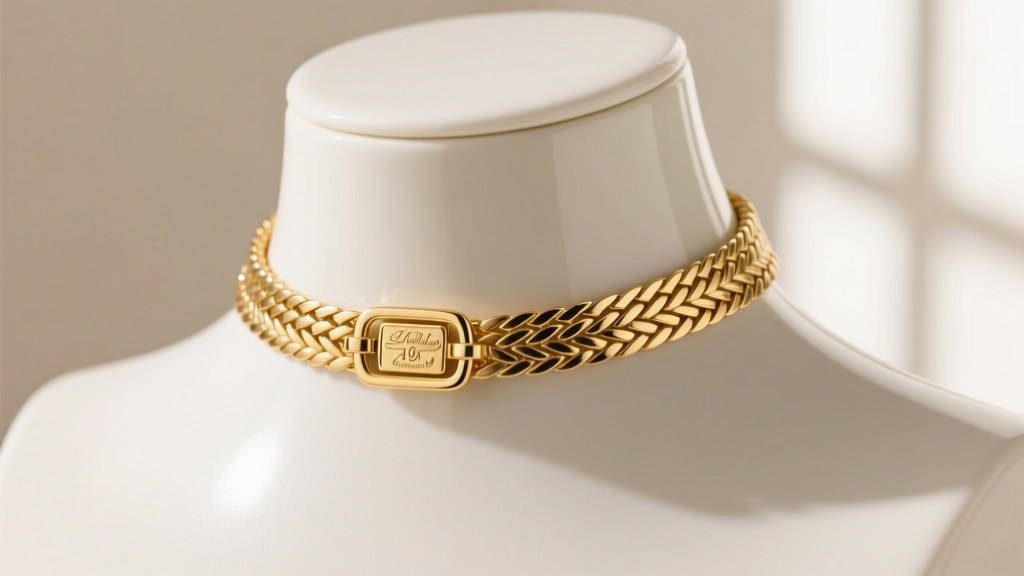
The Standard Dimensions: How Long Is a Choker Necklace?
When jewelry designers and gemologists are asked, 'how long is a choker necklace,' the technical answer requires more than a single number. In the jewelry industry, a true choker is engineered to sit snugly at the base of the neck, typically measuring between 14 inches (35.5 cm) and 16 inches (40.6 cm). However, the exact length depends heavily on the structural integrity of the materials used and the anatomical variables of the wearer.
Unlike a princess-length necklace (18 inches) which drapes over the collarbone, a choker must navigate the thyroid cartilage and the cervical spine's natural curvature. According to manufacturing standards outlined by suppliers like Rio Grande, a standard 15-inch chain is considered the universal baseline for a women's choker, providing approximately 1 to 1.5 inches of 'ease' (extra space) beyond the average female neck circumference of 13.5 inches.
Anatomical Variables: Neck Circumference and Fit Tolerances
To understand how long is a choker necklace in practice, one must measure the wearer's anatomy with precision. The 'two-finger rule' often cited in fashion blogs is highly inaccurate for fine jewelry, especially when dealing with rigid metals or delicate gemstone settings. Instead, master jewelers use exact ease metrics.

The Precision Measurement Protocol
- Anchor Point: Place a flexible fiberglass tailor's tape at the base of the neck, aligning it with the C7 vertebra (the prominent bone at the back of the neck).
- Front Alignment: Bring the tape around to the front, resting it just below the thyroid cartilage (Adam's apple) where the choker will naturally sit.
- Calculate Ease: Add exactly 1.5 cm (0.6 inches) for a skin-tight collar fit, or 2.5 cm to 3.8 cm (1 to 1.5 inches) for a standard comfortable choker fit.
| Neck Circumference | Collar Fit (Skin Tight) | Standard Choker Fit | Relaxed Choker Fit |
|---|---|---|---|
| 12.0 inches (30.5 cm) | 12.5 inches | 13.5 inches | 14.0 inches |
| 13.5 inches (34.3 cm) | 14.0 inches | 15.0 inches | 16.0 inches |
| 15.0 inches (38.1 cm) | 15.5 inches | 16.5 inches | 17.0 inches |
Material Engineering: Rigid vs. Flexible Choker Constraints
The physical material of the necklace dictates how the length behaves under tension and movement. A 15-inch velvet ribbon will fit entirely differently than a 15-inch solid gold Omega chain.
Metallurgical Constraints and Wire Memory
When working with precious metals, structural rigidity plays a massive role in sizing. Omega chains and Snake chains possess high wire memory and structural rigidity. If an Omega choker is sized even 0.5 inches too small, it will not bend to accommodate the wearer's neck, resulting in severe discomfort and potential warping of the metal tubing. Conversely, Herringbone chains are incredibly fluid but structurally fragile. A herringbone choker that is too long will drape and fold, causing permanent kinks in the flat-laid links. As noted by the Gemological Institute of America (GIA), understanding the tensile limits and malleability of gold alloys is critical when sizing pieces that sit under constant friction against the skin.
Textiles, Leather, and Tensile Creep
Organic materials introduce the variable of 'creep'—the tendency of a material to elongate under constant tension.
- Leather: Genuine leather chokers will absorb sebum and moisture from the skin, elongating by up to 12% to 15% over six months of daily wear. A leather choker should be sized 1 inch smaller than a metal equivalent.
- Velvet and Silk: Woven textiles cut on the bias will stretch. Velvet chokers must utilize a heavy-duty slide ring (O-ring) to allow for micro-adjustments as the fabric relaxes.
- Nylon and PTFE (Teflon) Cord: Used for heavy gemstone bead stringing, these synthetic cords exhibit near-zero creep, meaning the initial sizing will remain permanent for decades.
Hardware and Extension Mechanics
Because answering 'how long is a choker necklace' is highly subjective to daily fluctuations in the wearer's body (such as water retention or thyroid swelling), hardware engineering is the ultimate fail-safe.
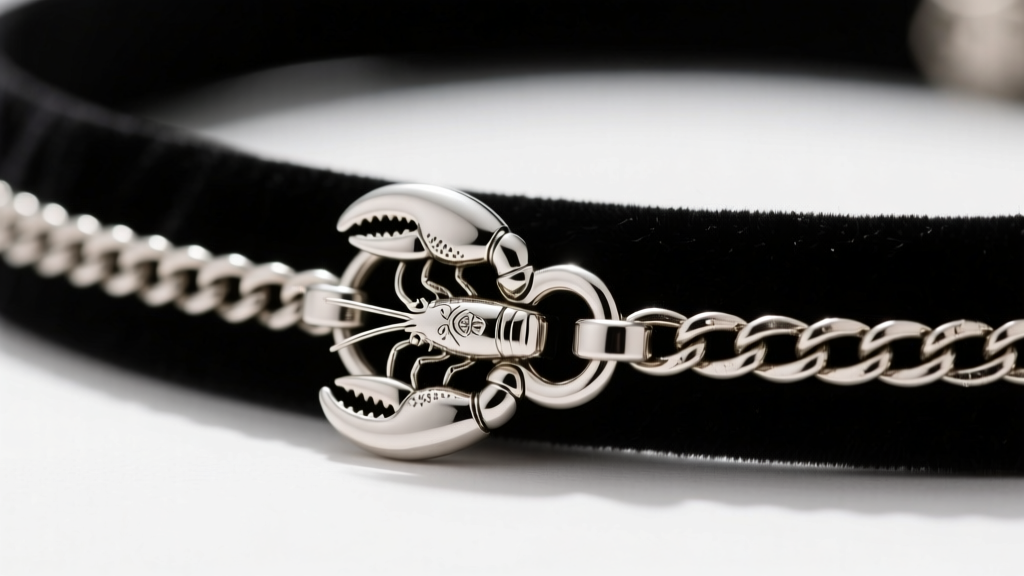
Clasp Shear Strength vs. Profile
A choker is subjected to high torsional stress when the wearer turns their head quickly.
Expert Note: Avoid standard 4mm spring-ring clasps for chokers. The internal tension spring is prone to failure under the lateral shear stress generated by a snug neck fit. Always specify a minimum 7mm lobster clasp or a hidden box clasp with a secondary figure-eight safety catch.
To accommodate sizing variances, jewelers integrate extender chains. A standard extender is 2 inches long, featuring 5mm open jump rings. However, for chokers, a 2-inch extender can cause the clasp to migrate to the front of the neck, ruining the aesthetic. The technical solution is a micro-extender (0.75 to 1 inch) paired with a silicone clasp stopper hidden beneath the hairline at the nape of the neck.
Troubleshooting Common Choker Fit Failures
Even when the exact measurement is achieved, chokers are notorious for specific failure modes. Here is how to troubleshoot them like a master bench jeweler:
1. The Asymmetrical Hang (Clasp Migration)
The Problem: The clasp constantly slides around to the front or side of the neck, pulling the center pendant off-axis.
The Fix: This is a center-of-gravity issue. The clasp is heavier than the chain links at the front. Solder a small, dense counterweight (like a 3mm gold bead or a custom cast logo tag) directly opposite the clasp. This forces the center of mass to the back of the neck, keeping the clasp anchored at the C7 vertebra.
2. Skin Irritation and Oxidation
The Problem: The snug fit of a choker traps sweat, dead skin cells, and lotions against the metal, leading to contact dermatitis or rapid oxidation of sterling silver.
The Fix: For clients with sensitive skin, avoid copper-heavy alloys like standard 925 sterling silver or 14k rose gold for chokers. Upgrade the specification to Platinum 950 or 18k Yellow Gold, which are highly hypoallergenic. Alternatively, apply a nano-ceramic coating (like e-coating) to the interior links to create an invisible, biocompatible barrier against sweat acidity.
3. The 'Choking' Sensation During Swallowing
The Problem: The client complains the necklace feels tight only when eating or swallowing.
The Fix: The thyroid cartilage expands outward during the swallowing reflex. If a rigid metal collar or a non-stretch wire choker is used, it must be sized with an additional 0.5 inches of ease specifically measured while the client is actively swallowing during the fitting process.
Conclusion
Ultimately, determining how long is a choker necklace is an exercise in precision engineering, material science, and human anatomy. While 14 to 16 inches serves as the industry baseline, the true measurement must account for the structural rigidity of the chosen metal, the tensile creep of organic textiles, and the dynamic expansion of the human neck. By prioritizing exact ease metrics, utilizing high-shear hardware, and engineering counterweights for balance, you can elevate a simple choker from a mass-market accessory to a bespoke, flawlessly fitted piece of fine jewelry.


