Hippo Necklace Value Guide: Metals, Pricing & Quality
Discover the true value of a hippo necklace. Compare pricing across sterling silver, gold, and enamel to find the best budget and quality balance.

The Market for Hippo Necklaces in 2026
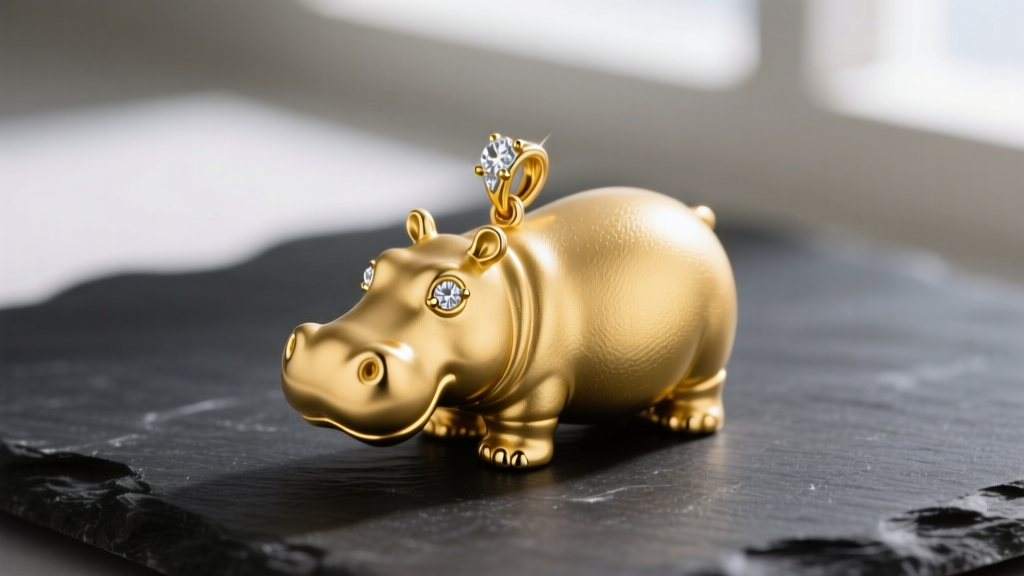
Animal motif jewelry has evolved significantly over the last decade. While once relegated to childish novelty trinkets, the hippo necklace has emerged as a sophisticated, minimalist totem for nature enthusiasts and collectors of zoological jewelry. However, the market is flooded with drastically overpriced novelty pieces and underpriced heirlooms. As a buyer, understanding the metallurgy, weight, and structural anatomy of a hippo pendant is critical to assessing its true value. This guide breaks down exactly what you should pay for a hippo necklace based on material grades, craftsmanship, and hardware integrity.
Material Breakdown: What Should You Actually Pay?
The price of a hippo pendant is intrinsically tied to its metal composition and the finishing techniques used to highlight the animal's distinct anatomical features, such as the deep skin folds and wide snout.
Sterling Silver (925) and Oxidized Details
Sterling silver is the sweet spot for budget-conscious buyers who still demand precious metal value. A high-quality 925 silver hippo necklace should range between $45 and $120. The best artisans use intentional oxidation (often via liver of sulfur) to darken the deep crevices of the hippo's skin folds, creating a striking contrast against the polished high points of the back and snout. If a silver piece lacks these dimensional details and appears flat or overly shiny in the crevices, it is likely a mass-cast item worth closer to $25. According to Britannica's guide on hallmarks, always look for the "925" stamp to ensure you are not buying silver-plated brass.
Gold Vermeil vs. Flash Plating
Gold vermeil offers the look of solid gold at a fraction of the cost, but it is heavily misrepresented in the animal jewelry market. The Federal Trade Commission (FTC) mandates that gold vermeil must consist of a sterling silver base coated with at least 2.5 microns of 10k gold or higher. A genuine vermeil hippo necklace should cost between $65 and $150. Conversely, "gold-plated" brass or copper pieces often feature a microscopic flash layer of less than 0.5 microns. These will tarnish and turn your skin green within weeks, yet are frequently mispriced at $80 or more by boutique novelty brands. Always verify the base metal and micron thickness before purchasing. For more on precious metal standards, consult the FTC Jewelry Guides.
Solid Gold (14k and 18k)
For an heirloom-quality piece, solid gold is the ultimate investment. Because hippos have a bulky, dense anatomical shape, a solid 14k gold hippo pendant will typically weigh between 3 and 6 grams. Factoring in current gold spot prices and artisan casting fees, expect to pay anywhere from $350 to $800+. The Gemological Institute of America (GIA) notes that 14k gold (58.5% pure gold) is often preferred for heavy animal charms over 18k gold, as the higher alloy content provides superior scratch resistance and structural rigidity for daily wear.
The Anatomy of a Well-Crafted Hippo Pendant
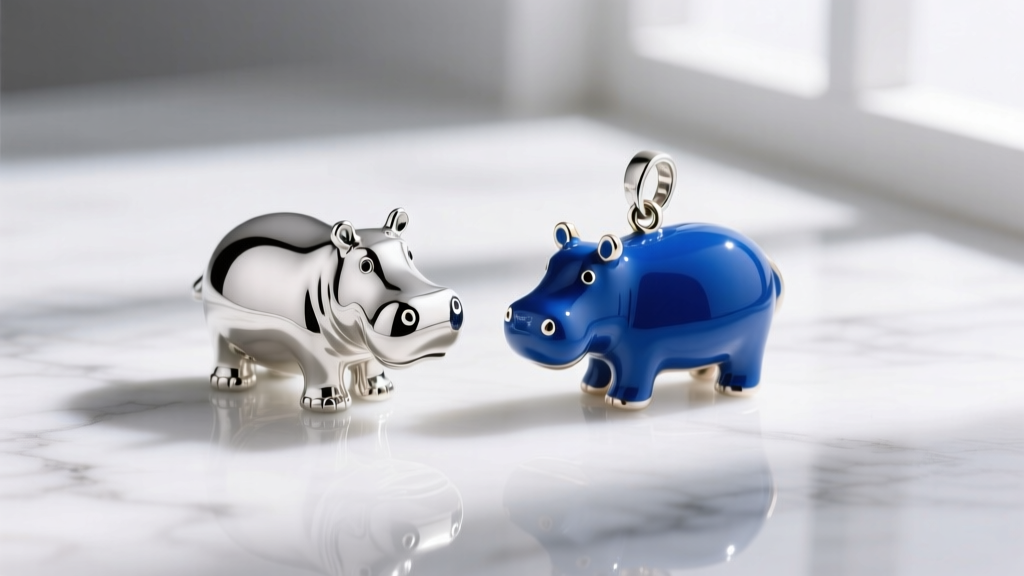
One of the most overlooked aspects of value assessment in animal jewelry is the center of gravity. The hippopotamus has a disproportionately large, heavy snout and a compact body. If the bail (the loop the chain threads through) is placed too far back near the tail, the heavy snout will pull the pendant downward, causing it to flip upside down against your chest. A master jeweler will position the bail directly over the hippo's shoulders or between the ears to ensure the pendant sits perfectly parallel to the body. When evaluating a hippo necklace, hold it by the bail; if it hangs awkwardly or tilts forward, it is a sign of poor CAD design and should be avoided regardless of the metal value.
The 2026 Hippo Necklace Pricing Matrix
Use this matrix to benchmark fair market value before making a purchase. Prices reflect independent artisan and reputable jewelry house averages, excluding extreme luxury markups.
| Material Grade | Average Weight | Fair Price Range | Durability & Value |
|---|---|---|---|
| Cold Enamel / Resin | 1 - 3 grams | $15 - $40 | Low intrinsic value; high chip risk. |
| Sterling Silver (925) | 2 - 5 grams | $45 - $120 | Excellent value; requires polishing. |
| Gold Vermeil (2.5μm) | 2 - 5 grams | $65 - $150 | Good value; avoid water exposure. |
| Solid 14k Gold | 3 - 6 grams | $350 - $800+ | Heirloom grade; lifetime durability. |
Chain Selection: Don't Let a Cheap Chain Ruin the Pendant
A heavy hippo pendant will quickly destroy a delicate, poorly made chain. The bulk of a hippo charm requires a chain that can handle dynamic stress without warping.
Gauge and Clasp Mechanics
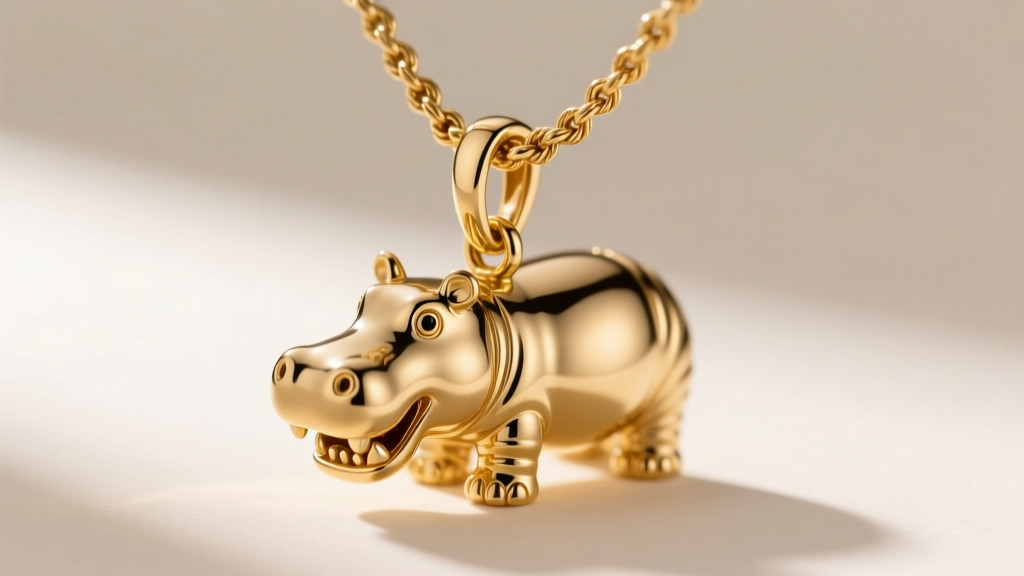
For a standard 3-gram silver or gold hippo pendant, you need a chain with a minimum thickness of 1.2mm. A 1.5mm rope chain or a 1.2mm wheat chain are the ideal pairings. Rope chains offer superior tensile strength and resist kinking, while wheat chains provide a smooth, woven texture that complements the organic wrinkles of the hippo design. Furthermore, inspect the clasp. A lightweight spring-ring clasp is a major red flag on a heavy animal pendant; the internal spring mechanism will fail under the weight. Always insist on a solid lobster clasp, which offers a secure, mechanical lock that will not snap open if the chain catches on clothing.
Red Flags: Spotting Overpriced Novelty Jewelry
When shopping for a hippo necklace, beware of the "surgical steel" markup scam. Many online boutiques sell 316L stainless steel animal pendants for $70 to $100, marketing them as "hypoallergenic premium metals." While stainless steel is indeed hypoallergenic, its raw material cost is pennies on the dollar compared to silver. A stainless steel hippo necklace should never exceed $25. Additionally, avoid pieces with glued-in synthetic rhinestones for eyes. High-end jewelers will use flush-set diamonds, sapphires, or high-quality bezel-set onyx. Glued stones will inevitably fall out when exposed to warm water or ultrasonic cleaners.
Care and Maintenance for Textured Animal Pendants
The deep crevices that give a hippo pendant its character are also traps for lotions, sweat, and environmental dust. Never use an ultrasonic cleaner on a hippo necklace if it features cold enamel or oxidized (blackened) silver details, as the high-frequency vibrations will shatter the enamel and strip the intentional oxidation. Instead, use a soft horsehair detailing brush dipped in warm water and a drop of mild dish soap to gently agitate the dirt out of the skin folds. For solid gold and non-oxidized silver, a specialized polishing cloth can be used on the high points to restore the mirror finish without damaging the recessed shadows.
Expert Verdict: The best budget-to-value ratio for a hippo necklace in 2026 is an oxidized sterling silver piece on a 1.5mm rope chain. It offers the artistic depth required for the animal's anatomy, the intrinsic value of precious metal, and the durability needed for everyday wear, all while keeping you comfortably under the $100 threshold.


