How a Necklace Lays: Budget & Value Assessment for Layering
Discover how a necklace lays across your neckline and evaluate the true budget and value of chain weaves, metal grades, and clasps for layering.

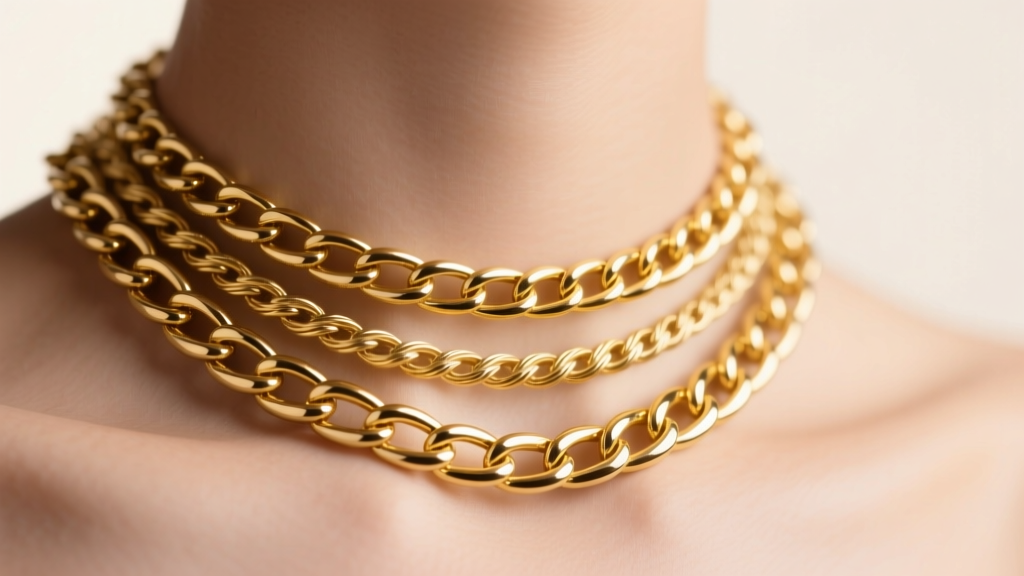
In the world of fine jewelry, the visual impact of a piece is dictated not just by its material or carat weight, but by its drape. How a necklace lays across the collarbone, sternum, or chest determines its elegance, comfort, and overall aesthetic. For budget-conscious collectors and layering enthusiasts in 2026, understanding the physics of jewelry drape is the secret to maximizing value. A poorly constructed chain will kink, tangle, and fail to support pendants properly, rendering even expensive metals look cheap. Conversely, a well-engineered chain maximizes cost-per-wear and elevates your entire stack.
This comprehensive budget and value assessment breaks down the metallurgy, link geometry, and clasp mechanics that dictate performance, helping you make informed purchasing decisions that balance upfront cost with long-term durability.
The Physics of the Drape: Why Link Geometry Matters
The way a chain drapes is a direct result of its link geometry, metal temper, and overall weight. When evaluating drape, the weight of the chain lays necklace pendants at the correct depth without flipping or tangling. Lightweight chains (under 1.5mm) often lack the structural integrity to lay flat, resulting in a twisted, unruly appearance that requires constant adjustment.
Furthermore, the flexibility of the links determines how the piece conforms to the body. Rigid chains, such as box or herringbone weaves, lay in structured, geometric lines. While visually striking, they are prone to permanent kinking if bent against the grain. Flexible weaves, like cable or rolo, conform to the natural curve of the neck but may collapse or bunch up if the gauge is too thin. Striking the right balance between gauge thickness and link flexibility is the cornerstone of a high-value purchase.
Metal Grades vs. Price: A 2026 Value Assessment
Gold and silver prices continue to fluctuate, making the choice of metal grade a critical factor in your budget. According to the Gemological Institute of America (GIA), the alloy composition in gold not only affects the color but also the tensile strength of the chain. 14k gold (58.3% pure gold) offers superior durability for everyday layering compared to 18k gold (75% pure gold), which is softer and more prone to stretching over time.
| Metal Grade | Purity | Est. Price per Gram (2026) | Tensile Strength | Tarnish Resistance | Best Use Case |
|---|---|---|---|---|---|
| Sterling Silver (925) | 92.5% Ag | $2.50 - $6.00 | Moderate | Low (Tarnishes) | Budget layering, seasonal trends |
| 10k Gold | 41.7% Au | $35.00 - $45.00 | Very High | High | Heavy chains, durable everyday wear |
| 14k Gold | 58.3% Au | $55.00 - $75.00 | High | Very High | Optimal value for pendants & layering |
| 18k Gold | 75.0% Au | $80.00 - $110.00 | Moderate | Excellent | Luxury pieces, hypoallergenic needs |
| Gold Vermeil | 925 Base + 2.5µm Au | $4.00 - $12.00 | Moderate | Moderate (Wears off) | Short-term trend stacking |
For the best return on investment, 14k gold remains the industry standard for chains that must endure daily friction. Sterling silver offers immense value for bulk layering, provided you are willing to maintain it with regular polishing to prevent oxidation.
Chain Weave Durability: Which Styles Lay Flat and Last?
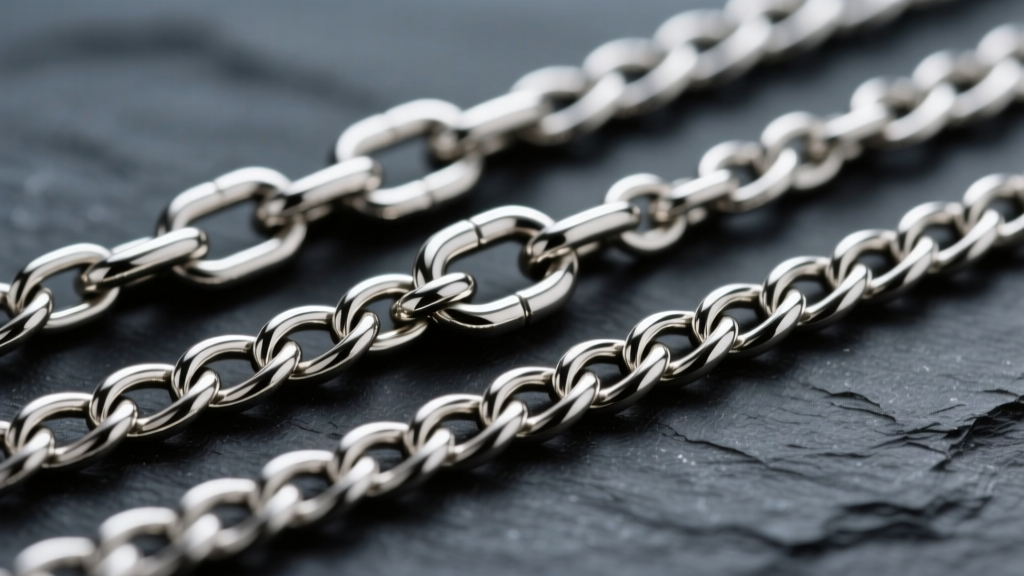
Not all weaves are created equal. The manufacturing process—whether machine-woven or hand-soldered—dictates the chain's structural integrity and how it lays against the skin.
Cable and Rolo Chains
Cable chains feature uniform oval links, while rolo chains use round, symmetrical links. Both are highly flexible and excellent for holding pendants. However, to ensure they lay flat and resist kinking, you must purchase a minimum gauge of 1.5mm for cable and 2.0mm for rolo. Thinner variations are notoriously fragile and will stretch under the weight of heavy charms.
Curb and Figaro Chains
Curb chains are twisted and flattened, allowing them to lay perfectly flush against the chest. This geometry makes them incredibly durable and resistant to tangling. Figaro chains, a variation of the curb featuring a pattern of three short links and one long link, offer the same structural benefits with added visual interest. A 2.5mm 14k gold curb chain is arguably the highest value-for-money piece you can add to a layering stack.
Box and Rope Chains
Box chains are constructed from square links, creating a rigid, structured drape. While they lay beautifully and reflect light well, their sharp corners can catch on hair or clothing. Rope chains, made of twisted links, offer a brilliant sparkle but are notorious for trapping lotions and debris, making them high-maintenance. If a heavy pendant lays necklace layers flat against the sternum, a rope chain might twist, whereas a box chain will maintain its structured silhouette.
Clasp Mechanics: The Hidden Cost of Necklace Failure
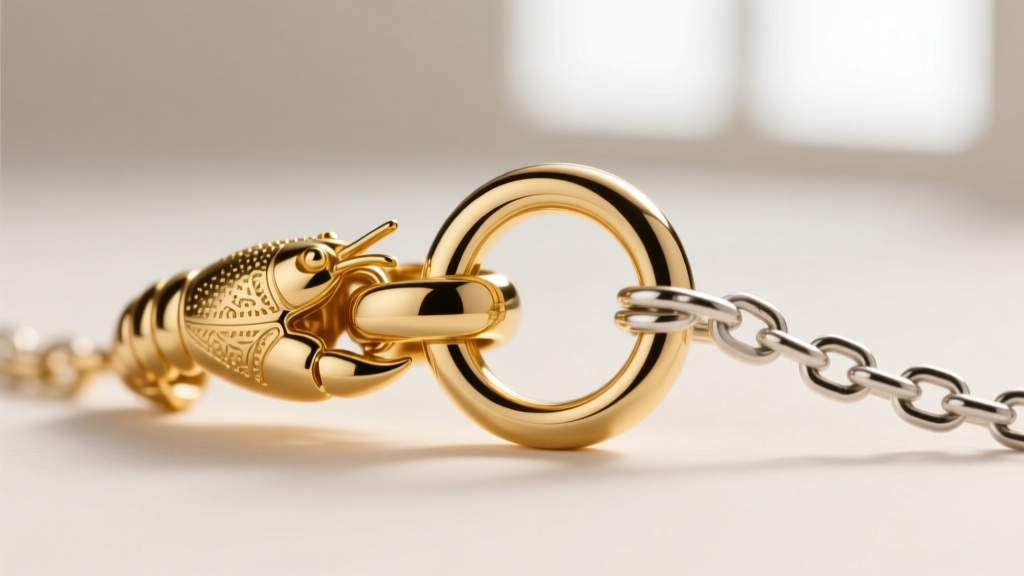
A chain is only as strong as its weakest point, which is almost always the clasp. Budget manufacturers often cut costs by equipping heavy chains with inadequate spring-ring clasps. According to industry standards highlighted by Jewelers of America, the clasp must be proportionate to the chain's weight and tensile load.
- Spring Ring Clasps: Cost-effective but mechanically weak. The internal spring frequently fails, and the small jump ring can easily pull open under 5-10 lbs of tension. Avoid these on any chain over 3.0mm.
- Lobster Clasps: The gold standard for everyday wear. Their elongated shape and robust internal spring can withstand 15-25 lbs of shear force. Always ensure the lobster clasp is solid, not hollow-cast.
- Box Clasps with Safety Latches: Essential for heavy, high-value chains (over 10mm). They provide a flush, seamless drape and mechanical security that prevents catastrophic loss if the primary latch fails.
Upgrading a chain's clasp from a spring ring to a solid lobster clasp typically costs between $25 and $60, a minor investment that drastically increases the security and overall value of the piece.
The 2026 Layering Strategy: Maximizing Budget Across Lengths
Building a cohesive layering stack requires strategic allocation of your budget across different lengths. The way a garment lays necklace layers flat against the skin depends heavily on the spacing between chains. A standard layering formula involves three distinct lengths: a 16-inch choker, an 18-inch collarbone chain, and a 22-inch sternum piece.
To maximize your budget, allocate your highest spend to the 18-inch chain, as it sits at the focal point of the neckline and will likely hold your primary pendant. The 16-inch and 22-inch chains can be simpler, thinner, and less expensive weaves (like a 1.2mm cable chain) that serve as textural framing. By mixing high-impact focal pieces with budget-friendly supporting chains, you create a luxurious, custom look without the exorbitant cost of purchasing three heavy, solid-gold statement pieces.
Final Verdict: Cost Per Wear Analysis
When assessing the true value of jewelry, the initial price tag is only half the equation. The Cost Per Wear (CPW) metric—calculated by dividing the total price by the estimated number of times you will wear it—reveals the actual financial impact of your purchase. A $600 14k gold curb chain worn daily for five years yields a CPW of just $0.32 per day. Conversely, a $150 gold-plated brass chain that tarnishes and breaks after three months has a CPW of $1.66 per day.
Ultimately, understanding how a necklace lays, the durability of its weave, and the security of its hardware empowers you to invest in pieces that offer lasting beauty and structural integrity. Prioritize 14k gold, robust link geometries, and secure clasps to build a layering collection that stands the test of time.


