Rose Quartz Bead Necklace Value Guide 2026: What to Pay
Discover the true market value of a rose quartz bead necklace in 2026. Learn grading secrets, pricing tiers, and how to spot treated fakes.

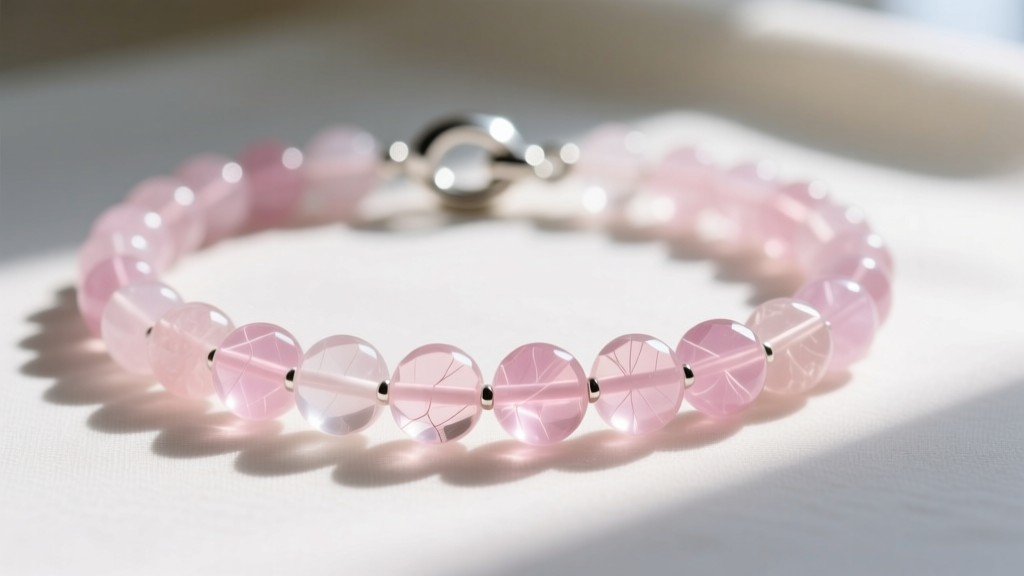
The True Market Value of Rose Quartz in 2026
The gemstone market has experienced significant shifts over the last few years, and as we navigate 2026, the pricing dynamics for a rose quartz bead necklace have become increasingly stratified. Once considered a cheap, mass-market staple found in every metaphysical shop and mall kiosk, high-quality rose quartz has graduated into the realm of serious semi-precious jewelry. However, the market remains flooded with low-grade, heavily included, and sometimes artificially treated stones. For the discerning buyer, understanding the true value of a rose quartz bead necklace requires looking past the pastel aesthetic and examining mineralogy, sourcing, and structural integrity.
Rose quartz is a macrocrystalline variety of quartz. According to Mindat.org, the characteristic pink hue is not actually caused by trace elements within the quartz crystal lattice itself, but rather by microscopic fibrous inclusions of a borosilicate mineral called dumortierite. This geological quirk is crucial for value assessment: the density and distribution of these fibers dictate both the color saturation and the translucency of the beads, which are the two primary drivers of price in the current market.
Grading Rose Quartz Beads: What You Are Actually Paying For
Unlike diamonds, colored gemstones and bead necklaces do not have a single, universally standardized grading system enforced by a governing body. However, reputable lapidaries and wholesale gem dealers utilize a tiered grading scale based on clarity, color, and cut (bead symmetry). When evaluating a rose quartz bead necklace, you are essentially paying for the absence of white, opaque quartz matrix and the presence of gemmy translucency.
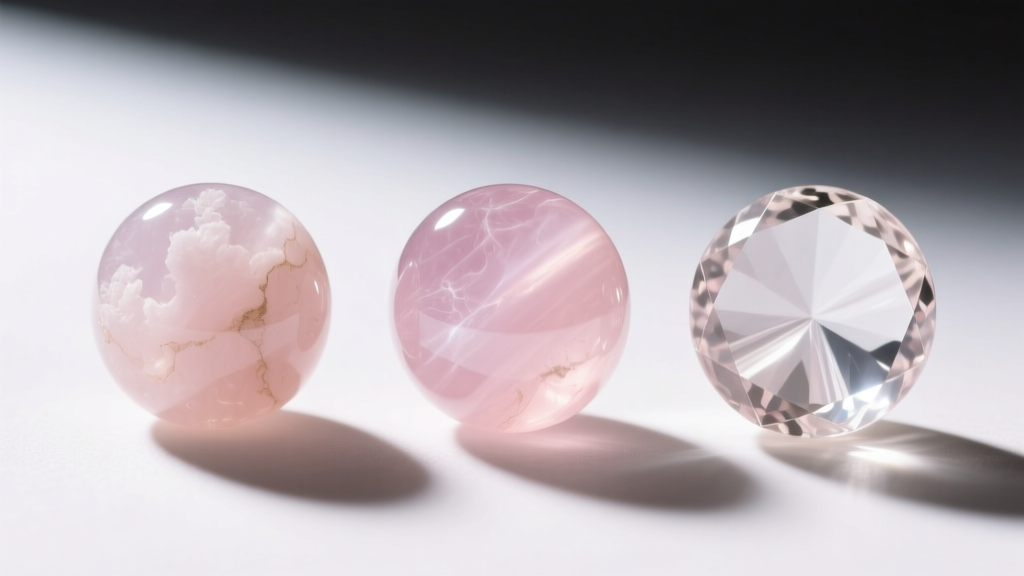
Grade A (Commercial / Low-End)
These beads are heavily included, appearing milky, cloudy, or mostly white with only faint streaks of pink. They are completely opaque. In 2026, Grade A beads are virtually worthless from a fine jewelry perspective and are typically sold in bulk for crafting or entry-level tourist jewelry. A 16-inch strand of 8mm Grade A beads wholesales for under $4.
Grade AA (Medium / Standard Retail)
This is the most common grade found in mid-tier boutique jewelry. The beads exhibit a solid, uniform pink color but remain mostly opaque to semi-translucent. You will see minor white veining or chalky patches. This grade offers excellent durability and a classic pastel look, representing the baseline for a respectable everyday necklace.
Grade AAA (Gem / High-End)
Often sourced from specific mines in Madagascar, AAA grade rose quartz is highly translucent, sometimes described as 'gemmy.' The color is a saturated, deep bubblegum pink without the milky veil. Light passes through these beads easily, giving them a luminous, icy glow. These beads command a massive premium, often costing 400% to 600% more than AA grade beads of the exact same millimeter size.
The Dye and Heat Treatment Trap
A critical component of budget and value assessment is identifying artificial enhancements. The Gemological Institute of America (GIA) notes that while rose quartz is generally stable, the market is plagued by dyed quartzite and pale quartz that has been fracture-filled with pink dyes to mimic high-grade Madagascar material.
- The Acetone Test: If you suspect a bead is dyed, gently rubbing it with a cotton swab dipped in pure acetone (nail polish remover) will often lift the dye. Natural dumortierite inclusions will never bleed color.
- The UV Test: Dyed stones frequently exhibit patchy, unnatural fluorescence under long-wave UV light, whereas natural rose quartz is typically inert or shows very weak, uniform fluorescence.
- Concentration in Cracks: Under a 10x jeweler's loupe, dyed beads will show dark pink concentrations pooling in the microscopic surface fractures and bead drill holes. Natural color is evenly distributed via the internal fibrous structure.
A master lapidary knows that true value lies in the stone's natural geology. If a rose quartz bead looks neon, perfectly uniform, and costs under twenty dollars, you are likely looking at dyed howlite or fracture-filled quartzite, not genuine gem-grade material.
Pricing Tiers by Bead Size and Necklace Length
The physical dimensions of the beads drastically alter the rough material requirements. Cutting perfectly round, symmetrical 10mm beads yields significantly more waste than cutting 4mm beads, leading to exponential price increases as the millimeter size grows. Below is the 2026 retail pricing matrix for natural, untreated, AA to AAA grade rose quartz bead necklaces, finished with standard sterling silver hardware.
| Bead Size (mm) | 16" Choker Length (Retail Price) | 18" Princess Length (Retail Price) | Best Use Case & Drape |
|---|---|---|---|
| 4mm | $25 - $40 | $30 - $45 | Delicate layering, subtle everyday wear, minimal weight. |
| 6mm | $45 - $70 | $55 - $85 | Standard versatile necklace, balances presence and comfort. |
| 8mm | $80 - $130 | $95 - $150 | Statement piece, visible texture, requires robust stringing. |
| 10mm | $140 - $220 | $160 - $250 | Bold, heavy drape, often preferred for masculine or high-fashion looks. |
Hardware and Stringing: Hidden Costs That Dictate Longevity
When assessing the budget for a rose quartz bead necklace, amateur buyers focus entirely on the stones, while experts scrutinize the stringing material and hardware. Rose quartz has a Mohs hardness of 7, making it relatively hard, but it is also brittle. Furthermore, an 18-inch necklace made of 10mm beads can weigh over 45 grams. This weight places immense tensile stress on the stringing material.
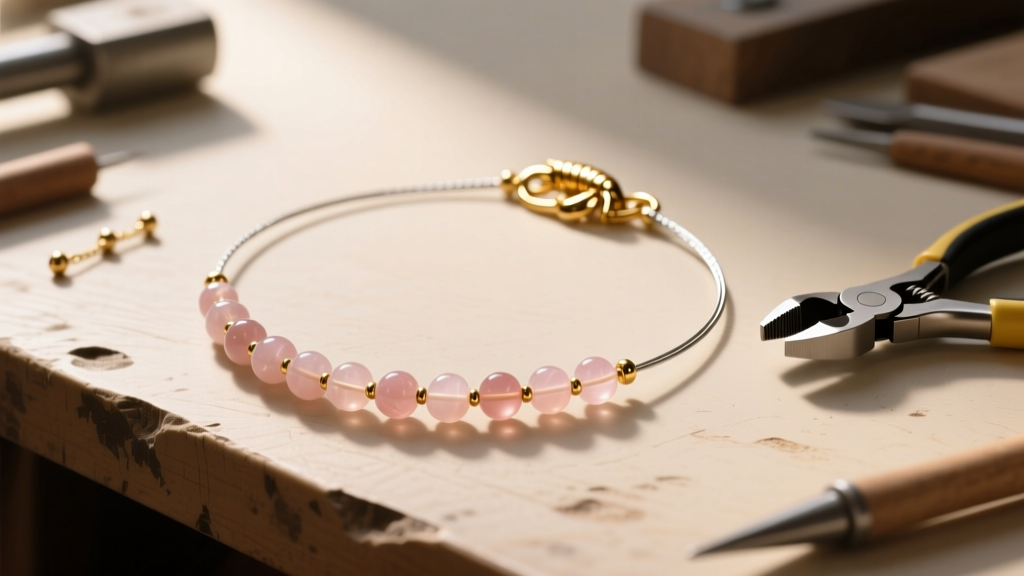
Stringing Materials:
- Silk Cord: Traditional but terrible for heavy rose quartz. Silk stretches over time, degrades with skin oils, and will eventually snap, resulting in lost beads. Avoid silk for any bead over 6mm.
- Nylon (e.g., Power Pro): A braided, gel-spun polyethylene line that offers incredible tensile strength and flexibility. Excellent for knotting between beads to prevent them from grinding against each other.
- 49-Strand Stainless Steel Wire (e.g., Beadalon): The industry standard for high-end, unknotted bead necklaces. It provides the drape of silk with the breaking strength of steel. A proper AAA grade necklace must use 49-strand wire with sterling silver or gold-filled crimp tubes.
Clasp Valuation:
A $150 gem-grade rose quartz necklace should never be finished with a $2 base-metal lobster clasp. Look for solid 925 sterling silver, 14k gold-filled, or solid 14k gold clasps. Magnetic clasps are popular for accessibility but can be heavy and may pull on the wire if not properly rated for the necklace's specific gram weight.
Star Rose Quartz: The Rare Premium
For the advanced collector, 'Star Rose Quartz' represents the pinnacle of value in this category. This phenomenon occurs when the stone contains densely packed, microscopic rutile needles oriented in specific crystallographic directions. When cut en cabochon, this creates a six-rayed star (asterism). While star rose quartz is rarely cut into perfectly round beads due to the difficulty of aligning the star, you will occasionally find 'star bead' necklaces where the beads are slightly faceted or baroque-cut to preserve the asterism. Expect to pay a 300% to 500% premium over standard translucent beads for verified, natural star rose quartz bead necklaces, as the rough material is exceptionally rare and difficult to lapidary.
Where to Buy: Retail Markup vs. Direct Sourcing
In 2026, the retail markup on semi-precious bead necklaces in traditional brick-and-mortar jewelry stores typically ranges from 400% to 800% over wholesale lapidary costs. To maximize your budget, bypass mall jewelers and fast-fashion accessory brands. Instead, seek out direct-to-consumer lapidaries or specialized gemstone bead dealers who source directly from cutting houses in Madagascar and Brazil. By prioritizing the stringing integrity and demanding untreated, translucent AAA-grade stones, you ensure that your rose quartz bead necklace is not just a fleeting trend, but a durable, valuable addition to your permanent jewelry collection.


