Heart Shaped Pendant Necklace Metals: A Durability Guide
Compare gold, silver, platinum, and titanium for your heart shaped pendant necklace. Learn about tarnish, scratch resistance, and pricing.

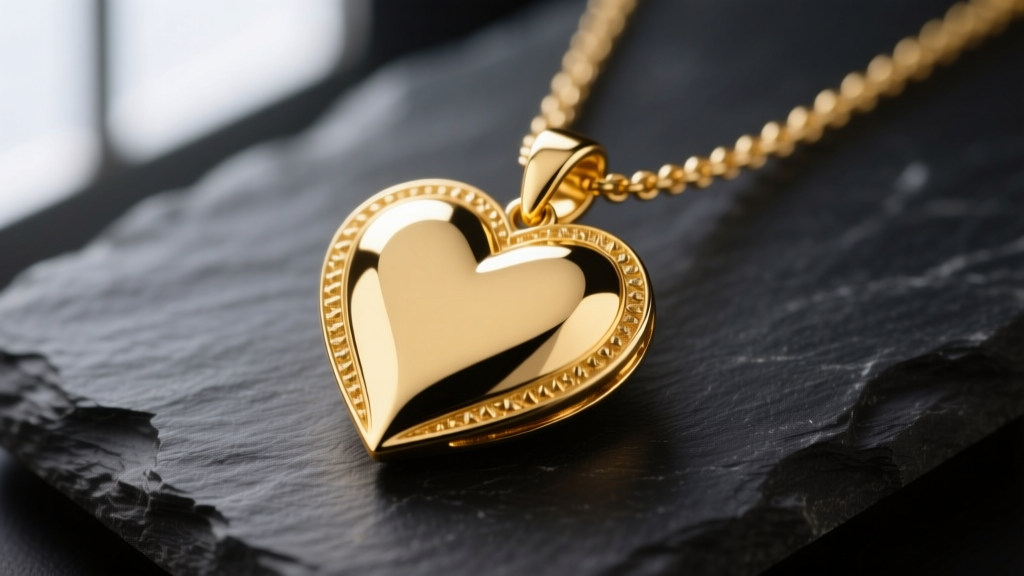
When selecting a heart shaped pendant necklace, most buyers focus entirely on the aesthetic: the symmetry of the cleft, the brilliance of the gemstones, or the overall carat weight. However, from a metallurgical and structural engineering perspective, the heart geometry presents unique durability challenges. Unlike a simple round or oval pendant, a heart features a sharp inferior vertex (the bottom point) and a deep superior cleft (the top dip). These extreme angles create concentrated stress points and high-friction zones that interact differently with various metals.
In this comprehensive guide, we analyze the material properties, Vickers hardness ratings, and long-term wear patterns of the most common metals used in heart pendants, helping you make an informed, structurally sound investment.
The Unique Wear Patterns of Heart Pendants
Before comparing metals, it is crucial to understand how a heart shaped pendant necklace degrades over time. The geometry dictates two primary failure modes:
- Vertex Blunting: The bottom point of the heart rests against the sternum, collarbone, or clothing. With every movement, this microscopic point absorbs friction. Softer metals will literally wear away, turning a sharp, romantic point into a rounded, blunt nub within 12 to 18 months of daily wear.
- Bail Friction and Cleft Stress: The bail (the loop connecting the pendant to the chain) is usually soldered or cast directly into the top cleft. The deep V-shape of the cleft limits the surface area for solder joints. If the metal is too soft or brittle, the bail can snap under the dynamic tension of a heavy chain.
Precious Metals Compared: Gold, Platinum, and Silver
14K vs. 18K Gold: The Daily Wear Standard
Gold remains the most popular choice for a heart shaped pendant necklace, but the karat weight drastically alters its structural integrity. Pure 24K gold has a Vickers hardness (HV) of roughly 60, making it entirely unsuitable for the sharp bottom point of a heart.
14K Gold (58.5% Gold): Alloyed with copper, zinc, and silver, 14K gold achieves an HV of 140-160. This hardness is ideal for maintaining the sharp vertex of the heart. However, if you choose 14K white gold, be aware that it requires rhodium plating to achieve a bright white finish. This plating will inevitably wear off at the high-friction bottom point, revealing the pale yellow alloy beneath. According to the Gemological Institute of America (GIA), 14K gold offers the best compromise between rich color and structural durability for pendants with sharp geometric edges.
18K Gold (75% Gold): With an HV of 120-130, 18K gold is noticeably softer. While it offers a deeper, richer yellow hue and is hypoallergenic, the bottom point of an 18K heart pendant will show micro-scratches and blunting much faster than 14K. It is best reserved for occasional wear or pendants that feature a protective gemstone bezel at the vertex.
950 Platinum: The Heirloom Choice
Platinum is the undisputed king of durability, but its behavior under stress is unique. Standard jewelry platinum is 95% pure, usually alloyed with 5% ruthenium (950 Pt/Ru), yielding an HV of 110-135. While this seems comparable to 18K gold, platinum's density and malleability change the wear equation.
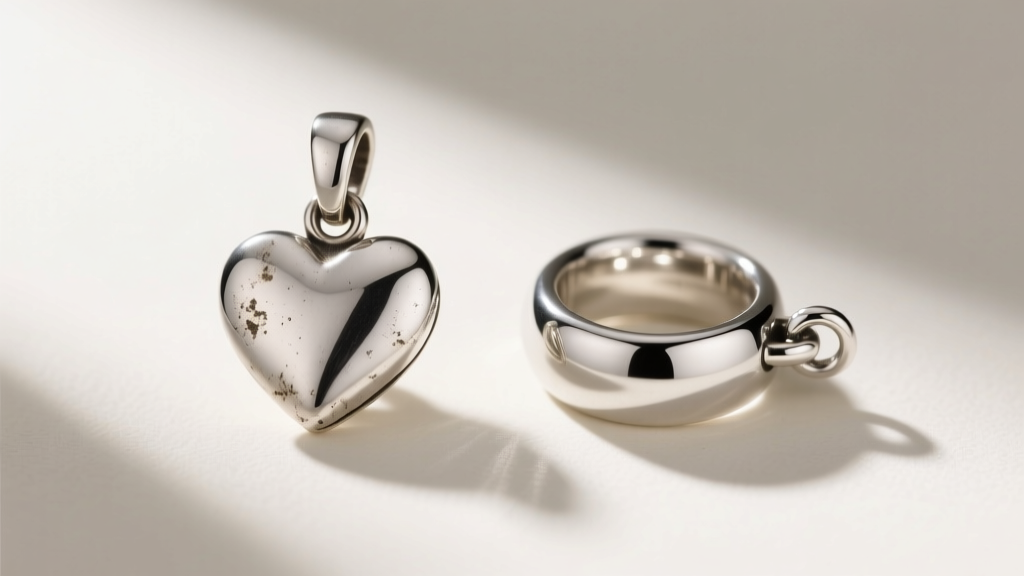
When the bottom point of a platinum heart pendant scratches, the metal is displaced, not lost. Over time, this creates a soft, satiny finish known as a patina. Unlike gold, which loses microscopic layers of metal to friction, a platinum pendant retains its exact structural mass. Furthermore, platinum's high melting point and tensile strength make it the safest metal for securing diamonds within the tight, acute angles of a heart-shaped halo setting.
Sterling Silver and Argentium: The Budget Options
Traditional 925 Sterling Silver (92.5% silver, 7.5% copper) has an HV of just 60-70. For a heart shaped pendant necklace, sterling silver is highly prone to vertex blunting and deep scratching. Additionally, the copper alloy reacts with sulfur in the air and skin oils, causing tarnish that frequently pools in the deep upper cleft of the heart, requiring constant polishing.
The Modern Solution: Argentium Silver. If you prefer the look and price of silver, seek out Argentium 960. By replacing some of the copper with germanium, Argentium achieves an HV of 85-100 (and can be heat-hardened to 130) while being virtually tarnish-proof. It holds the sharp bottom point of a heart pendant significantly better than standard sterling.
Alternative Metals: Titanium and Steel
For those seeking extreme durability and hypoallergenic properties, Grade 5 Titanium (Ti-6Al-4V) offers an astonishing HV of 340. A titanium heart pendant will never blunt, scratch, or tarnish. However, there is a manufacturing catch: titanium is incredibly difficult to cast and machine. Creating the crisp, sharp inner cleft of a heart shape requires advanced CNC milling, which often results in a slightly more angular, modern, or industrial-looking heart rather than a soft, romantic curve. Surgical steel (316L) is another alternative, but its heavy weight can cause the pendant to pull uncomfortably on delicate necklines.
Comprehensive Material Comparison Matrix
The table below synthesizes the critical data points for selecting the ideal metal for your pendant, factoring in structural longevity and market pricing for a standard 1-inch solid pendant.
| Metal / Alloy | Vickers Hardness (HV) | Vertex Blunting Risk | Tarnish / Maintenance | Est. Price Range (1" Solid) |
|---|---|---|---|---|
| 14K Yellow/White Gold | 140 - 160 | Low | Low (White needs re-plating) | $250 - $600 |
| 18K Yellow Gold | 120 - 130 | Moderate | Very Low | $400 - $950 |
| 950 Platinum (Ru) | 110 - 135 | None (Displaces/Patinas) | None (Polish to restore) | $800 - $2,000+ |
| 925 Sterling Silver | 60 - 70 | High | High (Requires polishing) | $40 - $120 |
| Argentium 960 Silver | 85 - 130 (Hardened) | Moderate | Very Low (Germanium alloy) | $80 - $200 |
| Grade 5 Titanium | 340 | None | None | $60 - $150 |
Chain Pairing: The Hidden Danger of Galvanic and Hardness Mismatches
A common mistake when buying a heart shaped pendant necklace is pairing it with the wrong chain. This leads to two distinct failure modes:
"Never pair a soft 18K gold pendant with a hardened stainless steel or titanium chain. The chain acts as a microscopic saw against the gold bail, cutting through the loop in a matter of months." — Master Bench Jeweler Guidelines, Jewelers of America
The Hardness Rule: Always ensure the chain is equal to or slightly softer than the pendant bail. If you have a 14K gold heart pendant, use a 14K or 18K gold chain.
The Galvanic Rule: If you wear your necklace in the shower or ocean, pairing dissimilar metals (like a silver pendant on a platinum chain) in the presence of salt water can create a galvanic cell, accelerating the corrosion of the less noble metal (the silver). Always match your metals for wet environments.
Final Verdict: Which Material Should You Choose?
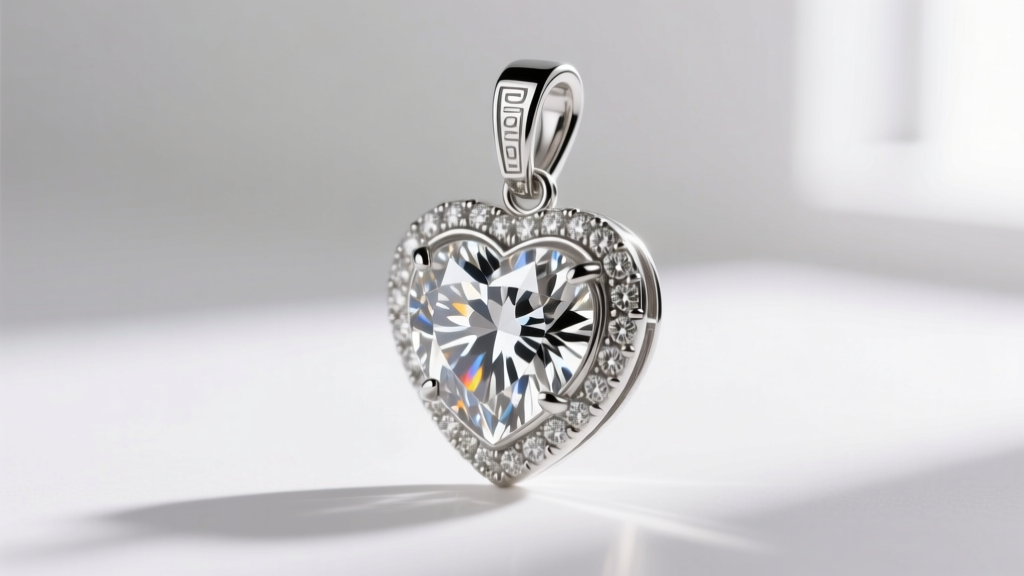
The best metal for your heart shaped pendant necklace depends entirely on your wearing habits and design preferences. If you want a sharp, crisp bottom point that will survive years of daily friction against clothing without rounding off, 14K Gold is the most practical precious metal choice. If you are investing in a generational heirloom piece featuring pavé diamonds tracing the tight curves of the heart, 950 Platinum is mandatory for its secure prong tension and mass-retaining scratch behavior. For budget-conscious buyers who want a modern, low-maintenance piece, skip traditional sterling and opt for Argentium Silver or Grade 5 Titanium, ensuring the geometry remains pristine for decades.


