Why Guys Wear Pearl Necklace Accessories: 2026 Trends
Discover why guys wear pearl necklace styles in 2026. Explore Tahitian and Akoya sizing, stringing materials, and masculine layering frameworks.


The landscape of men's jewelry has undergone a radical transformation over the last decade, but the most enduring and sophisticated shift is the mainstream adoption of pearls. No longer confined to the realms of rockstars or high-fashion runways, the question of why guys wear pearl necklace accessories in 2026 is answered by a desire for textured, nuanced personal style. Pearls offer a unique juxtaposition to traditional masculine metals, providing an organic luster that softens tailored menswear while elevating casual streetwear. This comprehensive trend analysis breaks down the technical specifications, material grades, and styling frameworks necessary for men to confidently integrate pearls into their wardrobe.
The Cultural Shift: From Taboo to Mainstream Menswear
Historically, pearls were a staple of male adornment in various cultures, from Maharajas in India to European royalty. However, the 20th century heavily gendered pearls as strictly feminine. The modern renaissance began with subcultural icons and hip-hop artists, eventually permeating luxury fashion houses. According to GQ's menswear analysis, the pearl has transitioned from a rebellious statement piece to a foundational accessory in the modern man's jewelry box. In 2026, the trend has matured; men are moving away from costume jewelry and investing in genuine, high-quality nacre with specific overtone characteristics that complement their skin undertones.
Decoding Pearl Types for Masculine Aesthetics
Not all pearls are created equal, and understanding the gemological differences is critical for men seeking a rugged, refined, or avant-garde aesthetic. The Gemological Institute of America (GIA) categorizes pearls by their origin, which directly dictates their size, color, and price point. For men, the focus is often on pearls with thicker nacre, unique baroque shapes, or darker, moodier color palettes.
| Pearl Type | Typical Size (mm) | Color & Overtone | Aesthetic Vibe | Price Range (18" Strand) |
|---|---|---|---|---|
| Tahitian | 8mm - 14mm | Dark grey, black, peacock green | Moody, rugged, luxurious | $400 - $2,500+ |
| White South Sea | 9mm - 16mm | Cream, bright white, silver | Opulent, classic, bold | $1,000 - $5,000+ |
| Freshwater (Baroque) | 6mm - 12mm | White, peach, metallic grey | Organic, artistic, relaxed | $75 - $300 |
| Akoya | 6mm - 9mm | Bright white, rose, silver | Sharp, refined, preppy | $250 - $900 |
For men new to the category, Baroque Freshwater pearls offer an excellent entry point. Their asymmetrical, organic shapes feel inherently less formal and more rugged than perfectly spherical Akoya pearls. Conversely, Tahitian pearls are the undisputed heavyweights of men's pearl jewelry. Their dark body colors with iridescent "peacock" overtones pair exceptionally well with leather jackets, denim, and dark tailoring.
Sizing, Proportions, and Stringing Materials
The physical scale of the necklace dictates its impact. A common mistake men make is choosing pearls that are either too dainty or overwhelmingly large for their frame. The ideal millimeter (mm) size correlates with the wearer's build and the intended styling context.
The Ideal Millimeter (mm) Guide for Men
- 6mm - 7mm: The subtle layering piece. Ideal for wearing under an open camp-collar shirt or layered with thicker silver Cuban link chains. Best for slender builds.
- 8mm - 10mm: The versatile standard. This size holds its own as a standalone piece over a plain white or black t-shirt. It provides noticeable presence without crossing into costume territory.
- 11mm - 14mm: The statement maker. Reserved for confident stylists, outerwear layering, or evening wear. Tahitian and South Sea pearls excel in this weight class.
Technical Stringing: Ditch the Silk
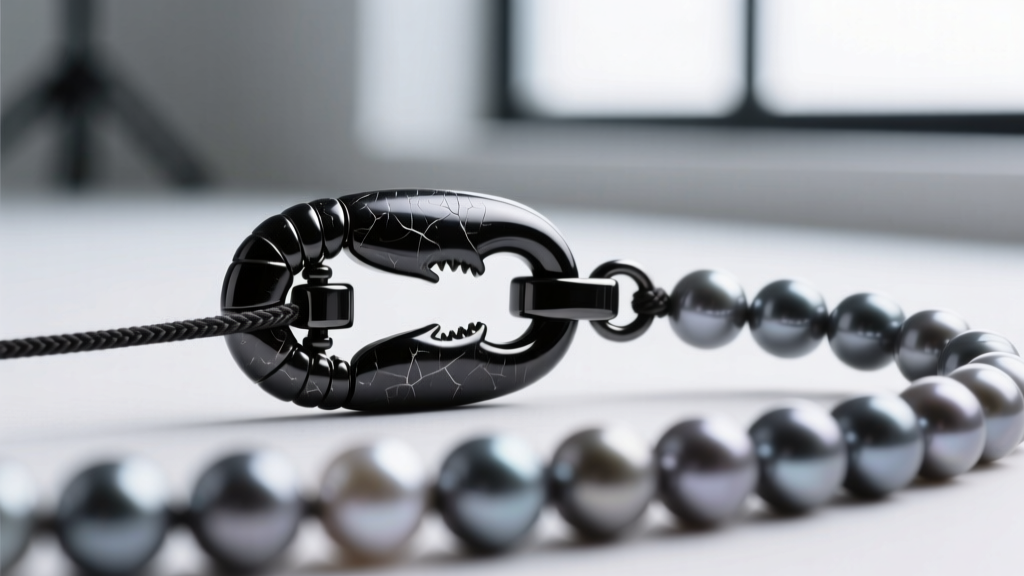
Traditional pearl necklaces are strung on silk thread with individual knots between each pearl. For men, this is a structural liability. Male body chemistry often involves higher sweat acidity and more friction from facial hair or chest hair, which degrades silk rapidly, leading to catastrophic string failure. In 2026, premium men's pearl necklaces are strung on high-tensile braided nylon (like PowerPro) or stainless steel micro-wire. Furthermore, hardware should feature matte finishes—such as PVD-coated black stainless steel or brushed titanium lobster clasps—rather than shiny, delicate gold clasps that clash with the rugged nature of men's styling.
Styling Frameworks: Necklines and Layering
Integrating pearls requires an understanding of neckline geometry. The organic curve of a pearl strand must interact harmoniously with the sharp lines of menswear.
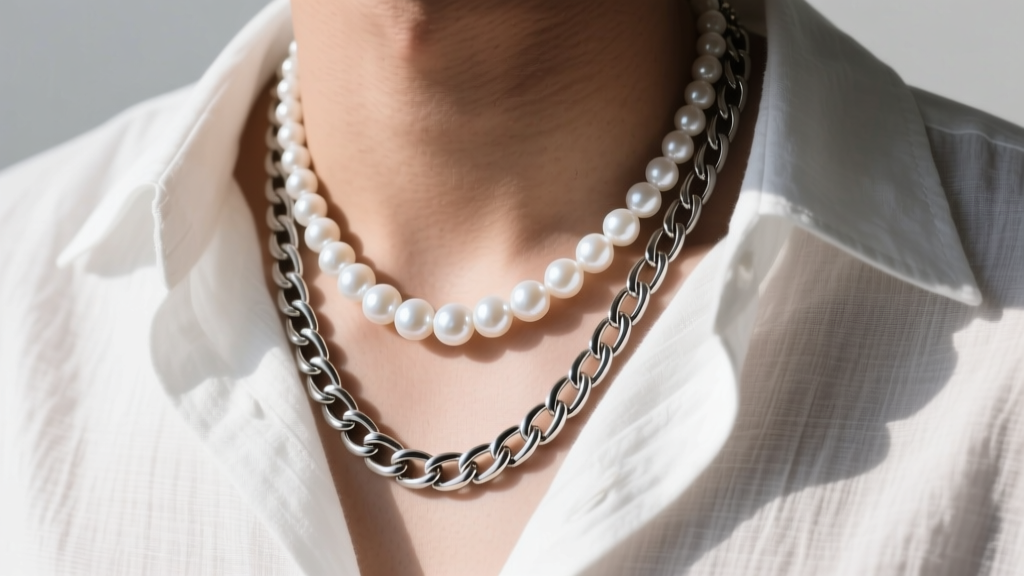
- The Camp Collar / Cuban Shirt: The V-shape of an open camp collar perfectly frames a single 18-inch strand of 8mm Tahitian pearls. The pearls should rest just below the clavicle, filling the negative space without touching the fabric.
- The Crew Neck T-Shirt: A 16-inch choker-length strand of baroque freshwater pearls worn tight against the neck, layered with a 20-inch oxidized silver pendant chain. This creates a high-low contrast between organic nacre and industrial metal.
- The Tailored Blazer: Avoid wearing pearls over the lapels of a suit. Instead, wear a 7mm Akoya strand tucked slightly beneath the lapel, resting against the skin or a fine-gauge merino wool turtleneck. This provides a subtle flash of luster that mimics the elegance of a classic pocket square.
"The key to men wearing pearls in 2026 is contrast. You want the softness of the nacre to play against the hardness of your environment—be it heavy denim, brushed steel hardware, or structured outerwear. It's about tension, not imitation." — Menswear Styling Director, Jewel Style Radar
Maintenance: Protecting the Nacre
Pearls are organic gemstones, ranking a mere 2.5 to 3.0 on the Mohs hardness scale. They are highly susceptible to acids, cosmetics, and abrasion. Men must adopt a strict maintenance protocol to preserve the luster of their investment. Never use ultrasonic cleaners or steam cleaners, as these will destroy the nacre. After wearing, wipe the strand with a damp, lint-free microfiber cloth to remove acidic sweat and skin oils. Store the necklace flat in a soft pouch; hanging pearls on a jewelry tree over long periods can stretch the stringing material, causing unsightly gaps between the pearls.
Final Verdict on the Male Pearl Renaissance
The decision for guys to wear pearl necklace styles is no longer a fleeting trend; it is a permanent expansion of the menswear lexicon. By prioritizing darker color palettes, organic baroque shapes, and durable stringing materials, men can harness the historical prestige of pearls while maintaining a distinctly modern, masculine edge. Whether opting for an entry-level metallic freshwater strand or a museum-quality Tahitian rope, the pearl remains the ultimate tool for the modern man looking to master the art of sartorial contrast.