Troubleshoot Your 925 Sterling Silver Necklace Made in Italy
Learn how to authenticate, clean, and repair a 925 sterling silver necklace made in Italy. Expert troubleshooting for tarnish, kinks, and hallmarks.

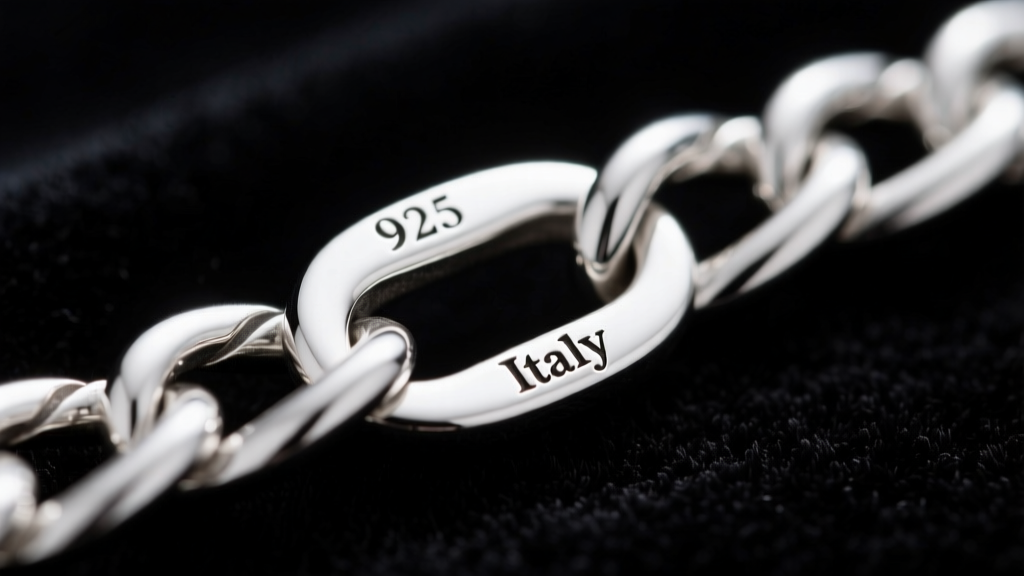
Italian jewelry craftsmanship is globally revered, particularly when it comes to silver chains and pendants. Regions like Arezzo and Vicenza have been the epicenter of precious metal manufacturing for centuries. However, owning a high-quality 925 sterling silver necklace made in Italy comes with its own set of maintenance challenges. From aggressive oxidation and stubborn kinks to the rampant market of counterfeit hallmarks, troubleshooting these issues requires specific metallurgical knowledge and practical techniques.
In this comprehensive guide, we dive deep into the exact methods for authenticating Italian silver, reversing severe tarnish without damaging the alloy, and performing micro-repairs on delicate chain styles.
Decoding the Hallmark: Is Your Italian Silver Authentic?
The first problem many owners face is verifying authenticity. The global market is flooded with base metals plated in silver, deceptively stamped with '925' and 'Italy'. According to The Silver Institute, genuine sterling silver must contain exactly 92.5% pure silver and 7.5% alloy metals (usually copper). But how do you prove it?
The Provincial Maker's Mark
A genuine Italian piece often features more than just '925 Italy'. High-end manufacturing houses stamp a provincial code alongside a registered maker's number. For example, a stamp reading 1234 AR indicates the piece was made by manufacturer #1234 in Arezzo (AR). Vicenza (VI) and Milan (MI) are other common provincial codes. If your necklace features this polygonal maker's mark, it is a strong indicator of authentic Italian provenance.
The Magnet and Acid Tests
If the hallmark looks suspicious (e.g., blurred fonts, shallow stamping), move to physical testing:
- The Magnet Test: Pure silver and copper are paramagnetic. If your necklace snaps to a neodymium magnet, it contains a ferromagnetic core (like iron or steel) and is a fake.
- The Acid Test: Use a specialized silver testing solution (usually nitric acid based). Scratch the chain on a testing stone to bypass any surface plating. Apply a drop of acid. Genuine 925 silver will turn a creamy, cloudy white. If it turns green, it is heavily plated copper or brass; if it turns black, it is lead or pewter.
Troubleshooting Severe Tarnish and Oxidation
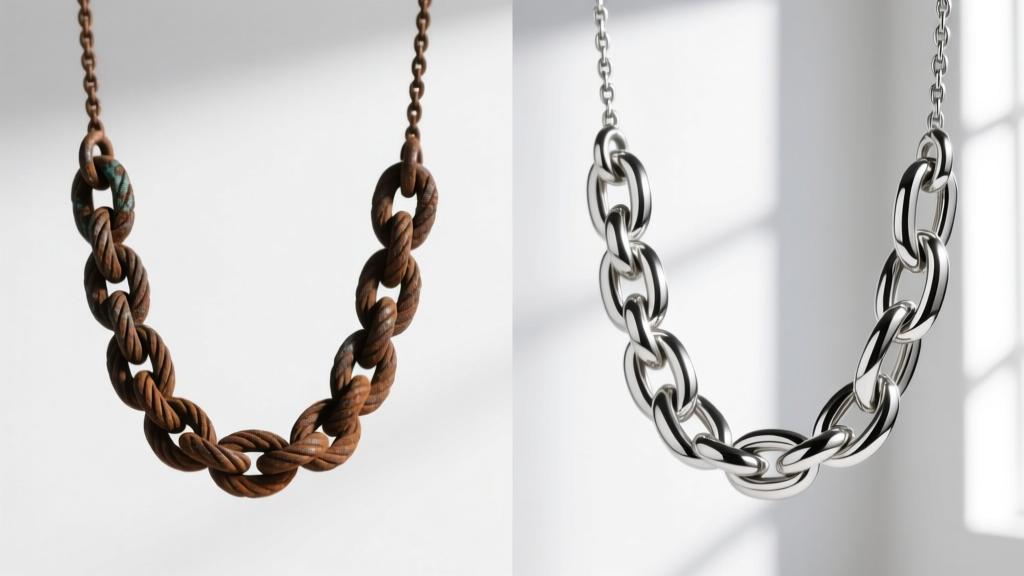
The 7.5% copper content in your 925 sterling silver necklace made in Italy is the culprit behind tarnish. Copper reacts with atmospheric sulfur and moisture to form copper sulfide, creating that familiar black or yellowish-brown film. Italian chains with high surface-area designs (like the Rope or Figaro) trap sulfur-rich skin oils and lotions in their crevices, accelerating the process.
The Electrochemical Bath (Step-by-Step)
For heavily tarnished chains where polishing cloths cannot reach the inner links, an electrochemical bath is the safest, most effective method. This process reverses the chemical reaction without removing microscopic layers of silver.
- Line a glass bowl with aluminum foil (shiny side up).
- Place your tangled or tarnished Italian silver necklace on the foil, ensuring the metal touches the aluminum.
- Sprinkle 1 tablespoon of baking soda and 1 tablespoon of non-iodized salt over the chain.
- Pour 2 cups of boiling water into the bowl. The solution will bubble and release a sulfur (rotten egg) odor.
- Let it sit for 3 to 5 minutes, then remove with wooden tongs, rinse in distilled water, and pat dry with a microfiber cloth.
Chemical Dips vs. Polishing Cloths
Avoid commercial liquid 'silver dips' containing thiourea. While they remove tarnish instantly, they are highly toxic, leave a microscopic porous surface that actually accelerates future tarnishing, and can strip the intentional antiquing (oxidized accents) from Italian pendants.
| Cleaning Method | Best For | Risk Level | Effect on Italian Chains |
|---|---|---|---|
| Electrochemical Bath | Heavy, all-over black tarnish | Low | Excellent; reaches deep into Rope and Figaro links |
| Microfiber Polishing Cloth | Light yellowing, daily maintenance | Very Low | Good; but cannot clean inside tight Mariner links |
| Thiourea Chemical Dips | Emergency, non-porous items | High | Poor; strips patina and causes micro-pitting |
| Ultrasonic Cleaners | Diamond/sapphire pendants on silver | Medium | Risky; high frequencies can snap fine Italian solder points |
Fixing Snags, Kinks, and Chain Breakages
Italian chains are famous for their fluid drape, but this flexibility makes them prone to kinking and snapping. The iconic Italian Rope chain, constructed from dozens of tiny interlocking twisted links, is notoriously fragile when subjected to torsional stress.
Unkinking the Italian Rope Chain
If your rope chain has developed a tight kink, do not pull it. Pulling will collapse the tiny links, creating a permanent weak point. Instead:
- Lay the chain flat on a clean, smooth glass surface.
- Apply a micro-drop of mineral oil or baby oil directly to the kink to reduce friction.
- Using two fine-point sewing needles, gently tease the overlapping links apart from the center of the kink outward.
- Once separated, roll the chain gently under a soft silicone spatula to realign the twist pattern.
Soldering Broken Links
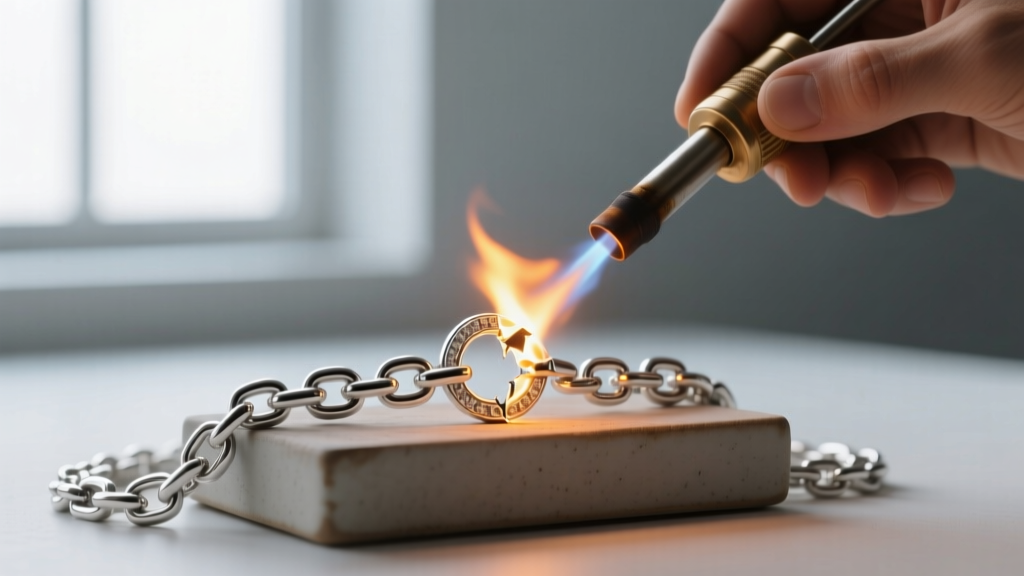
When an Italian 925 silver chain snaps, soldering requires precision. Silver is highly thermally conductive, meaning heat travels rapidly down the chain. If a jeweler uses too much heat, the adjacent fine links will melt into a solid blob.
Expert jewelers use Easy Silver Solder (melting point ~1325°F / 718°C) for chain repairs, rather than Hard or Medium solder. A specialized heat-absorbing gel or tweezers acting as a heat sink must be applied to the links immediately adjacent to the break to protect them from thermal transfer. According to the Gemological Institute of America (GIA), proper flux application (like borax-based flux) is critical to prevent firescale (copper oxide) from blooming on the 925 alloy during the heating process.
Clasp Malfunctions: Spring Ring vs. Lobster
The clasp is often the first point of failure on a 925 sterling silver necklace made in Italy. Traditional Italian spring ring clasps, while elegant and lightweight, frequently suffer from internal spring fatigue. If your spring ring no longer snaps back shut, the internal steel spring has likely rusted or lost tension.
The Fix: Spring rings are generally not repairable due to their sealed, micro-welded construction. The best troubleshooting step is to replace it with a solid 925 Italian Lobster clasp. Lobster clasps feature a heavier, external trigger mechanism and a thicker internal spring, offering 40% more tensile strength. When replacing the clasp, ensure the jump ring connecting it to the chain is soldered closed; an unsoldered jump ring will inevitably pull apart under the weight of an Italian silver pendant.
Final Thoughts on Italian Silver Care
A genuine 925 sterling silver necklace made in Italy is an investment in superior metallurgy and centuries-old design. By understanding the specific alloy composition, utilizing non-destructive electrochemical cleaning, and employing proper micro-repair techniques, you can ensure your piece remains a staple in your jewelry rotation for decades. Always store your chains flat or hanging in an anti-tarnish cloth pouch with a silica gel packet to control ambient moisture and sulfur exposure.


