Purple Colour Necklace Value Guide: Gems & Budgets 2026
Discover the true value of a purple colour necklace in 2026. Compare amethyst, tanzanite, and sugilite pricing, grades, and investment potential.

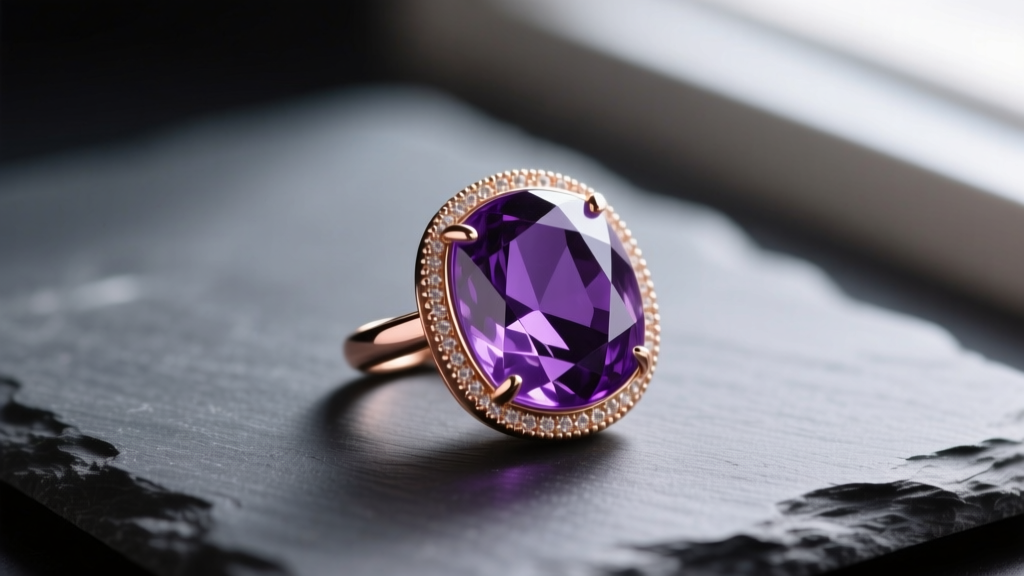
The Allure and Economics of Purple Gemstones
When shopping for a purple colour necklace, buyers often face a bewildering array of gemstones, ranging from accessible quartz varieties to ultra-rare single-source treasures. In 2026, the market for purple jewelry has shifted significantly. Supply chain constraints in East Africa and increased demand for opaque, ethically sourced gems have redefined what constitutes 'value' in this color spectrum. Whether you are allocating a $100 budget or preparing to invest $5,000 in an heirloom piece, understanding the gemological and economic nuances of purple stones is critical to avoiding overpriced inventory and treated imitations.
This comprehensive value assessment breaks down the exact pricing metrics, durability concerns, and market realities of the most popular purple gemstones used in pendants and necklaces today.
The Gemstone Hierarchy: Pricing Purple Stones
Not all purple gemstones hold their value equally. The price per carat is dictated by rarity, origin, and the stone's inherent durability (measured on the Mohs scale). Below is a comparative framework to help you benchmark prices when evaluating a purple colour necklace.
| Gemstone | Mohs Hardness | Primary Origin | Avg. Retail Price (Per Carat) | Value Retention |
|---|---|---|---|---|
| Amethyst | 7 | Brazil / Uruguay | $15 - $80 | Low (Abundant supply) |
| Sugilite | 6 - 6.5 | South Africa | $50 - $200 | High (Rare opaque) |
| Charoite | 5 - 6 | Russia (Yakutia) | $30 - $100 | Medium (Fragile, niche) |
| Tanzanite | 6.5 | Tanzania | $300 - $800+ | Very High (Single-source) |
| Purple Sapphire | 9 | Sri Lanka / Madagascar | $800 - $3,000+ | Exceptional (Heirloom) |
Budget Tier (Under $200): Amethyst & Synthetic Alternatives
For budgets under $200, crystalline quartz (amethyst) and lab-created stones dominate the market. However, value assessment at this tier requires distinguishing between commercial-grade stones and premium cuts.
The "Siberian" Amethyst Marketing Myth
Historically, the term 'Siberian' referred to amethyst with a deep, reddish-purple secondary flash. Today, Russian mines are largely depleted. According to the Gemological Institute of America (GIA), many retailers now use 'Siberian' as a misleading trade term for any dark amethyst, regardless of origin. When buying a purple colour necklace in this tier, prioritize Uruguayan amethyst, which naturally exhibits the deep, saturated 'raspberry' hues that collectors desire, typically costing between $40 and $80 per carat for well-cut stones. Brazilian amethyst is vastly more abundant, often exhibiting lighter, greyish-lavender tones, and should cost no more than $10 to $25 per carat.
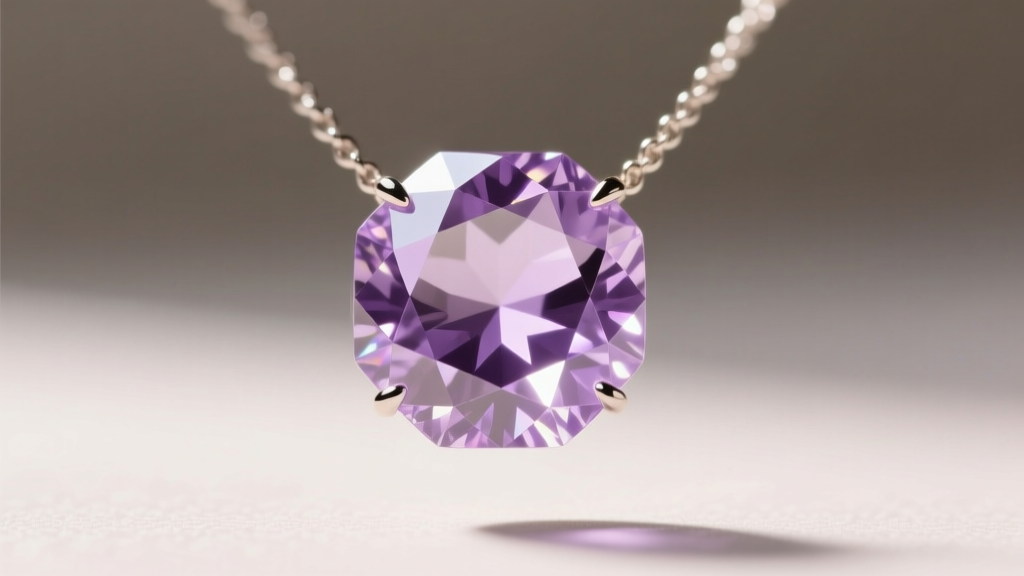
Lab-Created Purple Spinel and Sapphire
If your priority is durability and flawless clarity over natural origin, lab-created purple sapphire (grown via the Verneuil flame fusion process) offers a Mohs hardness of 9 at a fraction of the cost. A high-quality 2-carat synthetic purple sapphire pendant can be sourced for $80 to $120, offering exceptional scratch resistance for daily wear that natural budget stones cannot match.
Mid-Range Value ($200 - $800): Opaque & Rare Earth Favorites
The mid-range market is where gemologists and collectors find the most intriguing value. This tier is defined by opaque, patterned stones that are heavily dependent on artisanal lapidary work rather than traditional faceting.
Sugilite: The Royal Purple Opaque
Discovered in 1944 but only gaining jewelry prominence in the late 20th century, sugilite is a cyclosilicate mineral prized for its vibrant, opaque grape-jelly purple. The highest grade, often termed 'Royal Purple' or 'Grape Jelly' sugilite, is becoming increasingly scarce as South African mines yield lower-quality, matrix-heavy material. A high-grade sugilite cabochon pendant set in sterling silver or 14k gold will typically range from $300 to $600. Buyer Tip: Avoid stones with heavy white or grey calcite matrix unless you specifically desire the mottled aesthetic, as pure purple commands a 40% premium.
Charoite: The Russian Swirl
Found exclusively in the Murun Mountains of Yakutia, Russia, charoite is famous for its swirling, fibrous patterns and chatoyancy (cat's eye effect). With a Mohs hardness of 5 to 6, it is relatively soft and prone to scratching, making it better suited for occasional-wear pendants rather than everyday chains. Expect to pay $40 to $90 per carat for top-tier 'Royal Charoite' with minimal black aegirine inclusions.
Investment Grade ($800+): Tanzanite & Purple Sapphire
When a purple colour necklace transitions into the investment tier, the focus shifts to single-source scarcity and exceptional optical properties.
Tanzanite: The Single-Source Marvel
Tanzanite is found in only one place on Earth: a five-square-mile mining area near Mount Kilimanjaro. The GIA notes that nearly all tanzanite on the market is heat-treated to enhance its violet-blue to purple hues—a universally accepted practice that does not diminish its value. However, grading is paramount. An 'AAA' grade tanzanite (exhibiting a vivid, intense violetish-purple with strong pleochroism) will cost between $400 and $800 per carat. Be highly cautious of tanzanite pendants priced suspiciously low; they are often synthetic forsterite or coated glass imitations.
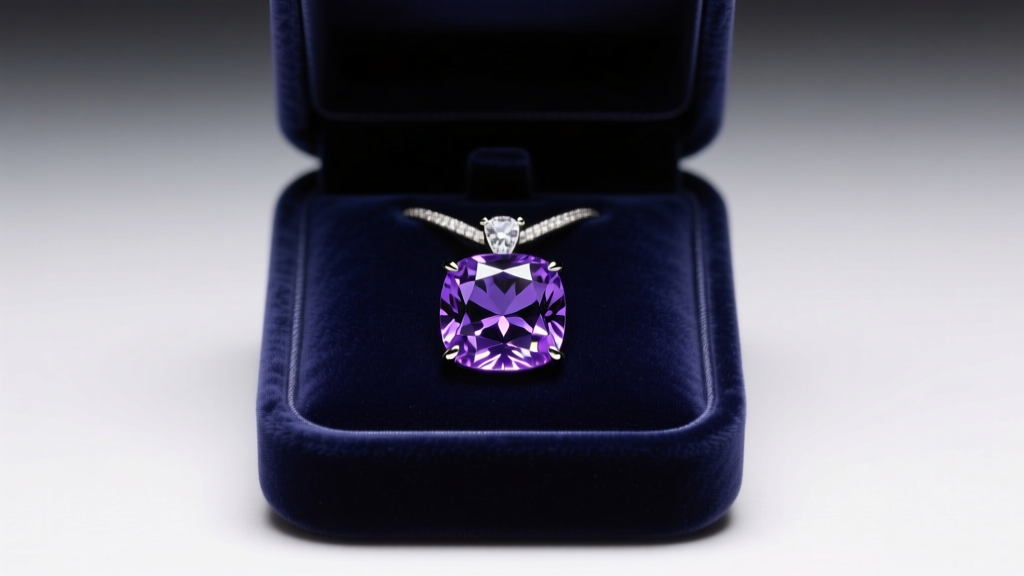
Expert Warning on Tanzanite Care: Tanzanite possesses perfect cleavage in one direction. This means a sharp knock against a table edge can split the stone. Never clean a tanzanite necklace in an ultrasonic cleaner, and always ensure the pendant setting features a protective bezel or heavy V-prongs at the corners.
Metal Pairings & Cost Implications
The metal alloy used for the chain and pendant bail drastically alters the final price and visual impact of a purple colour necklace.
- Sterling Silver ($30 - $80 markup): The standard for opaque stones like sugilite and charoite. It provides a cool contrast but requires rhodium plating to prevent tarnishing.
- 14k Rose Gold ($250 - $500 markup): The copper content in rose gold amplifies the reddish secondary flashes in Uruguayan amethyst and tanzanite, creating a warm, romantic aesthetic.
- 18k White Gold / Platinum ($600 - $1,500+ markup): Reserved for investment-grade purple sapphires and top-tier tanzanite. The bright white metal maximizes the stone's saturation and provides the necessary tensile strength for securing high-value gems.
How to Spot Overpriced & Treated Purple Pendants
The most common trap in the purple jewelry market is paying premium prices for treated or misidentified stones. Here is how to protect your budget:
- Dyed Lavender Jadeite: Natural lavender jadeite (Type A) is rare and expensive. Much of the market is flooded with Type C jade (bleached and dyed purple polymer-impregnated). Always demand a certificate from a reputable lab (like GIA or Gubelin) for any jadeite pendant over $500.
- Irradiated Quartz: Some commercial 'purple' quartz is actually clear rock crystal that has been artificially irradiated to induce color. While stable, it holds virtually zero resale value and should be priced at the very bottom of the market.
- Coated Topaz: 'Mystic' or purple-coated topaz is created via thin-film deposition. The coating will eventually wear off against the skin or clothing. Avoid paying more than $50 for coated topaz necklaces, regardless of the marketing terminology used.
Final Verdict: Maximizing Your Budget
Ultimately, the true value of a purple colour necklace lies in the alignment of your budget with the correct gemstone tier. For everyday durability on a budget, lab-created purple sapphire is unmatched. For collectors seeking organic, earth-born rarity, mid-range sugilite offers the best intersection of unique aesthetics and appreciating value. For heirloom investments, AAA tanzanite remains the undisputed king of the purple spectrum, provided it is set in a protective mounting and backed by independent gemological certification.


