How to Choose a Blue Crystal Necklace: Gemstone & Chain Guide
Discover how to choose the perfect blue crystal necklace. Compare aquamarine, topaz, and sapphire, learn about durability, and find the right chain.

Decoding the 'Blue Crystal': Natural vs. Treated vs. Synthetic
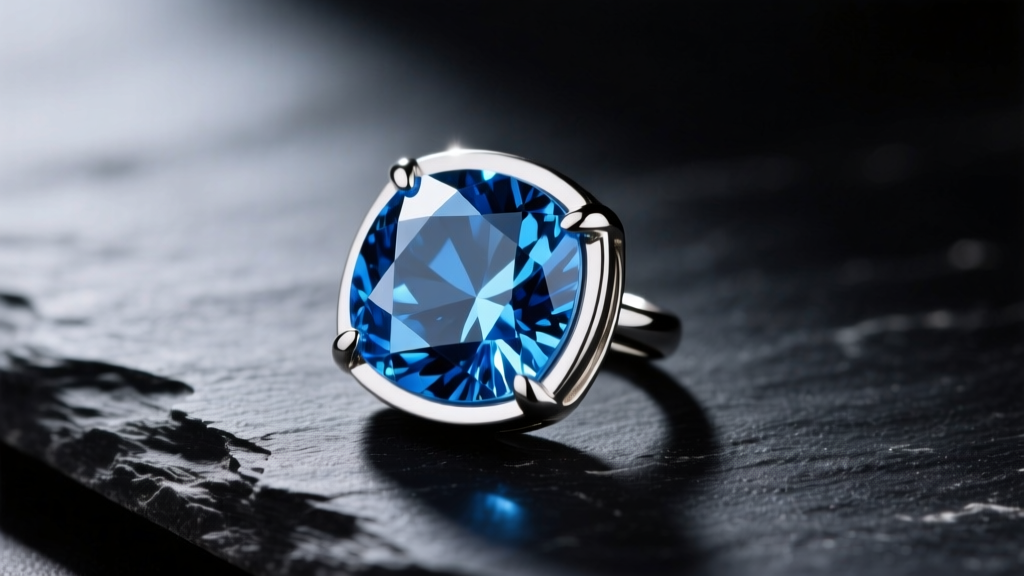
The term 'blue crystal necklace' is frequently used as a catch-all phrase in jewelry searches, but from a gemological perspective, it encompasses a vast spectrum of distinct minerals. When shopping for a blue crystal pendant, the first step is identifying the exact stone you are purchasing, as this dictates the necklace's durability, optical properties, and market value. The most common blue gemstones used in necklaces include Blue Topaz, Aquamarine, Blue Sapphire, Lapis Lazuli, and Kyanite.
Understanding treatments is critical. For instance, the vivid hues of London Blue and Swiss Blue Topaz are not entirely natural; they are achieved through a combination of neutron irradiation and heat treatment. While this process is permanent and universally accepted in the gem trade, it means the stone's value is significantly lower than untreated gems. Aquamarine, a member of the beryl family, is routinely heat-treated to around 400°C to eliminate greenish undertones, resulting in the pure, highly sought-after sky blue. Conversely, if you are looking at a 'blue sapphire' necklace priced under $200, you are likely looking at a synthetic flame-fusion corundum or a glass simulant rather than a natural, earth-mined sapphire. Always request disclosure of treatments from the seller.
Hardness, Cleavage, and Durability: The Mohs Scale Breakdown
A necklace rests against the collarbone and chest, an area prone to accidental bumps against desks, doors, and other jewelry. Therefore, understanding the structural integrity of your blue crystal is paramount. The Mohs scale of mineral hardness is a standard metric, but it only measures scratch resistance, not toughness (resistance to breaking).
| Gemstone | Mohs Hardness | Cleavage / Toughness | Necklace Suitability |
|---|---|---|---|
| Blue Sapphire | 9.0 | No true cleavage; Excellent toughness | Ideal for daily wear |
| Blue Topaz | 8.0 | Perfect basal cleavage; Brittle | Good, but requires protective settings |
| Aquamarine | 7.5 - 8.0 | Poor cleavage; Brittle | Very Good for pendants |
| Lapis Lazuli | 5.0 - 6.0 | No cleavage; Fair toughness | Fair; prone to scratching |
| Kyanite | 4.5 - 7.0 (Anisotropic) | Perfect cleavage; Fragile | Poor; strictly for occasional wear |
As noted by the GIA Gem Encyclopedia, topaz possesses perfect basal cleavage, meaning a single hard knock at the wrong angle can cause the stone to split cleanly in half. If you choose a blue topaz necklace, ensure the stone is set in a bezel or a heavy prong setting that covers the vulnerable girdle edges.
Optical Properties: Evaluating Cut and Color
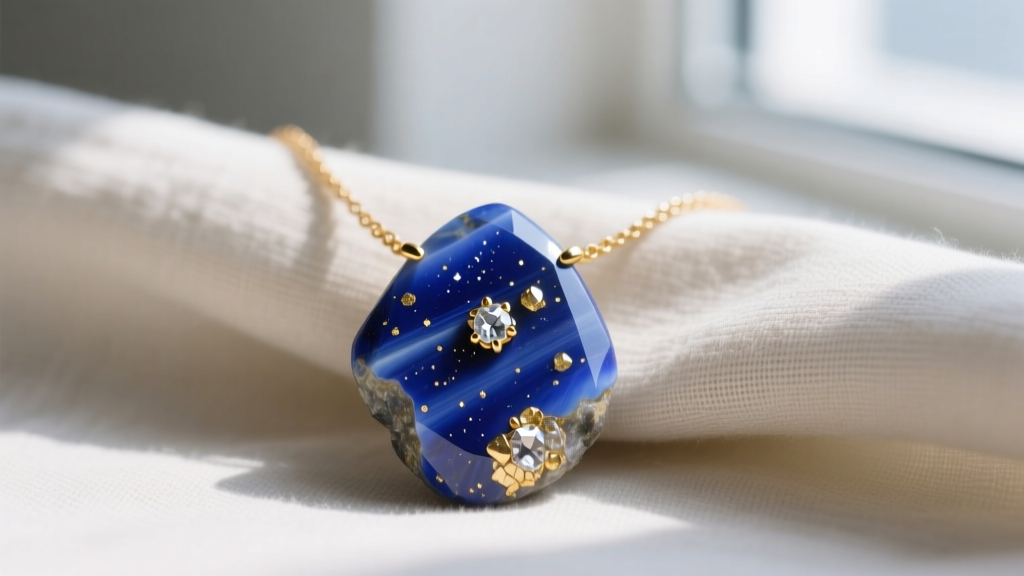
When evaluating the visual appeal of a blue crystal necklace, gemologists look at the refractive index (RI) and the cutter's ability to maximize light return. Sapphire has a high RI (1.76–1.77), giving it exceptional brilliance, while aquamarine has a lower RI (1.57–1.58), resulting in a softer, glassy luster.
Avoiding 'Windowing' and 'Extinction'
A common flaw in lower-tier blue crystal pendants is 'windowing.' This occurs when a gem cutter prioritizes carat weight over optical precision, cutting the pavilion (bottom) of the stone too shallow. As a result, light leaks out the bottom rather than reflecting back to the eye, creating a dead, transparent 'window' in the center of the gem. Conversely, 'extinction' happens when the stone is cut too deep, trapping light and creating dark, lifeless patches. When shopping, tilt the necklace under various lighting conditions to ensure the blue color remains saturated and evenly distributed across the facet pattern.
Setting Styles: Protecting Your Gemstone
The setting of your pendant directly impacts both the security of the stone and its overall aesthetic. Here is a decision framework for matching the setting to the crystal:
- Bezel Settings: A rim of metal completely surrounds the girdle of the stone. This is the absolute best choice for Blue Topaz, Kyanite, and Lapis Lazuli, as it protects the edges from chipping and prevents oils and lotions from accumulating beneath the stone.
- Prong Settings: Typically featuring four or six metal claws. This allows maximum light entry, which is ideal for maximizing the brilliance of Blue Sapphires and high-clarity Aquamarines. Ensure the prongs are thick enough (at least 0.8mm) to withstand daily tension.
- Flush / Gypsy Settings: The stone is set directly into the metal surface. While highly secure, this is rarely used for translucent blue crystals as it severely limits light return, making the stone look dark. It is better suited for opaque stones like Lapis Lazuli.
Chain Metallurgy: Pairing the Right Metal with Blue Stones
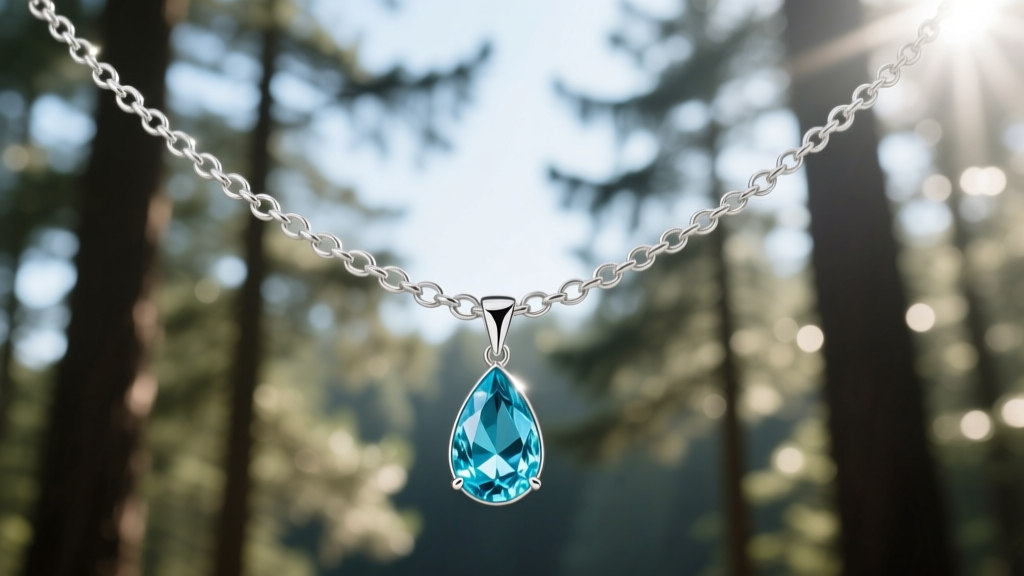
The metal chain you select will interact optically with your blue crystal. Cool-toned metals like platinum, palladium, and white gold enhance the icy, crisp hues of London Blue Topaz and Aquamarine. Yellow gold, on the other hand, creates a striking, high-contrast complementary color scheme that makes the deep blues of Sapphire and Lapis Lazuli appear richer and more saturated.
Chain Width and Clasp Mechanics
A common mistake buyers make is pairing a heavy, multi-carat blue crystal pendant with a delicate, sub-millimeter chain. As a general rule, the chain's tensile strength must support at least three times the weight of the pendant. For pendants weighing under 3 grams, a 1.0mm to 1.2mm cable or rolo chain is sufficient. For heavier statement pieces (10+ grams), opt for a 2.0mm to 3.0mm box chain or wheat chain. Furthermore, avoid spring-ring clasps for heavier necklaces; they are prone to spring failure. Always insist on a lobster claw clasp with a soldered jump ring for secure daily wear.
Price Tiers & Market Value in 2026
Navigating the pricing of blue crystal necklaces requires an understanding of the current gemstone market. Based on recent mineral valuation data from sources like Mindat.org and wholesale gem markets, here is what you should expect to pay for a genuine, well-crafted pendant necklace:
- Under $150: Synthetic blue sapphire, treated Swiss Blue Topaz, or dyed howlite/quartz masquerading as higher-end stones. Expect sterling silver chains.
- $150 - $600: Genuine, earth-mined Aquamarine (1 to 3 carats), high-grade Lapis Lazuli with minimal calcite veining, or London Blue Topaz set in 10k or 14k gold.
- $600 - $2,500: Premium Aquamarine (Santa Maria color grade), unheated Blue Sapphires with visible but acceptable inclusions, or designer pieces featuring intricate metalwork.
- $2,500+: Gem-quality, untreated Blue Sapphires (Kashmir, Burmese, or Ceylon origins) with GIA or AGL certification, set in 18k gold or platinum.
Final Pre-Purchase Checklist
Before finalizing your purchase, run through this quick gemological checklist to ensure you are getting exactly what you pay for:
- Request a Lab Report: For any blue crystal necklace priced over $1,000, demand an independent grading report from a reputable lab like the GIA, AGS, or AGL. Do not accept in-house 'certificates' from the retailer.
- Verify the Metal Stamp: Check the clasp or pendant bail for hallmarks. Look for '14K', '18K', 'PT950', or '925'. Avoid pieces stamped with 'HGE' (Heavy Gold Electroplate) or 'GF' (Gold Filled) if you want solid metal longevity.
- Inspect the Bail: The bail (the loop connecting the pendant to the chain) should be soldered closed or feature a secure hinge mechanism. Open-loop bails will eventually wear through from the friction of the chain.
- Check for Dye Bleed: If buying Lapis Lazuli or Sodalite, wipe the stone gently with a damp, warm cloth. If blue residue transfers to the cloth, the stone has been dyed to enhance its color, which significantly lowers its value.
By prioritizing structural integrity, optical precision, and proper metal pairings, you can confidently select a blue crystal necklace that is not only visually breathtaking but engineered to last a lifetime.


