Crystal Necklace Rose Quartz: Material Properties & Comparisons
Discover the mineral properties of a crystal necklace rose quartz. Compare its durability, sourcing, and value against morganite and tourmaline.

The Mineralogy and Physical Properties of Rose Quartz
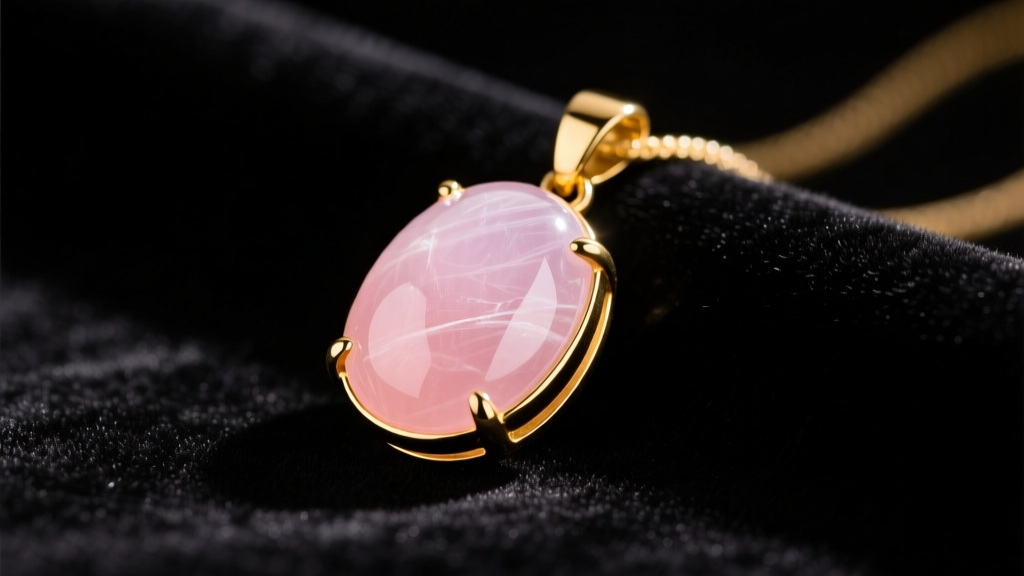
When selecting a crystal necklace rose quartz, understanding the underlying mineralogy is crucial for long-term wear and care. Rose quartz is a macrocrystalline variety of silicon dioxide (SiO2). Unlike its cryptocrystalline cousins like chalcedony or agate, rose quartz forms in distinct, large crystal structures, though it is rarely found in well-defined geometric prisms. Instead, it typically occurs in massive, translucent formations.
On the Mohs scale of mineral hardness, rose quartz scores a solid 7. This makes it highly resistant to everyday scratching from dust and common environmental debris (which typically contains quartz particles at a Mohs 7). However, hardness is only one metric of durability. Rose quartz lacks true crystal cleavage, meaning it does not split along predictable structural planes. Instead, it exhibits a conchoidal (shell-like) fracture. While this gives it good overall toughness, internal micro-fractures are common, particularly in heavily included specimens.
For decades, gemologists attributed the signature blush-pink hue of rose quartz to trace amounts of titanium or manganese. However, modern spectroscopic analysis by the Gemological Institute of America (GIA) has revealed that the color is primarily caused by microscopic fibrous inclusions of dumortierite or a closely related borosilicate mineral. This fascinating geological detail elevates the stone from a simple decorative piece to a complex mineralogical marvel.
Material Comparison: Rose Quartz vs. Pink Alternatives
How does rose quartz stack up against other popular pink gemstones used in pendant jewelry? The table below breaks down the critical physical properties and market positioning of the top five pink gemstones utilized in necklace designs.
| Gemstone | Mohs Hardness | Fracture / Cleavage | Toughness | Avg. Pendant Price Range |
|---|---|---|---|---|
| Rose Quartz | 7.0 | Conchoidal Fracture | Good | $15 - $60 (per piece) |
| Morganite | 7.5 - 8.0 | Uneven Fracture | Good | $150 - $500+ (per carat) |
| Pink Tourmaline | 7.0 - 7.5 | Uneven Fracture | Fair to Good | $50 - $250 (per carat) |
| Rhodochrosite | 3.5 - 4.0 | Uneven Fracture | Poor | $30 - $120 (per piece) |
| Kunzite | 6.5 - 7.0 | Perfect Cleavage (2 directions) | Poor | $40 - $150 (per carat) |
As the data illustrates, rose quartz offers an exceptional balance of durability and affordability. While morganite is harder, it is exponentially more expensive. Rhodochrosite and kunzite, though visually stunning, pose significant durability risks for daily-wear necklaces due to their low hardness and perfect cleavage planes, respectively. According to mineralogical databases like Mindat.org, the structural integrity of SiO2 makes rose quartz vastly superior for active lifestyles compared to carbonate minerals like rhodochrosite.
Sourcing, Treatments, and the 'Star' Phenomenon
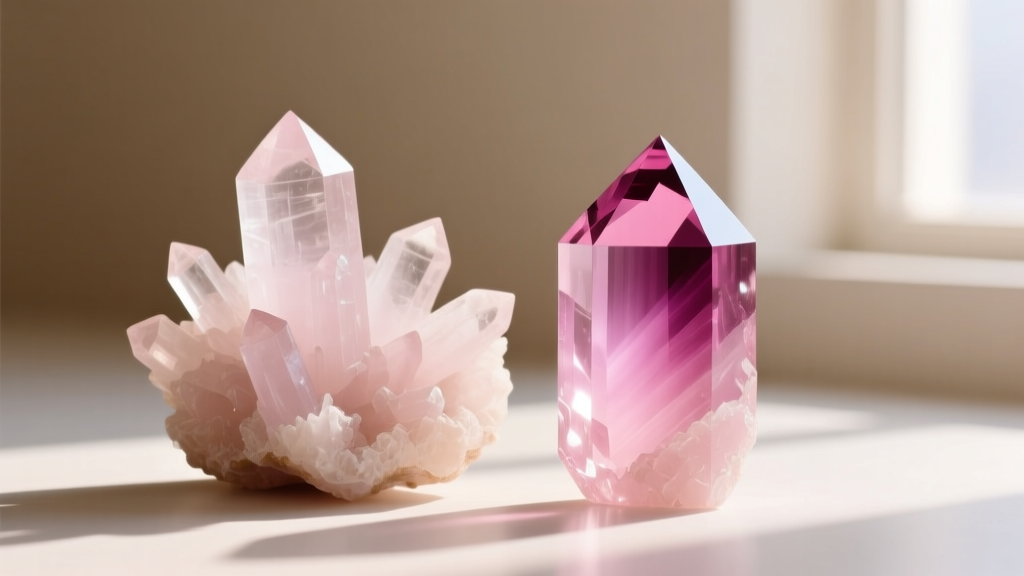
The global supply of high-quality rose quartz is heavily concentrated in a few key regions. The most prolific commercial sources are the pegmatite deposits of Minas Gerais, Brazil, and the mineral-rich terrains of Madagascar. Brazilian material often yields deeper, more saturated pinks, while Malagasy specimens frequently exhibit higher translucency.
Unlike many commercial gemstones, natural rose quartz is almost never subjected to heat treatment or irradiation. Its color is stable under normal conditions, and the market does not demand enhancement because the raw material is abundant and naturally beautiful. However, buyers should be wary of 'dyed' quartz, which can be identified by color concentration in surface-reaching fractures under a 10x jeweler's loupe.
Understanding Star Rose Quartz
A highly sought-after variant is 'Star Rose Quartz,' which exhibits asterism—a four-rayed or six-rayed star that glides across the surface of the stone when cut en cabochon and illuminated by a single point source of light. This optical phenomenon is caused by the reflection of light off densely packed, microscopic rutile (titanium dioxide) needles oriented in specific crystallographic directions. While visually captivating, the high volume of rutile inclusions inherently lowers the structural integrity of the stone, making star rose quartz pendants more susceptible to chipping upon hard impact than their non-asteriated counterparts.
Identifying Synthetics and Glass Imitations
Because rose quartz is relatively inexpensive, large-scale synthetic production for jewelry is rare. However, glass imitations are rampant in the fast-fashion and tourist markets. Distinguishing genuine rose quartz from pink glass requires a few specific diagnostic tests:
- Thermal Conductivity: Genuine quartz feels noticeably cool to the touch and takes longer to warm up against the skin compared to glass.
- Inclusions: Under 10x magnification, glass will often reveal spherical gas bubbles and swirl marks from the molding process. Natural rose quartz will never contain spherical bubbles; instead, you may see internal fractures, fluid inclusions, or dumortierite fibers.
- Hardness Test: A steel needle (Mohs 5.5) will easily scratch glass but will leave no mark on genuine rose quartz (Mohs 7).
Setting Mechanics and Chain Pairings for Durability
The physical properties of rose quartz dictate how it should be set and suspended. Because it is rarely 'eye-clean' and lacks the refractive index to benefit from faceting, rose quartz is almost exclusively cut en cabochon (smooth and domed).
Expert Setting Tip: Always opt for a bezel or semi-bezel setting for a rose quartz pendant. Prong settings leave the girdle (the outer edge of the stone) exposed. Given rose quartz's conchoidal fracture, a sharp impact to an exposed edge can easily cause a chip or crack that will propagate through the stone.
When pairing your pendant with a chain, consider the weight of the stone. A standard 30mm x 20mm rose quartz cabochon can weigh between 15 and 25 grams. To support this weight without risking chain failure, avoid delicate cable chains under 1.0mm. Instead, opt for a 1.2mm to 1.5mm box chain or rope chain in solid sterling silver or 14k gold-filled wire. Box chains offer superior tensile strength due to their interlocking square links, while rope chains provide excellent flexibility and resistance to kinking.
Long-Term Care, Maintenance, and Failure Modes
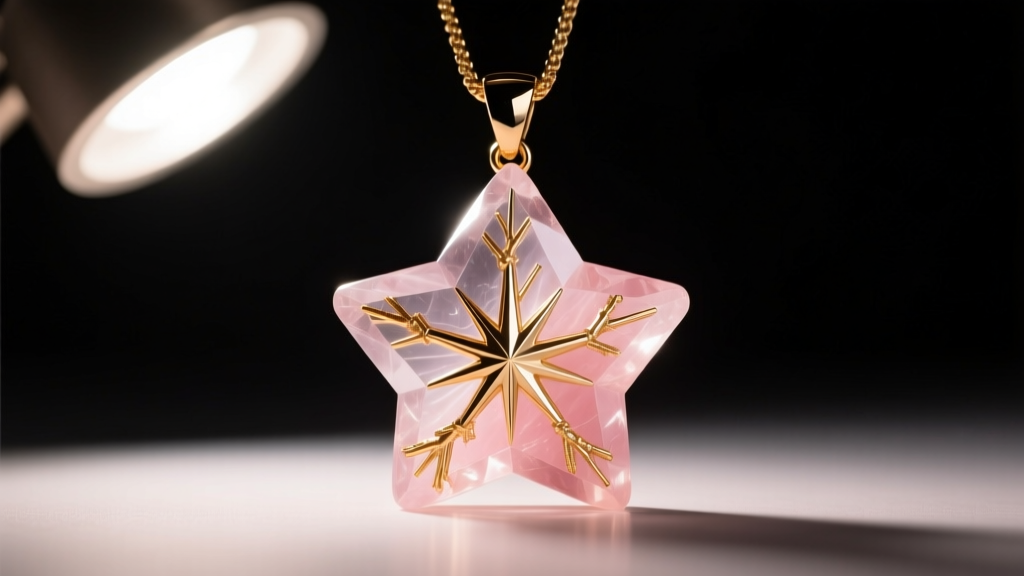
While rose quartz is a durable material, improper care can lead to catastrophic failure of the pendant. The most common mistake consumers make is using ultrasonic jewelry cleaners. The high-frequency acoustic cavitation generated by ultrasonic waves can cause the microscopic internal fractures naturally present in macrocrystalline quartz to expand, leading to sudden and irreversible shattering of the stone.
Furthermore, while rose quartz is generally color-stable, prolonged, continuous exposure to intense, direct ultraviolet (UV) sunlight over many years can cause the stone to dehydrate slightly at the surface level, leading to a dull, grayish cast. To maintain the optimal luster and color saturation of your crystal necklace rose quartz, follow these strict maintenance protocols:
- Cleaning: Use only lukewarm water, a mild phosphate-free dish soap, and a soft-bristled baby toothbrush. Rinse thoroughly and dry with a microfiber cloth.
- Storage: Store the necklace separately in a soft pouch. While quartz cannot be scratched by gold or silver, it can easily scratch softer gemstones or metal finishes if tangled together in a jewelry box.
- Environmental Protection: Remove the pendant before swimming in chlorinated pools or hot tubs. While the quartz itself is impervious to mild chlorine, the chemical can degrade the metal bezel setting and weaken the solder points on the chain clasp over time.
By respecting the unique mineralogical profile of rose quartz, you ensure that your pendant remains a structurally sound and visually captivating staple in your jewelry collection for decades to come.


