Budgeting for a Star Sapphire Necklace: Value & Pricing Guide
Discover how to evaluate a star sapphire necklace. Learn pricing tiers, asterism grading, natural vs. synthetic values, and budget tips for buyers.

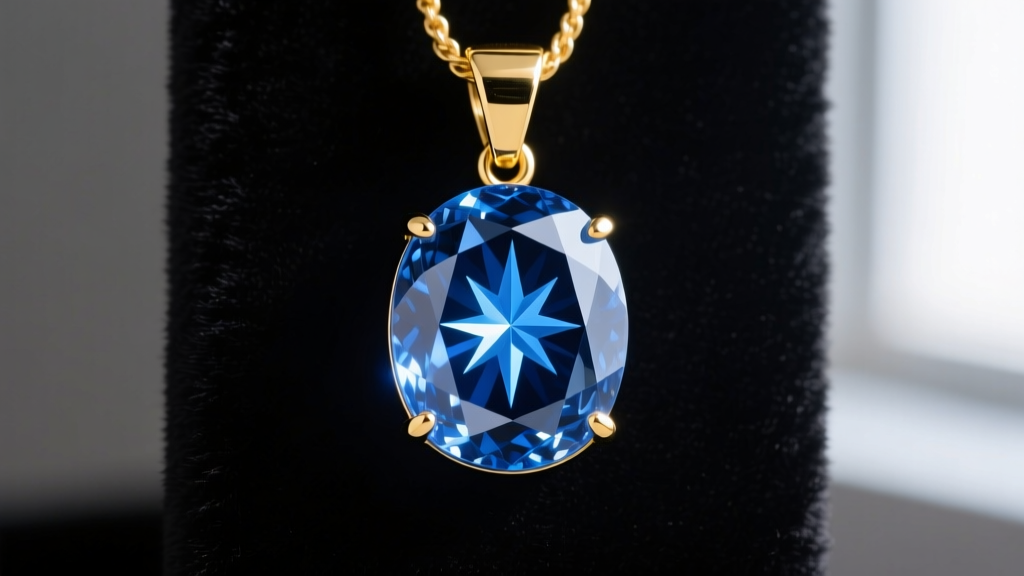
Evaluating the true value of a star sapphire necklace requires looking far beyond the standard 4Cs applied to faceted diamonds. The phenomenon of asterism—the glowing star that glides across the surface of the cabochon—introduces a unique set of gemological variables that directly dictate market price. As we navigate the colored gemstone market in 2026, buyers are increasingly drawn to the mystical appeal of star sapphires, yet many fall into the trap of overpaying for heavily treated stones or mistaking vintage synthetics for natural treasures. Whether you are hunting for a budget-friendly everyday pendant or an investment-grade heirloom, understanding the mechanics of star sapphire valuation is essential for protecting your capital.
The Anatomy of Value: What Drives Star Sapphire Prices?
Unlike faceted gems where clarity and brilliance are paramount, a star sapphire is cut en cabochon (a smooth, domed shape) specifically to showcase its optical phenomenon. The value of your necklace hinges on a delicate balancing act between the sharpness of the star and the translucency of the stone's body.
Asterism Quality: The 6-Ray vs. 12-Ray Premium
The 'star' is caused by microscopic, needle-like inclusions of rutile (titanium dioxide) that reflect light in a concentrated pattern. For a star sapphire necklace to command top dollar, the asterism must meet three strict criteria:
- Centering: The star must be perfectly centered on the dome of the cabochon. Off-center stars can reduce a stone's value by 40% to 60%.
- Sharpness: The rays should be distinct, unbroken, and extend all the way to the edges (girdle) of the stone. Blurry or 'milky' stars indicate poorly aligned rutile silk.
- Ray Count: While 6-ray stars are the industry standard, some sapphires contain both rutile and hematite inclusions, producing a rare 12-ray star. A sharp, natural 12-ray star commands a 30% to 50% premium over an equivalent 6-ray stone.
Body Color and Translucency
Gemologists often refer to the 'glass body' versus 'stone body' trade-off. If a sapphire has too much rutile silk, it becomes completely opaque; the star will be sharp, but the body color will look dull and grey. If it has too little silk, the stone becomes highly transparent with a rich, vivid color, but the star will be faint or invisible. The 'holy grail' of star sapphire valuation is a semi-transparent stone with a vivid cornflower blue or padparadscha (pink-orange) body color and a sharp, distinct star. According to the Gemological Institute of America (GIA), these semi-transparent specimens are exceedingly rare and sit at the absolute apex of the pricing spectrum.
Natural vs. Synthetic: The Budget Buyer’s Dilemma
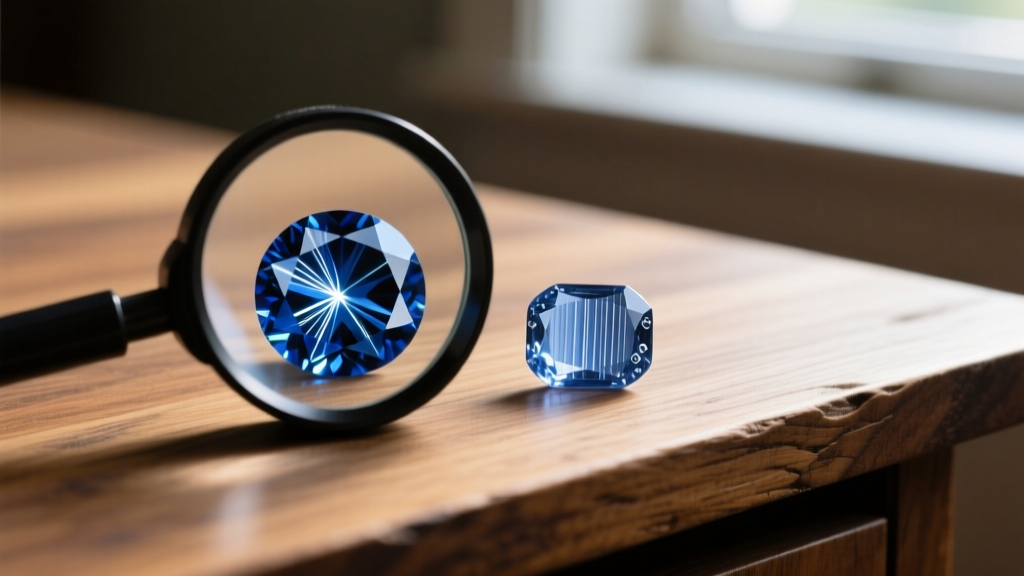
If you are browsing estate sales or vintage jewelry shops for a star sapphire necklace, you must be acutely aware of synthetic alternatives. The Verneuil flame-fusion process, popularized in the mid-20th century by companies like Linde, created synthetic star sapphires with unnaturally perfect stars and high transparency. These vintage synthetics are abundant and hold very little monetary value compared to their natural counterparts.
| Category | Visual Clues Under 10x Loupe | Estimated Necklace Value (10ct Stone) |
|---|---|---|
| Natural (Unheated) | Angular color zoning, natural rutile needles, uneven star intensity. | $5,000 - $25,000+ |
| Natural (Lightly Heated) | Minor silk dissolution, enhanced body color, sharp star. | $2,000 - $8,000 |
| Synthetic (Verneuil) | Curved striae (growth lines), perfectly sharp star, gas bubbles. | $150 - $400 (Mostly setting value) |
| Diffusion Treated | Color concentrates at facet junctions/girdle, artificial surface star. | $300 - $800 |
Pricing Tiers: What to Expect in the Current Market
When budgeting for a natural star sapphire necklace, it is helpful to categorize the market into three distinct tiers based on opacity, color, and origin. Prices below are estimated per carat for the center stone, excluding the precious metal setting.
- The Commercial Tier ($20 - $150 per carat): These stones are heavily included, opaque, and typically feature grey, black, or pale green body colors. Black star sapphires (which owe their star to hematite rather than rutile) fall into this tier unless they possess exceptional size and a razor-sharp 12-ray star. These make excellent, durable budget pendants for daily wear.
- The Fine Jewelry Tier ($300 - $1,200 per carat): Here you will find semi-transparent stones with pleasant, though not necessarily 'vivid', blue or pink hues. The stars are well-centered and sharp. Most star sapphire necklaces sold by reputable high-street jewelers fall into this category, often sourced from Madagascar or Sri Lanka (Ceylon).
- The Investment Tier ($2,500 - $10,000+ per carat): Reserved for translucent to semi-transparent stones with top-tier saturation (e.g., Kashmir or Burmese cornflower blue) and flawless asterism. These are museum-quality gems that require bespoke, high-security settings and comprehensive laboratory certification.

Red Flags and Treatment Disclosures
Treatment disclosure is the single biggest point of failure for unwary buyers. While heat treatment is universally accepted in the faceted sapphire market, it poses a unique problem for star sapphires. High heat dissolves rutile silk. Therefore, to preserve the star, lapidaries rarely subject star sapphires to the extreme temperatures required to dramatically alter body color. Most high-quality natural star sapphires are unheated or only lightly heated.
Beryllium Diffusion and Lead Glass Filling
The most dangerous treatments in the modern market are beryllium lattice diffusion and lead-glass fracture filling. Beryllium diffusion introduces foreign elements into the crystal lattice to artificially induce or enhance color (often turning pale stones into vivid oranges or pinks). This treatment drastically destroys the resale value and collector appeal of the stone. Furthermore, because star sapphires are heavily included by nature, they are prime candidates for fracture filling with lead glass to improve apparent transparency. Always demand a report from a reputable laboratory like GIA, AGL, or Gübelin that explicitly states 'No evidence of heating' or 'No evidence of lattice diffusion'.
Expert Insight: Never purchase an investment-grade star sapphire necklace based solely on a seller's verbal guarantee. The complex interplay of rutile silk and artificial heat treatments can only be definitively mapped using advanced spectroscopic analysis by a certified gemological laboratory.
Setting and Chain Considerations for Star Stones
The physical anatomy of a star sapphire dictates how it must be set to ensure longevity. Because the stone must be cut with a high dome to properly display the star, it is inherently top-heavy and vulnerable to chipping at the girdle (the widest edge of the stone).
Bezel vs. Prong: Protecting the Cabochon
While traditional prong settings allow more light to enter a faceted gem, they are highly discouraged for star sapphires. A full or semi-bezel setting in 14k or 18k gold is the industry standard for cabochons, as it secures the vulnerable girdle and provides a structural cage that protects the dome from lateral impacts. Additionally, because star sapphires are dense and often cut into large carat weights (10 to 30 carats is common for center stones), the necklace chain must be engineered to support the load. Avoid delicate 0.8mm cable chains. Instead, opt for a 2.0mm to 3.0mm wheat, box, or rope chain with a secure lobster clasp to prevent catastrophic chain failure and the loss of your gemstone.
Ultimately, budgeting for a star sapphire necklace is an exercise in prioritizing the phenomenon over traditional clarity metrics. By focusing on the sharpness of the asterism, demanding transparency regarding treatments, and selecting a protective bezel setting, you can acquire a breathtaking piece of jewelry that holds both its mystical allure and its financial value for generations.


