How to Fix a Flipping Horizontal Cross Necklace: Troubleshooting Guide
Is your horizontal cross necklace constantly flipping or sliding? Learn expert troubleshooting hacks, chain pairings, and bail fixes to keep it aligned.


The Physics of the Horizontal Cross: Why It Flips and Slides
The horizontal cross necklace—often referred to as a sideways cross—has remained a staple in minimalist and faith-based jewelry for years. However, its unique geometry creates a persistent mechanical headache for wearers: the pendant constantly flips upside down, slides off-center, or tangles in the chain. To troubleshoot this, we first have to understand the physics at play.
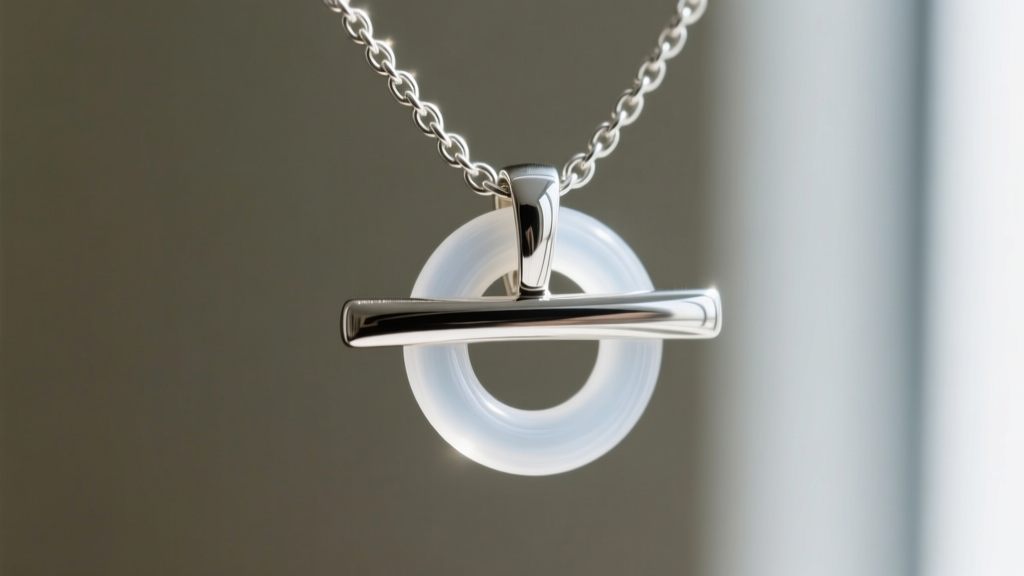
Unlike a traditional vertical cross where the center of gravity aligns perfectly beneath the bail (the loop that connects the pendant to the chain), a horizontal cross necklace distributes its mass laterally. If the crossbar is even slightly asymmetrical, or if the chain is too thin to provide adequate friction, the pendant will naturally seek equilibrium by rotating. Furthermore, the bail hole on mass-produced horizontal crosses is often stamped out at 4mm to 5mm, leaving excessive empty space around a standard 1.0mm chain. This gap is the primary culprit behind the dreaded 'spinning bail' effect.
Troubleshooting the Spinning Bail Problem
If your pendant refuses to lay flat, the issue is almost always rooted in the bail-to-chain ratio. Here are three expert-level solutions to stabilize your jewelry.
Fix 1: The Silicone O-Ring Hack
The most immediate, non-destructive fix for a sliding horizontal cross is to introduce artificial friction. Jewelers often use tiny, clear silicone jewelry o-rings (typically 2mm to 3mm in outer diameter). By threading your chain through the o-ring before attaching the pendant, the silicone acts as a invisible bumper. It fills the 3mm gap inside the bail hole, preventing the metal-on-metal slip that causes the cross to slide left or right. This is highly recommended for delicate 925 sterling silver chains where soldering a new bail might risk heat damage to the surrounding metal.
Fix 2: Upgrading to a Fixed Soldered Bail
Many affordable horizontal crosses feature a 'sliding bail'—a separate ring looped through a drilled hole in the top of the cross. This allows 360-degree rotation. If you are investing in a solid 14k gold piece, take it to a local bench jeweler and request a 'fixed bail' conversion. The jeweler will remove the sliding ring and laser-weld or solder a fixed bail directly to the top center of the vertical axis. According to the Jewelers of America, laser welding is the safest method for this, as it applies highly localized heat, preventing any warping of the delicate cross arms.
Chain Selection Matrix: Stopping the Slide
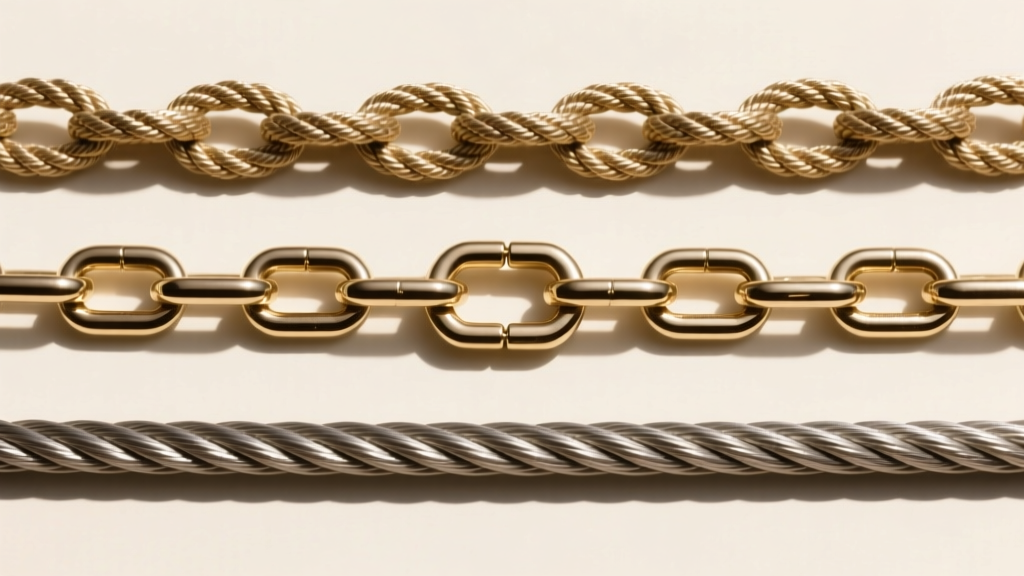
The chain you pair with your horizontal cross necklace dictates 80% of its behavior. A chain that is too round (like a standard cable chain) acts like a track, allowing the pendant to glide freely. You need a chain with flat planes or high-friction textures. Below is a troubleshooting matrix for chain selection based on millimeter width and structural profile.
| Chain Type | Ideal Width | Friction / Slide Resistance | Best For |
|---|---|---|---|
| Box Chain | 1.2mm - 1.5mm | High (Flat geometric planes) | Lightweight 14k gold or silver horizontal crosses |
| Wheat Chain | 1.0mm - 1.5mm | Very High (Braided texture) | Heavy 316L stainless steel pendants |
| Rope Chain | 1.5mm - 2.0mm | Medium (Twisted grooves) | Adding visual weight to minimalist crosses |
| Cable Chain | 1.0mm | Low (Smooth, round links) | Avoid for horizontal crosses (causes sliding) |
For a standard horizontal cross with a 4mm bail inner diameter, a 1.5mm box chain is the gold standard. The flat edges of the box links catch the interior corners of the bail, naturally resisting rotation without the need for silicone stoppers.
Metal Weight and Stress Fractures at the Bail
A hidden problem with horizontal cross necklaces is bail fatigue. Because the weight of the cross is distributed horizontally, dynamic movements (like leaning forward or catching the pendant on a sweater) create a lateral shearing force on the bail.
If your pendant is crafted from hollow 316L surgical stainless steel, it might weigh a mere 1.2 grams, putting minimal stress on the chain. However, a solid 18k gold horizontal cross can easily weigh 4.5 grams. The Gemological Institute of America (GIA) notes that higher karat golds (like 18k and 22k) are inherently softer and more malleable than 14k or 10k alloys. If an 18k gold horizontal cross is hung on a thin 0.9mm chain, the repetitive lateral pulling will eventually cause work-hardening and micro-fractures at the base of the bail. Always ensure your chain's tensile strength matches the gram weight of your pendant. A good rule of thumb: the chain should be rated to hold at least three times the static weight of the pendant.
Sizing and Length: Preventing the Upside-Down Cross
The length of your necklace directly impacts the pendulum effect. A horizontal cross necklace worn at a standard 18-inch 'princess' length has significant slack. This slack allows the pendant to swing freely, increasing the likelihood that it will flip completely upside down, showing the back of the bail to the world.
To troubleshoot this, opt for a 16-inch 'choker' or 'matinee' length. By anchoring the chain closer to the clavicle, you restrict the pendulum arc. The pendant rests against the upper chest, where the natural curve of the body provides a physical barrier that keeps the horizontal cross oriented correctly. If you prefer the look of an 18-inch chain, consider adding a counterweight to the back of the necklace. Many luxury jewelers now attach a small, heavy gold bead or a weighted brand tag near the lobster clasp at the nape of the neck. This rear counterweight pulls the chain backward, keeping the front clasp and the horizontal cross centered and taut against the collarbone.
Summary Checklist for a Perfect Drape
- Audit the Bail: Check if it is a sliding ring or a fixed soldered loop. Upgrade to fixed if rotation is severe.
- Measure the Gap: If the bail hole is 5mm and your chain is 1mm, apply a 2mm clear silicone jewelry o-ring.
- Swap the Chain: Ditch smooth cable chains for 1.2mm to 1.5mm box or wheat chains to introduce structural friction.
- Adjust the Length: Shorten the chain to 16 inches to eliminate the pendulum swing, or add a counterweight bead to the back clasp.
- Check Metal Integrity: Inspect the bail connection point every six months for micro-fractures, especially if wearing soft 18k gold or heavy 316L steel.
By treating your horizontal cross necklace not just as an aesthetic accessory, but as a mechanical system of weight, friction, and geometry, you can permanently solve the flipping and sliding issues. Implement these structural adjustments, and your sideways cross will lay perfectly flat, exactly as intended.


