Vintage Pink Glass Bead Necklace Trends & Styling 2026
Discover 2026 styling trends for the vintage pink glass bead necklace. Learn to authenticate Murano and Czech glass, layering tips, and values.

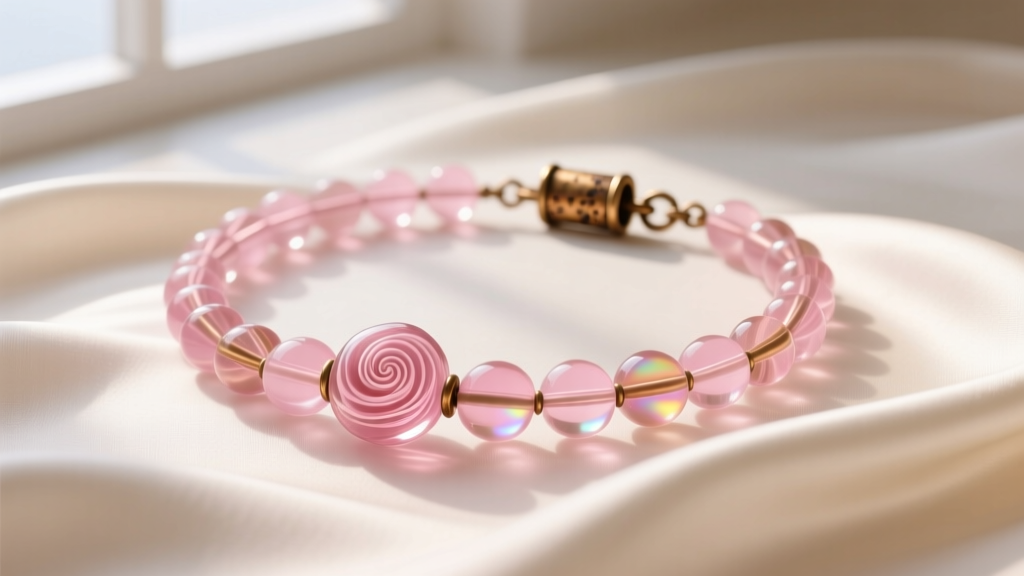
The Resurgence of the Vintage Pink Glass Bead Necklace
In the ever-evolving landscape of jewelry trends, the vintage pink glass bead necklace has emerged as a definitive staple for 2026. Moving away from the hyper-minimalism of the early 2020s, contemporary stylists and collectors are gravitating toward pieces that offer tactile warmth, historical resonance, and a distinct pop of color. The soft, translucent hues of vintage pink glass—ranging from pale blush and dusty rose to deep cranberry—provide a versatile bridge between casual daytime wear and elegant evening layering. According to trend forecasts highlighted by Vogue, the modern consumer is increasingly seeking 'heirloom quiet luxury,' favoring authentic vintage pieces with rich material histories over mass-produced contemporary alternatives.
However, navigating the vintage market requires a discerning eye. The term 'vintage' is frequently misapplied to modern retro reproductions, and the value of a genuine mid-century or Art Deco piece hinges on specific material markers, origin provenance, and structural integrity. This comprehensive guide delves into the material science, authentication frameworks, and advanced styling techniques required to master the vintage pink glass bead necklace in 2026.
Decoding Glass Origins and Material Science
The allure of the pink glass bead lies in its complex chemical composition. Historically, the most prized pink and red glass was created using colloidal gold, a technique famously utilized in 'cranberry glass' and 'gold ruby glass.' The gold chloride is suspended in the glass matrix, scattering light to produce a rich, luminous pink that modern selenium-based or cadmium-based pink glasses struggle to replicate. Understanding the origin of the beads is the first step in evaluating a necklace's worth and historical significance.
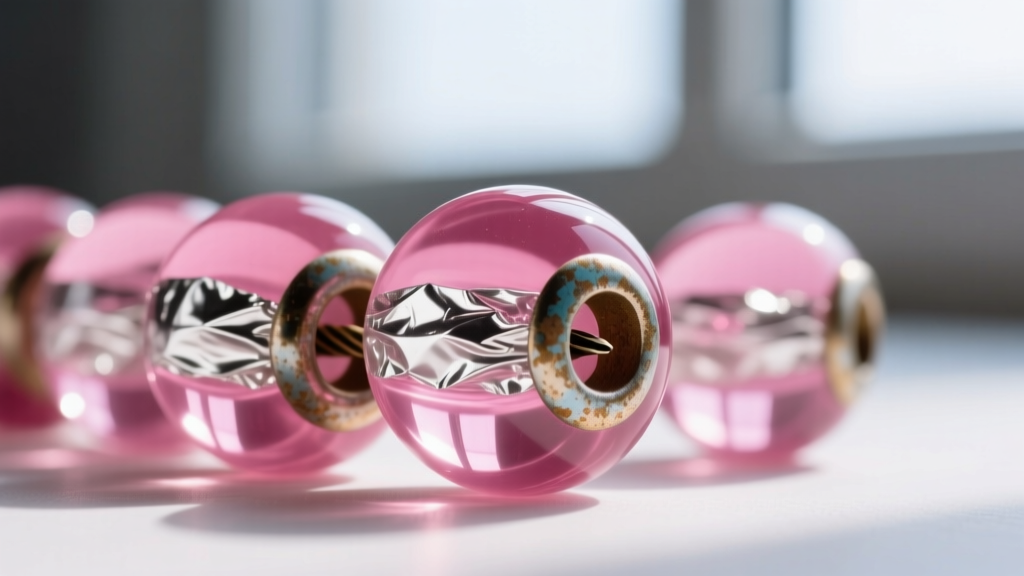
The Corning Museum of Glass notes that regional glassmaking hubs developed highly distinct signatures in their bead production. Murano, Italy, became famous for techniques like sommerso (layering contrasting glass colors without them mixing) and millefiori, while the Bohemian region (modern-day Czech Republic) dominated the market with molded, faceted, and foil-lined glass beads that caught the light brilliantly. Japanese glassmakers, particularly in the mid-20th century, produced exceptional lampwork beads with intricate floral motifs encased in clear or pink glass.
| Origin | Defining Characteristics | Typical Era | Estimated Market Value (18-inch Strand) |
|---|---|---|---|
| Murano, Italy | Sommerso layering, organic shapes, gold leaf inclusions, polished pontil marks. | 1950s–1970s | $250 – $1,200+ |
| Czech (Bohemian) | Faceted cuts, silver or copper foil lining, uniform molded shapes, high brilliance. | 1920s–1960s | $60 – $180 |
| Japanese Lampwork | Floral or geometric patterns encased in clear/pink glass, slightly irregular shapes. | 1960s–1980s | $45 – $120 |
| Indian / Trade Beads | Wound glass, matte finishes, larger gauge drill holes, often mixed with brass spacers. | Various | $30 – $85 |
Authentication: Separating True Vintage from Reproductions
As the demand for the vintage pink glass bead necklace has surged, so has the influx of artificially aged reproductions. Authenticating a piece requires a multi-point inspection focusing on the bead holes, stringing materials, and hardware.
Analyzing Drill Holes and Patina
Examine the drill holes of the beads under a jeweler's loupe. Vintage beads were often drilled using diamond-tipped or steel bits that left slight irregularities, micro-chipping around the edges, or a subtle 'snow' ring caused by decades of friction against the stringing material. Modern laser-drilled or mass-produced beads feature perfectly uniform, sharp-edged holes. Additionally, true vintage glass may exhibit a subtle patina or micro-scratches on the surface, whereas reproduction beads often have a sterile, high-polish finish that lacks depth.
Stringing Materials and Knotting Techniques
The material holding the beads together is a primary indicator of age and quality. High-end vintage necklaces were typically strung on natural silk thread and hand-knotted between each bead to prevent loss in case of a break. Over time, silk degrades, stretches, and absorbs skin oils, turning a yellowish-brown color near the clasp. If a purported 1950s necklace is strung on modern, brightly colored nylon or flexible beading wire (like Soft Flex) with crimp beads instead of knots, it has either been heavily restrung or is a modern reproduction. For authentic restrings, purists insist on Griffin 100% natural silk thread, typically in size #4 or #6, to maintain the historical drape of the necklace.
Hardware and Clasp Hallmarks
The clasp is often the most telling component. Vintage European necklaces frequently feature ornate filigree barrel clasps or push-in box clasps crafted from 925 sterling silver or 14k gold. Look for microscopic hallmarks such as '925', '14K', '585', or European maker's marks. Conversely, base metal lobster clasps or unmarked magnetic clasps are strong indicators of a modern, mass-produced piece. Note that some authentic vintage necklaces have had their clasps replaced for security; in these cases, the wear on the jump rings and the soldering marks will reveal the alteration.
2026 Styling and Layering Frameworks
The styling of the vintage pink glass bead necklace in 2026 relies on intentional juxtaposition. The softness of the pink glass is best highlighted when contrasted with structured metals or varying textures. Here are three expert-approved layering formulas for the current season:
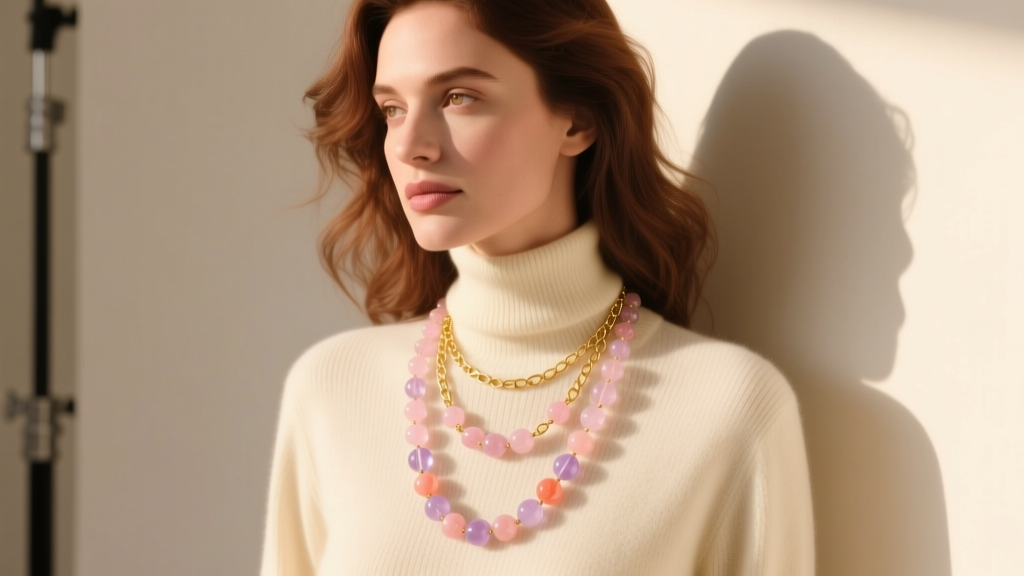
- The Asymmetrical Choker Stack: Pair a 15-inch vintage Czech pink glass bead necklace (6mm beads) with an 18-inch 14k gold paperclip chain. The rigid geometry of the gold links contrasts beautifully with the organic, light-catching facets of the glass.
- The Textural Contrast: Layer a 20-inch strand of large, 12mm Murano pink sommerso beads over a chunky, oxidized sterling silver rope chain. This works exceptionally well over deep V-necklines or silk blouses, allowing the glass to act as a vibrant focal point against the darkened metal.
- The Monochromatic Gradient: Combine three strands of varying lengths (16, 18, and 20 inches) featuring different shades of pink glass—from pale blush Japanese lampwork to deep cranberry Bohemian glass. Use a multi-strand gold clasp converter to keep the layers organized and prevent tangling.
"The vintage pink glass bead necklace is no longer relegated to the costume jewelry box. In 2026, we are treating these strands as fine jewelry, anchoring them with solid gold chains and letting the historical weight of the glass dictate the mood of the outfit." — Elara Vance, Senior Jewelry Archivist
Market Valuation and Sourcing Strategies
Acquiring an authentic vintage pink glass bead necklace requires navigating a fragmented market. Estate sales and local antique malls remain the most lucrative hunting grounds for undervalued pieces, particularly when sellers misidentify high-end Murano glass as simple 'costume beads.' On platforms like Etsy and 1stDibs, prices are more reflective of current market demand, with curated dealers charging a premium for professionally cleaned, securely restrung, and accurately attributed pieces.
When purchasing online, always request high-resolution macro photography of the drill holes, the clasp hallmarks, and the stringing knots. Beware of listings that use the term 'vintage-style' or 'vintage-inspired,' as these are legally distinct from true vintage. A genuine piece should come with an estimated decade of origin and a clear description of the glass type.
Preservation and Care Protocols
Proper maintenance is critical to preserving both the glass and the structural integrity of the necklace. Never use ultrasonic jewelry cleaners or harsh chemical dips on vintage glass beads, especially those from the Czech Republic that feature internal silver or copper foil linings. Moisture and chemicals can seep through the drill holes, causing the foil to oxidize, blacken, or flake away entirely, destroying the bead's brilliance.
To clean your necklace, lay it flat on a microfiber cloth and gently wipe each bead with a slightly damp, lint-free cloth. Avoid pulling or stretching the silk thread, and store the piece flat or loosely coiled in an acid-free tissue-lined box to prevent the silk from stretching under the weight of the glass. By adhering to these preservation standards, collectors can ensure their vintage pink glass bead necklaces remain vibrant and structurally sound for generations to come.


