Troubleshooting Guide for Men Wearing Pearl Necklaces
Master the art of men wearing pearl necklaces. Solve sizing, sweat damage, clasp failures, and styling issues with our expert troubleshooting guide.

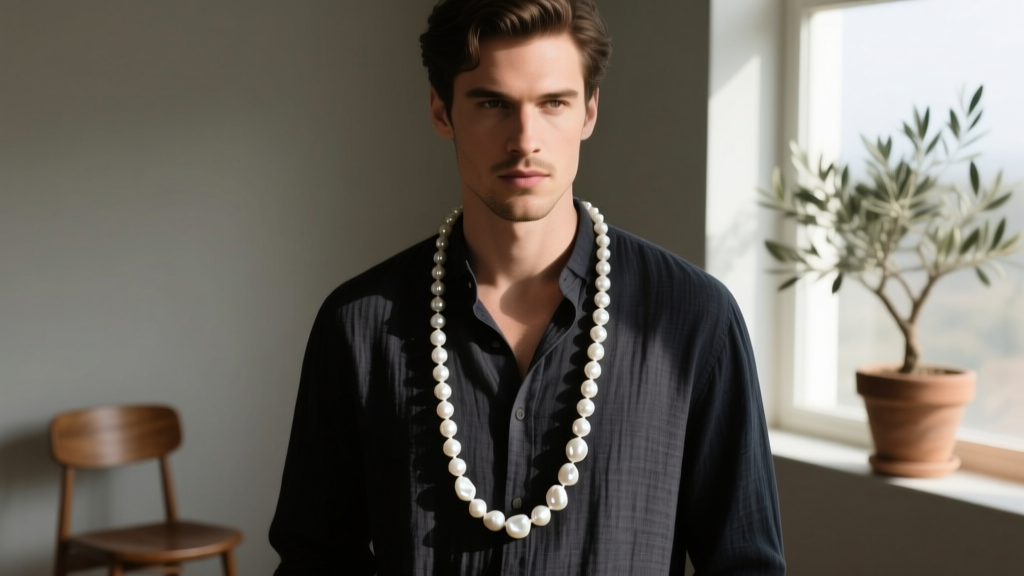
The resurgence of men wearing pearl necklaces has fundamentally shifted modern menswear, moving pearls from strictly formal, feminine-coded jewelry into the realm of rugged streetwear and tailored edge. However, the jewelry industry has historically engineered pearl strands for female anatomy and wear patterns. When men adopt this trend, they immediately encounter structural, biological, and aesthetic friction points. Standard clasps snap under the tension of thicker necks, silk stringing rots from male sebum production, and incorrect sizing turns a stylish statement into an uncomfortable chokehold.
As we navigate the 2026 jewelry landscape, it is no longer enough to simply throw a strand of Akoya pearls over a t-shirt. True style requires technical troubleshooting. This guide addresses the specific mechanical and biological failures men face when wearing pearls, providing actionable, expert-level solutions to ensure your necklace survives daily wear while maintaining perfect proportions.
The Nacre vs. Sweat Dilemma: Preventing Acid Degradation
The most common point of failure for men wearing pearls is biological. Human sweat typically has a pH ranging from 4.5 to 7.0, often leaning highly acidic during physical exertion or stress. Nacre, the iridescent outer layer of a pearl, is composed of microscopic aragonite platelets (calcium carbonate) held together by an organic protein called conchiolin. Calcium carbonate is highly susceptible to acid dissolution. Furthermore, men generally possess more active sebaceous glands and a thicker epidermis, resulting in higher sebum and oil transfer to the jewelry.
When acidic sweat and oils accumulate on the nacre, they eat away at the conchiolin matrix, leading to a permanent loss of luster, chalky surface degradation, and eventual pitting. According to the Gemological Institute of America (GIA), pearls should never be exposed to harsh chemicals or prolonged acidic environments.
The Troubleshooting Protocol:
- The Post-Wear Wipe: Never put a pearl necklace away without wiping it down. Use a lint-free, untreated microfiber cloth to physically remove sebum and sweat. Do not use jewelry polishing cloths, as they often contain mild abrasives or chemical treatments that will strip the nacre.
- The 30-Minute Rule: Apply cologne, aftershave, and skincare products at least 30 minutes before putting on your pearls. Alcohol and essential oils will cloud the surface almost instantly upon contact.
- Hydration Storage: Pearls require ambient moisture to prevent the conchiolin from drying out and cracking. Store them in a soft cotton pouch (never airtight plastic or a bank safety deposit box) with a lightly dampened cotton ball placed in the corner of the pouch, not touching the pearls.
Sizing and Proportion: Solving the "Choke" or "Plunge" Problem
The vast majority of pearl necklaces sold in mainstream retail are sized for women, typically ranging from 15 to 18 inches. The average adult male neck circumference sits between 15.5 and 17.5 inches. If a man wears a standard 16-inch women’s pearl strand, it will act as a restrictive choker, causing discomfort and creating an unflattering visual bulge at the collarbone.
Conversely, simply buying a 30-inch opera-length strand often results in the pearls plunging too low, getting lost in the chest hair or bouncing awkwardly against the sternum. The solution lies in targeting the "Princess" to "Matinee" lengths, specifically tailored to male anatomy.
| Neck Circumference | Recommended Length | Ideal Pearl Diameter | Visual Effect & Use Case |
|---|---|---|---|
| 14.5" - 15.5" | 18" - 19" | 6mm - 7mm | Sits just below the Adam’s apple. Ideal for unbuttoned camp-collar shirts. |
| 15.5" - 16.5" | 20" - 21" | 7mm - 9mm | Rests on the upper collarbone. The most versatile length for t-shirts and knitwear. |
| 16.5" - 18.0" | 22" - 24" | 9mm - 11mm | Falls to the lower chest. Requires larger beads to avoid looking like a delicate chain. |
Pro-Tip: If you find a strand you love but the length is wrong, do not attempt to add generic chain extenders to the silk knotting. Take it to a professional bench jeweler to have the strand completely restrung to your exact millimeter specification.
Clasp Failures and Stringing Snaps: Heavy-Duty Upgrades
Traditional pearl necklaces are strung on Size F or G silk thread with French knots between each bead. While beautiful, silk is a natural protein fiber that degrades rapidly when exposed to the oils and friction of male neck hair and beards. Furthermore, the standard 5mm or 7mm lobster clasps used on these strands are notorious for catching on facial hair, leading to sudden tensile snaps that scatter expensive pearls across the floor.
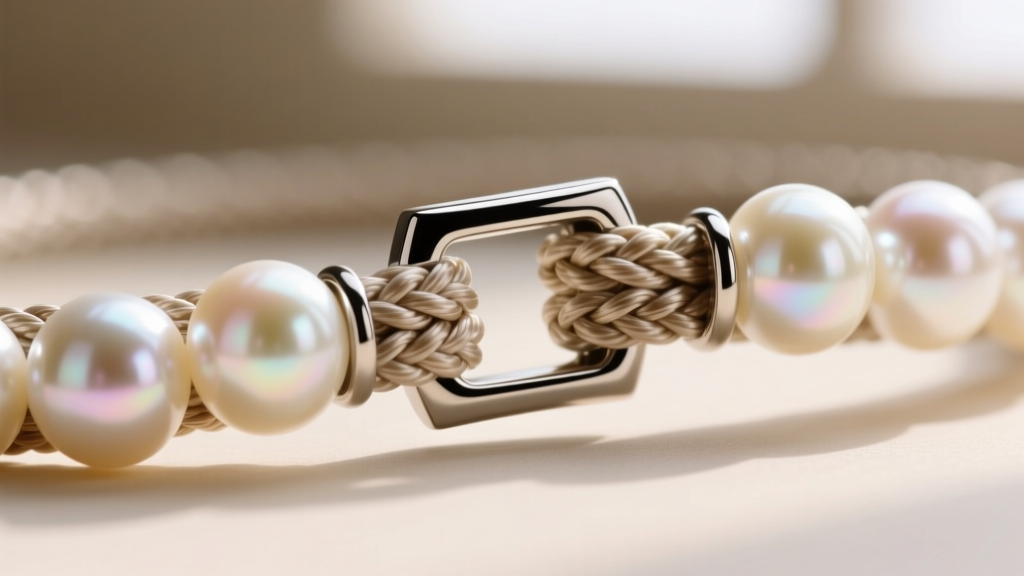
The Heavy-Duty Restringing Solution
To bulletproof your necklace, you must abandon silk. Have your pearls restrung using UHMWPE (Ultra-High-Molecular-Weight Polyethylene) braided line, commonly known in the angling world as PowerPro or SpiderWire. A 20lb to 30lb test braided line offers immense tensile strength, zero stretch, and complete immunity to sweat and sebum degradation. Because it is incredibly thin, it will easily pass through the standard 0.8mm drill holes of most commercial pearls.
For the clasp, upgrade to a neodymium magnetic clasp encased in surgical stainless steel or titanium. Magnetic clasps eliminate the need for fumbling with tiny lobster levers, completely bypassing the beard-pull hazard. Alternatively, a heavy-duty T-bar toggle clasp provides a rugged, mechanical aesthetic that aligns perfectly with menswear hardware.
Grading for Masculine Aesthetics: Why Baroque and Tahitian Win
When shopping for pearls, men often default to perfectly round, high-luster Akoya strands. While valuable, perfectly round white pearls carry a strong traditional association with vintage women’s formalwear, which can create visual dissonance when paired with a leather jacket or a distressed denim shirt. To solve this aesthetic clash, shift your focus to shape and color grading.
According to Pearl Paradise, the shape and origin of the pearl dictate its character. For men, Baroque Freshwater and Circle Tahitian pearls are the superior choices. Baroque pearls are asymmetrical and irregular; their organic, rugged shapes look inherently natural and less "precious," blending seamlessly into streetwear. Tahitian pearls, naturally grown in the black-lipped Pinctada margaritifera oyster, offer deep charcoal, peacock green, and gunmetal grey overtones. These dark, moody hues provide a masculine contrast against the skin and pair effortlessly with silver hardware and dark textiles.
Styling Friction: Escaping the "Costume" Trap
The line between avant-garde styling and looking like you are wearing a theatrical costume is incredibly thin. The most frequent styling error men make is wearing a single, pristine strand of white pearls with highly formal or overly busy patterned clothing, which isolates the necklace and makes it look like an afterthought or a prop.
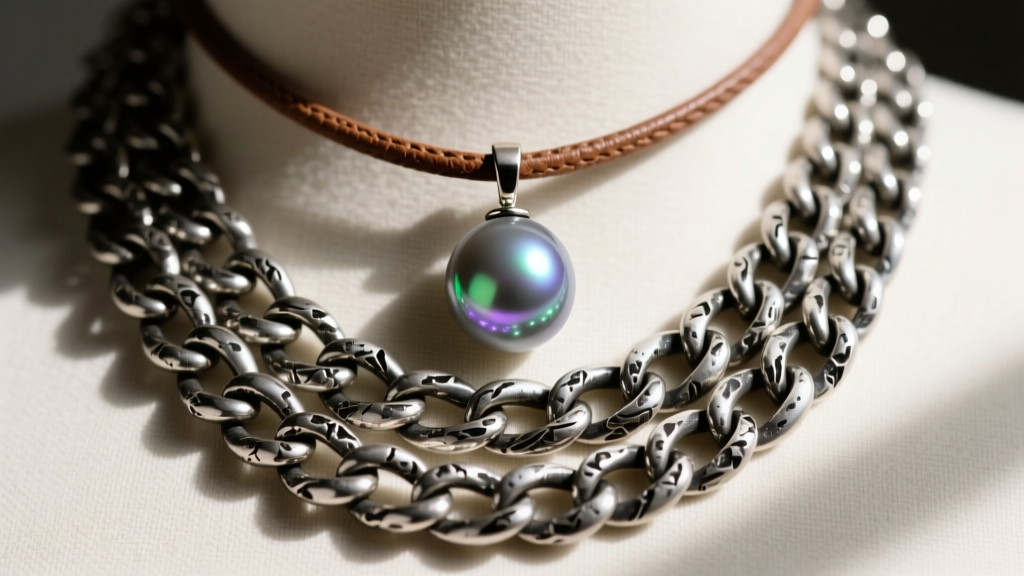
The Layering Framework
To integrate pearls into daily menswear, you must break up the uniformity of the strand through strategic layering and mixed metallurgy. Follow this structural framework:
- The Anchor Chain: Pair your pearl strand with a 2mm to 4mm oxidized sterling silver or matte black titanium Cuban link chain. The harsh, geometric links of the metal chain ground the organic softness of the pearls.
- The Pendant Conversion: If a full strand feels too loud, remove the clasp, thread a single, large (10mm+) baroque South Sea or Tahitian pearl onto a 2mm braided leather cord, and tie a adjustable macramé closure. This creates a rugged, surfer-adjacent pendant that works with any casual neckline.
- Neckline Pairing: Pearls require negative space to breathe. Avoid wearing them with tight crewnecks or busy flannel patterns. They perform best against the bare skin of an unbuttoned linen shirt, a deep V-neck knit, or a solid-color heavyweight cotton tee.
Authenticity Checks: Spotting Fakes in the Men’s Market
As the trend of men wearing pearls has exploded, the market has been flooded with cheap imitations marketed as "edgy men’s jewelry." Glass beads coated in essence d'orient (a synthetic pearlescent coating made from fish scales and lacquer) or molded plastic beads are rampant in fast-fashion menswear sections.
Before purchasing, perform these two non-destructive authenticity tests:
- The Tooth Test: Gently rub the pearl against the biting edge of your front tooth. A real pearl, due to its crystalline nacre structure, will feel distinctly gritty or sandy, like fine sandpaper. A glass or plastic fake will glide perfectly smooth.
- The Drill Hole Inspection: Examine the hole where the string passes through using a jeweler’s loupe or your smartphone’s macro lens. On a real pearl, the drill hole will be sharp, clean, and reveal a distinct boundary between the nacre and the inner bead nucleus. On a coated fake, the paint will often chip, peel, or pool around the edges of the hole, revealing the glass or plastic core beneath.
By understanding the mechanical vulnerabilities of stringing materials, the biological realities of skin pH, and the aesthetic nuances of pearl grading, you can confidently wear pearls without falling victim to the common pitfalls that plague newcomers to the trend. Treat your pearls with the same technical respect you would a high-end mechanical watch, and they will anchor your wardrobe for decades.


