What is a Normal Necklace Length? Technical Fit & Drape Guide
Discover the truth behind normal necklace length. Our expert technical guide covers anatomical fitting, hardware tolerances, and chain drape physics.

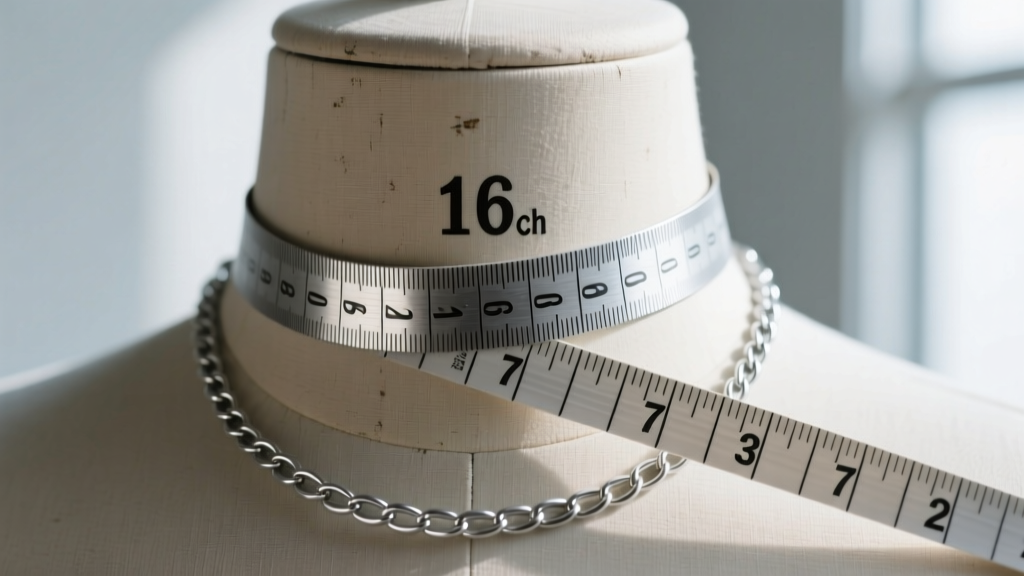
When consumers and novice jewelers search for the normal necklace length, they are typically met with a blanket answer: 18 inches. However, from a technical jewelry design and metallurgical perspective, the concept of a universal standard is fundamentally flawed. The jewelry industry relies on nominal lengths for manufacturing efficiency, but the actual wearable fit is dictated by complex variables including anatomical circumference, hardware tolerances, and the physics of the catenary curve. This deep dive explores the engineering and anatomy behind necklace sizing, providing a precision framework for jewelers, designers, and informed collectors.
The Physics of the Catenary Drape
A necklace does not sit flush against the skin in a perfect geometric circle. Instead, it forms a catenary curve—the same mathematical shape assumed by a hanging chain under uniform gravitational force. When evaluating what constitutes a normal necklace length, one must differentiate between the nominal length (the total end-to-end measurement including the clasp) and the effective frontal drop.
The frontal drop is heavily influenced by the cervical spine's curvature and the slope of the trapezius muscles. A chain resting on the back of the neck consumes a significant portion of its total length. For example, on a neck with a 15-inch circumference, the posterior half of the chain accounts for roughly 7.5 inches. If you are wearing an 18-inch chain, you only have 10.5 inches of chain to cover the front of the neck and the vertical drop. This means the actual vertical drop from the base of the throat is approximately 1.5 to 2 inches, not the 3 inches that simple subtraction might suggest.
Anatomical Baselines vs. Industry Nominal Lengths
The term normal necklace length usually defaults to the 'Princess' length (18 inches) in commercial jewelry. However, human anthropometric data reveals vast variations in neck circumference and torso proportions. According to ergonomic design standards, the average adult female neck circumference ranges from 13 to 15 inches, while the average adult male ranges from 15 to 18 inches. Therefore, an 18-inch chain acts as a choker on a 17-inch neck, but hangs as a loose collarbone-length piece on a 13-inch neck.
To achieve a precise fit, master jewelers use a flexible caliper or a specialized tailor's tape to measure the exact basal neck circumference, then add a specific tolerance based on the desired drape category. The Gemological Institute of America (GIA) frequently highlights in its design courses that understanding these anatomical baselines is critical for proportionate pendant placement.
The Baseline Matrix: Industry Standards vs. Actual Drape
The following table illustrates how nominal lengths interact with varying anatomical measurements. This matrix is essential for custom jewelers calculating the necessary chain length for a specific client.
| Nominal Length | Category | Neck Circumference | Actual Frontal Drop | Chain Gauge Recommendation |
|---|---|---|---|---|
| 14 - 15 inches | Collar / Choker | 12 - 13 inches | 0.5 - 1.0 inches | 0.8mm - 1.2mm (Box/Cable) |
| 16 - 17 inches | Choker / Short | 13 - 14.5 inches | 1.0 - 1.5 inches | 1.0mm - 1.5mm (Rolo/Cable) |
| 18 inches | Princess | 14 - 15.5 inches | 1.5 - 2.5 inches | 1.2mm - 2.0mm (Cable/Fox) |
| 20 - 22 inches | Matinee | 15 - 17 inches | 3.0 - 5.0 inches | 1.5mm - 2.5mm (Rope/Curb) |
| 24 - 30 inches | Opera / Rope | Any (Torso dependent) | Below sternum | 2.0mm+ (Structural links) |
Hardware Tolerances and Effective Length
A critical error in mass-market jewelry is the failure to account for hardware tolerances. When a manufacturer stamps '16 inches' on a tag, this measurement often includes the clasp, the jump rings, and sometimes even the pendant bail. From a technical standpoint, a standard 12mm lobster clasp and two 5mm soldered jump rings add roughly 22mm (nearly 0.9 inches) to the overall span.
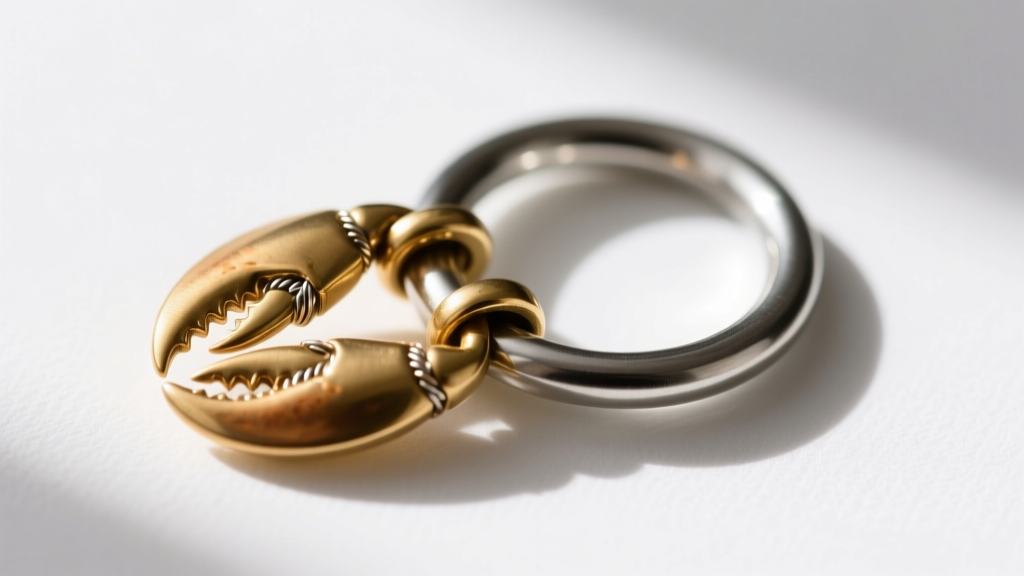
This means a '16-inch' necklace might only feature 15.1 inches of actual chain links. For high-end bespoke pieces, suppliers like Rio Grande provide exact metallurgical specifications for findings, allowing jewelers to calculate the precise chain length required to achieve an exact 16.0-inch internal circumference. When designing with heavy pendants, the bail itself can consume an additional 10mm to 15mm of vertical drop, fundamentally altering where the centerpiece rests on the sternum.
Material Physics: Tensile Creep and Elongation
When determining the normal necklace length for long-term wear, one must factor in material physics, specifically tensile creep and elongation. Different chain structures and base materials react differently to the sustained load of a pendant.
- Silk and Polymer Cords: Natural silk cords can stretch up to 4% to 6% under a sustained 15-gram load. A 24-inch silk cord holding a heavy jade pendant will permanently elongate over six months, requiring periodic re-knotting or replacement.
- Omega Chains: Due to their interlocking flat-plate construction, omega chains possess virtually zero tensile stretch. However, they are highly susceptible to plastic deformation (kinking) if bent past their minimum bend radius, which alters how they drape and effectively shortens their wearable length.
- Cable and Rolo Chains: Woven and linked chains exhibit microscopic elongation as the individual links wear against one another. Over a decade of daily wear, a soft 14k gold cable chain can elongate by 1% to 2% purely through friction-induced metal displacement at the contact points of the links.

Precision Sizing Framework for Custom Fitting
To abandon the flawed concept of a single normal necklace length and adopt a precision sizing framework, follow these technical steps:
- Measure the Basal Circumference: Use a flexible fiberglass tailor's tape (never metal, which can stretch or snag) placed exactly at the C7 vertebrae in the back and the thyroid cartilage in the front.
- Calculate the Desired Drop: Use a piece of cotton string weighted with a 10-gram fishing sinker to simulate the drape of the intended chain and pendant combination. Mark the string at the desired sternum placement.
- Subtract Hardware Allowances: Measure the exact length of your chosen clasp assembly and bail. Subtract this from your total desired span to determine the exact length of chain to cut.
- Account for Pendant Mass: If the pendant exceeds 20 grams, upgrade the chain gauge by at least 0.5mm to prevent the catenary curve from collapsing into an overly tight 'V' shape, which artificially raises the pendant higher on the chest than intended.
Final Calibration
Ultimately, the search for a standard measurement is a pursuit of convenience, not accuracy. The true normal necklace length is a dynamic variable calculated through the intersection of human anatomy, metallurgical tolerances, and gravitational physics. By understanding the mechanics of the drape, the hidden dimensions of hardware, and the long-term behavior of precious metals, jewelers and collectors can move beyond arbitrary industry standards and achieve perfect, customized proportions every time.


