Turquoise Nugget Necklace Value Guide 2026: Cost & Authenticity
Discover how to evaluate a turquoise nugget necklace in 2026. Learn pricing tiers, treatment detection, and matrix value to ensure a fair price.

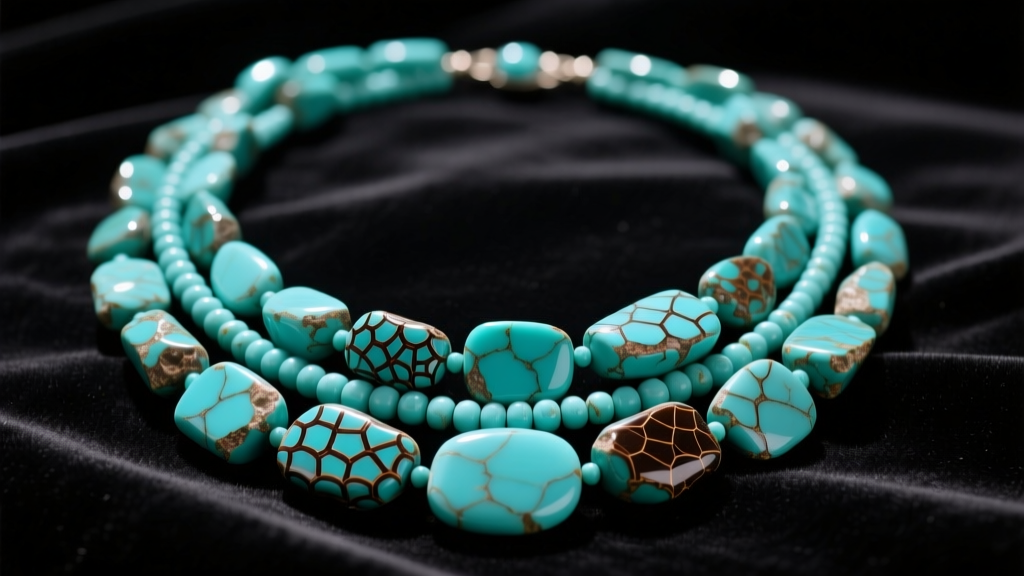
The Real Cost of Turquoise in 2026
The market for turquoise jewelry has undergone significant shifts over the last decade, driven by the depletion of historic American mines and increased global demand. When shopping for a turquoise nugget necklace today, understanding the intersection of geology, gemology, and market scarcity is essential to avoid overpaying. Unlike faceted gemstones graded by the 4Cs, turquoise is evaluated on color saturation, matrix pattern, porosity, and provenance. According to the Gemological Institute of America (GIA), less than 10% of all mined turquoise is hard enough and sufficiently vibrant to be used in jewelry without some form of treatment. This fundamental scarcity dictates the pricing structure of genuine nugget necklaces.
In 2026, the term 'nugget' generally refers to irregular, freeform cabochons or raw, unpolished stones that retain their natural topography. Because nuggets require larger, more structurally sound rough material than uniform beads, they command a premium. However, the market is flooded with stabilized, dyed, and outright imitation stones masquerading as high-grade natural turquoise. This guide provides a rigorous framework for assessing the true value of a turquoise nugget necklace, ensuring your budget aligns with the actual gemological reality of the piece.
Decoding Turquoise Grades and Treatments
The most critical factor in your budget assessment is identifying the stone's treatment status. Treatments drastically alter both the aesthetic longevity and the resale value of the necklace.
Natural vs. Stabilized vs. Dyed
Natural Turquoise: This refers to stones that have been cut, shaped, and polished without any chemical or structural alteration. Natural turquoise is porous and can change color over time as it absorbs oils from the skin. Because it is rare, natural nugget necklaces are investment-grade pieces. Expect to pay a significant premium, particularly for stones with high hardness (Mohs 5-6) that resist scratching.
Stabilized Turquoise: As noted by Geology.com, stabilization is a widely accepted industry practice where softer, chalky turquoise is subjected to a vacuum process, forcing a clear epoxy or polymer resin into the stone's pores. This hardens the material and locks in the color. While stabilized turquoise is genuine turquoise, it should cost 40% to 60% less than its natural counterpart. Many mid-range nugget necklaces utilize stabilized stones to ensure durability without the investment-tier price tag.
Dyed and Reconstituted: Dyeing involves adding artificial color to stabilized or chalk turquoise to mimic high-grade Persian or Sleeping Beauty blue. Reconstituted turquoise is created by grinding turquoise dust and scrap, mixing it with a polymer binder and dye, and molding it into 'nuggets.' These hold virtually no gemological value and should be priced as costume jewelry.
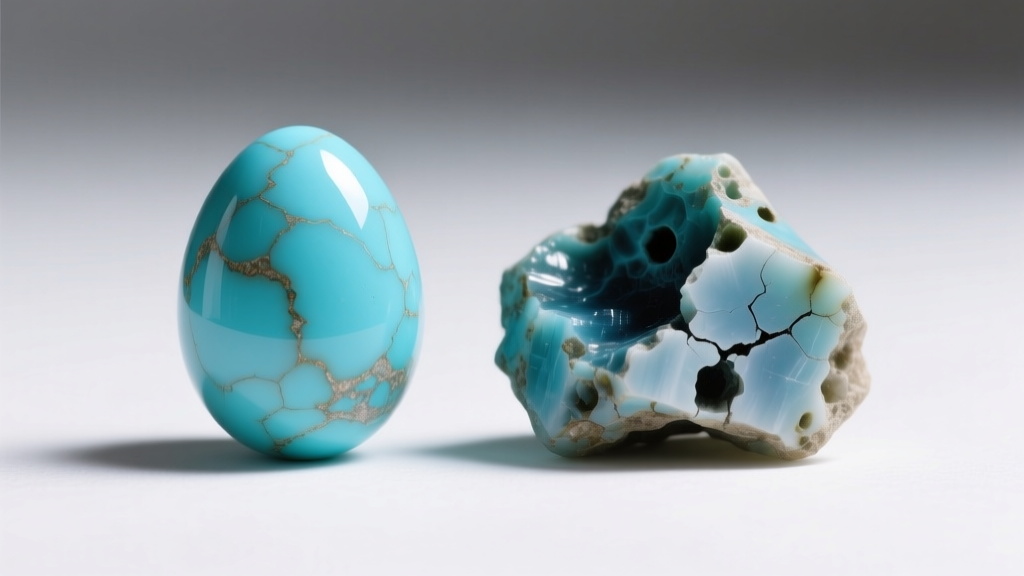
The Imitation Trap: Howlite and Magnesite
The most common counterfeit for turquoise nugget necklaces is dyed howlite or magnesite. These naturally white, highly porous minerals absorb dye readily. To spot them, examine the 'matrix' (the dark veining). In natural turquoise, the matrix consists of host rock like limonite or sandstone, which has a distinct, earthy texture. In dyed howlite, the matrix is simply dye pooled in the natural gray veins of the stone, often appearing unnaturally dark, web-like, and slightly raised or glossy under magnification.
2026 Pricing Matrix: What Should You Actually Pay?
To help you benchmark your purchase, the following table outlines the expected retail pricing for turquoise nugget necklaces in 2026, categorized by material grade, hardware quality, and stringing method.
| Tier | Turquoise Type & Origin | Hardware & Stringing | Estimated Retail Price (USD) |
|---|---|---|---|
| Budget | Dyed Howlite, Magnesite, or Reconstituted Chalk | Base metal, alloy clasps, nylon cord | $25 - $75 |
| Mid-Range | Stabilized Chinese (Hubei) or South American Turquoise | Gold-filled or 925 Sterling Silver accents, steel beading wire | $120 - $350 |
| High-End | Natural Kingman, Ithaca Peak, or High-Grade Hubei | Solid 925 Silver cones/clasps, hand-knotted silk or leather | $500 - $1,500 |
| Investment | Natural Bisbee, Lander Blue, or Number 8 (Spiderweb) | 14k/18k Solid Gold hardware, custom artisan stringing | $2,500 - $10,000+ |
When evaluating a necklace in the 'High-End' or 'Investment' tiers, always request documentation or a provenance guarantee from the seller. Reputable dealers will specify the exact mine of origin, which is a primary driver of value in the collector's market.
Evaluating the Hardware and Stringing
A genuine turquoise nugget necklace is heavy. The irregular shapes and solid density of the stones require robust stringing materials and high-quality findings. Assessing the hardware is a fast way to verify if the seller's asking price is justified.
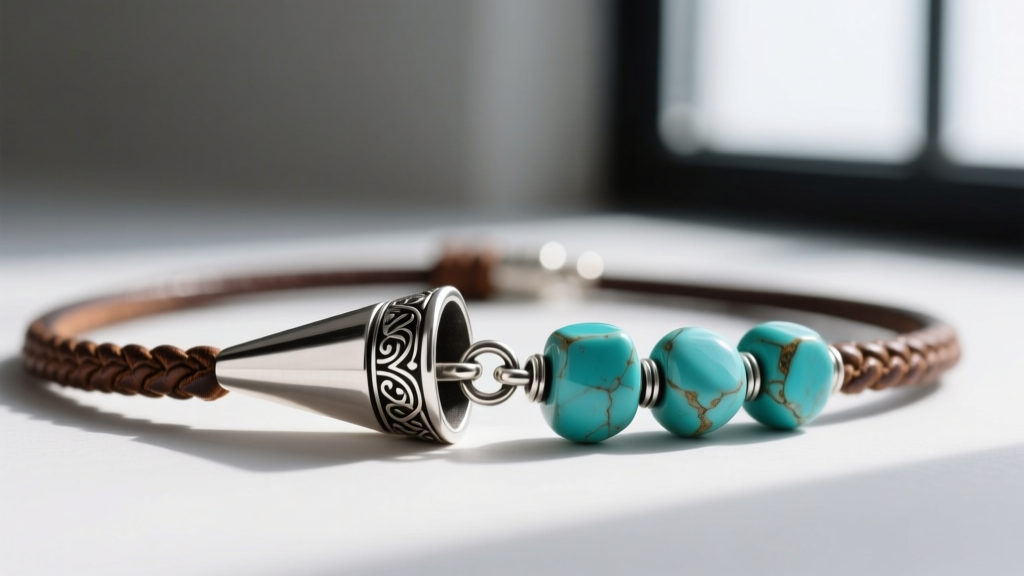
Stringing Materials: Durability vs. Tradition
- 49-Strand Beading Wire (e.g., SoftFlex): The gold standard for heavy nugget necklaces. It provides the drape of silk with the tensile strength of steel. If a heavy necklace is strung on cheap monofilament or basic nylon, it is a red flag for structural failure.
- Hand-Knotted Silk: Traditional and beautiful, but requires maintenance. Silk degrades when exposed to moisture and skin acids. High-end necklaces will feature knots between every single nugget to prevent total loss if the strand breaks.
- Leather Cord: Popular for rustic, Southwest-style nugget necklaces. Ensure the leather is high-grade and properly sealed; cheap leather will dry-rot and snap under the weight of stone nuggets.
Clasps and Findings
Inspect the clasp and crimp beads. Investment-grade necklaces utilize seamless sterling silver or solid gold crimp tubes, which are crushed to secure the wire. Avoid necklaces that use folded base-metal crimps or simple glue knots hidden inside cheap cone ends. Furthermore, the clasp itself should be proportionate to the weight of the necklace; a lightweight lobster clasp on a multi-strand, heavy nugget piece indicates poor construction and corner-cutting by the manufacturer.
Provenance: Does the Mine Matter?
In the upper echelons of turquoise valuation, the mine of origin is as important as the stone's appearance. While Chinese turquoise from the Hubei province dominates the mid-market and offers excellent stabilized options, American mine closures have turned domestic turquoise into a finite commodity.
- Sleeping Beauty (Arizona): Famous for its pure, robin's egg blue color with little to no matrix. The mine closed in 2012, and genuine, untreated Sleeping Beauty nuggets are exceptionally rare and expensive today.
- Kingman (Arizona): Known for its brilliant blue stones with striking black or brown spiderweb matrix. Kingman nuggets with tight, symmetrical webbing command top dollar.
- Bisbee (Arizona): Highly prized for its deep blue color and unique, smoky lavender or reddish-brown matrix. Bisbee is heavily counterfeited, so provenance documentation is mandatory.
- Lander Blue (Nevada): The rarest of them all. Producing only a few hundred pounds of high-grade spiderweb turquoise before closing, a genuine Lander Blue nugget necklace is a museum-tier collector's item, often fetching tens of thousands of dollars.
At-Home Verification and Testing
While advanced gemological testing requires a lab, you can perform a few non-destructive tests to assess a turquoise nugget necklace before purchasing. First, use the Acetone Test. Dip a cotton swab in pure acetone (nail polish remover) and rub it vigorously on an inconspicuous area of the stone or the matrix. If any blue or green pigment transfers to the swab, the stone is dyed. Natural and properly stabilized turquoise will not release color.
Second, examine the stone under a UV Flashlight. Many epoxy resins and polymer binders used in stabilization and reconstitution will fluoresce brightly under ultraviolet light, whereas natural, untreated turquoise typically shows no reaction or a very weak, natural glow. Finally, avoid the outdated 'hot pin test.' Not only will it fail to accurately identify modern polymer treatments, but it will also permanently damage the surface of the nugget, instantly destroying its resale value.
Final Verdict: Maximizing Your Budget
To maximize your budget when buying a turquoise nugget necklace, prioritize stabilized stones from reputable mines like Kingman or high-grade Hubei if you are in the $150 to $400 range. You will receive a durable, beautiful, and genuine product without paying the steep premium for untreated stones. If your budget allows for investment-grade natural turquoise, shift your focus entirely to provenance, matrix symmetry, and the quality of the stringing hardware. By understanding these gemological and structural nuances, you can confidently navigate the 2026 market and acquire a piece that holds both aesthetic and intrinsic value.


